
Currency

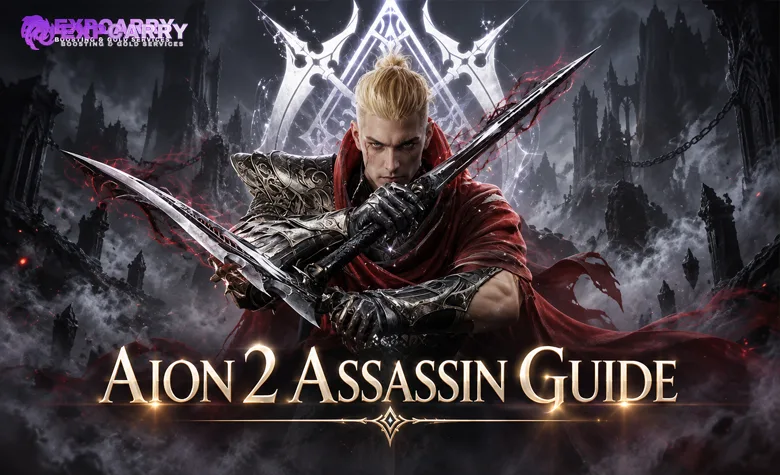
AION 2 Assassin Guide

AION 2 Assassin Guide

This AION 2 Assassin guide gives you five build templates for boss damage, AoE and solo play, safer PvE, Arena and group PvP. It covers the skill priorities, specialties, passives, Stigma, macros, stats, Arcana, Pantheon, pets and Daevanion choices that shape each setup. As of September 29, 2026, Global remains pre-launch: the Launch Scale Test has ended, Advance Access begins September 30 and the general launch is scheduled for October 5. Global test observations and later KR/TW progression are distinguished below; neither should be treated as verified retail balance.

Short answer: Build around Quick Slice, Savage Roar, Heart Gore and Insignia Explosion. Assassin excels when it can choose a target, attack from behind and finish a short burst window; it is much less forgiving when focused in a group fight or forced to trade hits from the front.

Assassin build selector
BuildMain purposeSkills and utilityPriority stats
Boss DPSExpeditions and single-target encountersQuick Slice, Savage Roar, Heart Gore, Insignia Explosion and timed burstAccuracy, Attack, Critical and damage multipliers
AoE / soloField packs and repeatable clearsWhirlwind Slice, Shadow Fall, AoE specialties and recovery optionsAccuracy, Attack, sustain and enough defense to avoid downtime
Safer PvELearning mechanics and soloing harder enemiesDefiance, Dodge, Evasion Stance and sustain specialtiesHP, Damage Tolerance, Accuracy and practical damage
ArenaDuels and small fightsShadow Walk, Shadowstrike, control, burst and a saved escapeAccuracy, PvP Damage, HP and control survival
AbyssOrganized group PvPFlank entry, focused burst, control and disengagePvP Damage Tolerance, HP, Accuracy, then offense

How Assassin Works in AION 2

Assassin is a dagger melee damage dealer whose output depends on positioning and short skill chains. In PvE, the class benefits from attacking behind a boss while a tank holds its attention. In PvP, the same positioning becomes target selection: wait for a safe entry, pressure one enemy and leave before the other team can turn on you.

The basic damage loop connects four skills. Quick Slice helps maintain MP and starts the sequence. Savage Roar applies Insignias. Insignia Explosion uses those marks for damage and control. Heart Gore becomes available after a critical hit and gains a major cooldown interaction from later skill investment in the regional client. Illusive Clone and Swift Contract support a planned burst window.

Assassin is strong in 1v1 because stealth, mobility and focused damage let a skilled player control the opening. It is weaker in mass PvP because it has to cross into melee range, has limited value when attacking into a formation and can be punished after spending its escape tools. In PvE, it can deliver high single-target pressure when the target stays still, but loses damage quickly when mechanics remove melee uptime.

Best Assassin Skills and Specialties

Spend points on a working core before spreading them across every attack. The main skill names were visible in the Global Launch Scale Test, while several detailed specialty choices and higher-level breakpoints below are drawn from KR/TW client data. Treat them as planning references, not guaranteed Global launch selections, and check each live tooltip before spending rare materials.

Assassin skill specialties from the regional skill layout
SkillPvE targetWhat the choice actually doesUseful swap
Quick SliceLevel 8 first, then 12 and 16 as external skill levels allowThe early MP recovery option helps prevent the basic rotation from stalling. Later regional options can reduce Insignia Explosion cooldown; a higher-level option improves hit reliability against Block or Evasion.Use HP absorption while sustain is a problem. Consider Multi-Hit after MP is stable.
Savage RoarLevel 8, then level 10 before spreading pointsSkill Speed makes the frequent attack smoother. Later levels add cooldown interaction with Shadowstrike and can unlock a pull option through Savage Smash.Choose lower MP cost if you run dry. For a single boss, use the fewer-target damage option if the live tooltip retains it.
Heart GoreLevel 8 early, then target level 16 through Daevanion, gear or ArcanaThe regional level 16 specialty resets its cooldown on a Critical Hit, which is a major damage breakpoint.Use HP absorption while learning or when solo survival matters more than peak damage.
Insignia ExplosionLevel 8 after the first core skills, then 10Multi-Hit is a practical PvE choice. Later options can extend Stun or reduce cooldown; use the finisher after the target has marks.Choose the control option for PvP if its effect is confirmed in the Global client.
ShadowstrikeLevel 8 for PvP access and rear positioningMoves you to the target and can support a fast burst from behind. The regional layout offers damage and control options.Choose Seal or Stun for a control setup when the matchup rewards locking down one target.
Storm RampageLevel 8 after the core fourRegional options include HP absorption, MP recovery or using the skill while moving. Later levels can add Multi-Hit or cooldown value.Use sustain while undergeared; switch toward damage when survival and MP are stable.
Whirlwind SliceLevel 8 for farming or an evasion-based setupAdds area coverage for packs and can interact with defensive play in the regional layout.Use the AoE option for farming and a confirmed defensive interaction for PvP.

Skill-point order from a fresh setup: bring Quick Slice to its first useful specialty, then Savage Roar, Heart Gore and Insignia Explosion. If MP is not a problem, take damage options instead of recovery. Raise Savage Roar toward level 10 because it is used frequently. After the first core breakpoints, invest in Rear Smite and the strongest available damage passives. Use Daevanion, equipment and Arcana skill rolls to move Heart Gore toward level 16; do not scatter those bonuses across secondary skills first.

The first specialty is listed at skill level 8 in the regional data, with additional slots at 12 and 20. Skill points from the skill window do not by themselves take a skill to those later levels. The Global client may differ in exact costs, unlocks or available options, so confirm each breakpoint in-game.

Version check: The September 16 KR/TW balance update increased the cancel delay for Savage Roar, Savage Smash and Heart Gore to discourage automated mouse-macro chains. It also raised PvE damage for Quick Slice, Breaking Slice, Swift Slice and Insignia Explosion by 10%, and extended the second Shadowstrike specialty from 5 to 10 seconds. These are regional patch notes, not a guarantee of identical Global launch values; avoid older frame-perfect macro rotations.

Which Assassin Passives to Upgrade

For a rear-attack PvE setup, prioritize Rear Smite, then Assault Stance and Exploit Weakness. Add Determination and Impact Hit as the main passives become more expensive. Rear Smite loses value whenever a boss turns or forces you to attack from the front, so positioning remains part of the build.

For PvP, retain useful damage passives and consider defensive or control-related passives only when their Global tooltip supports the matchup. Heightened Sixth Sense and other survival options can help a new character, but do not invest in them at the expense of every damage passive if the actual problem is poor entry timing.

Build 1: Assassin PvE Boss DPS

This setup is for fights where a tank can hold the boss and you can spend most of the encounter behind it. Its strength is concentrated single-target pressure during a stable damage window. Its weakness is that movement, forced downtime and a turning boss can break the sequence; save burst for a phase in which the boss can actually be hit.

Core: Quick Slice and Savage Roar maintain the chain, Heart Gore follows its Critical Hit condition, and Insignia Explosion spends the marks. Keep Shadowstrike or Flash Slice available to restore melee uptime after movement. Use Illusive Clone and Swift Contract together when the target is vulnerable, and align Triniel’s Dagger and Savage Fang with that window if equipped.

Specialties: start with MP recovery on Quick Slice and a smooth Skill Speed option on Savage Roar. Use sustain on Heart Gore while gear is weak, then move to damage options. Build toward the Heart Gore level 16 breakpoint through external skill levels. Use Multi-Hit on Insignia Explosion for PvE if the Global tooltip confirms the regional option.

Weak point: Assassin is not a tank. Do not stay in a frontal mechanic to preserve one attack, and do not activate a short damage buff immediately before a forced boss phase.

RECOMMENDED FOR THIS GUIDE
Popular Aion 2 Services

Explore services related to this guide, selected from our Aion 2 catalog.

View All Aion 2 Services


Assassin Boss Guide: Mechanics, Skills and Loot

These named encounters appear in the Global test-client dungeon data, while the mechanic descriptions reflect published encounter guides that include regional difficulty variants. The loot column lists examples from the relevant instance's reward cube, not guaranteed personal boss drops: the available pool, quantity and difficulty must be verified in the retail Global reward preview. Prioritize the boss's mechanic over finishing a melee chain.

Named bosses: mechanics, Assassin response and possible instance rewards
BossSkills and mechanicsWhat Assassin should doPossible loot
Neglected Gadioton (Krao Cave)Lava pools, directed laser and thrown rock projectiles; overlapping hazards punish stationary melee damage.Attack from the rear between casts. Step laterally out of the laser without dodging into a lava pool; move again for rock throws.Krao Cave cube: Division equipment, including Division Dagger in the applicable Normal pool, plus Kina and upgrade materials.
Enhanced Harcon (Krao Cave)Crossfire lines, rock projectiles and lingering lava hazards.Stay relatively close and find a clear sector during crossfire instead of fleeing to the arena wall; resume rear attacks when the lane opens.Krao Cave reward pool: Division equipment and accessories, Kina and materials; varies with difficulty.
Ultimate Berk (Krao Cave)Two consecutive forward lunges, a heavy spinning attack, a safe-rock cover phase, a stagger check and summoned totems.Evade both lunges, withdraw from the spin, shelter behind the indicated glowing rock, and switch to stagger skills or totems when required. Save burst until the boss is exposed.Krao Cave final reward cube: Division Dagger/gear in the appropriate difficulty, Berk accessories in eligible pools, and upgrade materials.
Red Spark Ignus (Fire Temple)Targeted persistent lava puddles, an expanding ring attack and Blazing Speed lunges between players.Place your marked puddle at the perimeter, dodge the ring and avoid stacking on another target during the chain lunges. Re-enter from the rear.Fire Temple reward pool: Corrupted Judicator equipment, including the Dagger in eligible difficulties, plus Kina and materials.
Black Smoke Murute (Fire Temple)Arm slam followed by delayed circles under players; expanding stomp waves, a tank leap and boulder throw.Leave the slam zone, move again for your own delayed circle, and time Dodge against the expanding waves. Do not stand on the tank.Fire Temple cube: Corrupted Judicator gear and encounter accessories such as Murute Earrings, subject to difficulty.
Kromede's Desire (Fire Temple)Untargetable moving fire-wall maze, clone line and rear attacks, plus the Blazing Judgment safe-circle check on the regional Hard version.Do not activate Illusive Clone during the maze. Follow wall gaps, watch clones at your back, reach the highlighted safe area if the Hard mechanic occurs, and burst when Kromede is targetable again.Fire Temple final pool: Corrupted Judicator Dagger/gear, Kromede-associated equipment and materials; inspect the live cube.
Watchdog Kwapo (Ferocious Horn Den)Thunder Cry detonates blue ground orbs and releases an expanding ring; tracking purple orbs and a tank spread marker add pressure.Clear blue orbs on one side to create space, jump the expanding ring and avoid overlapping the tank marker. Hold burst while the boss is untargetable.Ferocious Horn Den pool: Black Claw equipment (including Dagger on applicable difficulties), Fera Necklace and Kina.
Necromancer Duanka (Ferocious Horn Den)Mal Necromancer summons protected adds; a white orb grants the buff required to attack them. Soul Caller pulls the party toward a lethal central area.Coordinate the orb carrier, swap off the boss to remove adds, then run away from the center during Soul Caller. Re-engage only after the mechanic resolves.Ferocious Horn Den cube: Black Claw Dagger/gear, Fera Necklace and other instance materials, depending on difficulty.
Ferocious Horn Nuakum (Ferocious Horn Den)Bleed stacks create blood puddles; a clone dash requires rotating interceptors. Blue Light of Destruction must strike the central orb, followed by line-projectile interception.Drop puddles near arena edges and follow assigned interception order rather than diving through the boss. Aim marked projectiles through the central orb; save movement and defense for mechanics.Final cube: Black Claw Dagger/gear; Nuakum armor in eligible Unique pools; Soul Codex, Kina and enhancement materials.

Build 2: Assassin AoE and Solo Farming

This setup is for field packs and repeatable solo clears. Assassin’s strength is moving quickly between priority targets and finishing them with burst. Its weakness is lower tolerance for several enemies focusing it, so start with small pulls and add area skills only when you can survive the group.

Use the AoE specialty on Whirlwind Slice when available, then build marks and use Insignia Explosion when enemies are in range. Shadow Fall and Defiance can help cover dangerous pulls. Avoid spending every defensive skill to start a fight; keep one movement or evasion tool for leaving the pack if the first target survives your burst.

Priority: Accuracy first if attacks miss, then Attack and damage multipliers. Add sustain if recovery downtime is slowing complete farming cycles. A smaller safe pull can clear faster than a large pull that repeatedly interrupts the Assassin or forces a retreat.

Build 3: Defensive Assassin and Safer PvE

This is a survival variant for learning boss patterns, soloing dangerous enemies or entering a group without dependable protection. Its strength is giving you more chances to recover after an imperfect dodge. Its weakness is lower damage during the first burst window, so move back toward offense once you can avoid the encounter mechanics consistently.

Keep Dodge, Defiance and one defensive Stigma available. Use the HP absorption specialty on Heart Gore or Storm Rampage if the current tooltip supports it and the extra sustain prevents downtime. Raise HP and Damage Tolerance only enough to survive the attacks you cannot avoid; Assassin cannot replace a dedicated tank by stacking defense.

Build 4: Assassin Arena and Small-Scale PvP

Assassin is strongest in duels and small fights where it can isolate one target. Stealth and mobility help choose the entry, while control gives the burst room to land. The class is weak after a failed opener if both gap closers and the escape are already spent. Keep a route out before you commit.

Setup: take Shadow Walk or another confirmed approach tool, Shadowstrike for access, one reliable control option, the core burst skills and at least one defensive or disengage option. Smoke Bomb, Evasion Stance and Shadowstep can fill utility slots when they are available in the current Stigma setup.

Matchup adjustment: against a target with a defensive cooldown, bait or track that ability before spending the full burst. Against high evasion, fix Accuracy before stacking more damage. Against a target that can counter-control after your opener, keep Dodge or an escape manual.

Build 5: Assassin Abyss and Group PvP

In organized group PvP, Assassin is a flanker and pick class. Its strength is threatening a separated healer or ranged target when allies create an opening. Its weakness is low value in an unsupported frontal push: it has to reach melee range, has limited area pressure and can be focused before it exits.

Follow the group’s target call, approach from the side or rear and commit only when allied control or pressure makes the dive possible. Keep Shadowstep, Evasion Stance or another available disengage for the counterattack. Leave when your support line backs away; continuing alone rarely turns a failed dive into a successful one.

Build around Accuracy, HP and PvP Damage Tolerance before adding more offense if you are dying during the entry. A boss-only damage setup may have higher target-dummy output but perform worse in a real Abyss fight when it cannot survive focus.

Assassin Stigma Loadouts and Upgrade Priorities

Stigma is a separate equipped selection from regular active skills. Choose a compact core that matches the content and the slots open in your Global client. Do not assume that the slot count or level cap from a mature KR/TW build is available at launch.

Functional Stigma selections, not a universal fixed slot count
ContentFour abilities to consider firstWhen to swap
Boss DPSIllusive Clone; Swift Contract; Triniel’s Dagger; Savage FangUse a defensive Stigma if a mechanic repeatedly interrupts the burst window.
AoE / soloIllusive Clone; Savage Fang; Throw Shadowblade; one defensive optionReplace a defensive slot after your pulls are reliably safe.
Safer PvEIllusive Clone; Evasion Stance; Smoke Bomb; one available damage optionRestore a damage Stigma when you no longer need the extra recovery.
ArenaIllusive Clone; Swift Contract; Smoke Bomb; Evasion Stance or ShadowstepUse Triniel’s Dagger or Savage Fang when your entry and exit are consistent.
AbyssShadow Walk; Throw Shadowblade; Smoke Bomb; a defensive or disengage optionExchange utility for burst when allies can protect the dive.

Upgrade logic: first raise the Stigma that makes your main damage window work. Illusive Clone and Swift Contract support the burst; Triniel’s Dagger is an offensive cooldown tool; Savage Fang can set up Insignia pressure. For PvP, control or an escape can be more valuable than a small damage increase. Upgrade one useful option at a time and confirm the current Stigma slot and shard requirements before spending.

Assassin Macros Based on Korean Skill Macro Practice

Use the built-in Skill Macro for repeatable filler actions, not for decisions that depend on target position, critical hits or encounter timing. The September 16 KR/TW change lengthened the Savage Roar, Savage Smash and Heart Gore cancel delay to counter automated mouse-macro chains. Keep that interaction manual unless the Global client’s current macro system clearly supports it without skipping actions.

In-game macro and manual-button templates to configure
TemplateSuggested in-game Skill Macro queueKeep under manual control
PvE: simple fillerQuick Slice, then Savage RoarHeart Gore, Insignia Explosion, movement and emergency defense.
PvE: boss sustained priorityQuick Slice and Savage Roar as a short filler queueIllusive Clone, Swift Contract, Triniel’s Dagger, Heart Gore, Insignia Explosion and boss repositioning.
PvE: short AoE circuitQuick Slice, Savage Roar, Whirlwind Slice when usablePull size, Shadow Fall, Insignia Explosion timing and escape skills.
PvP: no fixed opener macroUse a short filler queue only after the target is controlled.Target selection, Shadowstrike, control, burst, Dodge and disengage.

How to test: start with two skills on a training target. Add another only after confirming that the sequence completes without skipping an action or locking you into an animation. Test at your actual ping and frame rate; a delay that works on another player’s machine is not a universal setting. Do not put Illusive Clone, a gap closer or a defensive cooldown into a queue that can trigger at the wrong time.

These are in-game control examples, not chat commands or third-party mouse scripts. The dedicated PvE rotation page can cover a tested full sequence after Global opens and its current patch behavior is observable.

Best Assassin Stats, Gear, Manastones and Soul Binding

Prioritize what currently stops your build from working. Accuracy comes first when attacks miss. After hit reliability, improve Attack and damage multipliers. Combat Speed can make a short chain smoother, while HP and Damage Tolerance matter more when you are being focused or learning a dangerous encounter. Do not copy exact KR/TW stat targets into the Global launch build.

Assassin stats by situation
Stat groupBoss PvEAoE / soloArena / Abyss
AccuracyEnough for reliable hits on the boss.Meet the actual needs of the enemies you farm.Raise it when misses or evasion break the kill window.
AttackCore offense after reliable hit chance.Shortens clears when survival is stable.Add after Accuracy and durability are adequate.
Critical Hit / Critical DamageSupports burst and Heart Gore interactions; compare the live skill text.Useful on priority targets, not a substitute for sustain.Increases pressure during a control window.
Rear Attack DamageValuable while the tank holds the boss facing away.Less reliable against enemies that keep turning.Harder to maintain against aware players.
Combat SpeedCan improve the flow of short melee chains.Useful when slow animations interrupt clear pace.Helps pressure, but does not fix a poor engage.
Smite and other damage multipliersCompare with current gear and the target’s resistance.Useful when it improves the full clear cycle.Choose PvP-relevant lines where available.
HP / Damage ToleranceEnough to survive unavoidable mechanics.Reduces deaths and recovery downtime.Important when opponents focus you after an opener.

Equip the strongest dagger you can improve without delaying the rest of the build for a regional drop. Use offensive Manastones and Soul Binding for PvE after hit reliability is covered. Keep a separate PvP setup with more Accuracy, HP or Damage Tolerance if those stats solve a real problem. Read the Global item tooltip and upgrade preview before committing rare materials.

Assassin Arcana Builds and Skill-Level Rolls

Arcana can add skill levels and set bonuses, so a card that completes a useful breakpoint may be more valuable than a higher-grade card with unrelated stats. Start with the parts available in Global. Prioritize Quick Slice, Savage Roar, Heart Gore and Insignia Explosion, then compare useful passive rolls and the completed set bonus.

Boss setup: favor core skill levels and offensive bonuses that remain active while you attack from behind. If a card moves Heart Gore closer to its level 16 specialty, compare that breakpoint against general Attack, Accuracy and Critical rolls using the same encounter.

PvP setup: keep enough core damage to create a kill window, then add Accuracy, survival or utility if those improve your actual entry. Do not dismantle the only card that supports an alternate preset. Regional endgame card combinations are examples, not confirmed Global launch best-in-slot setups.

Assassin Pantheon: Which Statues and God Stats to Place

Use Pantheon to fill gaps in the build rather than pursuing a named regional collectible without checking its Global effect. For boss damage, prioritize available offensive stats that improve the chain. In Arena, Accuracy can be more useful than another small damage line when opponents evade the opener. In group PvP, HP and defensive stats can make the difference between completing a pick and dying on entry.

Inspect the Global collectible tooltip before investing. Names, availability and God-stat values from KR/TW may change between regions or patches; the stat effect matters more than copying a late-game statue list.

Best Assassin Pets, Genus Insight and Wings

Choose combat value from the pet’s actual Genus Insight and owned effects, not its appearance. If your attacks miss, look for Accuracy in the available pool. Once hit reliability is stable, compare Critical, Attack and damage multipliers. For PvP, keep HP or defense on an alternate setup if it helps you survive the counterattack.

A balanced pet can be better for farming if it reduces deaths and recovery downtime. Wing appearance does not guarantee a combat bonus; compare the actual stat lines and collection effects shown in the Global client before spending resources.

Assassin Skill Progression and Daevanion Upgrade Order

This is a build progression order, not a character leveling route. First make the core skills work, then use Daevanion and equipment to reach the breakpoints that change the rotation. The number and layout of available Global boards may differ from the full KR/TW endgame setup.

  1. Establish the core: Quick Slice, Savage Roar, Heart Gore and Insignia Explosion to their first useful specialties.
  2. Fix resource problems: take MP recovery on Quick Slice if the rotation stalls. Add sustain on Heart Gore or Storm Rampage if survival is the issue.
  3. Upgrade core passives: prioritize Rear Smite, Assault Stance and Exploit Weakness for PvE damage.
  4. Target Heart Gore: use relevant Daevanion nodes, Arcana and equipment skill rolls to move toward level 16.
  5. Fill secondary needs: add mobility, Whirlwind Slice for AoE and defensive options based on the content you play.
  6. Build separate presets: keep a boss setup and a control or survival setup when the Global interface allows it.

Take core active-skill nodes and useful Accuracy, Critical or Combat Speed nodes along the available route. Choose defensive nodes for PvP or dangerous solo content when they solve a real weakness. Do not cross a whole board for a minor stat while a nearby node advances a core skill.

Assassin Mistakes to Avoid

Most performance losses come from broken timing, poor positioning or spending the escape to enter. Check these points before changing the build.

  • Spreading skill points evenly instead of completing the Quick Slice, Savage Roar, Heart Gore and Insignia Explosion core.
  • Activating Illusive Clone while the boss is untargetable or about to force the party away.
  • Attacking from the front and expecting rear-attack bonuses to work.
  • Using every gap closer to enter, then having no way to follow a moving target or disengage.
  • Using Insignia Explosion before the target has marks or before control matters.
  • Copying a KR/TW skill breakpoint, Stigma slot count, pet roll or Arcana set as a confirmed Global setup.
  • Putting Heart Gore and every buff into a long macro that can fire at the wrong time.
  • Building only for boss damage in Arena or Abyss and dying before the burst lands.
  • Assuming strong 1v1 performance means Assassin should fight in the frontline of a mass battle.

AION 2 Assassin FAQ

These short questions answer useful class details that do not need full build sections.

Can both factions play Assassin?
Yes. Assassin is included for both Elyos and Asmodians in the announced Global launch class lineup.

Does stealth make Assassin safe during a fight?
No. Stealth is an approach or repositioning tool, not a guarantee that enemies cannot detect or counter you. Keep an escape ready after you engage.

Is Assassin a good first class?
It suits players who enjoy fast melee and deliberate positioning. Its low tolerance for a failed entry makes it harder to learn than a sturdier melee class.

Must every PvP opener begin from stealth?
No. Stealth helps you choose an angle, but entry timing, target selection and keeping a route out matter more than forcing the same opener against every opponent.

Conclusion

Assassin’s practical core is Quick Slice, Savage Roar, Heart Gore and Insignia Explosion, supported by Rear Smite and a timed burst window. Build accuracy and the core skill loop first, then work toward Heart Gore’s regional level 16 breakpoint through Daevanion, Arcana and gear. Assassin is powerful when it controls the angle and timing of a fight, especially in 1v1 and focused boss damage; it is fragile when caught in the open or left unsupported in a mass PvP fight. Verify regional details against the live Global client before copying exact specialties or progression values.

Recommended services

Recommended Guides