
Diablo 4 Challenge Dungeons are boss-focused encounters reached through portals that open in the Overland. On Torment difficulties, Blizzard says you can choose the encounter difficulty up to three Torment tiers above your current difficulty, with greater intensity granting greater rewards. That is the confirmed core of the system. Blizzard has not yet confirmed exact portal locations, a spawn timer, the final Season 15 boss list, numerical scaling or a final reward table.
This distinction matters because the August patch 3.2.0 PTR tested the framework with encounters made specifically for testing. Blizzard explicitly said that the final Season 15 experience will use different content. This guide therefore explains the usable system, the safest difficulty progression and the build profiles worth preparing without turning a temporary PTR boss or test value into a live recommendation.
What Challenge Dungeons Are and What Is Final
Challenge Dungeons add a short, high-pressure boss opportunity to normal Overland exploration. A portal appears in Sanctuary and leads to a boss encounter. On Torment difficulties, the official patch 3.2.0 PTR overview confirms that you can choose the fight difficulty up to three Torment tiers above your current difficulty. It also warns that the PTR encounters are not the final Season 15 content.
The safest way to read every pre-release claim is to separate a confirmed system rule from a test implementation. A portal leading to a boss is a confirmed rule. A particular boss, arena, attack pattern, loot screen or portal behavior seen on PTR is only evidence of how Blizzard tested that rule. Our broader Diablo 4 Season 15 guide tracks the rest of the update, while this page stays focused on Challenge Dungeon preparation.
| Challenge Dungeon detail | Status before the final Season 15 reveal | How to use it |
|---|---|---|
| Portals open in the Overland | Confirmed system rule | Expect Challenge Dungeons to begin during open-world play rather than through a Nightmare Sigil |
| A portal leads to a boss fight | Confirmed system rule | Prepare a boss-capable setup, not only a fast area-clear build |
| Fight difficulty can go up to three Torment tiers above your current difficulty | Confirmed on Torment difficulties | Use the lowest appropriate option first, then increase difficulty as your build proves reliable |
| Greater intensity gives greater rewards | Confirmed overall relationship | Compare clear reliability and time instead of assuming every step has a known or linear reward increase |
| PTR bosses, arenas and mechanics | Testing content only | Do not build a final counter list around them |
| Exact selector layout, spawn locations, frequency and reward table | Not announced | Wait for the Season 15 reveal or live testing |
Challenge Dungeons should not be confused with Nightmare Dungeons, The Pit or a permanent change to the entire world difficulty. Blizzard describes a portal encounter and, on Torment difficulties, a selectable boss-fight difficulty. No official pre-release text says that entering one raises every other activity in the world, consumes a Nightmare Sigil or advances The Pit.
Where Challenge Dungeon Portals Appear
Blizzard says Challenge Dungeon portals open in the Overland and that the mechanic appears across Sanctuary. That answers the general location question: players should encounter portals while participating in the open world. It does not establish a fixed portal map, a named farming region or a guaranteed route between waypoints.
Confirmed Overland portal behavior
The portal is the entrance to the boss encounter. You find it outside the normal dungeon menu, enter and then engage with the Challenge Dungeon system. Because Blizzard uses the broad term Overland, the responsible launch advice is to continue useful open-world activities and treat a portal as an additional opportunity when it appears.
Helltides, Whispers and other open-world routes may be efficient places to spend time for unrelated reasons, but Blizzard has not said that any of them increases Challenge Dungeon portal spawns. A route that happened to produce several portals on PTR does not prove a hidden live modifier. Until final rules are published, do not abandon productive farming merely to circle an alleged hotspot.
Portal details Blizzard has not confirmed
There is no official pre-release answer for exact coordinates, map icons, regional restrictions, minimum level, cooldown, spawn timer, party ownership or whether a portal remains available after leaving the area. The developer has also not said whether every eligible player sees the same portal or receives an individual opportunity.
That means a launch map claiming guaranteed portal locations would be speculative. The useful first-week method is simple: record the region, activity, time and party state when a portal appears, then compare repeated observations after the live build arrives. A single screenshot proves that a portal appeared; it does not prove a repeatable farm.
How Difficulty Works Up to Three Torment Tiers Higher
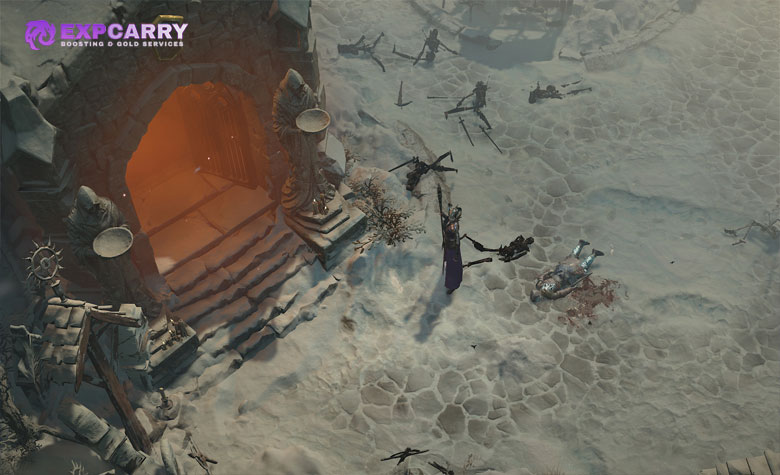
Challenge Dungeon difficulty is relative to the Torment difficulty you are currently playing. Blizzard says the fight can be set as high as three Torment tiers above your current difficulty. The selection applies to the encounter; the announcement does not describe it as a permanent world difficulty unlock.
Think in relative steps instead of inventing new global tier labels. The only fixed limit Blizzard has published is the maximum: up to three Torment tiers above your current difficulty. The full selector layout, the exact options shown between your current difficulty and that maximum, eligibility at the top of the live ladder and numerical monster scaling still require the final build. Players who are still working on normal endgame access can use a current Diablo 4 Difficulty Tiers Unlock service, but it should not be presented as a Challenge Dungeon clear or as proof that the Season 15 portal rules are final.
| Relative difficulty | Recommended use | Build expectation | Reward status |
|---|---|---|---|
| Lowest available option appropriate to your current Torment progress | Learn the final boss and verify portal behavior | Comfortable boss clear on the difficulty you already farm | Exact reward amount not published |
| One step higher, if offered | First progression test | Stable single-target damage with dependable defenses | Higher intensity is tied to greater rewards, exact increase unknown |
| Two steps higher, if offered | Optimized build test | Strong boss uptime, recovery and mechanic control | Exact step-by-step scaling is unknown |
| Up to three Torment tiers above current difficulty | Maximum confirmed range | Push-ready boss build with minimal weak points | Highest confirmed relative difficulty limit, exact loot unknown |
The table deliberately avoids health multipliers, damage multipliers and item counts because Blizzard has not published them. The phrase "greater rewards" confirms direction, not a linear curve. A +3 clear may be the highest option and still be a poor farming choice if it takes several times longer than a reliable lower-difficulty clear.
Use a one-step progression rule once the final selector is known. Start with the lowest available Challenge Dungeon setting that fits your current progression, evaluate the boss and then raise the difficulty one step at a time as the interface allows. Do not force the maximum simply because it is available. An efficient farmer measures successful rewards per minute and failed attempts, not the largest number visible in the menu.
Explore services related to this guide, selected from our Diablo IV catalog.
View All Diablo IV Services


How Challenge Dungeon Rewards Scale
Blizzard has confirmed only the relationship: increasing the fight intensity grants greater rewards. It has not identified the final item categories, quantities, drop odds, guaranteed rewards or the exact increase from one selection to the next. Any detailed loot table circulating before the final reveal is either PTR evidence, extrapolation or an unsupported claim.
What greater rewards actually confirms
The wording confirms that difficulty selection has an economic purpose. Choosing a harder boss is not only a prestige option; the encounter is intended to pay more. It does not prove that every individual drop will have higher quality, that a named Unique has a dedicated chance or that the maximum setting will always be the best farm for every build.
For launch testing, compare outcomes in batches rather than after one portal. Track the selected relative tier, clear time, deaths, item categories and total useful drops. If Blizzard later publishes a reward table, use that official table. Until then, a small personal sample is useful for route decisions but should not be promoted as a universal drop rate.
Reward details still missing before release
The final Season 15 notes still need to answer whether Challenge Dungeons award a cache, direct boss drops, crafting materials, seasonal items, experience, reputation or a combination of those rewards. They also need to clarify whether deaths, time, party size or repeated clears affect the payout.
- No exact reward pool is confirmed.
- No guaranteed Unique, Mythic, Soul Splinter or Charm reward is confirmed.
- No per-tier percentage or quantity increase is confirmed.
- No daily or weekly reward limit is confirmed.
- No dedicated boss target-farm table is confirmed.
Do not prepare a shopping list around PTR loot screens. Blizzard ran the test to gather feedback and can replace both encounters and rewards. The first live priority is to identify what the final boss drops and whether the extra difficulty compensates for slower clears.
Best Builds to Prepare for Challenge Dungeons
The best Challenge Dungeon builds before the final patch notes are build profiles, not named Season 15 tier-list winners. The activity ends in a boss fight, so the strongest candidates combine repeatable single-target damage, defensive coverage, recovery, mobility and stable resources. An elite speed-farming build can still fail if most of its damage depends on killing large packs.
Single-target boss killer
This is the first profile to prepare. It delivers damage without needing constant add kills, long setup outside the arena or an ideal density of targets. The build should maintain its core damage loop while moving away from telegraphed attacks and should not become harmless after one missed burst window.
Prioritize reliable boss uptime, resource generation, cooldown recovery and one flexible slot that can trade area damage for defense. If you want help converting an existing character from a farming setup into a boss setup, the Diablo 4 Builds service is relevant. Final Season 15 tuning still determines the exact skills, aspects and items worth using.
Durable sustain build
A sustain build is the best blind-progression choice when the final boss mechanics and attempt rules are unknown. It sacrifices some peak damage to maintain mitigation, healing, Barrier, Fortify or another class-appropriate defensive layer. This profile is especially useful for Hardcore characters and for a first attempt at a higher relative difficulty.
Durability does not mean stacking defense while ignoring the kill. The build still needs enough single-target damage and resource stability to finish a longer fight. The goal is to survive mistakes, recover and resume damage rather than enter a stalemate.
Mobile mechanic solver and group support
A mobile build is valuable when a boss forces frequent repositioning. Movement speed, a dependable mobility skill and access to an escape or Unstoppable effect can preserve damage uptime better than another conditional damage multiplier. In a group, one player may also improve the run through reliable Vulnerable application, a way to break crowd control, damage amplification or defensive support, depending on the final encounter rules.
Do not assume a traditional tank role, forced party composition or matchmaking system. Blizzard has not published Challenge Dungeon group scaling or role requirements. Build support should therefore increase the party's total uptime without leaving the supporting character unable to contribute meaningful boss damage.
| Build profile | Best use | Required strengths | Main risk |
|---|---|---|---|
| Single-target boss killer | Fast clears after mechanics are learned | Repeatable boss damage, stable resources, damage while moving | Can be fragile during an unfamiliar encounter |
| Durable sustain | Blind attempts, Hardcore and difficulty progression | Mitigation, recovery, reliable damage over a longer fight | May clear too slowly if offense is sacrificed excessively |
| Mobile mechanic solver | Movement-heavy bosses and ranged pressure | Mobility, escape tool, damage uptime during repositioning | Mobility does not compensate for weak defenses or low damage |
| Group support hybrid | Coordinated party attempts | Debuffs or protection plus personal boss damage | Value depends on final group scaling and encounter design |
Named meta builds should wait for the live balance pass. The Season 15 class changes guide explains the proposed PTR direction, but those values belong to the test build. Use them to understand possible changes, not to declare a final Challenge Dungeon winner.
Challenge Dungeon Build Checklist
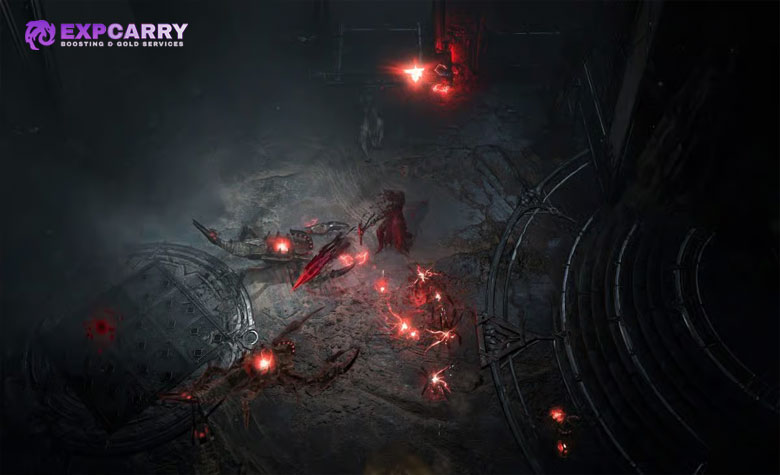
A build is ready when its entire combat loop works against one durable target. Test that condition before optimizing for the maximum portal setting. The following checklist is more useful than copying a high-damage screenshot because it exposes the reasons a build fails.
- Defenses are appropriate for the current Torment setting before adding another relative tier.
- The main damage loop works without requiring constant trash kills or several Elite packs.
- Primary Resource remains stable through an extended boss fight.
- At least one defensive skill or reliable emergency layer is available.
- Movement is sufficient to leave telegraphed danger without consuming every cooldown.
- The build has a practical recovery plan after taking damage.
- Cooldowns return consistently instead of relying on perfect random triggers.
- Damage remains meaningful while the player repositions.
- Consumables and equipment are checked before entering the portal.
For a speed-farming setup, the simplest conversion is often one or two swaps rather than a complete rebuild. Replace an effect that only triggers from dense packs with single-target damage, resource stability or defense. Keep the original setup available for Overland farming and use the boss variant inside the portal if the final interface and access rules make swapping practical.
Season 15 systems may change the calculation. Soul Splinters shown on PTR combine powerful benefits with substantial drawbacks, and final balance can change skill values or item interactions. Test the whole character after every major change. A damage bonus that breaks resource generation or removes too much mobility can make the boss build worse despite raising its tooltip damage.
Solo and Group Strategy
Solo players control the pace and can judge difficulty entirely by their own build. On the first live encounter, choose the lowest available Challenge Dungeon setting that fits your current Torment progression, identify the boss attacks and only raise the selection after a clean clear. Save major cooldowns until you understand whether the final boss has phases, immunity windows or dangerous transitions; none of those details is confirmed yet.
In a group, agree on the relative difficulty before entering and check that every member is ready for it. Avoid building the party around PTR mechanics. Instead, cover universal needs: consistent boss damage, recovery, movement and a way to survive sudden pressure. If one player provides a debuff or defensive effect, confirm that the benefit applies reliably to the final boss.
Blizzard has not confirmed party scaling, portal ownership, re-entry rules, resurrection limits or whether every member receives identical rewards. Those are launch-test questions, not details to fill with assumptions. Until the rules are known, the lowest-risk plan is to have the full group present and prepared before the portal is activated.
Best Progression Route Before Your First Challenge Dungeon
The correct preparation route begins on content your character can already clear. Establish a comfortable current Torment baseline, improve the weak part of the build and practice boss damage before choosing a Challenge Dungeon above that setting. A portal is not a reason to skip foundational progression.
- Choose a build that functions on one target and confirm its resource loop.
- Farm the current Torment setting until ordinary bosses and Elites are reliable rather than occasional successes.
- Cap or improve the defensive layers required by the live difficulty and your class.
- Prepare a second loadout or a small set of swaps for boss damage and survival.
- Enter the first live Challenge Dungeon at the lowest available option that matches your current progression.
- Raise the difficulty by one step only after the previous setting is controlled.
- Compare clear time and useful rewards before pushing toward the maximum of up to +3 Torment tiers.
Players who need help with existing dungeon progression can use a current Diablo 4 Dungeons service. It covers live dungeon content and should not be confused with an unannounced Challenge Dungeon service. The new activity needs final Season 15 rules before any provider can responsibly promise its difficulty, boss or rewards.
Do not spend rare materials solely to counter a PTR boss that Blizzard says will be replaced. Investments that improve general boss damage, defense, mobility and resource stability are safer because they remain useful even when the encounter changes.
PTR Encounters Versus the Final Season 15 Version
The patch 3.2.0 PTR ran from August 4 through August 11, 2026. Blizzard described its Challenge Dungeon encounters as content built specifically to test the underlying system. That language is unusually direct: the portal and the ability to raise encounter difficulty on Torment are the durable concepts, while the test bosses and their encounter details are not the final Season 15 version.
PTR videos can legitimately demonstrate that portals existed, that a player entered a boss fight and that the difficulty system supported up to three relative Torment steps above the player's current difficulty. They cannot confirm the final boss roster, exact mechanics, counters, portal frequency, rewards or best build. Even a flawless PTR clear is not a verified live route.
Blizzard also said the PTR intentionally withheld parts of Season 15 and pointed players toward BlizzCon for more information. The official BlizzCon 2026 page lists the event for September 12 and 13, so the article should be updated after any Diablo IV announcements made during BlizzCon and again after the live patch. Until then, the status labels in this guide are more reliable than confident predictions.
Diablo 4 Challenge Dungeons FAQ
These answers cover the system Blizzard has actually described and preserve the line between confirmed rules and PTR-only observations.
Where do Challenge Dungeon portals appear?
Blizzard says they open in the Overland across Sanctuary. Exact regions, coordinates, map icons and spawn rules have not been announced.
How many Torment tiers above my difficulty can I select?
On Torment difficulty, you can set a Challenge Dungeon fight as high as three Torment tiers above your current difficulty. The final selector layout and behavior at the top of the live ladder still need confirmation.
Does a higher Challenge Dungeon tier change my world difficulty?
Blizzard describes a selectable boss-fight difficulty on Torment. It has not said that the choice permanently changes the difficulty of every activity in Sanctuary.
Do rewards increase at every Challenge Dungeon tier?
Blizzard says greater intensity grants greater rewards, confirming the overall relationship between difficulty and payout. It has not published a per-step curve, exact item quantities, drop odds or a guarantee for any named reward.
What is the best Challenge Dungeon build?
Prepare a boss build with reliable single-target damage, stable resources, strong defenses, recovery and mobility. A final named tier list should wait for the Season 15 balance notes and live bosses.
Are the PTR Challenge Dungeon bosses final?
No. Blizzard explicitly says the PTR encounters were built to test the underlying system and that the final Season 15 experience will feature different content.
Can Challenge Dungeons be played in a group?
The pre-release overview does not publish complete party rules, scaling, portal ownership or resurrection behavior. Wait for the final notes before treating PTR group behavior as permanent.
Are Challenge Dungeons the same as Nightmare Dungeons?
No. Challenge Dungeons use Overland portals and lead to boss encounters. On Torment difficulties, their encounter difficulty can be raised relative to your current difficulty. Blizzard does not describe them as Nightmare Sigil dungeons.
Conclusion
Diablo 4 Challenge Dungeons add a clear endgame test: find an Overland portal and enter a boss encounter. On Torment difficulties, Blizzard confirms that the encounter can be set as high as three Torment tiers above your current difficulty. Greater intensity is confirmed to improve rewards, but Blizzard has not yet supplied the exact selector layout, spawn map, frequency, final bosses, numerical scaling or loot table. Those missing details should remain unknown rather than being copied from the PTR.
The best preparation is a class-appropriate boss build with repeatable single-target damage, stable resources, defense, recovery and mobility. Learn the final encounter at the lowest available setting appropriate to your current progression, raise the difficulty one step at a time and compare reliable rewards per minute instead of forcing the maximum immediately. Update the build and farming route after Blizzard reveals the final Season 15 encounters and after live players can test the real portal and reward rules.