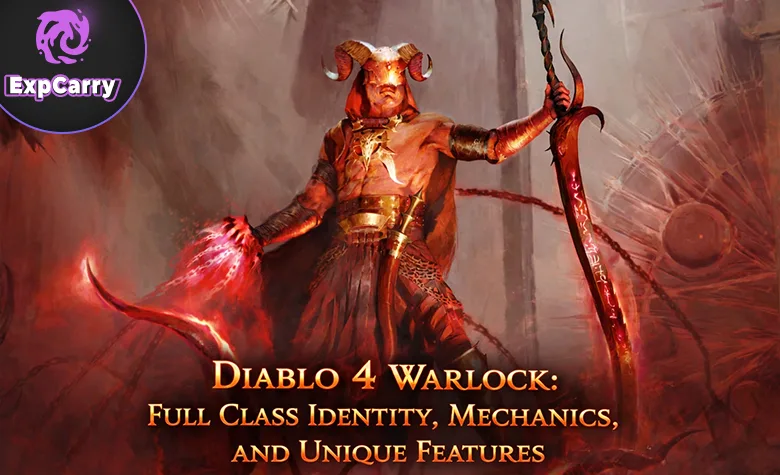
The Warlock is one of the clearest class fantasy statements Blizzard has made for Diablo 4. This is not just another dark caster added to fill out the roster. The class is built around a harsher idea: a spellcaster who drags power out of Hell, binds demons by force, and survives through enough discipline to resist corruption. Blizzard's own reveal keeps returning to the same point for a reason: the Warlock is not a servant of Hell, but its bane.
That distinction matters because surface-level comparisons are easy and mostly wrong. The Warlock is not just a darker Sorcerer, and it is not a Necromancer with demonic visuals. Its identity is built around coercion, infernal rituals, battlefield pressure, and control under strain. Every confirmed part of the class reveal points back to that same center. At the same time, the class is still unreleased as of this writing, so any judgment about final endgame strength or real build hierarchy would be premature. What can be judged already is the design direction, and that direction is unusually coherent.
Warlock identity and class fantasy in Diablo 4
The Warlock's uniqueness starts with identity before numbers ever enter the conversation. Blizzard ties the class to forbidden demonology, the Vizjerei legacy, and the aftermath of the Sin War. Demon summoning was outlawed, its practitioners were hunted, and what survived did so through hidden knowledge, broken traditions, and dangerous rituals. That is not just decorative lore. It explains why the class feels unstable, predatory, and constantly under pressure rather than calm or ceremonial.
The strongest part of the reveal is that Blizzard did not blur the fantasy into generic darkness. Infernal power is shown as painful, dangerous, and always close to backlash. A Warlock studies the exact force most likely to destroy them, then survives by mastering it before it masters them. That creates a different emotional tone from Diablo 4's other casters. The Sorcerer expresses arcane control. The Necromancer imposes order on death and decay. The Warlock weaponizes Hell itself through domination, subjugation, and calculated risk.
The summons matter for the same reason. They are not framed as companions or friendly helpers. They are bound instruments of violence. That keeps the class from sliding into a standard pet-class fantasy. The Warlock does not fight beside demons in partnership. The Warlock forces demons into service and turns them into disposable weapons. That is a much cleaner concept than a vague "dark mage with minions," and it gives the class a real lane of its own inside Diablo 4.
Warlock mechanics that make the class stand apart
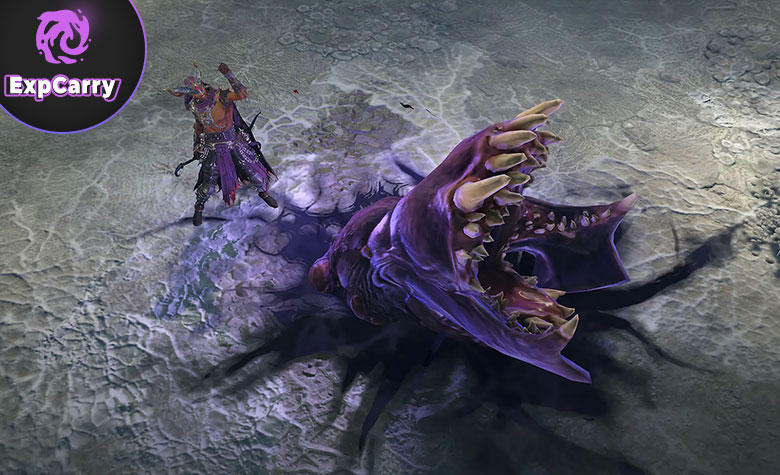
The reveal supports that fantasy with mechanics instead of leaving it at the lore level. Warlock uses two resources: Wrath and Dominance. Wrath fuels direct skills, while Dominance is spent on summoning demons and using their abilities. That split immediately separates the class from a flat one-bar caster model. Even before full release testing, the design intent is obvious: the class is meant to balance personal spell output against demonic control instead of treating summons as passive decoration.
The keyword set reinforces the same design language. Hex, Eviscerate, Shadowform, Demonform, and Volatility are not random flavor terms. They point to the class's real pillars: curse pressure, bleeding punishment, shadow movement, infernal transformation, and unstable Hellfire empowerment. The confirmed skill list also shows real range inside that identity. The Warlock already has curses, direct Hellfire attacks, shadow tools, demon commands, ritual sigils, transformations, and large summon effects. The kit does not read like a one-note summoner, and it does not read like a renamed caster either.
Soul Shards and archetypes
The Warlock's biggest differentiator is the Soul Shard system. Blizzard has already confirmed that the class mechanic unlocks at level 30 and lets the player choose one of four Soul Shards. That choice defines the demon linked to the Warlock and establishes the core of the build. This is the point where the class stops being a broad infernal caster and starts becoming a more specialized expression of that same identity.
Blizzard has also outlined four official archetypes through the Soul Shard system, and they matter because they show range without breaking the class fantasy. Each path emphasizes a different form of infernal control rather than abandoning the core idea.
| Archetype | Core direction | What it emphasizes |
|---|---|---|
| Legions | Swarm pressure | Relentless lesser demons, expendable bodies, battlefield flooding |
| Vanguards | Front-line infernal force | Demonform pressure, brute presence, aggressive occupation of space |
| Masterminds | Shadow control | Oppressive shadowcraft, positioning, stealth-linked pressure, manipulation |
| Ritualists | Occult setup and payoff | Blood-etched rites, Hex interactions, heavier ritual-driven damage loops |
That spread is important. It shows that Blizzard is not building the Warlock as a one-template class with cosmetic variations. The archetypes suggest several ways to express the same core fantasy: overwhelming with demonic numbers, becoming a monstrous infernal threat, locking down the field through shadow pressure, or leaning into ritual-driven curse play. That is exactly the kind of internal breadth a new class needs.
The progression path also makes sense structurally. The Disciple of the Forbidden class quest begins in Ked Bardu after level 15, while the full Soul Shard mechanic opens at level 30. That gives the class an early thematic anchor and a later specialization point instead of dumping the entire system on the player at once.
Why the Warlock already looks more distinctive than a standard dark caster
The Warlock looks unique for the right reasons. Its lore is specific. Its resource model is distinct. Its summons are framed as domination rather than companionship. Its keyword set is cohesive. Its Soul Shards appear to be a real class engine rather than a shallow passive choice. Most importantly, every major system Blizzard has shown serves the same idea instead of competing with it.
That does not automatically mean the class will ship perfectly balanced or become the strongest option in the game. Those are release and endgame questions, and they should not be answered before players have the class in their hands. But on identity, design direction, and thematic clarity, the Warlock already looks stronger than a simple "dark caster with demons" summary would suggest.
Explore services related to this guide, selected from our Diablo IV catalog.
View All Diablo IV Services

Conclusion
The Warlock stands out because Blizzard did not build it as a generic evil-flavored caster and then paste demon visuals on top. The class has a clear ideological core, a coherent resource model, and a system structure that supports its fantasy at every level shown so far. Wrath and Dominance separate direct spell use from infernal control. Soul Shards push the class into real archetypal specialization. Demon summons are framed as bound weapons, not allies. Even the class quest and progression timing reinforce the sense that Warlock power is something dangerous, learned in stages, and never fully safe to wield.
That is why the Warlock already feels more interesting than a simple reveal summary might suggest. Even before release balance, itemization, and endgame testing, the class has a sharper internal logic than many ARPG classes that rely on broad dark-magic aesthetics without mechanical identity. If Blizzard delivers on the systems exactly as outlined, the Warlock should land not as another variant of an existing caster, but as one of Diablo 4's most clearly defined class fantasies.