Grand Theft Auto 6 releases on November 19, 2026, exclusively on PlayStation 5 and Xbox Series X/S. After more than a decade and multiple delays from its original 2025 window, the successor to one of the most successful entertainment products ever made is no longer a concept. It has confirmed protagonists, a confirmed setting, confirmed mechanics, and a date Rockstar has publicly committed to. What separates GTA 6 from everything before it is not just scale. It is a structural rethinking of how an open world functions: how protagonists carry a story, how the game registers crime and consequence, and what player freedom actually means when the world around you is smart enough to notice what you do with it.
The State of Leonida and What Makes This Map Different
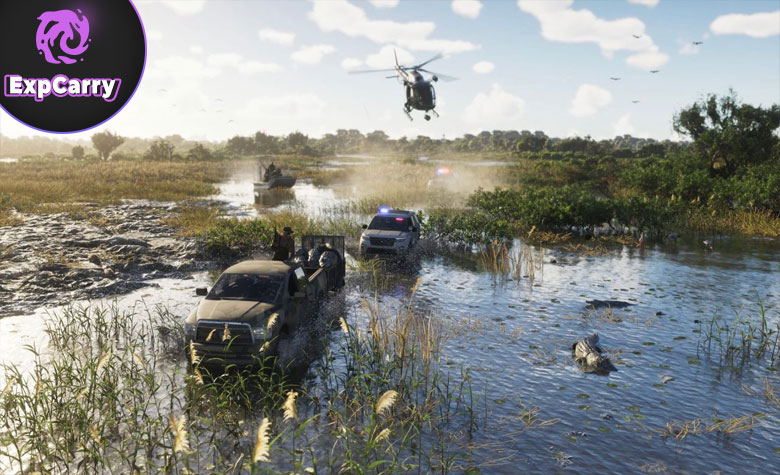
GTA 5's Los Santos and Blaine County was built for hardware that was already constrained on release day in 2013. GTA 6 builds its world in Leonida, a fictional state based on Florida. Vice City anchors the map as the central urban zone, but the world extends well beyond city limits. Confirmed regions include Grassrivers, the Leonida Keys, Port Gellhorn, Ambrosia, and Mount Kalaga National Park. Fan mapping projects working from trailer footage and the 2022 source code leak estimate the total map at roughly 1.5 to 2 times the combined size of Los Santos and Blaine County. That raw scale is not the most significant change. What matters more is what Rockstar put inside it.
Over 700 enterable interiors have been confirmed by development materials. GTA 5 locked almost everything behind mission triggers. If the story did not take you inside a building, the building did not exist as a space you could actually enter and move through. GTA 6 distributes that interior access across the open world itself, covering commercial properties, residential buildings, and industrial facilities. This changes the map from a surface you drive across to a volume you move through. A player can scout a location from outside, identify what is worth taking using Jason's confirmed scanning ability, and plan an approach before making contact. Pre-mission reconnaissance becomes a genuine option because the spaces missions take place in exist during free roam, not only during scripted sequences.
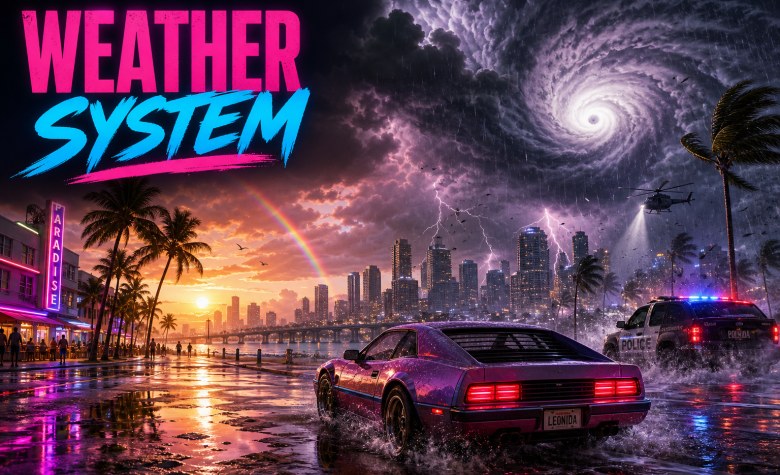
The terrain variety across Leonida is also designed to produce genuinely different gameplay situations rather than just visual contrast. Vice City's dense urban grid operates differently from the rural backroads of the Keys or the open terrain around Mount Kalaga. Dynamic weather confirmed for the game affects visibility and NPC behavior, including police response, in ways that make location and timing relevant decisions rather than cosmetic ones. Wildlife moves through the environment on its own schedule. Take-Two leadership confirmed every environment in Leonida is handcrafted, meaning no procedural shortcuts were used to fill out the territory between major locations. The space between regions was built deliberately, not generated to pad the distance.
Lucia and Jason - A Different Kind of Criminal Story
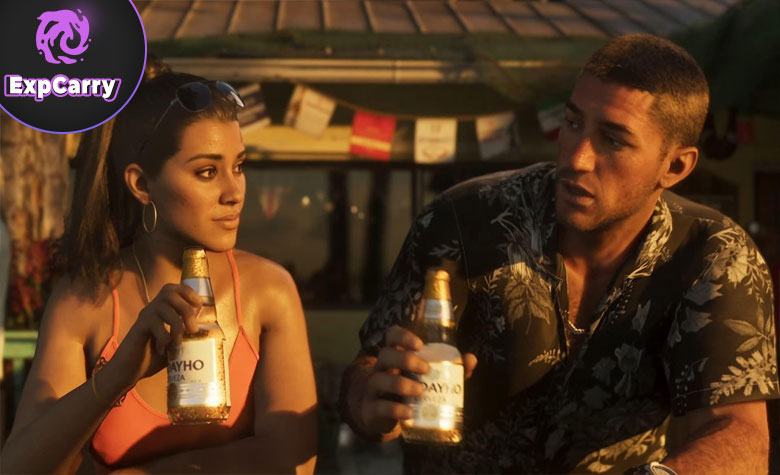
GTA 5 ran three protagonists across parallel story lines that converged at key plot points. GTA 6 does something structurally different. Lucia Caminos and Jason Duval are not parallel leads who occasionally meet. They are an interlocked pair from the opening of the game, with shared consequences running through both characters rather than separate threads that cross when the story demands it. Rockstar frames their setup explicitly as Bonnie and Clyde - a criminal duo bound together by circumstances neither fully controls.
Lucia is the first female protagonist in the mainline Grand Theft Auto series. Her background is specific: she grew up in Liberty City, served time in Leonida Penitentiary, and is described by Rockstar as someone who wants the good life her mother always dreamed of - and is prepared to take it by force rather than wait for it. Jason's story runs on a parallel track. He grew up around grifters, joined the military to escape that background, and ended up working for drug runners in the Leonida Keys before meeting Lucia. Rockstar describes their meeting as potentially the best or worst thing to ever happen to him. That framing sets up a story that is personal and high-stakes in a way GTA 5's loosely connected trio never quite managed.
On the gameplay side, the dual-protagonist system takes what GTA 5 built and makes it faster and more tactical. Current-gen SSD speeds allow near-instant switching when Lucia and Jason are in the same location. Weapons and items can be passed between them in real time. A Trust meter governs performance during high-pressure moments: higher Trust means both characters respond more effectively during heists and chases, which gives the relationship mechanical weight rather than just narrative weight. During robberies, one character handles a different part of the situation while the player controls the other. The split is tactical, not cinematic. Heists become coordination problems where both protagonists' positions matter.
Lucia's Combat Abilities and What Sets Her Apart
Lucia has a confirmed tactical ability that functions as a slow-motion burst during combat, improving precision and increasing damage output against armored targets. Jason's profile sits on a different axis - his scanning ability lets him identify valuable targets inside buildings before entering, making pre-mission reconnaissance something the character does within the game's mechanics rather than something the player does by looking at a walkthrough. The two protagonists are designed to bring different strengths to the same situations. Choosing who to lead a mission with affects the approach, not just which cutscene plays at the end.
Police, Witnesses and How Consequence Actually Works in GTA 6
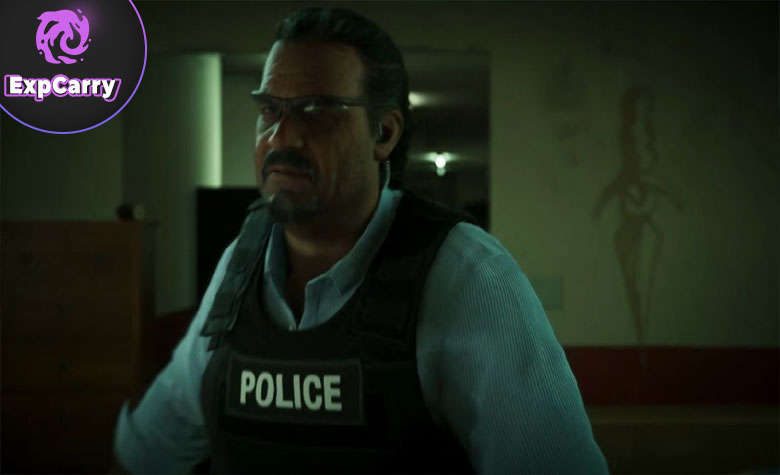
The wanted system in GTA 5 was, by its own standards, forgiving. Leaving the search radius and waiting was almost always enough to reset the situation. GTA 6 replaces that loop with a system modeled closer to Red Dead Redemption 2's approach to crime and recognition. The six-star wanted level structure returns, but the mechanics underneath it are fundamentally different at every tier.
At two stars, police prioritize non-lethal responses and attempt to de-escalate before using force. Surrender mechanics appear in the series for the first time, meaning lower-level confrontations have an exit that does not require shooting or running. At higher wanted levels, law enforcement escalates through roadblocks, K9 units, aerial surveillance, and coordinated tactical formations that adapt to player behavior rather than cycling through preset attack patterns. FIB and NOOSE equivalents deploy at the top tiers. Every chase is designed to feel different because the police response adjusts to what the player is actually doing rather than what a difficulty setting predicts they will do.
The witness mechanic is the structural change that makes the whole system work differently from any previous GTA entry. NPCs can report crimes and provide descriptions that include the suspect's appearance and vehicle. Surveillance cameras cover specific areas of the map and can be identified and disabled during pre-mission planning. If a witness sees Lucia but not Jason during a robbery, only Lucia's description circulates in that district afterward. Police can scan license plates and recognize repainted vehicles, which means changing the plate itself - not just the color - is required to break identification. The mechanic gives players tools to manage information flow after a crime rather than just distance from the scene.
The freedom question sits inside that system. GTA 6 does not restrict what players can do. It gives the world a memory. Committing a crime is no longer resolved by crossing a line on the minimap. It starts a process that can be managed, manipulated, and potentially contained - but only if the player understands how the recognition system works and acts on that understanding before witnesses reach law enforcement. That is more freedom in practice, not less, because it gives players a problem worth solving rather than a timer to outlast.
Stealth, Combat and the Systems That Change How You Move Through the World
GTA 5 had stealth in name. In practice, most missions had a loud approach and a stealth approach, with stealth rarely paying off compared to direct action. GTA 6 confirms stealth mechanics at a structural level. Players can now crawl prone, which changes approach angles and reduces detection risk in ways that were not available before. Zip ties allow NPCs to be restrained without killing them - relevant both for mission outcomes and for how witnesses are managed after a crime. Human shields are a confirmed tactical option. Bodies can be carried and repositioned. The melee system has been updated with under-fire animations and the ability to switch weapon hands, giving close-quarters combat more adaptability than the static melee options in GTA 5.
The over 200 confirmed vehicles each have distinct handling models rather than a shared physics template with different skins. A pursuit in Vice City's urban grid handles differently from the same speeds on a backroad through the Keys. Interiors on vehicles are fully detailed. Damage modeling on collisions goes beyond visual dents to structural changes that affect how a vehicle performs after an impact. This is not aesthetic detail - it creates real decisions about which vehicle to use for which situation.
The in-game social media feed adds something the series has not used before as an active mechanic. Player actions can surface in Leonida's simulated short-video platforms, creating a feedback loop between what the characters do and how the world inside the fiction registers it. GTA 5 used radio and television to mock media culture from the outside. GTA 6 puts that satire into the moment-to-moment experience of moving through the world. A chase, a robbery, or any action that generates witnesses in a crowded area can become content within the game's internal media ecosystem, with potential consequences that extend beyond the immediate police response.
Character appearance changes progressively through gameplay. Facial hair grows over time, reflecting actual days spent in the world. A fitness system tied to how characters spend their time affects both appearance and physical performance. These are not menu-based customization options - they are the result of how the player actually uses the game. Two players who reach the same story point can have characters who look and perform differently based entirely on how they spent the time between missions.
Final Thoughts
GTA 6 arrives November 19, 2026, and the surface-level read is predictable: bigger map, better graphics, more to do. The confirmed details point to something more specific. Rockstar built Leonida around density and consequence rather than scale for its own sake. Over 700 enterable interiors, reactive weather, a witness system with genuine mechanical teeth, and stealth that is actually worth using represent structural changes to how the open world functions - not cosmetic upgrades to a formula that already worked.
The answer to whether GTA 6 offers more freedom or less is that the question itself misses the point. The physical space is larger. The number of things to enter and interact with is much higher. The number of approaches to any given situation has expanded significantly. But the world now pushes back in ways it did not before. What you do leaves traces. The police adapt to what they observe. Witnesses carry information players have to manage. The city watches itself. That is the shift Rockstar is making: from an open map where chaos is the default state to a living environment where chaos has an ecosystem around it. Whether these systems hold together under real gameplay pressure will only become clear on release day. But everything confirmed points toward a game that treats open-world design as a craft problem, not a content-volume problem. That distinction alone is what separates GTA 6 from most of what came before it.