




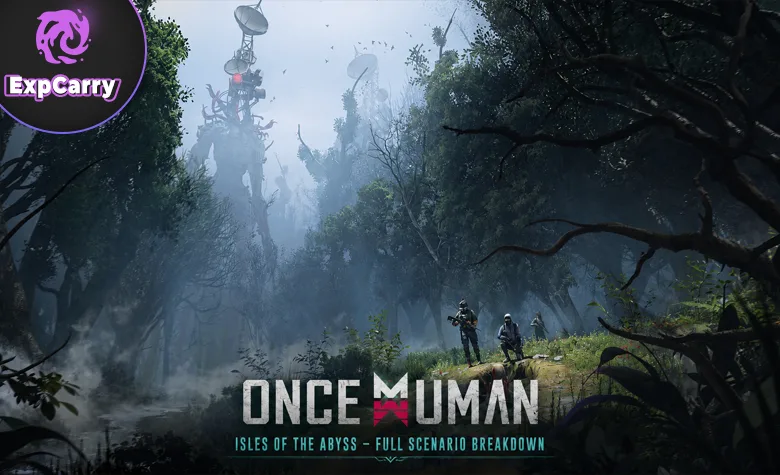
Once Human's newest survival scenario, Isles of the Abyss, is currently in its second Pioneer Confidential Test phase, active since June 17, 2026, as part of patch 2.4.2. The scenario abandons the continuous landmass design of all previous Once Human scenarios in favor of a scattered island-cluster ocean map with underwater resource systems, ship-based transit and artillery combat, and a two-phase world progression structure ending in an 8-player Legion Dungeon called the Sunken Lord. Developed by Starry Studio under NetEase, this is the most structurally distinct scenario the game has produced since its PC launch in July 2024. The Pioneer Test is a confidential, data-wiping limited access phase requiring a signed non-disclosure agreement from all participants, with feedback from both test rounds feeding directly into the adjustments made before the full public release.
Isles of the Abyss Pioneer Test - Access and Structure
The first Pioneer Test announcement for Isles of the Abyss went live on May 24, 2026, targeting 2,000 selected players from the North America region with a start date of June 17, 2026, and a duration of approximately 20 days. The test was classified as an online, data-wiping confidential test, meaning no character progress from the session carries forward to the main server when the test concludes. Players did not need to download a separate client - the Pioneer Test server is accessible through the existing Once Human client by switching via the Mode Switch button in the upper-left corner of the game interface. Mobile players were directed to download the current Pioneer Test resource pack through the in-game download center before accessing the server, and the development team specifically recommended PC participation due to the mobile performance adaptation for Isles of the Abyss not being fully complete during this test phase.
The second Pioneer Test launched on June 17, 2026, at 18:00 PT as part of patch 2.4.2, delivering the complete Isles of the Abyss map for testing. This second phase focuses on validating the core game loop, system stability, and early story pacing at a broader scale than the initial test. All participants in both tests were required to sign a non-disclosure agreement prohibiting the sharing of screenshots, video recordings, or live stream content during the test period. Violations trigger account bans, associated account restrictions, and potential legal action. The Pioneer Test is tracked to conclude around July 7, 2026, based on the 20-day duration from the June 17 start. Player feedback from both test phases will be referenced by the development team for scenario adjustments before the full public launch.
Island Exploration, Building, and the Survival Loop
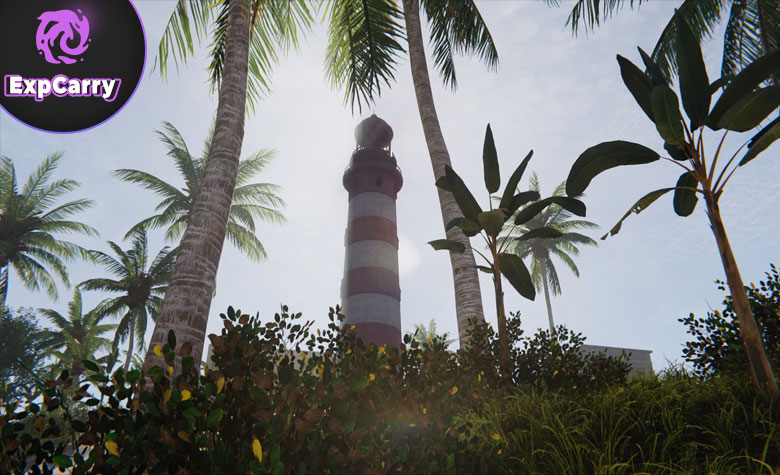
The Isles of the Abyss map replaces the open continuous world terrain of scenarios like Manibus or Endless Dream with a cluster of scattered islands spread across a large ocean. Players move between islands by ship, making nautical navigation a core part of the daily survival loop rather than an optional activity. Resource gathering extends into ocean and underwater environments, introducing biome-specific materials, facility types, and tech tree items specific to this scenario. Gear acquisition follows a redesigned progression pathway distinct from land-based scenarios, with island supply sources and new enemy types providing the materials needed to advance through the gear tiers. The scenario also incorporates dynamic weather and a standard day-night cycle that both actively influence gameplay conditions across the island clusters.
Base building follows familiar Once Human territory construction logic but adapts to the island-cluster geography. Territories are placed on island landmasses, and optimal placement depends on proximity to ocean resource nodes, Haywire Zone coverage radius, and exposure to nighttime threats. World Progress drives the scenario timeline - advancing it gates Phase II content, unlocks new Calamity Tower challenge variations, activates Calamity Zones, and ultimately controls when the Sunken Lord dungeon becomes available to the server population. Players also encounter Deviations in the wilderness across the islands and can engage and capture them through direct combat, consistent with Deviation mechanics from prior scenarios.
Day-Night Cycle and Escalating Enemy Threats
The Isles of the Abyss operates under a dynamic day-night cycle that directly modifies the intensity of enemy spawns across the entire island map. Daytime hours allow for standard exploration, resource runs, and base construction at typical threat levels. When night falls, significantly more dangerous enemy variants appear across the island clusters simultaneously, escalating the survival challenge for every player on the server at the same time. Players who are caught in the open on smaller islands without adequate gear preparation or defensive positioning during nighttime hours face substantially harder combat encounters than during daytime equivalent areas. This cycle structures the daily rhythm of the scenario - daytime for expansion and resource gathering, nighttime requiring either consolidated defensive play or a willingness to engage the harder enemy variants with appropriate gear.
Voyagers - Hostile Drifting Ships
Voyagers are procedurally generated hostile ships that cruise along randomized routes across the open water between island clusters. Players have two engagement options when intercepting a Voyager: destroy the vessel from a distance using ship-mounted artillery, or physically board it to loot the Loot Crates held within its facilities. Voyagers are categorized by size and internal facility quality, with both enemy difficulty and reward output scaling proportionally upward as ship size increases. Larger, more developed Voyagers carry significantly higher-tier Loot Crate contents, making the risk calculation of boarding versus ranged destruction a meaningful resource and progression decision. The randomized routing of Voyagers across the major waters of the world means encounters are dynamic rather than scripted, and players can encounter multiple Voyager types during a single sailing transit between islands.
Calamity Towers and World Progress in Isles of the Abyss
Calamity Towers are the primary large-scale challenge objectives of Phase I, located at sea and progressively activated as the server's collective World Progress advances. Once a tower activates, players must form a group, sail to the corresponding sea region, and engage the tower in combat. The first successful clear of any Calamity Tower on a server sends a rewards mail to every player on that server simultaneously, creating a shared achievement moment tied to the server's collective progression. That first clear also provides a direct boost to World Progress, compressing the timeline to Phase II entry and accelerating access to the next tier of scenario content for the entire server population.
Calamity Towers evolve as scenario progression advances. As both World Progress and Scenario Progress increase, each Calamity Tower generates new challenge variations that alter the encounter mechanics and difficulty from the initial clear. This means revisiting a previously cleared tower after hitting certain progression milestones provides a structurally different fight rather than the same encounter repeated. The evolving difficulty of Calamity Towers keeps sea-based challenge engagement relevant beyond Phase I, extending the content loop into the Phase II timeline alongside the Calamity Zone system.
Haywire Zones in Once Human Isles of the Abyss
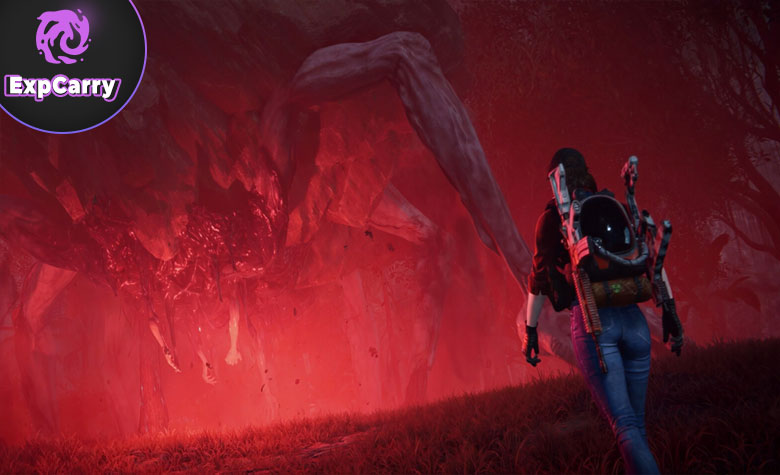
Haywire Zones are the scenario's dedicated survival event system, distributed across the island groups of the Isles of the Abyss. Each zone overrides standard gameplay mechanics within its boundary with a unique environmental rule set that forces players to adapt builds, item loadouts, and tactical priorities specifically for that zone type. Four Haywire Zone variants are active during the Pioneer Test phase, each targeting a different aspect of the survival loop.
| Haywire Zone | Core Environmental Rule | Primary Survival Priority |
|---|---|---|
| Mist of Deceit | Vision range tied directly to current HP | Health management plus light item usage to restore visibility |
| Skyfire | Active meteor impacts across a volcanic terrain region | Resource extraction from meteorite deposits under ongoing impact hazard |
| Time Rain | Accelerated plant/animal growth, accelerated item and gear degradation | Leveraging accelerated resource cycles while managing fast equipment wear |
| Black Tide | Cyclical Pollution surges stacking successive Pollution Zones | Adapting to each new Pollution layer's distinct survival rules as they compound |
Mist of Deceit
The Mist of Deceit Haywire Zone covers the affected island in persistent fog with a mechanic that directly links visual range to the player's current HP. As health drops, visibility shrinks, creating a compounding feedback loop where damage becomes progressively harder to avoid because the information needed to avoid it - enemy positions, terrain layout, threat directions - increasingly disappears from view. Light-based items and consumables are the designated counter mechanism, pushing back the mist in an area around the player and temporarily restoring usable visibility. Healing management in this zone is not just a survivability priority but a gameplay awareness priority: maintaining health above key thresholds preserves the situational awareness needed to continue fighting effectively. Players who approach Mist of Deceit as a standard damage-output encounter will find the visibility degradation creating an escalating disadvantage that compounds with each hit taken.
Skyfire
The Skyfire Haywire Zone converts a volcanic island region into an active meteor impact zone. Meteors fall continuously from the sky, reshaping the volcanic terrain on impact and distributing across the landscape as extractable deposits. The wealth embedded in these meteorite deposits is the zone's primary reward driver, making resource extraction under active environmental hazard the core objective rather than enemy elimination. Players navigating Skyfire need movement agility and terrain reading ability to work around impact zones while identifying and cracking high-value meteor deposits. The zone actively rewards aggressive, mobile play - staying in motion to exploit meteorite landing patterns - over stationary or defensive approaches that cede the extraction opportunity to the environmental hazard.
Time Rain
The Time Rain Haywire Zone applies a temporal distortion field across the affected island that simultaneously accelerates biological growth for all plants and animals and accelerates durability loss for all player items and gear. The gear degradation is the primary threat vector - equipment wears down at a rate substantially faster than normal, demanding either a supply of repair materials or strategic rotation of loadout pieces to prevent critical gear from failing mid-encounter. The accelerated biological growth cycle creates a tactical resource opportunity: the sped-up resource generation from affected flora and fauna can be exploited to meet the increased material demands generated by the faster degradation rate. Players who manage both effects together, using the accelerated growth to sustain gear repair rather than reacting to degradation as a separate problem, operate most efficiently within the Time Rain rules.
Black Tide
The Black Tide Haywire Zone brings Pollution surges in cyclical waves onto the affected islands. Each wave does not replace the previous Pollution Zone but layers a new Pollution Zone on top of the existing ones, with every successive layer carrying its own distinct set of survival rules. The stacking structure means complexity escalates continuously throughout the event - early stage layers impose manageable restrictions, but as the Black Tide cycles through successive pulses, players must simultaneously navigate multiple overlapping rule sets from all accumulated Pollution Zones at once. No single static build or strategy remains fully effective across all stacking layers, making adaptive gear and tactic switching a core competency for this zone type. The Black Tide is the most demanding of the four Haywire Zones in terms of required strategic flexibility.
Calamity Zones and Phase II Progression
After the scenario transitions into Phase II, Calamity Zones begin appearing across the world map as a consequence of energy disorder within the scenario's lore context. Each Calamity Zone spawns with a fully randomized internal layout - the structure, obstacle placement, and enemy composition change each time a new zone generates - and is populated by powerful combat units that require gear progression beyond standard island survival loadouts. Calamity Zones function as assault objectives: players must enter the zone, destroy all obstacles and threats within the randomized layout, and fully clear the zone to register a completion. Each cleared Calamity Zone contributes to the server's cumulative Purification Progress, a shared metric tracked across the entire active player population on that server. Purification Progress is not tied to any individual team's output but accumulates from the sum of all Calamity Zone completions by all players on the server.
As the server's Purification Progress builds toward 100% through collective Calamity Zone clears, the timeline to the Sunken Lord dungeon's emergence accelerates. The server-wide dependence on aggregate player activity for Purification Progress means active server populations reach the Sunken Lord threshold faster, while lower-activity servers take longer regardless of individual team performance. This system gives the broader server community a shared stake in the Phase II progression pace.
The Sunken Lord - 8-Player Legion Dungeon
The Sunken Lord is the endgame Legion Dungeon of Isles of the Abyss and the scenario's raid-tier boss encounter. It requires exactly 8 players to enter and becomes accessible only after Phase II has begun and the server's Purification Progress reaches 100% through combined Calamity Zone completions. The 100% threshold makes the Sunken Lord's emergence a server-wide event rather than a milestone any single team can reach independently - the dungeon unlocks for the entire server population simultaneously once the collective progress total is achieved. The encounter is designed to demand gear and coordination levels that go beyond what the standard island survival loop and Haywire Zone content require, positioning the Sunken Lord as the terminal gear and group capability checkpoint of the scenario's full content chain. Clearing Calamity Zones efficiently to reach the Purification threshold faster is therefore directly tied to earlier dungeon access for the most progression-focused players on any given server.
Ship-Controlled Artillery and Naval Combat
The Isles of the Abyss introduces active naval combat through a Ship-Controlled Artillery system. While a ship is in motion, players can open a weapon selection interface via the ship's wheel to designate one of the available artillery pieces mounted on the vessel. The selected artillery piece can then be aimed and fired while the ship continues moving, allowing players to engage sea targets, intercept Voyager vessels, and strike coastal enemy positions without stopping. The combination of simultaneous movement and weapon control creates a naval combat dynamic that distinguishes ocean engagement from standard on-foot combat - positioning, approach angle, and lead targeting all factor into effective artillery use at sea in ways that have no direct equivalent in land-based Once Human combat.
The artillery system integrates directly with Voyager random event encounters and with ocean-based threats patrolling the waters between island clusters. The capability of a player's ship - specifically the quality and selection of available artillery - determines how aggressively open-water content can be engaged. Better-equipped ships can pursue higher-tier Voyagers, take more direct sea routes through contested zones, and sustain combat against multiple threats simultaneously. Ship combat investment functions as a parallel gear progression track to standard land-based loadout development.
First Person Mode Pioneer Test
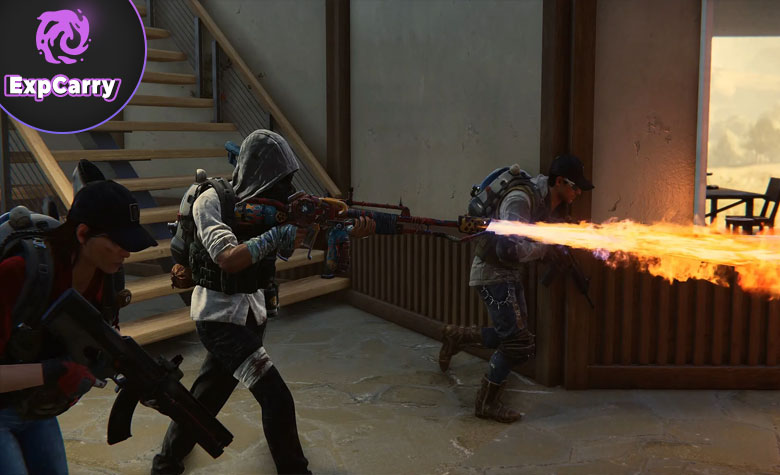
Patch 2.4.2 launched a simultaneous but separate First Person Mode Pioneer Confidential Test on June 10, 2026, running for 7 days in the Manibus and Endless Dream scenarios. This test introduced a full first-person camera as a switchable alternative to the standard third-person view, affecting how every core gameplay system feels to operate. Shooting and reloading shift from watching a character animate at a distance to a hands-forward perspective where the weapon fills the lower field of view. Melee threat range estimation changes substantially - the third-person camera's peripheral awareness is replaced by a more restricted forward cone of vision, making spatial awareness during close-quarters combat a different skill requirement. Exploration of familiar areas like Manibus takes on a noticeably different character from the closer perspective, and basic survival actions including consuming items and throwing objects gain additional physical immediacy in first person.
Participants in the First Person Mode test received supplemental initial Supplies, Gear Blueprints, and Gear Mods distributed by the development team specifically to ensure full content access throughout the test period without gear bottlenecks limiting what modes could be tested. Players could switch freely between first-person and third-person at any point during gameplay. Isles of the Abyss itself was not available in first-person mode during this test phase - the mode was limited to Manibus and Endless Dream only. The test ran from June 10 to approximately June 17, overlapping with the start of the Isles of the Abyss second Pioneer Test.
Patch 2.4.2 Live Server Updates
The 2.4.2 update delivered several major additions to the live Once Human server for all players alongside the Pioneer Test launches, including a new account-wide cosmetics system, the S13 Battle Pass, a full overhaul of RaidZone team functions, and a terrain adjustment affecting the Chalk Peak West region.
Radiance Cosmetics System
The Radiance system is a new account-wide cosmetics progression layer that launched with patch 2.4.2 and is accessible via Cosmetics - Radiance in the game interface. Every cosmetic item obtained by an account contributes to that account's total Radiance value, which accumulates across all scenarios rather than being tied to any individual playthrough. The system currently operates with 9 Radiance levels open, with each level-up granting exclusive rewards including personalized badges and team name decorations displayed on the player's namecard and character window. A Radiance Shop provides additional cosmetic redemption options with different items unlocking based on the player's current Radiance level. Monthly Active Rewards provide bonus cosmetic currency to accounts that reach specific Radiance value thresholds within a calendar month, incentivizing consistent cosmetic engagement. All cosmetics obtained before the Radiance system launched were retroactively applied to existing accounts on first entry into the Radiance interface after the update, assigning the corresponding Radiance level and benefits without any manual claiming required.
The same patch also executed a terrain adjustment to the Chalk Peak West border area of Nalcott to prepare for the upcoming Western Isles region expansion. All player territories located within the adjustment boundary were automatically packed up during the maintenance window. Players in the affected area were required to manually relocate their territories after the patch went live. The adjustment is identified on an in-game map overlay showing the red-marked affected zone.
S13 Battle Pass - Indigo Mystic
Season 13's Battle Pass "Indigo Mystic" launched with patch 2.4.2 and runs until August 25, 2026. Unlike previous Battle Passes capped at level 60, S13 expands the reward track to level 200, with additional rewards unlocking every 5 levels starting from level 65, giving players a significantly extended progression runway. The extended level cap comes with a longer-than-standard run duration from June 10 to August 25 - the development team confirmed that Battle Pass S14 onward will return to the standard 2-month update cycle. The Advanced Edition includes the Epic Fashion Set "Indigo Mystic," the Epic Weapon Skin "Painted Screen Serenity - EBR-14," and the Rare Territory Furniture Pack "Stillnight Pavilion" series. The Luxurious Edition provides 15 instant Battle Pass levels on purchase plus exclusive rewards: the Epic Hype Rarity Territory Collectible "Firefly Lantern" and the Epic Cradle Cosmetics "Blossom Moon," along with a themed avatar frame and namecard. A limited-time 10% discount applies to the Luxurious Edition at launch.
The S13 update also includes a limited-time return of the Season 3 "Sailor's Spirit" Battle Pass cosmetics. Players who missed S3 can purchase the Stardust's Advent Bundle for 680 Crystgin, which includes the Epic Fashion Set "Enchanted Sails," the Epic Weapon Skin "Diamond Box - DE.50," and the Rare Furniture Pack "Pastoral Weave" series. Players with the S3 Advanced Edition unlocked can also redeem missed cosmetics via Silver Keys, with a built-in pity system guaranteeing acquisition of all rewards including the Epic Hype Territory Collectible "The Trio" within 25 attempts.
RaidZone Team Function Overhaul
The RaidZone cooperative team system received two core additions in patch 2.4.2. Squad mark sharing now makes any map marker placed by a squad member visible to all other squad members simultaneously in real time, appearing both on the world map and directly within the field of view of players in range. This closes the coordination gap that previously required external communication tools to convey supply locations, enemy positions, or strategic markers during RaidZone group play. The second addition is native in-game voice chat integrated directly into team mode, enabling real-time audio communication within the game client without requiring third-party applications. Both additions target the friction points in squad coordination that had been reported consistently in RaidZone group runs, particularly in squads without pre-established external communication setups. Custom Server hosts also received added control over weapon and armor durability loss settings, and daily caps on Battle Pass Exp gained through combat and non-combat methods were set at 3,000 points each per day, resetting at 06:00 server time.
Pioneer Test Rewards and Wish Emblem System
Participation in the Isles of the Abyss Pioneer Test is incentivized through Wish Emblems, a dedicated reward currency that carries over to the live server and can be redeemed in the Starwish Shop via the Event Interface regardless of the test's data-wipe conclusion. The sign-in campaign runs for 10 days within the test period with daily rewards for each login.
| Action | Reward | Notes |
|---|---|---|
| Daily login (days 1 through 10) | 100 Wish Emblems per day | Sign-in campaign lasts 10 days total |
| 7th consecutive daily login | Jade Nocturne (exclusive cosmetic) + 100 Wish Emblems | Exclusive to Pioneer Test participants, not available post-launch |
| Reach Tech Level 10 | 300 Wish Emblems (one-time bonus) | Independent of sign-in progress, claimed at the milestone |
Wish Emblems are issued directly to the account and shared with the live server immediately upon claiming, meaning they are spendable in the Starwish Shop while the Pioneer Test is still running. Players who complete all 10 days of sign-in and reach Tech Level 10 accumulate 1,300 Wish Emblems total from those two sources before counting the Jade Nocturne cosmetic on day 7. An additional feedback event runs on the Pioneer Test Server with its own point system and reward structure, with specific participation methods and point rules announced separately through official Pioneer Test channels. The development team framed Pioneer Test participation as one of the primary methods going forward for testing major Once Human update content before full public release.
Final Thoughts
Isles of the Abyss is not an incremental update to the Once Human scenario formula - it is a full structural pivot. Every prior scenario, from Manibus to Endless Dream to The Way of Winter, operated on a continuous landmass with enemies, biomes, and events scaling outward from a central progression framework. Isles of the Abyss breaks that template by making the ocean itself the core gameplay space, with ships as the primary transit and combat system, underwater environments as a distinct resource layer, and Haywire Zones that impose rules with no precedent in previous scenarios. The two-phase Purification Progress structure leading to the Sunken Lord raid creates a collective server-wide endpoint that ties individual Calamity Zone clears to a shared unlock condition - a progression design that distributes the responsibility for end-game access across the entire active server population rather than concentrating it in the hands of the most coordinated teams.
The Pioneer Test data will shape the final release considerably. Two test phases in quick succession, moving from a 2,000-player limited North America test to a full-map second test with complete content coverage, indicates rapid scope expansion between iterations. When Isles of the Abyss launches publicly, it will arrive as a scenario already refined through active player testing. For Pioneer Test participants, the Wish Emblem cosmetic currency transfers to the live server intact regardless of when the public scenario launches, making participation a tangible investment in their account's cosmetic progression beyond the test period itself.