




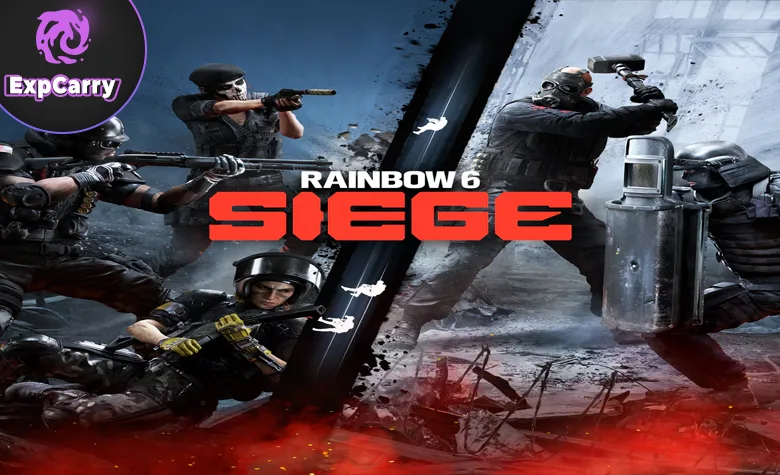
Operation System Override, the 41st expansion for Rainbow Six Siege, went live on June 2, 2026 as Year 11 Season 2 and packed more structural change into a single season than most R6 updates manage in a year. Ranked 3.0 tore out the hidden MMR system that has frustrated players since the game launched, replacing it with a fully transparent 40-rank ladder where your visible rank is exactly what the matchmaker uses. Calypso Casino landed in the ranked pool on day one - a ground-up Siege rebuild of the fan-favorite map from Rainbow Six Vegas (2006). Dokkaebi received a full gadget redesign replacing the mass-spam Logic Bomb with the targeted Jegeo Payload, a device that can physically destroy a Defender's phone and strip phone-dependent operators of their gadgets for the rest of the round. The XK23 assault rifle, flank watch buffs for four operators, visual modernization for three maps, and console mouse-and-keyboard support round out a season that reshaped several core systems simultaneously.
Ranked 3.0 in Rainbow Six Siege - The Full System Breakdown
The core premise of Ranked 3.0 is the complete removal of hidden MMR. Under the previous system, the rank displayed on a player's card and the actual matchmaking value used to build lobbies were two separate numbers - and the gap between them was the source of endless complaints about Silver players landing in Diamond lobbies or Gold players being matched against Emeralds. That split is gone. In Ranked 3.0, Rank Points are the rank. The number on your card is what the matchmaker uses to find your games, and nothing else is running behind it. The post-match report now explicitly shows RP changes after every match, with the gain or loss figure broken down clearly so there is no ambiguity about what happened to your rank or why.
The ladder itself now runs 40 ranks. The eight tiers are Copper, Bronze, Silver, Gold, Platinum, Emerald, Diamond, and Champion. Every tier has exactly five divisions (V through I), including Champion, which previously had no divisions and simply served as a leaderboard. Under Ranked 3.0, Champion I houses that leaderboard, showcasing the highest-performing players. RP gains and losses after each match are calculated based on two factors: match outcome and the relative rank balance between teams. Beating a stronger team returns more RP than an equivalent result against a lower-ranked team. Losing to a lower-ranked team carries a proportionally larger penalty. When squads contain large rank gaps between members, the system weights the team closer to the higher-ranked player to reflect the squad's actual competitive strength, and RP gains and losses adjust accordingly.
Placement Matches and Seasonal Starting Rank
At the start of each season, players complete 5 Placement Matches before receiving a starting rank. These matches use accelerated RP gains specifically to help players return to roughly the level they occupied at the end of the previous season without having to grind back through ranks from scratch. Placement Matches do not apply squad restrictions - players can queue with friends of any rank during the five placement games regardless of tier difference. Once the placements conclude, the player receives their starting rank and continues on the normal RP progression track with standard squad restrictions active from that point forward.
Squad Restrictions by Division
Squad restrictions in Ranked 3.0 apply after the placement phase ends and are split by rank bracket. Players in Copper through Emerald can queue with teammates within 3 full ranks of their own rank. Players in Diamond and Champion are limited to teammates within 2 full ranks. The restrictions are intended to prevent extreme rank disparities within a squad from distorting the skill level of the lobby they enter, which was a consistent complaint under the old hidden MMR system where a Champion could effectively carry a Bronze into Champion lobbies. During Placement Matches, these restrictions are lifted entirely to allow free queuing with friends regardless of current standing.
Competitive Rewards Track - Full Milestone Table
Every ranked match now contributes to a seasonal Competitive Rewards track. Players earn 2 points for a win and 1 point for a loss, with a new reward unlocking every 10 points accumulated. The track runs to 150 points and includes Competitive Coins, Alpha Packs, cosmetic items, and seasonal headgear. Rank-based rewards - the seasonal charm and card background - are tied to the highest rank reached during the season and are delivered at the start of the next season, even if the player deranks before the season ends.
| Points Milestone | Reward |
|---|---|
| 10 | 2500 Competitive Coins |
| 20 | 2 Alpha Packs |
| 30 | Card Background |
| 40 | 2 Alpha Packs |
| 50 | 4000 Competitive Coins |
| 60 | 2 Alpha Packs |
| 70 | 2500 Competitive Coins |
| 80 | Charm |
| 90 | 2 Alpha Packs |
| 100 | 3000 Competitive Coins |
| 110 | 2 Alpha Packs |
| 120 | 3000 Competitive Coins |
| 130 | 2 Alpha Packs |
| 140 | 5000 Competitive Coins |
| 150 | Seasonal Headgear |
Demotion Shield
The Demotion Shield mechanic carries over from previous ranked seasons and remains active in Ranked 3.0. If a player would normally lose enough RP to drop a division after a loss but started the match above 0 RP in that division, the system can instead hold them at 0 RP rather than deranking. This protection does not persist indefinitely - a player held at 0 RP will eventually derank if losses continue - but it absorbs individual bad games from turning into immediate deranks after pushing into a new division. The shield applies only when the player has RP above 0 at the start of the match.
Champion Divisions and the Season 3 Legend Division
Champion now functions as a full five-division tier (Champion V through Champion I) matching the structure of every other rank. The featured leaderboard that previously defined Champion as a standalone rank now lives at Champion I, displaying the highest-performing players in the tier. Ranked 3.0 also sets the groundwork for the Legend Division, planned to launch in Season 3 of Year 11. To qualify for Legend, players must reach Platinum rank or higher in Season 2 (this season) and then hit Champion in Season 3. The requirements also include enrollment in R6ShieldGuard Secure Platform and active app-based two-factor authentication. Legend will replace the current Champion I leaderboard format when it launches.
Calypso Casino Map - Layout, Bomb Sites, and Siegeline
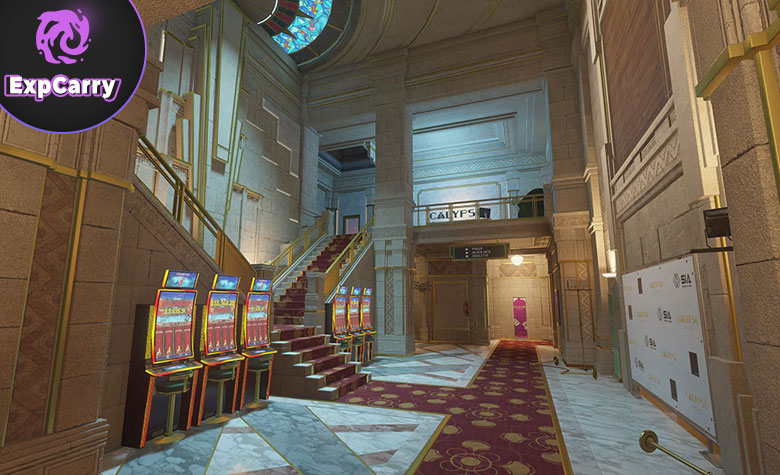
Calypso Casino is the first all-new map of Year 11 and the first map in the Siege pool with roots in Rainbow Six Vegas (2006) - specifically the mission map where Logan Keller, Michael Walter, and Jung Park cleared a $4 billion Las Vegas casino that had been seized by terrorists. The Vegas version became a multiplayer staple that returned for Rainbow Six Vegas 2, and the Siege rebuild was formally announced at the Six Invitational on February 15, 2026. The map was built entirely from scratch using Siege's modern destruction physics and competitive map design principles rather than being a direct port of the Vegas layout. Calypso Casino entered the Ranked pool immediately on June 2 alongside the season launch - no delayed rotation.
The structure is a multi-floor casino tower set in the heart of Las Vegas. The ground floor features poker, blackjack, and roulette tables across the main gaming floor. The second floor shifts to high-stakes tables, lounges, and private gambling areas for a noticeably different spatial character from the open ground level. The basement holds the Vault. The building has a construction area around its exterior that creates external navigation challenges for teams unfamiliar with the routes, particularly when approaching from angles beyond the main front door entry point. Calypso has been added to Ranked, Unranked, Quick Match, Team Deathmatch, Landmark Drill, and Clear House playlists.
Entry Points, Verticality, and the Drone Vent Network
The most significant structural addition over the original Vegas map layout is the rooftop crane, which provides attackers with a dedicated vertical entry point at the top of the building and rappel angles down the exterior. The basement also has a spawn point positioned for scaling up the casino facade from below, creating a vertical attack vector from the opposite direction. Between the crane above and the basement exterior spawn, attackers have legitimate top-and-bottom pressure options that the original Vegas layout did not support. The interior drone vent network was expanded to span multiple floors, making vertical drone scouting viable across more of the building than a single-floor vent system would allow. Atrium angles and aquarium corridor rotates are the two named sightline clusters the Ubisoft level design team specifically flagged as the key angles to learn on this map. The construction areas around the exterior of the tower are functional but unforgiving for players approaching blind - there are cover choices and entry routes to learn but navigating them cold costs time and positioning.
Bomb Sites - Blackjack, Poker, and the Basement Vault
The Blackjack room on the second floor is one of the defined bomb sites. Ubisoft's preview noted it is straightforward to locate but difficult to penetrate, implying tight approach angles and limited breach options from the exterior. The Poker site sits on the ground floor amid the open gaming area. The basement Vault is the third distinct bomb site and plays very differently from the two upper sites - the basement environment is more enclosed, the sight lines are shorter, and the security camera setup in the area offers defenders passive intelligence coverage on the surrounding space when the Vault is not the active site. The multi-floor vent network means vertical drone placement through the casino structure is viable for reading all three sites before the round's action commits to one. Calypso Casino is the Showcased Map for the start of Season 2, meaning it occupies a reserved slot in the Map Ban phase rather than competing directly against the standard Pro Pool maps.
Map Ban Phase and the Showcased Map System
Operation System Override introduces the Showcased Map system alongside Calypso Casino. When a Showcased Map is active during a season, the Map Ban phase runs with 1 Showcased Map slot, 2 Pro Pool maps, and 2 Seasonal Pool maps instead of the standard format of 3 Pro Pool plus 2 Seasonal Pool maps. Calypso Casino is the first map to use the Showcase slot, guaranteeing it appears in every Map Ban phase at the start of Y11S2. New seasonal maps, including Calypso Casino, cannot be banned throughout the entire season - they remain in the pool unbannably until the full seasonal cycle completes. A Discovery playlist ran from June 2 to June 9 with Calypso Casino as the only available map, giving players a dedicated one-week window to learn the map before it fully integrated into the standard rotation. At mid-season, the Map Ban format will revert to the standard 3 Pro Pool plus 2 Seasonal Pool configuration.
Dokkaebi Rework - Jegeo Payload Explained
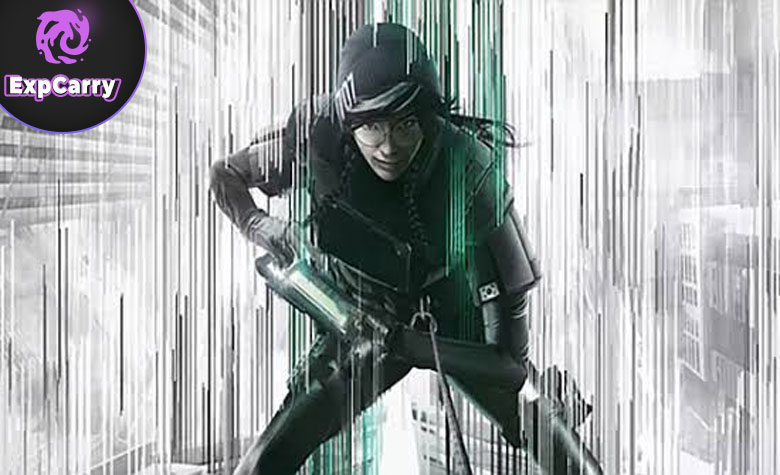
The Dokkaebi remaster replaces her Logic Bomb gadget entirely with the Jegeo Payload. The fundamental shift is from a mass-disruption tool to a precision weapon. The Logic Bomb activated all five Defender phones simultaneously, creating noise across the entire defending team and revealing position data. The Jegeo Payload targets a single Defender per activation using a targeting system that works like Deimos's DeathMark - Dokkaebi must first have a Defender scanned and identified, typically via drone, before locking the Jegeo call onto that specific operator. The call that the targeted Defender receives is shorter in duration than the old Logic Bomb spam, and the dismiss window is actually faster, meaning Defenders who react quickly can neutralize the threat. For those who do not dismiss it, the consequences are severe: the phone overheats and detonates, dealing 40 damage instantly and igniting a small fire at the Defender's location that deals additional damage if they stay put. The forced repositioning from the fire combines with the HP reduction to push the target into a disadvantaged position, often into a sightline held by Dokkaebi's team. More charges and a faster cooldown compared to the Logic Bomb mean Dokkaebi has more activation windows per round despite the single-target limitation.
Phone-Dependent Defenders and Gadget Loss
The most strategically significant consequence of a successful Jegeo Payload is gadget disabling. If a Defender's phone is destroyed by the explosion, that Defender loses access to all observation tools - cameras, drones, the minimap gadget layer - until they are eliminated or the round ends. Beyond observation tools, any gadget that relies on the Defender's phone for operation is disabled for the remainder of the round. Mozzie loses the ability to control stolen Attacker drones. Maestro cannot trigger his Evil Eye laser blasts remotely. Echo loses access to Yokai's ultrasonic burst. Fenrir can no longer interact with his F-NATT Dread Mines. Skopós cannot switch between shells. These are some of the most disruptive Defenders in the current meta, making them natural priority targets for Dokkaebi's Jegeo Payload calls. Dokkaebi also retains her legacy ability to hack the phones of eliminated enemies and access their cameras, updated in the remaster to work from a greater distance and through walls, though the intel window from this hack remains temporary rather than permanent.
XK23 Assault Rifle - New Primary for Three Operators
The XK23 is a new assault rifle built for short-to-medium range engagements and is free for all players from the start of Operation System Override without requiring any unlock. Dokkaebi, Rauora, and Sens all receive the XK23 as an addition to their primary weapon loadouts. For Dokkaebi specifically, the XK23 fills a gap - her existing primary options are the MK 14 EBR marksman rifle and the BOSG.12.2 shotgun, both of which require distinct range commitments. The XK23 gives her a flexible middle-ground primary that pairs better with the aggressive, information-directed pressure the Jegeo Payload is designed to enable. Sens and Rauora receive the XK23 as an additional option that broadens their primary choice beyond their existing rifles.
Operation System Override Operator Balance Changes
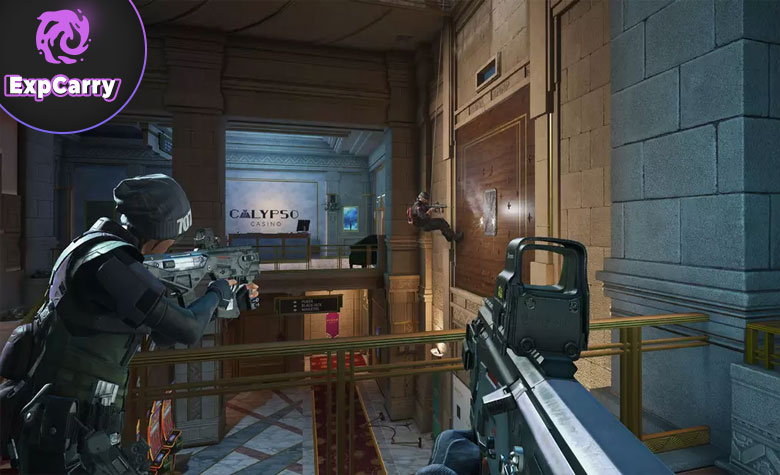
The balancing focus for Operation System Override centers on flank watch mechanics, with four Defenders receiving adjustments that strengthen the perimeter control tools Siege teams use to detect and deny roaming Attackers. Gridlock is the most significantly changed. Her Trax Stingers now deploy faster and are substantially harder to destroy, and Defenders who step in them suffer a 10-second limp debuff. The tradeoff is a reduced total quantity of Trax Stingers available per round - the individual stingers are burlier and more effective, but there are fewer to work with, which shifts Gridlock placement from a saturation strategy to a more deliberate one focused on critical chokepoints and angles. Players accustomed to laying broad Trax coverage will need to recalibrate. Pulse's Cardiac Sensor detection range has been increased, extending how far his heartbeat monitoring works without repositioning. Mozzie's Pest capture radius has also increased, making it easier for Mozzie to capture Attacker drones that pass near a deployed Pest unit without needing as precise a placement. Nomad's Airjab trigger range has been extended, and her AK-74M now supports grip attachments that were not previously available to her, adding recoil control options to a weapon she previously had fewer customization choices for.
Modernized Maps and Console Mouse-and-Keyboard Support
Three existing maps - Kanal, Outback, and Emerald Plains - received visual modernization updates in Operation System Override. The changes across all three include improved lighting and shadow rendering, updated 4K textures, visual enhancements to the overall environment art, and revisions to destructible ingredient placements. Modernized map updates do not alter the competitive layout or bomb sites - the changes are graphical and material quality upgrades rather than layout reworks. The modernization pass brings these maps closer to the visual standard of newer Siege maps while maintaining the callout structures and tactical geometry that competitive players have built years of game knowledge around.
Mouse-and-keyboard support for consoles is arriving as a mid-season update rather than at the Operation System Override launch. When it goes live, console players using a mouse and keyboard will be separated from standard controller lobbies and matched against PC players instead. Rotating trial operators also launched with the season - three new Attackers and three new Defenders cycle through free trial access each week, giving players the opportunity to test operator gadgets, playstyles, and utility kits without purchasing them first. The Dual Front playlist, which ran in previous seasons as a mode variant, has been removed from the playlist rotation in Y11S2.
Final Thoughts
Operation System Override is the season where Ubisoft addressed the single longest-standing structural problem in Rainbow Six Siege's ranked mode. Hidden MMR was never the only issue with the competitive system, but it was the most visible one - a shadow number that undermined player confidence in the rank they could actually see. Ranked 3.0's removal of it, combined with the new 40-rank ladder and transparent RP changes in the post-match report, closes the gap between what players believe their skill level is and what the game tells them it is. Whether the matchmaking quality actually improves in practice will depend on the player data that accumulates across the season. Calypso Casino, as a map, carries weight beyond being another new addition to the pool - it is the first piece of Rainbow Six Vegas to come into Siege directly, and whether Ubisoft pursues more of that franchise history in future seasons is worth watching. Dokkaebi's Jegeo Payload is the riskiest change of the season from a meta balance perspective: a gadget that can disable Mozzie, Maestro, Echo, Fenrir, and Skopós for an entire round has enormous potential value, and how defenders adapt to scanning awareness and faster call dismissal will define how dominant she becomes.