
Star Citizen 4.8 resets the early economy hard enough that the first million aUEC matters again. After the wipe, players lose earned aUEC, in-game resources, items, vehicles bought with aUEC, and reputation progression, so the usual post-wipe problem is simple: you need money before you can afford the tools that make money faster. That first million is not about becoming rich. It is about escaping the weakest part of the reset, where every mistake feels expensive and every bad purchase turns into a small financial crime against your own account.
The most reliable route after the 4.8 wipe is not gambling your tiny starting balance on commodity trading or pretending a starter ship is suddenly an industrial empire. For most solo players, the cleanest path is to use low-risk missions first, move into hauling or simple combat once you have enough cash to support the loop, and avoid buying gear that does not directly help you earn. Star Citizen will happily eat your time through bugs, bad landings, missing cargo, server issues, and questionable decision-making. Only one of those is fully your fault, tragically.
Best Ways to Make Your First Million aUEC After the 4.8 Wipe
The first million after a wipe should be built around reliability. You want methods that do not require expensive ships, deep reputation, large upfront cargo buys, or risky PvP zones. In Alpha 4.8, the safest early money for most players comes from hauling contracts, simple mercenary missions, starter delivery work, and group activities where another player already has the ship or mission access. Mining, salvage, and high-risk trading become better later, but they are not the cleanest answer when your wallet is still pretending to be a concept.
| Method | Best For | Main Requirement | Risk Level | First Million Value |
|---|---|---|---|---|
| Hauling contracts | Safe early aUEC | Starter cargo ship or rented cargo ship | Low to medium | Best general solo route for low-risk early money |
| Starter mercenary missions | Combat players | Basic FPS gear or combat ship | Medium | Good if you play clean and avoid overbuying gear |
| Delivery and courier work | True zero-start players | Any starter ship | Low | Slow but useful for the first cash buffer |
| Group hauling or combat | Players with friends or orgs | Reliable group | Low to medium | Fastest if the crew is organized |
| Mining or salvage | Players with the right ship access | Prospector, ROC setup, Vulture, or borrowed ship | Medium | Strong later, weaker from a pure zero start |
| Commodity trading | Experienced haulers | Starting capital and cargo space | High | Bad first step unless you know the routes |
The best first choice for most solo players is hauling because it does not force you into expensive FPS kits, high combat risk, or cargo speculation. Contract hauling is especially useful after a wipe because you are moving assigned cargo instead of risking your entire balance on commodities. That difference matters. Losing a delivery mission hurts. Losing your whole cargo investment because the server, pirates, or your own landing skills decided to improvise hurts much more.
The simple first-million route for most players
Start with whatever pledge or starter ship you actually have. Do not buy weapons, armor sets, ship components, or random personal gear unless the mission loop requires it. Run safe starter contracts until you have a small cash buffer, then move into hauling missions from a major city to its orbital station or between nearby stations. If useful rentals are available and you already have contracts lined up, renting cargo capacity can speed up the first million instead of locking your early money into a bad ship purchase. Rentals are boring, temporary, and financially sensible, which is exactly why half the playerbase will ignore them.
If you have access to a small cargo ship, use it immediately for hauling. If you do not, build enough cash through basic delivery, investigation, or low-risk mercenary work to rent something that can carry larger contract loads when it makes financial sense. The goal is not to optimize every minute from the start. The goal is to reach stable repeatable income without wasting the first 100,000 to 300,000 aUEC on things that look useful but do not increase earnings.
A practical early grind order after the 4.8 wipe
Start with basic contracts until you can cover fuel, repairs, medical supplies, and several failed runs without going broke. After that, stop jumping between every money-making rumor in global chat and commit to one repeatable loop. For most solo players, that means short hauling contracts around one planetary system or nearby stations. For players with a combat-ready ship, easier ship combat can replace part of that route. For players with friends, crew salvage, group hauling, or organized combat can beat solo income because you skip the early ship limitation.
The important part is not chasing the highest theoretical payout. It is avoiding the kind of run that wipes out your entire balance when something breaks. A slow loop that completes cleanly is better than a perfect spreadsheet route that dies to one crash, one pirate, one bad landing, or one heroic attempt to park like a refrigerator with engines.
The fastest route if you have a group
If you have friends or an org, the fastest first million is usually not solo play. Join a player with a cargo ship, salvage ship, mining setup, or combat mission access and split the payout. In a post-wipe economy, crew work can beat solo grinding because you skip the early ship limitation. You may earn less per mission than the ship owner, but you also risk less, invest less, and start building cash before your own account can support better loops.
This works especially well with organized hauling, salvage, and ship combat. It works badly with random chaos crews where nobody knows the route, the cargo, the payout, or how doors function. Star Citizen group play is powerful, but only when the group is not eight people independently discovering gravity.
Hauling Contracts Are the Cleanest Post-Wipe Money
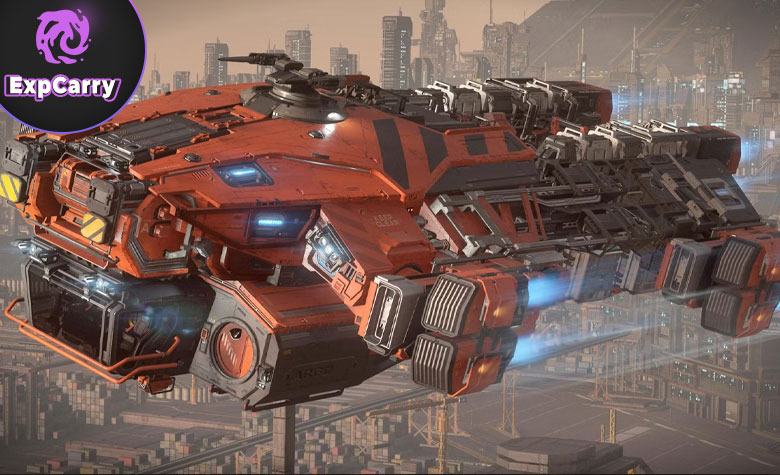
Hauling is the strongest general recommendation for a first million after the 4.8 wipe because it turns time and cargo space into predictable money. You are not relying on rare ore, perfect salvage access, expensive trade capital, or high reputation that no longer exists after the reset. You accept contracts, move freight, complete deliveries, and use the payouts to increase your working buffer. It is not glamorous. It is also less likely to leave you broke, which is apparently a controversial feature in space capitalism.
| Hauling Stage | What to Do | What to Avoid |
|---|---|---|
| First cash buffer | Run small delivery or local hauling jobs with your starter ship | Do not buy unnecessary armor, weapons, or ship parts |
| Rental stage | Rent a cargo ship only when payouts and available contracts justify the rental cost | Do not rent too early if you cannot fill the time with contracts |
| Route building | Chain contracts between nearby cities, orbital stations, and distribution points | Do not fly long risky routes for tiny payout gains |
| First million push | Repeat reliable routes and stack compatible contracts when possible | Do not switch methods every 20 minutes because boredom won |
City-to-station hauling beats reckless long routes
The best early hauling routes are short, familiar, and easy to repeat. City-to-orbital-station routes are useful because they reduce travel confusion, keep you close to services, and make recovery easier when something breaks. A perfect long route on paper is worse than a shorter route you can finish consistently. The first million is a consistency problem, not a romantic journey through every loading screen CIG has ever invented.
Stacking compatible contracts is where hauling becomes much better. If several contracts send you between similar locations, take them together and reduce empty travel. The profit comes from reducing wasted time, not from chasing the largest single payout. If your cargo ship spends more time in quantum travel, hangars, elevators, and route planning than actually completing jobs, your money method has become a screensaver.
Rentals should make money, not drain it
Renting a cargo ship can speed up the first million, but only if you are ready to use it immediately. Do not rent a ship, then spend half the rental window deciding what to do. Before renting, check available contracts, know your route, and make sure you have enough time to run several jobs. The rental only makes sense if it increases your hourly income beyond what your starter ship can already do.
The safest rental logic is simple: rent when you already have a mission loop that is too small for your current ship. If you are still wandering around looking for work, stay cheap. Star Citizen punishes vague plans with travel time, claim timers, and elevators that appear to have joined a labor union.
Starter Combat Can Work, But It Is Less Forgiving
Combat can earn your first million after the wipe, but it is less stable than hauling for many players. Alpha 4.8 includes combat-related content such as Tactical Strike Groups and Defend Location missions, but fresh players should separate two things: what exists in the patch and what is sensible for a low-budget start. Higher-risk combat can pay well, but early deaths, gear replacement, travel time, medical recovery, and failed missions can eat into the value fast.
If you already fly well, ship combat missions can be a strong route. If your starter ship is weak or your FPS habits involve absorbing bullets with your face, start slower. Buy only the gear needed for the mission. Use looted equipment where possible. Do not walk into early FPS contracts wearing a full boutique armor collection like you are modeling for a catalog called "Things That Will Be Lost in Five Minutes."
FPS missions need cheap discipline
For bunker-style and location defense work, keep your loadout cheap. A basic weapon, enough magazines, a medpen, and functional armor are enough for early contracts. Expensive gear does not make you immortal. It just makes each death more annoying. The correct early approach is to survive, loot what you can, and reinvest only when the mission loop is paying consistently.
FPS missions are best if you enjoy combat and can clear them without repeated deaths. They become bad money when travel, respawn, corpse recovery, and replacement costs stack up. A mission that pays well after a clean clear may be worse than hauling if it takes three attempts and half your patience.
Ship combat depends on your pledge ship
Ship combat is heavily shaped by what survived the wipe in your account hangar. If you have a capable pledge fighter or multicrew ship, early bounty and defense work can be strong. If your only ship is a basic starter, do not force it into content it cannot handle comfortably. Repair costs, claim delays, and failed missions can turn "fast combat money" into an educational documentary about bad assumptions.
Players with better ships should still avoid overextending too early. Start with easier contracts, confirm how 4.8 balance feels, and then scale up. Patch changes to armor, shields, weapons, and ship systems can shift what feels safe. Old habits from the previous build are useful until they are not, which in Star Citizen usually happens at high speed.
Explore services related to this guide, selected from our Star Citizen catalog.
View All Star Citizen Services

Mining, Salvage, and Trading After the First Cash Buffer
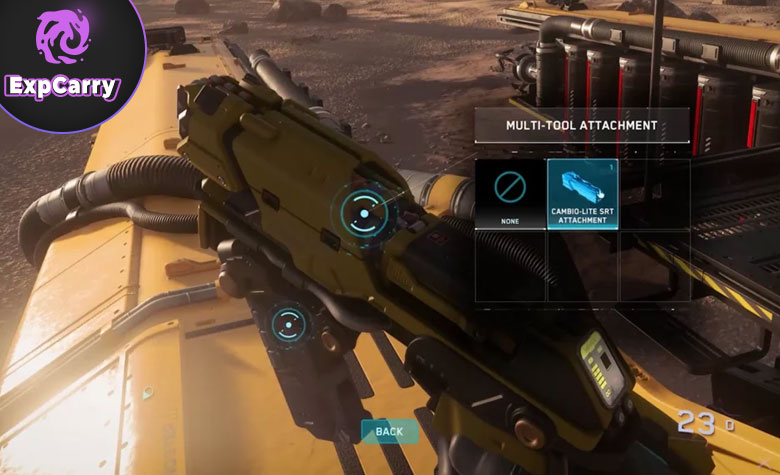
Mining, salvage, and commodity trading can all make strong money, but they are not equally good for the first million from a clean wipe. They become much stronger once you have ship access, working capital, and enough patience to recover from bugs or bad runs. For most players, these methods should come after the first safe cash buffer, not before it.
| Loop | When It Becomes Good | Main Problem Early After Wipe |
|---|---|---|
| Mining | When you can access a Prospector, ROC setup, or reliable group mining | Needs equipment, route knowledge, and time before payout |
| Salvage | When you have a Vulture, Reclaimer crew, or salvage group | Ship access is the barrier |
| Commodity trading | When you have spare capital and know stable routes | You risk your own money on cargo |
| Service and support play | When you have the right ship, reliable demand, and a group or route that needs support | Too specialized to be a beginner-proof first-million plan |
Mining and salvage are better with ship access
If you own or can borrow the right ship, mining and salvage can be excellent after the wipe. A Vulture, Prospector, ROC setup, or group Reclaimer run can push income faster than starter contracts. The problem is entry cost. From a true zero start, the time needed to unlock the loop may be worse than simply running hauling contracts until your first million is secure.
Mining also demands route knowledge and patience. Salvage demands ship access and suitable targets. Neither is bad. They are just less universal than hauling. A guide that tells every new player to start with specialized industry loops is quietly assuming they already have the tools, which is a charming way to make advice useless.
Commodity trading is not a first-wallet strategy
Commodity trading can scale well, but it is dangerous when your entire balance is small. If you spend most of your money on cargo and lose the run to a crash, piracy, bad landing, server issue, or route mistake, your recovery slows down hard. Contract hauling is safer because the cargo is tied to the job, not your personal fortune.
Use commodity trading only when losing one load will not ruin your progress. A good rule is to avoid putting more than a comfortable fraction of your total aUEC into one cargo run. If one mistake can send you back to starter missions, the route is too expensive for your stage.
First Million Priority List After the Star Citizen 4.8 Wipe
The first million should be treated as working capital, not spending money. The worst thing you can do after reaching it is immediately buy random gear, cosmetics, and ship parts that do not improve your earning loop. That is not progression. That is a garage sale with thrusters.
| Priority | Spend On | Reason |
|---|---|---|
| High | Rental ships that directly improve your money loop | Turns aUEC into higher earning speed |
| High | Basic mission gear | Keeps FPS and recovery costs controlled |
| High | Fuel, repairs, medical supplies, and essentials | Prevents small failures from ending a session |
| Medium | Ship components tied to a proven loop | Useful only after you know the ship is earning |
| Low | Expensive FPS armor | Easy to lose and rarely needed early |
| Low | Speculative cargo buys | Too risky before you have a larger buffer |
| Low | Random ship purchases | Can trap your money in a bad early decision |
Do not buy your way into feeling productive
The first million is there to stabilize your account. Keep enough aUEC for repairs, fuel, claims, gear replacement, and one or two bad sessions. A player with 1,000,000 aUEC and a reliable hauling loop is in a better position than a player with 40,000 aUEC, a shiny purchase, and no plan. Star Citizen is already unstable enough without turning your wallet into another bug report.
Only upgrade ships or gear when the upgrade improves a loop you are already using. If you are hauling, cargo capacity and route efficiency matter. If you are doing combat, survivability and weapon reliability matter. If you are mining or salvaging, tool access matters. Everything else can wait until your economy is no longer made of wet paper.
A clean two-session plan for the first million
In the first session, focus on cash stability. Run starter contracts, avoid unnecessary purchases, learn which stations and routes are functioning well, and build enough money to support a rental or better loop. In the second session, commit to one method. For most players, that method should be hauling. Chain nearby contracts, keep routes short, and stop switching activities every time another money-making rumor appears in chat.
If you have a combat-ready ship, replace the hauling phase with easier ship combat or group contracts. If you have industrial access, use mining or salvage after you confirm the loop is stable in 4.8. The key is commitment. The first million comes faster when you repeat one clean loop than when you sample five systems and call it research.
Final Thoughts
The most practical way to make your first million aUEC after the Star Citizen 4.8 wipe is to stay boring at the start. Use starter contracts to build a buffer, move into hauling as soon as your ship or rental option supports it, avoid risky commodity trading too early, and only buy gear that directly protects or improves your money loop. The players who recover fastest after a wipe are usually not the ones with the flashiest plan. They are the ones who stop leaking money.
Hauling is the best general recommendation because it is repeatable, low-risk, and does not require high reputation, expensive components, or specialized industrial ships. Combat can be faster for skilled players with good ship access, while mining and salvage become excellent once the right tools are available. Commodity trading should wait until losing one run does not destroy your progress. That distinction is the whole point: the first million is not the time to act rich.
After you reach the first million, keep the pressure on but do not spend recklessly. Maintain a cash reserve, scale the loop that worked, and only move into bigger ships or higher-risk routes when your balance can absorb failure. Alpha 4.8 gives everyone a cleaner economic start, but it also punishes lazy planning. Build the wallet first, then build the empire. Doing it backward is how players end up broke in a hangar, staring at a ship they cannot afford to use.