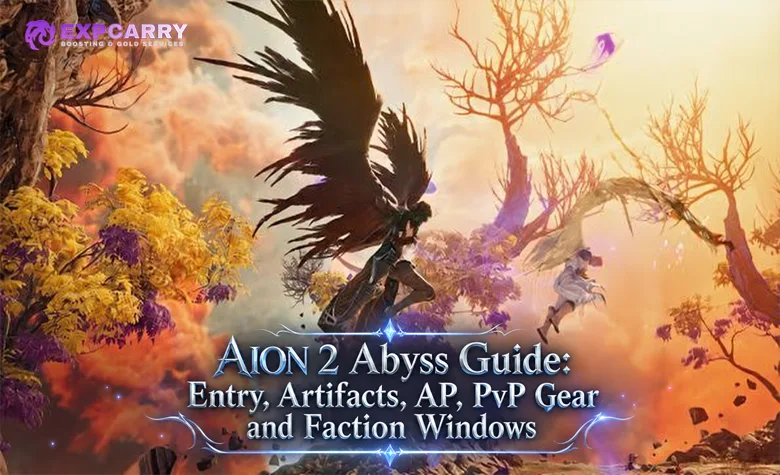
The AION 2 Abyss is a faction-based PvPvE system where Elyos and Asmodians compete for Artifacts, Abyss Points and access to contested activities. Character level alone does not guarantee entry. The selected area may also check story progress, equipment level and separate admission rules. The September 17 and 18 Global Launch Scale Test has ended, but it was capped at level 37 and could not establish the final requirements of the level 45 Abyss content listed in regional and indexed quest data. Advanced Access begins September 30, followed by the free-to-play Global launch on October 5, 2026.
Short answer: Follow your faction storyline, check the actual entry conditions of your chosen Abyss area and improve equipment if its displayed requirement is not met. Entry to a shared Abyss field and access to an Artifact-linked Abyss Corridor are separate permissions.
| Topic | What matters | Evidence for Global |
|---|---|---|
| Abyss entry | Level, equipment and area-specific admission conditions can apply. | KR and TW reference |
| Koro at Abyss Base | A level 45 faction storyline objective listed for both Elyos and Asmodians. | Indexed Global test client |
| Artifacts | Faction objectives that influence control and associated access opportunities. | Official KR rules |
| Abyss Corridor | A separate, potentially timed activity; availability can depend on faction state. | Official KR rules |
| Abyss Points | Spendable AP and competitive Ranking Points have different functions in the revised Korean system. | Official KR rules |
| Global launch values | Final entry thresholds, available layers, schedules and vendor costs require retail confirmation. | Pending retail check |
Regional rule: The figures and mechanics explicitly labeled KR or TW below explain established regional builds. They are not promises that Global launches with the same content selection, AP penalties or timetable.
AION 2 Abyss Entry Requirements
When an Abyss entrance remains locked, check the requirement shown for that specific area instead of assuming another character level will solve the problem. The Korean and Taiwanese launch versions used level 45 and equipment level 1000 for their first Lower Abyss reference point. That is a regional baseline, not a confirmed Global retail threshold.
| What you see | Possible reason | What to check |
|---|---|---|
| The field entrance stays locked | Level, story or equipment requirements are incomplete. | Compare every condition displayed by the activity panel. |
| One layer opens but another does not | Layers use different entry requirements. | Inspect the selected layer rather than applying one threshold to every area. |
| A Corridor is closed | Artifact control, faction eligibility or its access window has changed. | Read the Artifact interface and the current entry timer. |
| An eligible layer refuses admission | A capacity limit or temporary admission condition may apply. | Read the live system message and check client-offered alternatives. |
How to Pass the Abyss Gear Check
Replace outdated equipment across several slots before investing all your materials into a single item. Check accessories, collect reliable progression rewards and watch the displayed entry measurement after meaningful upgrades. Item level, Combat Power and community Gear Score should not be treated as interchangeable labels unless the actual interface defines a relationship between them.
If the main storyline remains the blocker, the separate AION 2 leveling guide covers progression before higher-level activities.
Abyss Access Quest Walkthrough Koro at Abyss Base
The objective Talk to Koro at the Abyss Base appears in the indexed faction quest records. Its presence does not prove that speaking to Koro alone opens every Abyss map. The Global playtest database lists a level 45 episode for each faction, beyond the completed level 37 Launch Scale Test.
| Faction | Episode | Previous quest | Completion NPC |
|---|---|---|---|
| Elyos | Witness to a Nightmare | Draupnir | Paitos in Verteron |
| Asmodians | Daeva Trapped in a Nightmare | Forgotten Commander | Nemon in Altgard |
Elyos Quest Witness to a Nightmare
The Elyos episode belongs to Encountering Kaisinel's Core. Use the following sequence to identify the quest objective without confusing Koro with the final turn-in NPC.
- Continue the Elyos main story through Draupnir.
- Track Witness to a Nightmare when it becomes available.
- Follow the objective to talk to Koro at the Abyss Base.
- Complete the related objective involving The One Who Witnessed the Nightmare.
- Follow the episode instructions and finish it through Paitos in Verteron.
Asmodian Quest Daeva Trapped in a Nightmare
The Asmodian episode belongs to Encountering Zikel's Core. Its indexed preceding quest is Forgotten Commander.
- Progress through the Asmodian storyline past Forgotten Commander.
- Track Daeva Trapped in a Nightmare and follow the Koro objective at the Abyss Base.
- Complete the linked objective involving The One Who Witnesses the Nightmare.
- Follow the remaining story markers and finish the episode with Nemon in Altgard.
- Check the desired Abyss layer separately for its current entry requirements.
If Koro is missing: Track the precise faction quest, confirm that its preceding episode is complete and follow the active quest navigation or story phase. The indexed record names Abyss Base but does not establish a permanently accessible map pin for every Global retail state.
AION 2 Abyss Maps and Layers
The Abyss includes different areas rather than one continuous map with a universal entry rule. Later KR and TW updates expanded Reshanta, so a regional guide or video may show content that Global does not have on its first day.
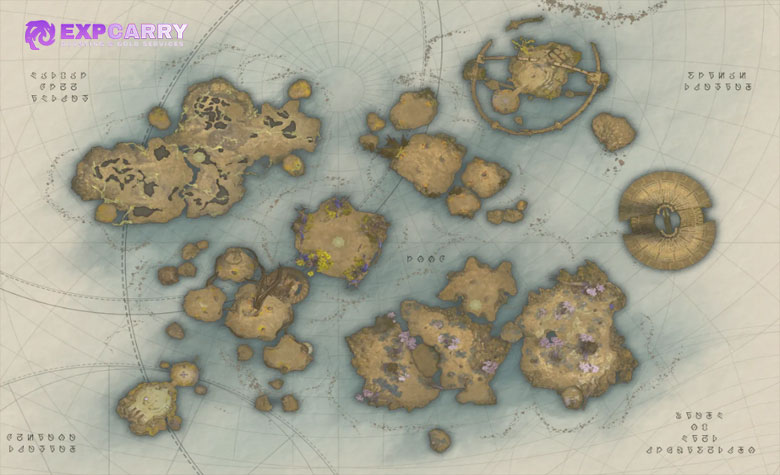
| Area | Regional entry reference | Important distinction |
|---|---|---|
| Chaotic Lower Reshanta | Level 45 and equipment level 1000 or higher | Uses a minimum equipment requirement. |
| Chaotic Middle Reshanta | Level 45 and equipment level 3000 or higher | Has a separate progression gate. |
| Chaotic Upper Reshanta | Level 45 and equipment level 4300 or lower | Uses an equipment ceiling in the documented TW client. |
| Abyss Rift Zone | Level 45 and equipment level 3000 or higher | A separately scheduled regional activity. |
Upper does not automatically mean the hardest area. In the documented TW snapshot, Upper is the area with an equipment ceiling. Use the names and conditions shown in your own Global activity panel rather than copying a later regional content list.
Explore services related to this guide, selected from our Aion 2 catalog.
View All Aion 2 Services


How Abyss Artifacts and Faction Windows Work
Artifacts are objectives fought over by Elyos and Asmodians. A successful siege changes the occupation state and can influence associated Abyss Corridor access. These are faction-level conditions, not permanent individual quest unlocks. The Elyos and Asmodians guide explains the separate faction decision.
The Artifact Siege Cycle
The practical sequence is to check the schedule, prepare a group, contest the objective, confirm occupation and then inspect the available Corridor. In the Korean February 11 update, NCSOFT scheduled Lower and Middle Reshanta Artifact Sieges together on Tuesday, Thursday and Saturday at 9 PM Korean time. That schedule is historical regional evidence, not a Global or EU timetable.
- Check the current Abyss calendar and choose the siege your faction intends to contest.
- Repair equipment, prepare consumables and reach the approach route early.
- Follow your faction group and prioritize the Artifact objective over unrelated fights.
- After the siege, inspect the updated ownership icon and any available benefits.
- Check the Corridor entrance and remaining timer before beginning another activity.
What the Losing Faction Can Still Access
Losing an Artifact does not automatically close every shared Abyss field. Korean rules also provide an important exception: NCSOFT stated that a faction behind 3 to 0 in the relevant siege results can receive Abyss Corridor access through designated outposts. Server rematching may change Artifact and Corridor states again. Check the current entry UI instead of assuming that the winning side is always the only side allowed into a Corridor.
AION 2 Abyss Corridor Access and Farming
A Corridor is a separate activity whose access can be linked to Artifacts, faction eligibility and a time window. Being able to enter a normal Abyss layer is not identical to having an active Corridor permission.
Practical rule: When your faction receives access, check the entrance and remaining duration immediately. Do not spend the limited window reorganizing equipment or waiting at an obsolete location from a regional guide.
- Inspect the live Artifact interface for the entrance and timer.
- Prepare repair supplies, consumables and inventory space beforehand.
- Set a group objective and a short route instead of improvising after entry.
- Check any acquisition limits displayed for your current build.
- If a Corridor is unavailable, continue the other eligible Abyss activities rather than repeatedly clicking a closed gate.
Abyss Points AP and Abyss Ranks Explained
Abyss Points are a central reward connected to the Abyss exchange and eligible progression purchases. A separate competitive value is important when interpreting ranks and death penalties in the revised Korean system.
| Value | What it does | Important rule |
|---|---|---|
| Abyss Points AP | Currency for eligible purchases and regional progression systems. | Spending AP is not automatically the same as losing competitive rank. |
| Ranking Points | Competitive Abyss rank and leaderboard progression. | Under the Korean February 11 changes, faction PvP deaths reduce Ranking Points instead of spendable AP. |
Older guides describing automatic spendable AP loss on every PvP death are outdated for this revised Korean rule. Global rank names, gains, penalties and acquisition limits must be verified in the retail interface.
How to Earn Abyss Points
Regional AP sources combine PvE objectives, PvP and scheduled faction participation. They have different entry rules, rewards and interruption risks.
- Abyss monsters and field objectives: repeatable progress where eligible, with possible enemy faction interference.
- Enemy faction combat: opportunities for PvP-related rewards under the current regional rules.
- Artifact Sieges: scheduled objectives linked to faction control and applicable rewards.
- Abyss Corridors: focused activity when the relevant access window is open.
- Supply Requests: eligible material turn-ins, subject to the live requirements and deadlines.
- Other regional missions: additional sources whose availability and caps may differ at launch.
Do not calculate Global AP per hour from a fixed Korean farm rate. Travel time, enemy pressure, reward caps and regional changes can produce a different result.
PvP Gear and the Abyss Exchange Shop
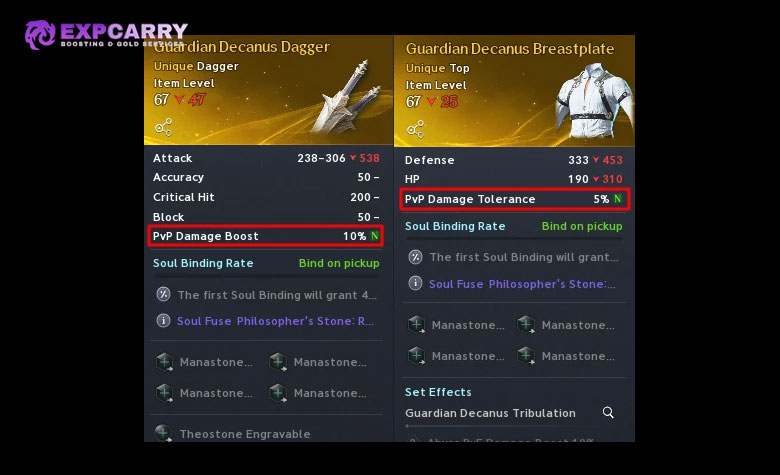
The Abyss exchange converts earned currency into eligible PvP equipment and other progression items. Inventory, additional medal costs, purchase restrictions and later enhancement paths can differ by regional version, so do not use a Korean endgame shopping list as the Global starter vendor inventory.
What to Check Before Spending AP
The useful target is the next meaningful improvement for your class, not necessarily the first item you can afford.
- Verify class compatibility, PvP effects and any set bonuses.
- Check the exact AP and other currency costs displayed by the vendor.
- Review purchase limits and any regional or seasonal conditions.
- Compare immediate improvement with the cost of the next equipment tier.
- Check whether the current build supports an enhancement or inheritance path for the item.
AP may also compete with other progression purchases in some regional versions. Stigma materials are one example, although alternative sources have expanded through later KR updates. The separate Stigma and Daevanion guide covers those systems in detail.
Solo and Group Abyss Farming Routes
A reliable route balances rewards against interruption and recovery time. Solo players benefit from repeatable, less contested objectives; coordinated groups can approach sieges and Corridor opportunities more deliberately.
| Approach | Priority | Avoid |
|---|---|---|
| Solo | Safe field objectives, eligible monsters, material preparation and available Supply Requests. | Long fights near enemy approaches or attempts to contest a defended Artifact alone. |
| Organized group | Scheduled sieges, target focus, coordinated movement and a prepared Corridor route. | Chasing isolated enemies while the shared objective is decided elsewhere. |
Before entering alone, identify an exit and a practical return route. In a group, assign a caller, keep support within range and agree whether the main purpose is capture pressure, PvP participation or the next Corridor opportunity.
A Practical Weekly Abyss Progression Route
Prioritize limited and scheduled opportunities before unrestricted farming. Use the current regional activity interface for reset times, entry allowances and acquisition caps.
- Review the available Abyss layers and any displayed weekly limits.
- Collect materials for eligible Supply Requests before their deadlines.
- Arrange group play around the Artifact Sieges your faction plans to contest.
- Use an available Corridor window promptly if it suits your farming objective.
- Fill remaining time with lower-risk eligible field activities.
- Compare the earned AP with your next planned exchange-shop purchase.
A specific Abyss Points farming route should likewise be planned around the live region's actual eligible sources and restrictions, not a copied KR timetable.
How to Plan Abyss Progression for Global
Global is a separate release, not an automatic copy of the most recent Korean or Taiwanese chapter. Advanced Access begins September 30 and the free-to-play launch follows October 5. The completed level 37 Launch Scale Test cannot verify every later level 45 quest, zone or gear threshold.
Verify in the Global retail client: the Koro quest flow, available Reshanta layers, entry scores, Artifact schedules, Corridor eligibility, AP and Ranking Point rules, acquisition caps and exchange-shop stock. Do not assume that the later KR catch-up Corridor, equipment inheritance or specialized layers are present on day one.
Evidence used: Official KR NCSOFT's February 11 Abyss update documents siege scheduling, the 3 to 0 Corridor exception and the Ranking Point death change. Quest Data The indexed Elyos and Asmodian quest records identify the Koro objective. Regional map thresholds are reference data, not live Global observations.
Conclusion
Prepare for the Abyss by progressing the faction storyline, meeting the equipment requirement shown for your chosen layer and checking faction access separately. Once inside, plan around real Artifact and Corridor windows, use AP deliberately and keep spendable currency distinct from competitive Ranking Points. Replace regional reference values with the confirmed Global rules as they become available.