



Ashes of Creation Castle Siege Guide (2026): Castle sieges are built to be the highest-stakes, guild-driven PvP event on a server. They are not meant to be a random open-world brawl. They are scheduled, objective-based wars where preparation outside the siege window matters almost as much as the fight itself-and where time, positioning, and organization usually beat raw kill counts.
This guide focuses on practical tactics for both attackers and defenders: how to prepare during the siege cycle, how to play the battlefield objectives, how to control tempo through waypoints and respawn flow, and how to actually close out a win at the inner keep. It is written for how organized groups will realistically play in 2026: shorter weeknights, heavier weekend coordination, strict roster discipline, and ruthless competition over limited siege access. If you only remember one thing, remember this: castle sieges are won by tempo and objective control, not by chasing fights across the map.
One note up front: Ashes of Creation is still in active development, so exact rules, numbers, and UI details can evolve. The playbook below stays useful even if implementation details shift, because it is built around the consistent design pillars described publicly so far: scheduled prime-time sieges, participation limits that reward organization, objective pressure over kill-chasing, and a long preparation runway tied to castle regions and nearby node ecosystems. Where specific mechanics are mentioned (timers, channels, caps), treat them as "current public intent," not a final contract.
Castle Siege Snapshot: What the Event Actually Demands
Castle sieges are intended to be large-scale, capped battles that run during a server prime-time window on a repeating cycle (often discussed as roughly monthly). Public discussions frequently reference battles in the hundreds per side as a design target (commonly cited as 250 vs 250, with aspirations higher), but final caps, performance targets, and enforcement rules may change as testing progresses. Defenders win by holding through the timer (often described as a two-hour window). Attackers win by breaking into the inner keep and successfully completing the final capture action (often described as an "ownership seal") that secures ownership.
What makes castle sieges different from most MMO wars is the surrounding ecosystem. Castles are meant to influence regional control, taxation, and politics, and they draw in alliances, rivals, and opportunists who may not care who "should" win as long as they profit. After a guild controls a castle, the surrounding systems and between-siege routines become central to the next defense plan and the next cycle. A winning guild is not only strong on siege day. It is organized every week of the cycle-through logistics, diplomacy, intel, and consistent attendance.
The two victory conditions you must plan around
In current public descriptions, defenders are playing the clock. Their goal is to keep the attackers from completing the final capture inside the keep until time expires. Attackers must both reach the inner keep and then execute a multi-minute capture channel that is far harder without battlefield control and clean respawn tempo. That is why kill counts are secondary: the real currency">currency-farm">currency is time, and the real weapon is tempo-waypoints, spawn distance, gate pressure, room control, denial of clean re-entry angles, and keeping your channel team alive long enough to finish the seal. If your raid does not understand the capture window, you will "win fights" and still lose the siege.
Declaration week and the real first fight
For attackers, the siege often begins before siege day. Many summaries describe a declaration process involving a siege item (often referenced as a scroll) and a vulnerable, multi-minute channel by guild leadership near the castle, with alerts and counterplay that can interrupt the attempt. In practical terms, treat declaration as a live operation: scouts to spot defenders early, decoys to split response groups, an escort shell to keep leadership safe, and an extraction route planned before the channel ever starts. For defenders, preventing a successful declaration is the cleanest win you will ever get-reliable scouting coverage, fast interception discipline, and a clear "commit" call can save you an entire siege window.
Start Here: Pre-Siege Setup Checklist for Attackers and Defenders
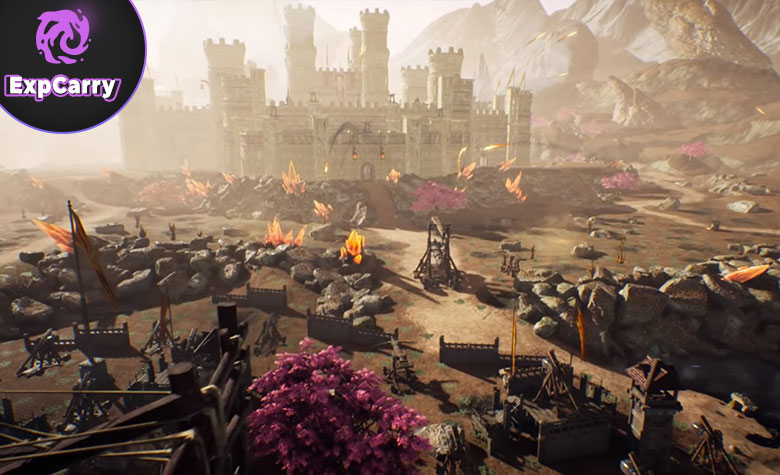
Most castle sieges are decided by how well a group turns a long cycle into repeatable routines. The best siege guilds do not improvise logistics and comms on siege day. They rehearse them during the weeks before, and they treat waypoints, rally routes, and roster discipline as core systems-not optional extras. If your waves are sloppy, your objective play collapses, no matter how good your individual players are. "Clean waves" are a skill you can train long before you ever touch a castle wall.
First 72 hours checklist for a serious siege campaign
- Appoint clear siege leadership: a war lead, a defense lead, a logistics lead, an intel lead, and an engineering lead, with explicit backups for each role and a clear chain of command if someone disconnects or cannot attend.
- Create a comms structure: one voice channel for command, one for each battlefield group, and a clean callout format for gates, waypoints, regroup points, and reset timing (keep it short, standardized, and repeatable under stress).
- Build an intel map: approach routes, high ground, choke points, likely waypoint fights, and two or three default rally locations for emergency regroup and "full reset" waves; update it after every scrim or field fight.
- Define your siege day roster rules: who is guaranteed a slot, who is flex, and who fills reserves, plus clear late arrival and replacement procedures so you do not lose tempo to drama; enforce punctuality like it is a combat mechanic.
- Set your siege kit standard: consumables, repair plans, a shared build baseline, and a rule for bringing objective tools and utility instead of personal experiments; standardize what "ready" means so you can audit quickly.
- Practice two drills: a rapid regroup drill after wipes, and a channel protection drill for the final capture, including how you rotate defensives, interrupts, and peel without abandoning the objective; record and review mistakes like a sports team.
The one rule that prevents chaos
Every player needs to know what winning looks like on the clock. Attackers must understand when to stop chasing kills and instead lock down the keep and protect the channel team. Defenders must understand when to stop overextending and instead trade space for time while protecting critical rooms and anti-channel resources. If your raid does not share the same win condition at minute 95, you lose-usually without understanding why.
Roadmap: The Core Loops That Win Castle Sieges
Castle sieges reward groups that keep five loops synchronized: declaration and access, waypoint control and respawn tempo, breach operations, inner keep execution, and logistics and morale. If one loop collapses, you either stall out as an attacker or you crack as a defender. The easiest way to avoid "lots of fighting, no progress" is to give each loop an owner and make the whole raid play the same priority list at the same time: secure access, win the waypoints that matter, convert that advantage into a breach window, stabilize inside, then channel only into a favorable reset. If public implementations add extra objectives (such as commander-style targets or secondary pressure points), treat them as tempo tools: they matter because they change who can reset faster and who can safely commit.
Loop 1-2: Declaration, control points, and tempo
Attackers: protect leadership during declaration and build a participation plan you can actually enforce, then prioritize the waypoints that reduce downtime and keep waves cohesive. You do not need "everything"-you need the points that let you return to the fight quickly and hit the same objective repeatedly without bleeding minutes on long runs. If waypoints also increase enemy respawn timers (as commonly described), winning even one key point can turn every defender death into real time value.
Defenders: treat declaration week as security work, then deny or constantly contest key waypoints so attackers are forced into slow resets. Your goal is not to win every skirmish; it is to make every attacker death expensive and every regroup painful. If attackers cannot keep clean waves on a short respawn, their breach attempts become scattered and predictable.
What usually goes wrong: both sides chase fights away from objectives and leadership gets dragged into chaos-attackers leak their plans early, defenders overcommit to decoys, and nobody is actually controlling tempo. Meanwhile, a small, disciplined group quietly wins the waypoint game and decides the siege indirectly.
Simple fix: assign a dedicated "tempo team" with authority to rotate and disengage. If the main push needs bodies at a gate, the tempo team stops brawling and moves. If the enemy is trying to sneak a waypoint, the tempo team collapses and forces a reset. Your commander should be able to say "tempo now" and have a group that instantly understands the assignment.
Loop 3-4: Breach cycles and inner keep execution
Attackers: run the breach like a set of timed cycles, not a constant drip of players into a choke. Pressure in waves, rotate lanes when defense stabilizes, and commit hard only when your control, protection, and siege tools align. Once inside, do not rush the channel-stabilize the room first, cut defender re-entry, and only channel when you can protect it into a defender reset. If the final channel is multi-minute (as commonly described), you should treat it like a "boss phase" that requires preparation, not a button press.
Defenders: turn every gate into a time sink by punishing trickle pushes and forcing inefficient re-engages. If you must give ground, do it on purpose: layered retreats that preserve interrupters and keep anti-channel tools alive are worth more than a heroic stand that ends in a wipe and an open keep. You are allowed to lose space; you cannot afford to lose your ability to break the next channel attempt.
What usually goes wrong: attackers tunnel one gate, burn half the window, then arrive at the keep disorganized and try to force a channel into a full defender wave; defenders try to hold every doorway forever, blow everything early, and have nothing left when the real channel attempt happens.
Simple fix: attackers pick one breach plan and one rotation plan and rehearse both; defenders pre-plan a fallback layer and a "collapse on channel" call that overrides everything else. When the channel starts, all defender decision-making collapses to one question: "Can we break the cast?"
Loop 5: Logistics, resets, and morale
Logistics is where disciplined guilds separate from loud ones. Attackers must keep respawns organized and regroup timing strict so pressure stays continuous-solo re-entries are not "helping," they are feeding time and giving defenders easy stagger kills. Defenders should actively bait those panic re-engages and punish them, because every staggered attacker death is minutes off the clock. Both sides need a hard reset trigger that everyone respects: if two pushes fail in a row, you rebuild the wave at a rally point, you change something meaningful (lane, timing, waypoint priority, or target selection), and you re-enter together. Teams that refuse to reset do not "keep trying"-they donate momentum until they cannot recover.
Attackers Playbook: How to Break a Castle on a Two-Hour Clock
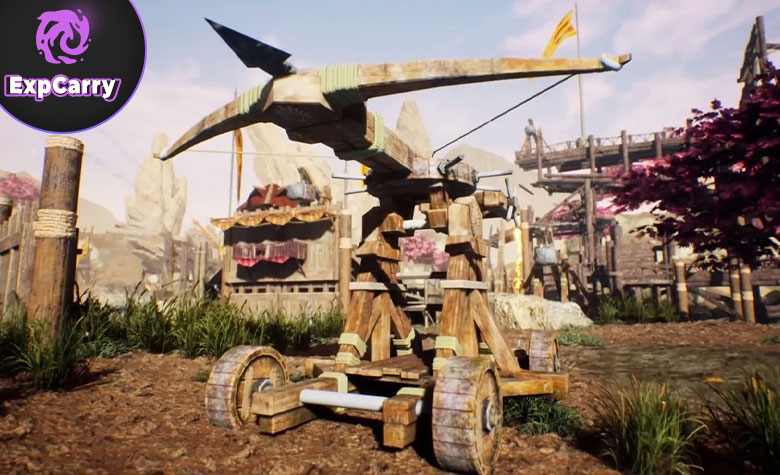
Attackers lose most often because they treat a castle siege like an open-world zerg. You cannot outfight geometry forever. You win by converting waypoint control into breach time, and breach time into a protected channel window-while keeping your respawn flow fast, your regroup timing predictable, and your objective focus unbreakable. Think in minutes, not kills: every stalled push is a tax you pay to the clock.
Phase 1: Declaration week tactics that pay off later
- Cast protection shell: build a layered escort around leadership with a dedicated peel group whose only job is to keep the channeler alive, un-stunned, and able to reposition instantly; treat the channeler like the objective, not like a player.
- Decoy casts: if the system allows multiple attempts or fake-outs, force defender rotations and cooldowns, then strike where their response is weakest and their scouts are blind; win by misdirection, not by "fair" fights.
- Intel buys wins: identify defender play windows, response routes, and where they stage their intercept. You will fight those same patterns on siege day, so record them and plan around them; the best intel is repeated behavior, not a single lucky sighting.
Phase 2: Waypoints and spawn tempo
Current descriptions commonly include capturable waypoints that affect respawn flow and siege momentum (often by reducing your respawn timer and increasing the enemy’s). Your primary objective is not to own every point. It is to own the points that shrink your downtime, keep your waves cohesive, and let you hit the same gate repeatedly until it breaks. A single well-held waypoint can be worth more than a dozen "won" skirmishes in the field.
- Assign a waypoint captain: a single person calls when to take, hold, or abandon a point based on the main push timing, not ego fights or killboard padding; if the waypoint plan and breach plan disagree, the commander decides, not the crowd.
- Do not overcap: owning extra points is worthless if your main breach force is starving for bodies at the gate and arriving as a trickle instead of a wave; tempo points exist to support the main objective, not to create side wars.
- Stagger reinforcements: feed the gate in waves, not as a constant trickle. Defenders are strongest when they can pick off solo arrivals and delay your next real push; your job is to land repeated, synchronized impacts.
Phase 3: Breach operations that do not stall
Most defender strategies are built around turning your breach into a time sink. Attackers must respond with structure, rotation, and timed pressure windows. A good breach is not "everyone forward." It is "everyone forward at the same time, with a reason, into a planned window."
- Two-lane pressure: if the battlefield supports it, threaten a second entry route to force defender splitting. Even a fake lane creates real value by pulling control and healing away from the main choke; your goal is to create doubt and slow their reactions.
- Engineer rhythm: siege engines and breach tools should be scheduled, not improvised. Call exact windows for pushes so your burst, control, and protection align; protect operators and supply lines like they are a raid boss mechanic.
- Door discipline: do not chase kills outside the gate when you have a breach window. Your job is to convert openings into a secured interior foothold; "one more kill" outside often costs you the entire push inside.
Phase 4: Inner keep staging and the capture channel
In many current summaries, the final capture involves a multi-minute channel by leadership or a designated officer inside the inner keep. That is not an action you do the moment you arrive. It is the last step of a controlled room take, executed into a favorable defender reset. Also plan for chaos: third parties may show up, and even "friendly" participants can create risk if your seal security is sloppy. Treat the keep room like a controlled environment: entry control, interrupt denial, and disciplined positioning win more than damage does.
- Build a capture bubble: one group peels and interrupts, one group body-blocks and trades defensives, one group hunts defender disruptors and denies clean entry angles; assign names and keep roles consistent.
- Cut defender re-entry: your best defense is offense. Assign a small strike team to deny defender regroup paths and force them to re-enter in small numbers instead of a full wave; you are buying seconds for the channel, not padding kills.
- Time your channel: start the channel only when defenders are on a long respawn or mid-reset and your room control is stable. If you channel into a full defender wave, you waste your best attempt; if the channel breaks, reset fast and re-attempt only with a meaningful change.
Defenders Playbook: How to Hold a Castle Without Bleeding Out
Defenders win by making time expensive. Every attacker death that forces a slow reset is worth more than a highlight clip. Your goal is to deny attacker tempo, force them to regroup repeatedly, and keep the inner keep unchannelable until the clock ends. Your best weapon is discipline: controlled retreats, preserved interrupters, and wave timing that arrives exactly when it matters.
Phase 1: Stop the siege before it starts
If the declaration process includes a vulnerable channel and a regional alert, defenders should operate like a security team during declaration week. The goal is not "more fights." The goal is to deny the declaration window entirely or make it so costly that attackers lose morale and attendance before siege day.
- Scout rotations: maintain watch shifts and log sightings. You are hunting patterns, not one-off sightings, and you are tracking who is moving with whom; repeatable routes are actionable intel.
- Interception squads: keep a fast group ready to collapse on a channel attempt immediately, with clear authority to call the commit and clear rules for who peels and who finishes; hesitation is the enemy’s best friend.
- Do not overcommit: attackers may use decoys. Tag, confirm, then fully commit when the real channel is identified and the leader is vulnerable; force them to reveal the channeler before you spend cooldowns.
Phase 2: Deny waypoints, deny momentum
Waypoints are often where defenders accidentally lose. They chase fights outside the walls and let attackers quietly secure the infrastructure that makes breaches repeatable. Treat waypoint denial as a real objective, not "side content," and look for windows to pressure attacker staging so they cannot regroup cleanly. If waypoints manipulate respawn timers (as commonly described), denying them is literally denying minutes.
- Waypoint denial team: assign a dedicated group whose only mission is to contest key points, even if it means lower kill counts elsewhere; their scoreboard is the enemy’s wasted time.
- Trade space for time: if holding an outer point costs too much, fall back and force attackers into longer runs while you reinforce the gate and reset your cooldown economy; you can win while "giving ground" if you keep the clock winning for you.
- Exploit trickle spawns: punish small attacker reinforcements before they merge into a wave, and force them to regroup on your terms instead of feeding the choke; stagger kills are time kills.
Phase 3: Choke point economy and controlled retreats
Defenders often lose by trying to win every doorway forever. A smart defense has layers: outer wall delay, inner corridors, then a final keep posture where every second matters. Your goal is not to look heroic; your goal is to stay channel-ready with tools and people alive.
- Layer your control: stagger crowd control and defensive cooldowns so you always have something for the next push, not everything for the first push; if you burn your entire kit early, you are defenseless later.
- Reset calls: your commander must be willing to call a retreat to the next layer before a wipe turns into a full collapse and opens the keep for free; a clean retreat is often a win, not a loss.
- Protect anti-channel tools: identify your best interrupters and keep them alive. If they die early, you lose your most reliable answer to the final channel; assign peel and priority healing like they are VIPs.
Phase 4: The anti-channel collapse
When attackers attempt the final capture, defenders should switch to a single objective: break the channel. This is the moment where perfect coordination matters most. The best defense is a planned "collapse" that arrives with mobility, burst, and interrupts at the exact moment the channel starts-without panicking early or wasting tools on bait.
- One job, one call: do not split focus between farming kills and stopping the capture. Kills only matter if they break the channel window; everything else is noise.
- Wave timing: hold key mobility and burst for the channel attempt. If you spend everything 20 seconds before, you arrive empty; discipline here wins more sieges than gear does.
- Drag the fight away: if you cannot reach the channel cleanly, force attackers to chase disruptors and pull their protection bubble apart; make their channel team feel isolated and unsafe.
Siege Tools and Battlefield Control: How to Think About Engines and Traps
Even as details evolve, castle sieges are consistently framed as an environment where siege weapons and defensive emplacements matter. Attackers should treat siege tools as a way to create safe breach windows. Defenders should treat them as a way to delay, punish, and shape predictable attacker lanes. Tools are not "extras"-they are force multipliers that turn a fair fight into a timed advantage.
Attackers: engines are for time, not vanity
- Protect the tool, not the killboard: assign guard teams to siege equipment and supply lines so your breach plan does not die to harassment; if operators and builders get farmed, your pressure disappears.
- Force reposition choices: if defenders have fixed emplacements, pressure angles that force them to choose between defending a wall and defending a chokepoint; create dilemmas, not head-on trades.
- Use short burst windows: siege tools shine when you coordinate a push with the moment defenders are displaced, wiped, or forced to retreat; align your wave, your tools, and your cooldowns.
Defenders: traps and emplacements should shape attacker behavior
- Make lanes feel bad: the goal is not maximum damage, it is forcing attackers into slower, more predictable routes and breaking their wave timing; predictability is defense value.
- Do not reveal everything early: keep some defensive tools hidden for the second or third major breach attempt, when attacker confidence is highest and discipline is weakest; punish complacency.
- Protect your operators: an emplacement is irrelevant if the crew gets deleted. Assign peel and healing to operators like they are a VIP squad; the tool is only as strong as its uptime.
Command and Comms: The Difference Between a Zerg and an Army
Castle sieges are long enough that comms fatigue becomes a real resource. Both sides should treat clarity as a combat advantage, and they should avoid "everyone talks" chaos during decisive windows. The goal is simple: fewer words, cleaner calls, faster resets, and zero ambiguity about what the next 60 seconds are supposed to accomplish. The best comms sound boring-because boring is consistent.
A simple comms structure that scales
- One commander voice: only the war lead calls macro decisions, lane swaps, and full resets; everyone else supports with short, factual info.
- Captains per function: waypoint captain, breach captain, anti-channel captain, and a backline captain; captains translate the plan into immediate actions.
- Short callouts: gate names, waypoint numbers, and a single word for retreat, plus a single word for "hold" to stop over-chasing; if your callouts change mid-siege, you are already losing.
The reset rule that prevents losing by panic
Both attackers and defenders need a hard reset trigger, but it must be tied to a real change, not just a walk back from the front line. If you lose two consecutive pushes at a gate, reset and change something meaningful: lane, wave timing, or waypoint priority. If you lose a defense layer, reset to the next layer early and stabilize instead of wiping in place. Teams that refuse to reset do not "keep trying"-they feed momentum until they cannot recover.
After the Siege: How Winners Hold and Losers Rebuild
Winning a siege is not the end of the story. Castle ownership is meant to drive ongoing politics and preparation for the next cycle. The winning side should immediately stabilize: roster expectations, diplomatic posture, defense development, and operational security around declaration week. The losing side should document what broke, identify where tempo was lost (especially waypoints and regroup timing), and build a stronger plan for the next declaration period and siege window. If you want to win the rematch, you need receipts: timelines, who was where, why pushes failed, and what changed when momentum shifted.
The best long-term advantage is reliability. A guild that shows up every cycle with the same disciplined structure becomes harder to dislodge than a guild that peaks once and then fades. Consistency is a siege stat-and it is the one most guilds refuse to train.
Conclusion
Castle sieges in Ashes of Creation are designed to reward operations, not improvisation. Attackers win by controlling tempo through waypoints, running structured breach cycles, and protecting the final capture channel inside the keep. Defenders win by denying attacker momentum, managing layered retreats, and collapsing precisely on capture attempts while the clock does the rest. If your calls, waves, and objectives are aligned, the siege feels "easy." If they are not, you will spend two hours fighting and still never get a real channel window.
If you build a cycle routine around declaration security, roster discipline, waypoint control, and repeatable objective play, you give yourself the most important advantage in 2026: consistency under pressure. That is what separates a one-night zerg from a guild that can take-and keep-a castle.