



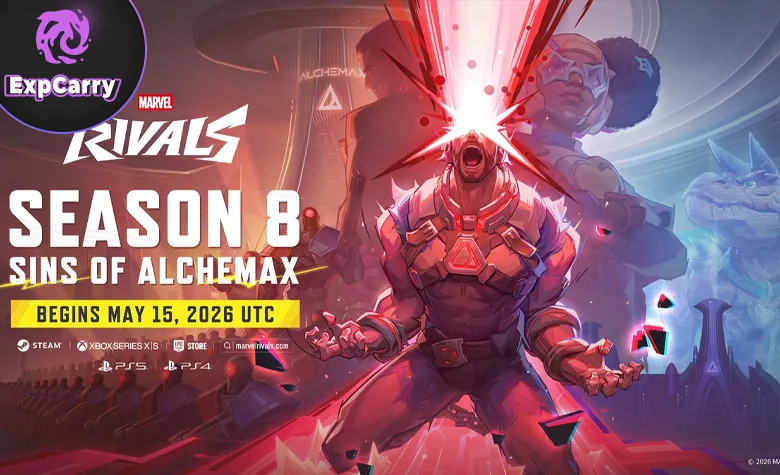
Marvel Rivals Season 8 is not trying to be subtle. The update throws Devil Dinosaur into the roster, opens the Sins of Alchemax storyline, launches the Project: Heroic Age Battle Pass, starts the Devil Dino Hide and Seek event, refreshes store cosmetics, pushes Twitch Drops, expands esports tools, and reshapes the meta with a new balance pass. That is not a quiet seasonal reset. That is NetEase dropping a giant red dinosaur into the live-service machine and seeing how much noise it can make before the walls start shaking.
The Season 8 update went live on May 15, 2026, and its main message is clear: Marvel Rivals is no longer selling single updates. It is selling momentum. Devil Dinosaur is the headline, but the real story is the structure around him. New hero, new event track, new rewards, new Team-Up Ability, ranked incentives, esports integration, Twitch Drops, Battle Pass cosmetics, and hero balance changes all arrived together. This is the modern hero shooter formula at full volume, because apparently one content pillar is now considered malnutrition.
Marvel Rivals Season 8 Builds Its Update Around Devil Dinosaur
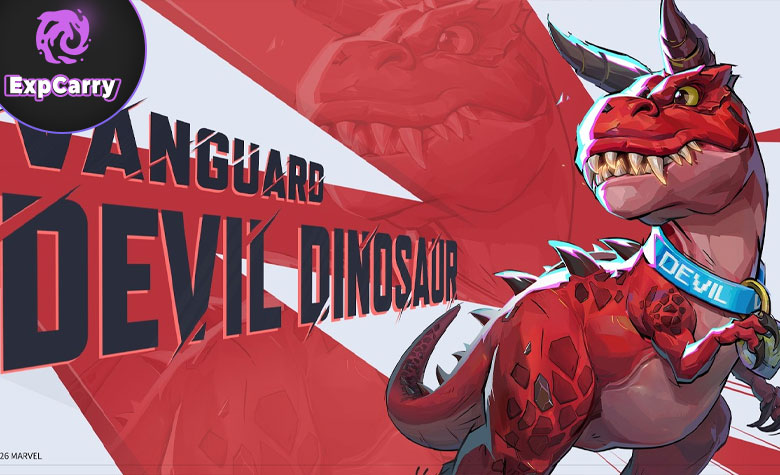
Devil Dinosaur is the obvious hook for Marvel Rivals Season 8, and that is exactly the point. A giant monster joining a hero shooter is instantly readable, instantly marketable, and instantly disruptive. The character gives Season 8 an identity before players even open the patch notes. This is not just another masked fighter with slightly different projectiles. It is a massive Marvel creature stomping into team fights, dragging the Monster Kingdom energy into the new Sins of Alchemax season.
That kind of roster addition matters because hero shooters live and die by fresh match problems. A new hero changes team compositions, target priority, map pressure, counters, and the emotional stability of anyone entering ranked on day one. Devil Dinosaur gives returning players something new to test, gives content creators a giant target to dissect, and gives the meta another problem to solve. Very efficient. One dinosaur enters the roster and suddenly everyone has homework again.
Season 8 also avoids making Devil Dinosaur feel isolated. His arrival connects to new lore, store items, ranked rewards, event progression, and a Team-Up Ability with The Punisher. That gives the update a stronger shape than a simple hero drop. Devil Dinosaur is not just content placed inside Season 8. He is the centerpiece that holds the season's theme, rewards, and balance conversation together.
Sins of Alchemax Gives Season 8 a Sharper Story Frame
The new Season 8 serial, Sins of Alchemax, gives Marvel Rivals a cleaner narrative direction after the Monster Kingdom build-up. The update also adds Devil Dinosaur lore through The Devil in the Details, tying the new hero into the broader seasonal fiction instead of dropping him into the game like a misplaced toy from a much louder shelf.
This matters because Marvel Rivals has a major advantage over most hero shooters: its roster already carries story weight. Players do not need a lecture to understand why Devil Dinosaur, Rogue, Gambit, Hulk, Deadpool, Jeff the Land Shark, or The Punisher can sell a themed season. The IP does part of the work. NetEase still has to organize that material into a coherent update, but Marvel gives the game a huge library of characters, relationships, costumes, and absurd comic-book logic to turn into content.
Season 8 uses that advantage more aggressively. The Battle Pass, store bundles, Twitch Drops, ranked rewards, and event structure all orbit the same seasonal mood. Alchemax gives the season its tech-flavored danger. Devil Dinosaur gives it scale and chaos. The cosmetics give it monetization. The cosmetics give it monetization. Season Event Missions also help keep players moving through the update between ranked matches. The event track gives it a reason to log in. Somehow, this is now considered a healthy ecosystem. Nature is healing, or at least being heavily monetized.
Marvel Rivals Season 8 Content Has More Than One Job
The strongest part of Season 8 is that it does not rely on Devil Dinosaur alone. A single new hero can pull players back for a weekend, but a full seasonal structure keeps the update active for longer. Season 8 stacks several layers at once: gameplay freshness, cosmetic progression, esports engagement, ranked incentives, social viewing rewards, and balance changes. That is the difference between a content drop and a content engine.
| Season 8 Feature | What It Adds | Why It Matters |
|---|---|---|
| Devil Dinosaur | New playable hero and season headline | Gives players a major roster change and a new frontline problem |
| Sins of Alchemax | New seasonal story serial | Frames the update around a clear Marvel conflict |
| Project: Heroic Age Battle Pass | 10 new costume sets, including Rogue, Jeff the Land Shark, and Gambit highlights | Creates long-term progression across the season |
| Devil Dino Hide and Seek | Season event with missions and rewards | Gives casual players a reason to return outside ranked play |
| Primal Punishment | New Devil Dinosaur and The Punisher Team-Up Ability | Links the new hero directly to team composition decisions |
| Season 8 balance pass | Hero tuning across Vanguard, Duelist, and Strategist roles | Prevents the season from being only a cosmetic and hero release |
| Marvel Rivals Championship and Ignite support | Competitive hooks, esports hub tools, drops, and qualification paths | Gives organized players and viewers a reason to follow the season |
This structure is smarter than simply saying "new hero, please clap." Season 8 gives different player types different reasons to care. Competitive players get balance changes and Team-Up movement. Casual players get event missions and rewards. Collectors get skins, chromas, VFX, accessories, and Battle Pass costumes. Viewers get Twitch Drops and esports integration. Ranked players get the Devil Dinosaur - Corporate Cruncher costume for reaching Gold or above. The update is broad because the audience is broad.
Devil Dino Hide and Seek Keeps the Season From Becoming Ranked Homework
The Devil Dino Hide and Seek event is important because not every Marvel Rivals player wants every login to become a ranked trial by combat. Hero shooters need casual goals as much as competitive pressure. If the only meaningful activity is ranked play, the game slowly turns into a stress test with cosmetics. Human leisure, naturally, finds a way to become paperwork with explosions.
Season 8 gives players missions tied to Devil Dinosaur's trail, with rewards such as Units, Chrono Tokens, Gallery Cards, and more. That gives the season a lighter progression layer outside the harshest parts of the queue. It also keeps Devil Dinosaur visible even when players are not directly playing him. The event turns the new hero into a seasonal presence rather than just another character on the select screen.
This is one of the better uses of live-service event design. The event supports the theme, rewards regular play, and gives casual players something to chase. The risk, as always, is overload. Marvel Rivals already has Battle Pass progression, ranked rewards, store drops, Twitch Drops, esports events, and seasonal missions competing for attention. The trick is giving players reasons to return without making the calendar feel like a predator with notifications.
Season 8 Team-Up Changes Put The Punisher Beside the Dinosaur
Team-Up Abilities remain one of Marvel Rivals' most important systems because they give the game a Marvel-specific strategic layer. Season 8 adds Primal Punishment, a new Team-Up between Devil Dinosaur and The Punisher. Devil Dinosaur acts as the Team-Up Anchor and gains bonus health, while The Punisher unlocks Ancient Judgement through the pairing.
This is exactly the kind of system that lets Marvel Rivals refresh team-building without rewriting every hero from scratch. A new Team-Up can make one roster addition feel bigger than one kit. It changes not only how Devil Dinosaur plays, but also how teams may evaluate The Punisher in compositions built around him. That is useful design, assuming it does not eventually become a balance spreadsheet wearing a superhero mask.
Season 8 also adjusts Chilling Assault for Luna Snow, Iron Fist, and Emma Frost by increasing the relevant field range from 9m to 12m and matching the barrier placement distance to that radius. That is not as flashy as a dinosaur and Punisher pairing, but it matters. Team-Up tuning can quietly reshape compositions because it changes the value of specific hero clusters. In Marvel Rivals, synergy is not flavor text. It is a balance lever.
The Season 8 Balance Patch Pushes Strategists Back Toward Support
The Season 8 balance pass is one of the reasons the update feels current rather than cosmetic. NetEase did not just add Devil Dinosaur and call it a day. The patch touches Vanguards, Duelists, Strategists, and Team-Up Abilities, with several changes aimed at damage pressure, frontline durability, mobility, and support identity.
Deadpool receives reduced healing during The Ban Hammer in Gun Form and lower Vanguard Dual Desert Eagles damage. Emma Frost gets more durable through better Diamond Form and Psionic Seduction damage reduction, faster Mind's Aegis repositioning, and a longer Telepathic Pulse falloff window. The Thing gets a direct base health increase from 700 to 750. That gives the frontline a clearer Season 8 adjustment pattern: trim excess damage or self-sustain in some places, reinforce durability in others.
Duelists also move around. Iron Fist gains stronger combo pressure through Jeet Kune Do and K'un-Lun Kick changes. Mister Fantastic loses some movement slow control but gains more direct damage and a cheaper ultimate. Moon Knight gets a shorter Moonlight Hook cooldown. Phoenix becomes more dangerous on direct hits while losing some explosive mark detonation damage. Spider-Man's ultimate hits harder, Squirrel Girl gets a shorter Mammal Bond cooldown, Star-Lord gets more ammo, and Wolverine's Regenerative Healing Factor triggers more often.
The Strategist section is the most interesting because it shows NetEase trying to stop supports from becoming damage dealers with healing privileges. Invisible Woman loses some Force Physics push distance and damage. Loki's illusions heal more reliably but deal less damage, and his ultimate costs more energy. Mantis loses part of her Allied Inspiration damage boost but gains a flat movement speed boost for allies. Rocket Raccoon and White Fox move in the other direction, receiving stronger healing or utility output in ways that keep them tied to support value rather than raw damage identity.
Project: Heroic Age Turns Season 8 Into a Cosmetic Push
The Project: Heroic Age Battle Pass brings 10 new costume sets, with highlighted skins including Rogue - Starlit Rebel, Jeff the Land Shark - Devil Landshark, and Gambit - Barrier Buster. The store also adds Hulk - Infinity Hulk, Deadpool - Monster King, Devil Dinosaur - Chrono-Armor, Devil Dinosaur - Tropical Beast, Devil Dinosaur emoji content, Rogue chromas and ultimate VFX, Jeff chromas and ultimate VFX, Devil Dinosaur animation content, and accessories for several heroes.
This is where Marvel Rivals turns character attachment into seasonal spending. The game does not need to invent interest from zero. Rogue, Gambit, Hulk, Deadpool, Jeff, The Punisher, and Devil Dinosaur already come with built-in identity. Cosmetics work better when they feel tied to character fantasy, and Season 8 clearly understands that. Jeff becoming Devil Landshark is absurd, but it is the right kind of absurd. Not all civilization was a mistake.
The danger is that every season can start looking like a storefront with gameplay attached. Season 8 avoids that problem mostly because it has real gameplay movement beside the cosmetics: a new hero, a new Team-Up, a real balance pass, an event, esports systems, and ranked rewards. If those layers stay meaningful, the store feels like part of the season. If they get thin, the store becomes the main character, and that is usually when players start sharpening pitchforks in the comments.
Marvel Rivals Esports Gets Pulled Deeper Into the Client
Season 8 also expands Marvel Rivals' competitive structure. The official patch notes point to Marvel Rivals Championship returning for the season, while Ignite Stage 1 is pushed through Twitch Drops and an in-game esports hub. The client now supports live streams, battle notifications, VOD replays, combat analytics, team information, match previews, prediction tools, and even custom crosshair copying from pro player profiles.
That is more important than it sounds. Esports only works for a live-service game when the audience can actually follow it without needing to assemble a research folder like a detective in a raincoat. Putting more of the competitive scene inside the client lowers the friction. Players can watch, claim drops, check teams, copy reticles, follow schedules, and connect ranked interest to the professional scene.
The Marvel Rivals Championship also gives organized factions a seasonal goal. Open Qualifiers offer Units and rewards, while top faction performance can connect into Ignite Series 2026 Mid-Season Qualifiers and potential Stage 2 Pro League advancement. That gives Season 8 a competitive ladder beyond ordinary ranked grinding. It is not just "play matches until your soul leaves." It is a structured seasonal ecosystem, which is healthier and only slightly less exhausting.
Marvel Rivals Season 8 Shows the Game's Biggest Strength and Its Biggest Risk
Marvel Rivals Season 8 works because it understands that a hero shooter needs constant movement. Devil Dinosaur gives the update spectacle. Sins of Alchemax gives it a story frame. Project: Heroic Age gives it progression. Devil Dino Hide and Seek gives casual players a reason to return. Primal Punishment gives the new hero a Team-Up identity. The balance pass gives the meta something real to process. Esports integration gives competitive players and viewers a stronger reason to follow the season.
The risk is the same one every successful live-service game eventually faces: the machine always wants more. Once players expect a new hero, new events, new skins, new balance changes, new rewards, new drops, and new competitive hooks every season, silence starts to feel like decline. That is powerful when the studio can maintain the pace, and brutal when it cannot.
For now, Season 8 gives Marvel Rivals a strong current-season push. It is loud, packed, and built around a headline character that nobody can miss. The update has enough gameplay change to support the cosmetic layer and enough event structure to keep casual players involved. The next test is whether Marvel Rivals can keep this cadence sharp without turning every season into a checklist avalanche. Devil Dinosaur may be huge, but even he cannot carry a live-service treadmill forever.