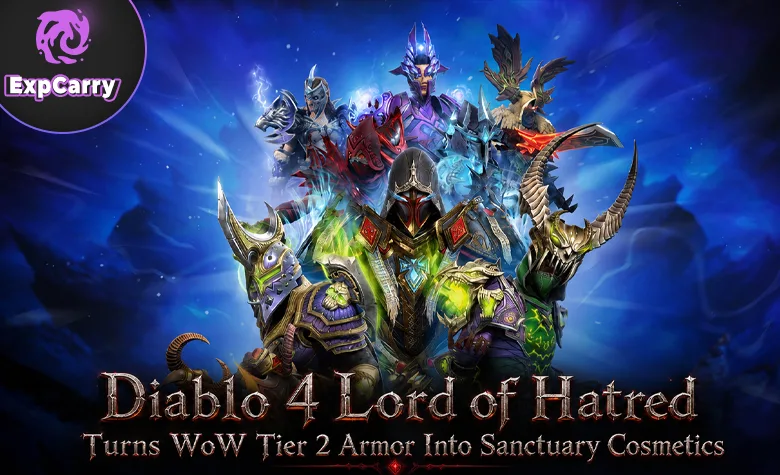
Diablo 4: Lord of Hatred has turned one of World of Warcraft's most recognizable armor eras into a Sanctuary fashion crossover. The collaboration brings classic WoW Tier 2-inspired looks into Diablo 4 as premium cosmetics, translating sets like Judgment, Bloodfang, Wrath, Nemesis, Stormrage, Netherwind, and The Ten Storms into Diablo's darker visual style. It is not a gameplay system, not a loot chase, and not a new way to build power. It is a premium cosmetic crossover built on old Blizzard class fantasy, which naturally means half the playerbase will admire the work while the other half checks the price and starts sharpening pitchforks.
The timing is not random. The Lord of Hatred Campaign brings the Paladin and Warlock into the Diablo 4 spotlight alongside Skovos, War Plans, Talisman set bonuses, the Horadric Cube, new endgame systems, and broader progression changes. The WoW collab sits beside that as a store-driven nostalgia play. It brings Azeroth's old raid silhouettes into Sanctuary, but the value depends entirely on whether players care enough about classic Warcraft armor to buy it again in another Blizzard game. The answer, tragically for everyone's wallet, is probably yes.
Diablo 4 WoW Tier 2 Collab Sets in Lord of Hatred
The collaboration focuses on WoW Tier 2-inspired armor sets adapted for Diablo 4 classes. These are not direct one-to-one technical ports. They are reinterpretations built for Diablo 4's class models, materials, lighting, and darker art direction. The recognizable elements remain: Judgment's gold and red holy silhouette, Bloodfang's crimson rogue style, Wrath's heavy warrior armor, Stormrage's antlers, Netherwind's arcane mage look, Nemesis's demonic warlock flavor, and The Ten Storms' shaman identity.
| Diablo 4 Class | WoW-Inspired Set | Original Warcraft Identity | Main Visual Hook |
|---|---|---|---|
| Barbarian | Battle Gear of Wrath | Warrior Tier 2 | Heavy plate, blades, dragon-scale styling, brutal frontline silhouette |
| Paladin | Judgment Set | Paladin Tier 2 | Gold and red robes, glowing eyes, masked cowl, sacred executioner look |
| Warlock | Nemesis Raiment | Warlock Tier 2 | Demonic caster robes, horned silhouette, dark fel-style identity |
| Sorcerer | Netherwind Regalia | Mage Tier 2 | Blue-purple arcane armor, gems, runes, split helm design |
| Rogue | Bloodfang Armor | Rogue Tier 2 | Crimson hood, sharp shoulders, assassin-style leather profile |
| Druid | Stormrage Raiment | Druid Tier 2 | Antlered helm, earthy tones, nature-heavy druid identity |
| Necromancer | Pale Rider's Eternal Armor | Death Knight-inspired anniversary armor | Spiked metal, undead knight styling, colder death-themed plate |
| Spiritborn | The Ten Storms | Shaman Tier 2 | Animal-head shoulders, flowing kilt, storm and tribal shaman influence |
The sets are cosmetics, not power gear
The most important practical point is simple: these WoW Tier 2 collab sets are cosmetics. They do not add class bonuses, item affixes, new skills, or progression advantages. They sit in the same broad category as premium armor skins, mounts, portals, back trophies, and other paid visual items. That makes them attractive to collectors and irrelevant to players who only care about build strength. Players focused on character progression instead of cosmetics can look at Power Leveling for advancement support.
This distinction matters because Lord of Hatred already adds real gameplay systems through Talisman, War Plans, the Horadric Cube, Skovos, Paladin and Warlock access, endgame changes, and broader class updates. The WoW collab does not replace any of that. Blizzard did not bring old Blackwing Lair set bonuses into Diablo 4. It brought Tier 2 aesthetics into the shop, because apparently even nostalgia now needs a checkout page.
Diablo's darker style changes the Warcraft armor fantasy
The best part of the crossover is also the part some players will argue about forever: the sets do not look exactly like they do in World of Warcraft. Diablo 4 has heavier materials, darker lighting, more realistic proportions, and a less cartoon-like armor language. That means Judgment, Bloodfang, Wrath, Nemesis, and the other sets read differently once they enter Sanctuary.
For some players, that is the appeal. For broader Diablo IV services, players can use the main game hub. The armor looks like a darker, more grounded version of a classic WoW memory. For others, the change loses part of the original Warcraft charm. Both reactions make sense. A WoW set inside Diablo 4 cannot fully preserve the same exaggerated silhouette without looking out of place. It has to be rebuilt for Diablo's world, otherwise it becomes cosplay in a demon slaughterhouse.
Judgment, Nemesis, Bloodfang, and the Strongest Nostalgia Picks
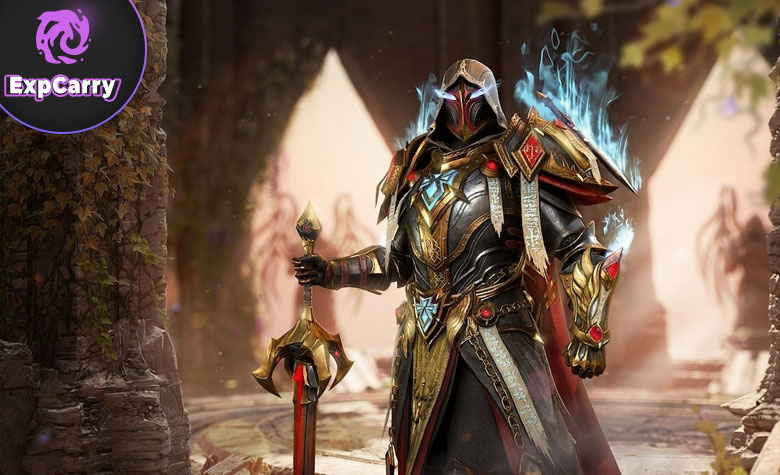
The crossover leans hardest on the most recognizable Tier 2 looks. Judgment, Bloodfang, Wrath, Nemesis, Netherwind, and Stormrage carry decades of player memory. Even players who never farmed Blackwing Lair seriously can often recognize those silhouettes. That is the power of early WoW armor design: the sets were readable, bold, and tied directly to class identity instead of looking like random spikes arranged by committee.
| Set | Best Audience | Reason It Stands Out |
|---|---|---|
| Judgment Set | Paladin players and classic WoW fans | Probably the most famous Paladin armor look Blizzard has ever made |
| Nemesis Raiment | Warlock players and dark caster fans | Demonic Warlock identity fits Sanctuary's horror tone naturally |
| Bloodfang Armor | Rogue players | Strong red hooded assassin fantasy that fits Diablo's Rogue cleanly |
| Battle Gear of Wrath | Barbarian players | Warrior armor translates easily into Diablo's heavy melee fantasy |
| Stormrage Raiment | Druid players | Antlers and nature motifs make it instantly readable |
| Netherwind Regalia | Sorcerer players | Arcane colors and mage shapes line up well with spellcaster fashion |
| The Ten Storms | Spiritborn players | Shaman visuals give Spiritborn a strong Warcraft-style elemental identity |
| Pale Rider's Eternal Armor | Necromancer players | Death Knight-inspired armor gives Necromancer a colder undead knight profile |
Judgment is the obvious centerpiece
Judgment is the set most likely to dominate screenshots because it is one of the most famous armor sets in Blizzard history. The gold, red, hooded, glowing-eyed Paladin look has survived because it communicates class fantasy instantly. It looks holy, severe, dangerous, and theatrical without needing a paragraph of explanation. In Diablo 4, that identity fits especially well because Lord of Hatred brings Paladin into the spotlight.
The timing is not subtle. Paladin arrives with Lord of Hatred, and the WoW collab gives that class one of the most iconic Paladin visual references Blizzard owns. This is the corporate equivalent of placing a relic under a spotlight and pretending it wandered there by accident. It works, obviously, because Judgment still has the kind of visual authority most modern armor sets struggle to fake.
Nemesis gives Warlock the cleanest dark fantasy match
Nemesis Raiment is one of the easiest sets to justify inside Diablo 4 because Warlock fantasy already lives near demons, forbidden magic, ritual power, and theatrical menace. Unlike some Warcraft armor that needs heavy translation to fit Sanctuary, Nemesis already looks like it belongs near curses, blood rituals, and bad decisions made in candlelit rooms.
This also makes Warlock one of the most important classes in the collab, not a side note. Lord of Hatred gives Warlock its own gameplay identity, while the WoW crossover gives it a visual shortcut to one of Warcraft's strongest dark caster looks. Leaving Nemesis out of a full collab breakdown would be like writing about demons and forgetting the horns, which is apparently a thing people can do if no one stops them.
Bloodfang and Wrath fit Diablo without much translation pain
Bloodfang and Battle Gear of Wrath are also natural fits for Diablo 4. Bloodfang already has a darker rogue identity: red leather, a hood, sharp shoulders, and a predatory silhouette. It fits Diablo's Rogue without needing much explanation. Wrath also translates cleanly because Barbarian armor in Diablo already supports heavy, aggressive, brutal shapes.
That makes both sets safer than some of the more stylized Warcraft looks. They do not need to fight Diablo 4's art direction. They already belong near blood, steel, and violence. Very convenient, since those are basically Sanctuary's three main exports.
Premium Shop Pricing, Reliquary Timing, and Bundle Value
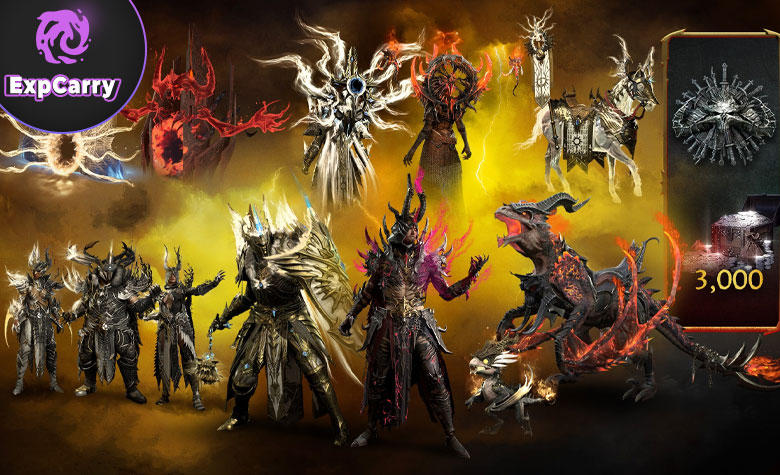
The WoW crossover is not just a free celebration of shared Blizzard history. The armor sets are premium cosmetics, with each class bundle sold separately and a larger bundle available for players who want the full collection. Current coverage lists each class bundle at 2800 Platinum and the full class bundle at a discounted 5700 Platinum. The limited-time Premium Reliquary features Relics of Azeroth, costs 1000 Platinum, and runs for 59 days from release, ending on June 29.
| Item Type | Reported Pricing or Timing | Practical Note |
|---|---|---|
| Individual class armor bundle | 2800 Platinum | Best for players who only care about one class look |
| All-class armor bundle | 5700 Platinum discounted bundle | Better value for collectors who want every armor set |
| Premium Reliquary | 1000 Platinum | Features Azeroth-themed weapon cosmetics and event rewards |
| Reliquary duration | 59 days, ending June 29 | The clearest time-sensitive part of the crossover |
| Armor bundle status | Premium shop cosmetics | Check the in-game shop for current availability and rotation |
Class bundles make sense only for mains
The individual class bundles make sense only if you strongly play that class or care about that specific Warcraft reference. A Rogue main who loves Bloodfang has a clear reason to buy one bundle. A Paladin main who wants Judgment has an even clearer one. A Warlock player who wants Nemesis gets one of the cleanest visual matches in the entire crossover.
The uncomfortable part is that the crossover exists in the premium shop. Players who hoped a Blizzard-to-Blizzard crossover would mean free earnable armor will not be thrilled. That criticism is predictable and fair. When a company brings one of its own iconic designs into another of its own games, charging premium currency-farm">currency">currency-farm">currency for it feels less like a celebration and more like nostalgia being held behind glass with a tiny price tag.
The Reliquary is the time-sensitive piece
The armor sets may rotate through the shop differently, but the Azeroth-themed Premium Reliquary is the more clearly time-sensitive part. It includes weapon cosmetics and event rewards tied to the crossover window. Players who care about completing the whole collection should check the in-game shop and Reliquary tabs instead of assuming everything will remain available forever.
This is especially important because Diablo 4's shop and event rollout can vary by account visibility, region timing, and client refresh behavior. If something is missing, restarting the game or checking again later may help. Extremely elegant, yes: the ancient ritual of turning it off and on again, now applied to interdimensional fashion commerce.
Explore services related to this guide, selected from our Diablo IV catalog.
View All Diablo IV Services
Lord of Hatred Gives the Crossover a Stronger Hook
The WoW collab lands at a smart moment because Lord of Hatred is already positioned as a major Diablo 4 expansion push. Blizzard is not dropping these cosmetics into a dead patch window. The expansion brings Skovos as a new region, Temis as an endgame hub, War Plans as an endgame activity structure, Talisman as a new item system with set-style bonuses, the Horadric Cube as a crafting station, and major updates for all players.
That matters because the crossover benefits from launch attention. Players are already logging in for new systems, Paladin and Warlock access, campaign content, build changes, and progression updates. Adding WoW-inspired cosmetics to that moment gives the store a larger audience. Shocking business insight: sell nostalgia when everyone is already looking at the game.
Talisman set bonuses are separate from Tier 2 cosmetics
One easy point of confusion is the word "set." Lord of Hatred adds the Talisman system, which includes set bonus concepts through Seals and Charms. The WoW Tier 2 collab also uses famous armor set identities. These are not the same thing. The Tier 2 crossover sets are cosmetic armor bundles, while Talisman set bonuses are part of Diablo 4's actual itemization and build system.
That distinction should be kept clear in any guide or news article. Saying "Tier 2 sets come to Diablo 4" is fine for cosmetic shorthand, but it can mislead players if the article does not explain that these are not functional WoW-style class sets. Nobody is getting old raid bonuses in Sanctuary. They are getting the look, not the raid gear logic.
Paladin and Warlock timing gives Judgment and Nemesis extra weight
Lord of Hatred's class focus makes Judgment and Nemesis feel especially deliberate. Paladin gets one of Blizzard's most recognizable holy armor sets, while Warlock gets one of Warcraft's strongest demonic caster looks. That combination gives the collab more marketing force than a random skin drop because the cosmetics connect directly to the expansion's class identity.
It also shows why Blizzard picked Tier 2 rather than a less iconic armor era. Tier 2 sets have clear silhouettes, strong class memories, and a direct link to classic WoW identity. They are old enough to feel nostalgic and recognizable enough to sell outside WoW itself. This is not subtle. It is effective, which is worse, because now everyone has to admit the nostalgia machine still works.
Azeroth Armor in Sanctuary Changes the Meaning of These Sets
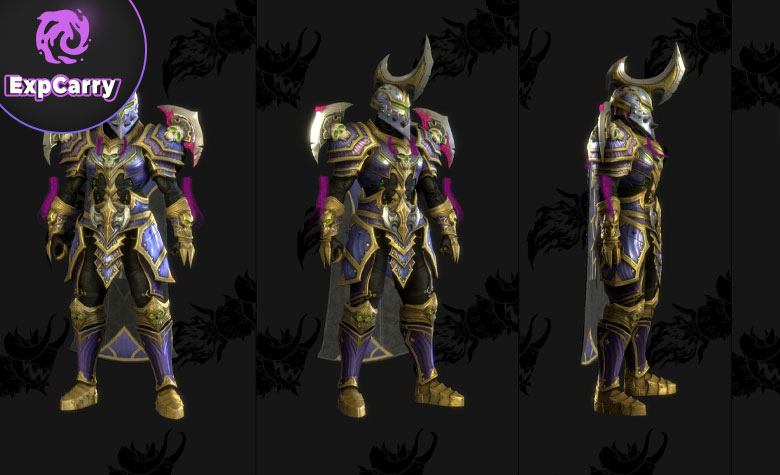
Moving WoW Tier 2 armor into Diablo 4 changes the visual meaning of the sets. In World of Warcraft, they belong to raid history, class progression, transmog collections, and the memory of older class fantasy. In Diablo 4, they become premium dark fantasy cosmetics separated from the original raid context. That makes them easier to wear, easier to sell, and less connected to the gameplay achievements that made them famous in the first place.
This is the central tension of the crossover. The designs are strong because they come from a time when class armor had sharper identity. But in Diablo 4, that identity is being sold as a shop skin rather than earned through a raid or seasonal challenge. Some players will not care because the armor looks good. Others will care because the armor's original meaning came from acquisition, not just appearance. Both sides will now argue online, nature's least necessary weather pattern.
The best sets preserve class identity across games
The strongest adaptations are the ones where Warcraft class fantasy lines up naturally with Diablo 4 class fantasy. Paladin and Judgment are the cleanest holy warrior match. Warlock and Nemesis fit Diablo's darker magic almost too easily. Rogue and Bloodfang also work because both games use the hooded assassin profile without needing translation gymnastics.
Barbarian and Wrath work because both warrior and barbarian armor share heavy melee aggression. Druid and Stormrage survive the move because the nature theme remains readable. Netherwind gives Sorcerer a strong arcane shape, while The Ten Storms gives Spiritborn a shamanic identity that fits through primal, spiritual, and elemental themes. Pale Rider's Eternal Armor gives Necromancer a Death Knight-adjacent look, which is close enough to Sanctuary's death magic to work.
Tier 2 still wins because the silhouettes are readable
The reason this collab gets attention is not just brand recognition. It is silhouette power. Judgment, Bloodfang, Netherwind, Stormrage, Nemesis, and Wrath are still easy to identify because their shapes, colors, helmets, and shoulders do real visual work. Modern armor often drowns itself in detail until nothing reads clearly from a distance. Tier 2 did not have that problem.
That is why these sets survive the move into Diablo 4. Even after darker materials and Diablo-style rendering, the main visual language remains. You can still recognize the source. That is the whole point of a crossover cosmetic. If the player needs a museum label to understand it, the skin has failed.
Best Players for the Diablo 4 WoW Collab Sets
The WoW Tier 2 collab is not for every Diablo 4 player. It is aimed at three groups: Warcraft veterans with attachment to classic class sets, Diablo 4 collectors who care about premium cosmetics, and Blizzard crossover fans who enjoy seeing Azeroth visual history rebuilt inside Sanctuary. Players who ignore shop cosmetics can safely skip it without losing gameplay value.
| Player Type | Collab Value | Best Pick |
|---|---|---|
| WoW veteran | High if attached to classic Tier 2 armor | Judgment, Nemesis, Bloodfang, Wrath, Netherwind, or Stormrage |
| Diablo 4 class main | High if the set fits your main class | Single class bundle |
| Cosmetic collector | High but expensive | Full bundle plus Reliquary if desired |
| Build-focused player | Low | Skip unless appearance matters |
| Free-to-play style spender | Low | Check for any free event items only |
| Paladin player | Very high nostalgia value | Judgment Set |
| Warlock player | Very high class fantasy value | Nemesis Raiment |
Single-class buyers should choose by main, not nostalgia alone
If you only plan to buy one set, choose based on the Diablo 4 class you actually play. A beautiful Bloodfang set does very little for a player who never touches Rogue. Judgment is iconic, but it matters most if Paladin becomes your main Lord of Hatred class. Nemesis is a strong pick for Warlock players, but it is still only useful if you actually plan to play the class. Cosmetics are only valuable if you use them, not if they sit in the wardrobe as a monument to poor impulse control.
This is especially true because the individual bundles are not cheap. The best purchase is the one tied to a class you will keep playing after the launch hype settles. Do not buy the full nostalgia shelf unless you genuinely rotate classes or collect everything. Blizzard's shop does not need charity. It is doing alarmingly well without your heroic sacrifice.
Collectors should watch the limited-time items first
Collectors should prioritize time-sensitive content before permanent or semi-permanent shop additions. The Premium Reliquary window is the part that may disappear first, while armor bundles appear to be positioned differently in the shop. That does not mean armor sets can never rotate, but the event Reliquary has the clearer limited-time structure.
The safest approach is to check the in-game shop, confirm availability, and decide based on the actual account-visible offers. Do not rely only on screenshots or social posts, because shop rollouts and regional presentation can create confusion. In-game confirmation beats rumor archaeology.
Final Thoughts
Diablo 4's World of Warcraft Tier 2 collab is a smart, expensive, and extremely predictable nostalgia strike. Lord of Hatred already gives Diablo 4 a major gameplay push through Skovos, Paladin, Warlock, War Plans, Talisman, the Horadric Cube, and broader system updates. The WoW sets add a separate cosmetic hook by bringing some of Azeroth's most recognizable armor identities into Sanctuary.
The strongest sets are the ones with the clearest class fantasy: Judgment for Paladin, Nemesis for Warlock, Bloodfang for Rogue, Wrath for Barbarian, Stormrage for Druid, Netherwind for Sorcerer, The Ten Storms for Spiritborn, and Pale Rider's Eternal Armor for Necromancer. They work because Tier 2 armor still has strong silhouettes, readable colors, and a level of class identity that many newer sets struggle to match. Diablo 4's darker art style changes them, but it does not erase what made them recognizable.
The main criticism is obvious: these are premium cosmetics, not earnable raid-style rewards. That will make the collab exciting to collectors and irritating to players who think an in-house Blizzard crossover should have included more free rewards. Both reactions are fair. As a visual crossover, it works. As a shop strategy, it is exactly as cynical as expected. The sets look strong, the nostalgia is real, and the price tag is the little demon standing behind the curtain, smiling like it designed the whole thing.