Turtle WoW has shut down after legal pressure from Blizzard, ending one of the most visible World of Warcraft private server projects and one of the clearest examples of why Classic Plus demand never really disappeared. The server was not just another unofficial realm running old content in the background. Turtle WoW built a long-running Vanilla+ experience with custom quests, new zones, class changes, additional races, and the fan-made Mysteries of Azeroth expansion, while staying rooted in the slower, older version of Azeroth that many players still prefer.
The problem is that Turtle WoW existed outside Blizzard's permission. After a copyright infringement lawsuit, settlement, consent judgment, and permanent injunction, the project was forced to end operations. The final day of operation was May 14, 2026, with servers going offline at 12:00 AM on May 15. The broader web presence, including forums and social channels, was scheduled to go offline by October 16, 2026. That makes the shutdown more than a server closure. It is a direct collision between fan preservation, custom MMO design, private server monetization, and Blizzard's control over World of Warcraft as an active commercial product.
Turtle WoW Shutdown Timeline and Blizzard Legal Pressure
The Turtle WoW shutdown did not appear from nowhere. Blizzard filed legal action against the project in 2025, targeting the private server operation as an unauthorized use of World of Warcraft copyrighted material, trademarks, and related intellectual property. The case eventually moved toward a settlement, consent judgment, and permanent injunction in Blizzard's favor, requiring the project to stop activity tied to Turtle WoW.
| Event | What Happened | Why It Matters |
|---|---|---|
| Blizzard lawsuit | Blizzard pursued legal action against Turtle WoW over copyright and related claims. | The case turned Turtle WoW from a private server controversy into a formal legal fight. |
| Settlement and consent judgment | The court record moved to judgment in Blizzard's favor after the parties reached a settlement. | This created the legal foundation for forcing the project to stop operating. |
| Permanent injunction | Turtle WoW was ordered to cease and desist operations tied to development, promotion, marketing, sales, and related activity. | The project could no longer continue as a public private server. |
| Realm shutdown | The final day of operation was May 14, 2026, with servers going offline at 12:00 AM on May 15. | Players lost access to the live Turtle WoW world and its custom progression. |
| Community channel closure | Forums, social media, and related community spaces were scheduled to close by October 16, 2026. | The shutdown also affected the project's archive, guides, and community memory. |
The timing matters because Turtle WoW had become far more visible than a small nostalgic side project. It had a dedicated community, custom content, public development plans, donation-linked systems, and ambitions that reached beyond simply preserving old WoW. Once a private server becomes that visible, the old fantasy of being ignored by the rights holder becomes much harder to believe.
The legal result turned Turtle WoW from defiant project into sunset server
Before the shutdown, Turtle WoW had positioned itself as a community-driven alternative to official WoW Classic. Its team argued that fan servers could preserve and expand old MMO experiences in ways that publishers often do not support. That argument has cultural weight, especially in a genre where older versions of games can disappear, change beyond recognition, or survive only in limited official formats.
Legally, however, cultural value does not create permission. Blizzard owns World of Warcraft, and Turtle WoW operated using a world, brand, and foundation tied to Blizzard's intellectual property. Players saw a labor of love. Blizzard saw an unauthorized operation built around its property. That conflict is the core of the entire shutdown.
The shutdown date gave players a final chance to say goodbye
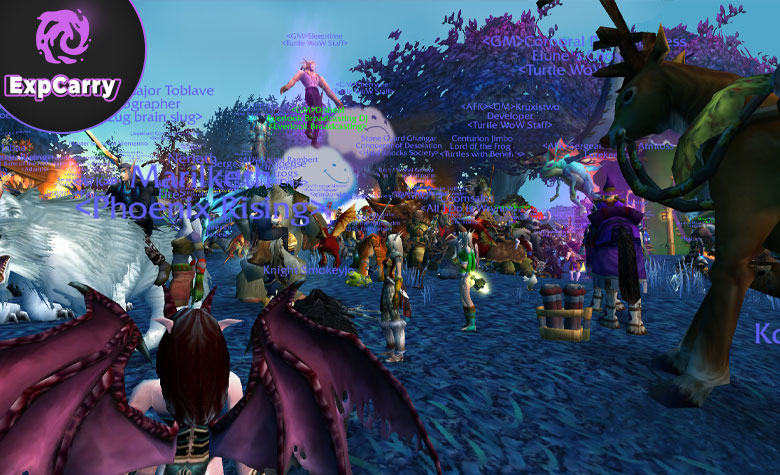
The final weeks of Turtle WoW became a farewell event for the community. Players logged in to visit characters, gather with guilds, revisit zones, and say goodbye to a version of Azeroth that had become personal. For many, this was not only about access to a server. It was about losing years of progression, roleplay, friendships, and a world shaped by community design rather than Blizzard's official roadmap.
The Turtle WoW team pushed the realms toward final progression so players could see late content before the sunset. That did not solve the loss, but it gave the community a final shared moment instead of a sudden blackout.
Turtle WoW Was Popular Because Classic Plus Demand Never Went Away
Turtle WoW mattered because it gave players a version of World of Warcraft that many fans still describe as a true Classic Plus experience. The project kept the old-world pace, tone, and level cap while expanding Azeroth through new quests, zones, races, dungeons-services">dungeons, raids, and balance changes. It tried to answer a question that has followed WoW Classic since its launch: what if vanilla World of Warcraft continued sideways instead of being replaced by expansions?
| Turtle WoW Feature | Player Appeal | Classic Plus Connection |
|---|---|---|
| Vanilla+ design | Kept the slower original WoW rhythm while adding new content. | Matched the fantasy of an expanded vanilla Azeroth. |
| Mysteries of Azeroth | Added fan-made story content without moving into later expansion eras. | Showed how Classic could grow without abandoning its original identity. |
| New races and zones | Gave players fresh reasons to level and explore old-world-style content. | Filled the gap between preservation and reinvention. |
| Class and balance changes | Adjusted old systems that many players felt were unfinished or neglected. | Offered a more active version of classic design rather than a museum copy. |
| Community-led direction | Made the project feel shaped by players who understood the niche. | Created trust among fans frustrated with official priorities. |
Official WoW Classic proved that players still wanted old Azeroth. Turtle WoW proved that many of them wanted more than a preserved snapshot. They wanted new content built with old design values, where leveling mattered, zones felt grounded, and Azeroth was not just a waiting room before endgame systems took over.
Vanilla+ gave Turtle WoW a stronger identity than nostalgia alone
The easiest mistake is to describe Turtle WoW as simple nostalgia. Nostalgia can bring players back for a weekend, but it does not keep a project alive for years. Turtle WoW had staying power because it treated old Azeroth as a foundation for expansion, not as a finished museum piece.
That is why the shutdown hit harder than the loss of a generic private realm. Turtle WoW represented a design argument: old MMO worlds can grow without becoming faster, cleaner, louder, and more disposable. It gave players a version of Classic where the world itself remained the center of the experience.
The fan server debate is really about control, not just preservation
Private server supporters often frame projects like Turtle WoW as preservation. Publishers usually frame them as infringement. Both sides are talking about control. Players want access to the version of a game they love, sometimes with community-driven improvements. Publishers want to protect ownership, revenue, brand presentation, security, and product strategy.
Turtle WoW's appeal for a fan server licensing framework tried to move the conversation into a more formal space. The team wanted Blizzard to create a path where community servers could exist legally, instead of operating in permanent danger. Blizzard has not built that kind of ecosystem for World of Warcraft, and Turtle WoW learned the price of operating before permission existed.
Blizzard's Legal Position Was Predictable Even If Players Hated It
Blizzard's move against Turtle WoW was not surprising. World of Warcraft is still an active commercial MMO, not an abandoned relic. Blizzard sells subscriptions, expansions, services, cosmetics, and official Classic access. A large unofficial server using the WoW brand, copyrighted material, and gameplay foundation is exactly the kind of project a company is likely to challenge once it becomes too visible or too organized.
This is where the emotional argument and the legal argument split apart. A player can believe Turtle WoW made a better Classic Plus experience than Blizzard has offered. That may be a reasonable design opinion. It still does not give Turtle WoW the right to operate using Blizzard's intellectual property.
Monetization made the private server risk harder to ignore
Monetization is one of the biggest pressure points in any private server dispute. A non-commercial preservation project is already legally risky, but a server with donation systems, shop-linked rewards, paid promotion, or public growth ambitions becomes much harder for a rights holder to ignore. It makes the project look less like pure preservation and more like an unauthorized ecosystem around an active commercial game.
That does not mean every player saw Turtle WoW as exploitative. Many saw the shop and donations as practical support for a large volunteer-driven project. But from Blizzard's side, money changing hands around an unofficial World of Warcraft experience was always likely to sharpen the legal response.
The Nostalrius shadow still hangs over every private WoW server
The Turtle WoW shutdown immediately brings back memories of Nostalrius, the famous vanilla private server Blizzard helped shut down in 2016 before official WoW Classic eventually arrived. That comparison matters because Nostalrius became part of the public pressure campaign that proved demand for classic-era WoW was real. Turtle WoW now plays a similar role for Classic Plus demand.
The difference is that Blizzard already has official Classic products now. Turtle WoW was not only proving demand for old WoW. It was competing with Blizzard's own ability to define what Classic should become next. That makes the shutdown legally predictable, but it also makes the design question harder for Blizzard to ignore.
Explore services related to this guide, selected from our WoW Classic catalog.
View All WoW Classic Services


The Shutdown Hurts Because Turtle WoW Solved Problems Official Classic Still Avoids
The anger around the Turtle WoW shutdown is not only about losing characters. It is also about the uncomfortable fact that Turtle WoW answered design demands Blizzard has been slow to address. Many players want classic-era content that grows horizontally, respects the pace of leveling, and expands Azeroth without turning it into another seasonal treadmill.
Official Classic has experimented with new ideas, especially through seasonal formats, but those experiments do not fully replace the appeal of a persistent Classic Plus world. Turtle WoW offered continuity. Players could invest in a character and world that felt like a long-term alternate branch of vanilla WoW. Shutting it down does not erase the demand that created it.
Classic Plus demand is now Blizzard's problem again
With Turtle WoW gone, the Classic Plus conversation does not disappear. It moves back onto Blizzard. Players have already seen that a fan team could create a compelling version of expanded vanilla Azeroth. That raises expectations for what official WoW Classic could become if Blizzard chooses to develop a more ambitious long-term branch instead of relying only on nostalgia cycles and seasonal experiments.
This does not mean Blizzard should copy Turtle WoW directly. But Blizzard can learn from the demand patterns Turtle WoW exposed: slower progression, grounded questing, old-zone relevance, class identity, and new content that feels native to pre-expansion Azeroth.
Fan Server Licensing Is the Hard Question Turtle WoW Leaves Behind
Turtle WoW's call for a formal fan server licensing framework is one of the most important parts of the story because it points beyond one shutdown. A licensing system could, in theory, let community projects operate legally under defined rules. Blizzard could control standards, branding, monetization limits, security expectations, and content boundaries while still allowing fan-driven creativity to exist without constant legal uncertainty.
The concept is attractive because it offers a middle path between total shutdown and uncontrolled private server growth. The difficulty is implementation. Blizzard would have to manage legal risk, technical support expectations, moderation issues, monetization disputes, and the possibility that fan servers compete with official products.
A real licensing framework could reduce uncertainty for players and server teams, but a restrictive one would not replace what made Turtle WoW popular. The challenge is giving community projects enough freedom to matter without letting them damage the official game, abuse monetization, or fragment the player base beyond control. That balance is possible in theory, but it would require trust, legal clarity, and a publisher willing to give fans limited room to build inside a protected franchise.
Turtle WoW Shutdown: The Real Verdict
The Turtle WoW shutdown is not a simple story about heroes and villains. Blizzard had a clear legal interest in stopping an unauthorized server built around World of Warcraft. Turtle WoW had a clear cultural impact because it gave players a compelling version of Classic Plus that Blizzard has not fully delivered. The legal result ended the server, but it did not answer the design question that made the server matter.
Turtle WoW became popular because it offered an alternate future for vanilla WoW: slower, grounded, expanded, and community-shaped. That future was legally vulnerable from the start, but it was not creatively meaningless. It showed that players are not only asking for old servers. They are asking for old design values with new content that respects the original world.
That is the gap Blizzard now owns again. The company can protect World of Warcraft legally while still failing to satisfy the part of the audience that made Turtle WoW successful. If Blizzard follows the shutdown with a cautious, minimal Classic roadmap, players will remember the closure as a publisher killing the more interesting version of its own legacy. If Blizzard builds a serious official Classic Plus branch, the shutdown may be remembered as a messy but important turning point.
Turtle WoW is gone, but the appetite for a grounded, expanded classic Azeroth remains. If Blizzard wants the final word, it cannot be only a permanent injunction. It has to be a better official answer to the Classic Plus demand that Turtle WoW carried for years. Otherwise, the company has not ended the argument. It has only removed the most visible piece of evidence.