



Ashes of Creation is built around one core idea: the world changes because players push it. The Node system is the clearest expression of that, and the Stage 6 Metropolis is the finish line that reshapes an entire region. The Node system is the clearest expression of that, and the Stage 6 Metropolis is the finish line that reshapes an entire region. If your group relies on crafting, a Professions Boost can help keep the node fed with steady progression. The Rise of Metropolises is not a single quest you complete. It is a long, coordinated development track that turns daily activity, logistics, crafting, and politics into settlement power.
This guide is written for how node progression is described today and how guilds and organized groups will realistically play it in 2026: short sessions on weekdays, longer pushes on weekends, and a constant tension between growth and defense. It is not a lore recap and it is not a theorycraft rabbit hole. It is a practical plan you can follow to pick a node, feed it efficiently, keep it from stalling, and protect it long enough to reach Stage 6. One note up front: Ashes of Creation is still in development, so exact thresholds, timers, and implementation details can evolve. The framework in this guide stays useful even if numbers change, because it is based on the stable structure of the system: nodes advance from player activity in the Zone of Influence, vassal rules cap growth hierarchies, and higher stages introduce larger governance and siege pressure.
Metropolis Snapshot: What a Stage 6 Node Actually Demands
A Node becomes a Metropolis at Stage 6. That is the final development stage, and it is intended to function as a major regional hub with expanded services, stronger identity from node type and culture, and a unique Metropolis level advantage often described as a Superpower tied to the node type. In other words, Stage 6 is not only bigger buildings. It is a different tier of regional influence and capability.
The key concept is how nodes grow. Nodes advance by collecting experience from player actions inside the Node’s Zone of Influence. Questing, killing monsters, gathering, crafting, exploration, building, and other progression activities feed the node. Growth is not passive. If people stop doing meaningful play in the Zone of Influence, the node does not simply “bank progress.” It begins to accumulate atrophy pressure and can lose momentum or capabilities if it is not maintained.
The stage ladder and the two hidden constraints that ruin most pushes
Stage 6 is the top of a fixed ladder: Wilderness, Expedition, Encampment, Village, Town, City, Metropolis. Each stage requires enough accumulated node experience to advance. That sounds straightforward, but two constraints decide whether your push is smooth or miserable.
First, vassal hierarchy rules can block advancement. If your node is a vassal and it would advance to the same stage as its parent, it cannot advance. This creates a map-level strategy layer: you can farm hard and still hit a ceiling if you picked a node under the wrong parent chain.
Second, atrophy is real. Nodes are described as carrying ongoing atrophy pressure that must be covered by player activity. If the pressure is not addressed, the node can degrade over time. Depending on final implementation, that degradation may mean reduced services and functionality, or it may include stage loss or even a full collapse. This is the silent killer of Stage 5 to Stage 6 plans because groups focus on big weekend pushes but do not create a maintenance habit Monday through Thursday.
Why Stage 6 changes the plan: Superpowers and regional web control
Metropolis stage is where node type advantages are designed to become dramatic. Intrepid has described node type Superpowers unlocking at Level 6. For example, Scientific Metropolises are designed to unlock a teleportation style Superpower connecting the Metropolis and its vassals, and Economic Metropolises are designed to unlock a linked economy concept for auction access between similar nodes and their vassals. You do not need those exact examples to understand the strategic lesson: Stage 6 benefits are meant to justify the political and military effort required to reach them.
Stage 6 also amplifies the vassal web. Nodes begin vassal behavior from Stage 3 and enforce a parent-child stage gap. When you are pushing to Metropolis, you are not only growing one city. You are managing a region where nearby nodes become part of your governance, diplomacy, taxation, and war posture. This is why a Metropolis plan must include diplomacy and defense, not only farming.
Start Here:Picking the Right Node
And Your First 72 Hour Setup Checklist
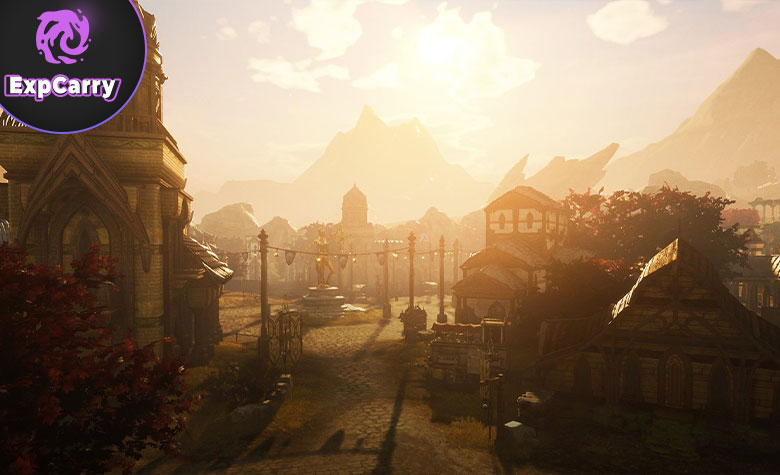
Most Stage 6 attempts fail before they begin because the group chooses a node like it is a personal housing neighborhood. A Metropolis plan starts with a regional map decision: where you want influence, what content you want nearby, and how much conflict you are willing to attract.
Your first goal is not to grind endlessly. Your first goal is not to grind endlessly. A steady Resources farm plan helps your group keep experience flowing without burning out. Your first goal is to create a repeatable pipeline that feeds node experience, stabilizes maintenance, and builds social legitimacy so your settlement can survive when enemies decide to stop you.
Quick checklist for the first 72 hours of a serious Metropolis project
- Choose a Node location based on geography and competition, not vibes. Assume you will be contested once you become relevant.
- Recruit a core operations team: a growth lead, a logistics lead, a crafting lead, a PvP lead, and a diplomacy lead.
- Establish a Zone of Influence play plan: which content your group will run inside the zone each day to generate node experience reliably.
- Set a maintenance minimum: a daily activity target that covers atrophy pressure on weekdays even when the full group is offline.
- Decide your node identity path early: your node type is fixed, but the cultural influence reflects who contributes experience at each stage. Build that contributor plan intentionally.
- Create a basic security posture: scouting routes, quick response groups, and a rule for when caravans and farming sessions need escort.
Node selection rules that save months
Use these selection rules to avoid common dead ends:
- Do not build under someone else unless you want to live under them. Vassal hierarchy can cap your growth. If a nearby node becomes the dominant parent early, your node may be forced into a slower, less controllable path.
- Pick content density over scenery. Nodes advance from player actions inside the Zone of Influence. You want routes where your group naturally does quests, kills, gathering, and crafting loops without feeling like chores.
- Choose your conflict profile. A quiet node can grow steadily with low harassment, but it may also be a weak alliance target. A high traffic node grows fast but draws PvP and political pressure sooner.
If your group is medium sized, your biggest advantage is consistency. A giant coalition can brute force growth. A medium guild wins by having a sustainable schedule that other groups cannot match week after week.
Roadmap: The Core Loops That Build a Metropolis and Why Groups Get Stuck
Stage 6 is the result of four loops running in parallel: experience production, construction and services, vassal management, and defense. If any one loop collapses, your progress either stalls or reverses. Use the table below as your map of what you do, why it blocks groups, and the simplest fix.
| Loop | What it is | What it unlocks | Why it blocks people | Simple fix |
|---|---|---|---|---|
| Experience pipeline | Daily play inside the Zone of Influence that feeds node experience | Stage advancement from Village to Metropolis | Players farm outside the zone and wonder why the node is not growing | Anchor your main routes inside the Zone of Influence and track it |
| Maintenance and atrophy | Cover ongoing atrophy pressure so the node stays functional and does not degrade | Stability between big push weekends | Weekday inactivity causes slow decline in capability and progress | Set a weekday minimum activity plan and rotate responsibility |
| Construction and services | Building choices, service priorities, and crafting capacity growth | More merchants, services, and node type progression | People build randomly and lack the systems that support growth | Build to support the pipeline: storage, crafting, logistics first |
| Vassal web management | Regional influence from Stage 3 onward with parent and vassal rules | Broader control, diplomacy, and resource organization | Ignoring vassals leads to political instability and capped growth | Treat vassals as part of your plan, not background noise |
| Defense and siege posture | Preparation for PvP pressure and siege risk once Stage 3 is reached | Survival long enough to reach Stage 6 | Groups push growth without building security capacity | Build a security culture early and escalate it each stage |
The Experience Pipeline That Actually Advances Your Node
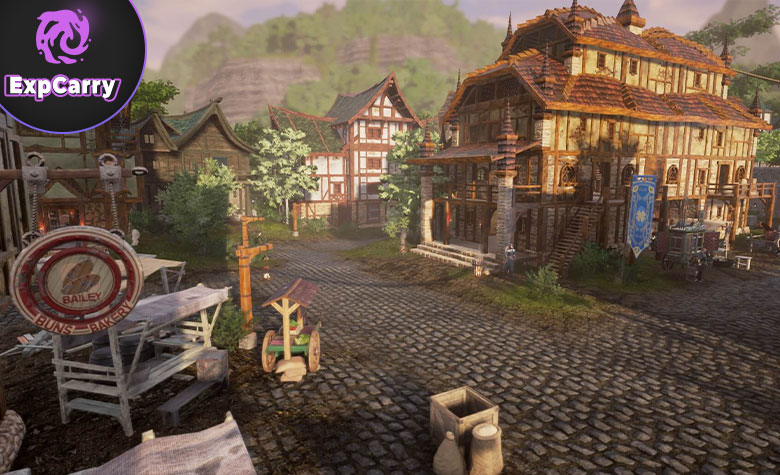
Nodes advance by collecting experience from what players do inside the Zone of Influence. The most efficient Metropolis groups do not chase one magical activity. They create a schedule where normal play naturally produces node experience: quest circuits, grinding spots, gathering routes, crafting turn-ins, and exploration paths all inside the zone.
The practical implication is simple: you do not tell people to stop having fun. You move the fun into the zone. When the zone becomes the default hangout, your node grows even when leadership is offline.
A daily template that feeds the node without burning people out
Use this daily template as your default and adjust it to your server’s realities:
- 30 to 45 minutes: Zone of Influence questing and combat loops. Pick routes with minimal travel downtime.
- 20 to 30 minutes: Gathering and processing runs inside the zone. This keeps your crafters supplied and adds node experience through gathering actions.
- Optional 30 minutes: A group activity block inside the zone (elite camps, dynamic events, dungeon entrances if present). The goal is to keep people clustered where their time matters.
This template works because it is repeatable. Stage 6 is not achieved by one heroic day. It is achieved by hundreds of normal sessions that all count toward the same objective.
The culture influence trap and how to control it intentionally
Node culture is shaped by who contributes experience. As nodes advance, the dominant contribution can influence the node’s style and cultural identity. If your group cares about aesthetics, NPC flavor, or racial benefits tied to dominance, you must plan it early.
The simplest approach is to pick your target contributor profile and reinforce it at stage milestones. For example, if you want a specific cultural influence to dominate at Stage 3 and beyond, schedule your biggest push sessions when the desired contributors are online and active inside the zone. If you do not manage it, your node culture becomes an accident of who happened to grind that week.
Building and Services The Stage 3 to Stage 6 Development Plan
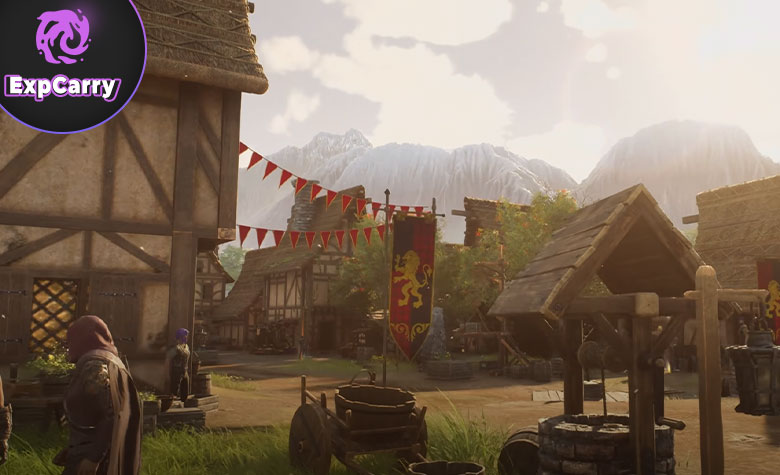
Buildings are not cosmetic. Buildings exist to make your experience pipeline easier, your economy stronger, and your defense more resilient. A Metropolis group builds in phases: stabilize storage and crafting first, then expand services that attract non-citizens, then invest in prestige systems that support long-term dominance.
The important mindset shift is to treat construction as enabling infrastructure. If your crafters cannot efficiently turn raw materials into useful outputs, your fighters and gatherers burn out. If your logistics are sloppy, your caravans get farmed. If your services are weak, your city does not become a regional hub and you lose soft power.
Stage based priorities that prevent random building chaos
Use this priority stack as you climb stages:
- Stage 3 Village: Establish governance habits, storage discipline, and a clear place where citizens coordinate. Stage 3 is where the project becomes political, not only mechanical.
- Stage 4 Town: Expand services that reduce friction for daily play. Make it easier for your people to stay in the zone instead of leaving for basic needs.
- Stage 5 City: Build toward regional relevance. At this stage the world begins to treat you as a target and as a trade partner. Your diplomacy and defense must scale up.
- Stage 6 Metropolis: Your goal shifts from growth to dominance maintenance. You are now managing atrophy pressure, politics, and siege posture while maximizing the node type Superpower value.
If you are unsure what to build next, ask one question: does this reduce friction for the daily pipeline or increase our resilience against disruption. If the answer is no, it is probably a prestige build you should delay.
Node type advantages at Stage 6 and how to build around them
Node types are fixed, and at Metropolis stage they are designed to unlock a powerful node-type Superpower. Because of that, your construction priorities should support your node type identity instead of fighting it.
For Scientific nodes, the design plan includes a knowledge progression building that evolves with stage and a teleportation Superpower at Metropolis that connects citizens and vassals. That suggests a playstyle that rewards information, crafting specialization, and fast movement between controlled settlements. For Economic nodes, the design plan includes a commerce building that evolves with stage and a linked economy Superpower that expands auction access and market reach, which rewards trade routes, hauling, licensing, and regional commerce play.
Even if implementation details shift during development, the strategic principle holds: your Metropolis should feel like the best place on the server to do the thing your node type represents. That is how you attract allies and customers, and that is how you justify protection when enemies test you.
Vassal Web Strategy The Regional Game Behind Stage 6
From Stage 3 onward, node advancement creates vassal relationships. Vassal nodes must stay at least one stage below the parent and can be capped from growing. Excess experience from capped vassals is designed to spill upward to the parent after local pressures are handled. This turns your region into an engine: when managed well, vassals help your Metropolis push forward faster and stabilize maintenance.
The mistake is treating vassals like background towns. A Metropolis project that ignores its vassal web becomes politically brittle and logistically inefficient.
How to turn vassals into growth multipliers instead of enemies
Your vassal plan should include three components:
- Service value: Give vassal citizens reasons to accept the hierarchy. That can be trade access, protection, shared events, or simply being the most functional hub in the region.
- Activity routing: Keep your main activity in the parent Zone of Influence, but intentionally schedule some vassal-facing sessions so vassal citizens feel included and invested.
- Conflict rules: Set clear expectations: which conflicts you support, which you avoid, and what behavior gets protection versus what behavior gets ignored.
In practice, most stable Metropolises are built by groups that are boringly reliable. They defend trade, they respond to threats, and they do not exploit vassals to the point of rebellion. If you want Stage 6, you want fewer internal fires.
The hierarchy pitfall: when your node can be blocked even with enough experience
Node advancement can be blocked by vassal hierarchy rules. The common failure case is a group that farms hard inside the zone but is structurally capped because the parent chain does not allow the node to advance to the same stage as its parent. The fix is strategic, not grind-based.
Before you commit to a Stage 6 plan, map the nearby node growth trajectories and decide whether you are building as a parent contender or as a vassal by choice. If you are not willing to be someone’s vassal, you must contest the parent slot early, before the hierarchy locks you into slow progress.
Defense Atrophy and Sieges The Part Everyone Forgets Until It Hurts
Stage 6 is not only a growth race. It is a survival race. Nodes can be destroyed starting at Stage 3 through sieges, and the siege process is designed to have visible escalation and preparation time. This is why you cannot postpone defense planning until you are “almost Stage 6.” By the time you are visible, enemies will already be practicing how to break you.
At the same time, defense is not only PvP. Atrophy pressure means you must defend your node from inactivity as well. A Metropolis project collapses just as often from apathy as it does from enemies.
Atrophy management: the weekday habit that keeps your node alive
Atrophy is described as ongoing pressure that increases with node stage and must be offset by player activity. Player activity is applied to current atrophy pressure first, and only excess contributes to growth. If atrophy pressure is allowed to accumulate, the node can degrade over time (for example, losing services and momentum), and in some implementations it may also lose stage or ultimately collapse. The practical takeaway stays the same: you must pay the maintenance bill consistently.
The practical solution is to treat maintenance like a small daily bill. You do not need a raid to pay a bill. You need a routine. Assign rotating “maintenance captains” who run short zone activities and invite whoever is online. This keeps the node healthy without turning leadership into a second job.
Siege posture: what to prepare before you become a real target
Once you are Stage 3 and above, plan as if a siege will happen eventually. The details of siege implementation can evolve, but the structure described includes a declaration process and a countdown visible to the region. That means you will have a window to rally allies, stock supplies, and set schedules.
Prepare these elements early:
- Rapid response groups: small teams that can escort gatherers and caravans, respond to harassment, and hold key points while the main force forms.
- Information discipline: keep scouting routes, track hostile guild play windows, and document patterns. Metropolis defense is often won before the fight through preparation.
- Alliance expectations: do not wait until war day to negotiate help. Build trade and diplomacy relationships while you are still growing.
Defense does not mean nonstop PvP. It means reducing disruption. If enemies cannot reliably stop your pipeline and cannot easily isolate your logistics, your node keeps moving.
Economy and Logistics: Caravans Trade and Why Economic Nodes Scale Hard
Metropolises win by controlling movement of goods, not only movement of players. Even a combat-focused guild needs a functioning economy: gear, consumables, materials, and crafting capacity. Logistics is what allows your node to keep playing inside its Zone of Influence instead of scattering across the world for supplies.
Economic nodes are an obvious example of how this scaling is intended to work. The design plan describes an Economic unique building that expands from Market to Exchange to Galleria to Emporium as the node advances. At Metropolis stage, Economic nodes are designed to unlock a linked economy Superpower that connects auction access across linked nodes and ties Metropolises to their vassals in meaningful ways. That is why a Metropolis plan should always include a trade plan, even if you are not an Economic node.
A practical logistics loop you can run every week in 2026
Use a simple weekly rhythm to keep your economy healthy:
- One gathering night: organized routes inside the Zone of Influence with escort rules. Focus on bottleneck materials for your crafters.
- One processing and crafting night: convert stock into usable outputs. Make it social and fast so people show up.
- One hauling and trade night: move goods with security, build relationships through commerce, and keep your markets active.
This loop prevents the classic Metropolis failure where everyone fights and farms but nobody moves resources effectively, so the city becomes poor and fragile. Rich cities can hire allies. Poor cities get sieged.
Governance: Mayor Power Legitimacy and How to Avoid Civil War
Player government begins around the time nodes reach Village stage, and mayors gain more powers and responsibilities as the node advances. This is where many projects implode. Growth attracts people who want influence, and influence attracts conflict inside your own faction.
The best Stage 6 groups do not rely on personality politics. They create systems that keep governance stable: clear rules, transparent spending, and predictable decision-making.
The three governance rules that keep your node functional
- Separate growth from politics. Your experience pipeline should not depend on one leader’s mood. Document routes, schedules, and responsibilities.
- Make tax and spending decisions explainable. Players accept inconvenience when they understand the purpose. They rebel when they feel exploited.
- Control access to strategic information. Do not broadcast caravan schedules and weak points publicly. Metropolis projects lose to leaks as often as they lose to stronger fighters.
Governance stability is a combat stat. A city that argues constantly cannot field consistent defense, cannot coordinate logistics, and cannot maintain atrophy coverage. Keep politics boring and you will outlast groups that rely on charisma.
Conclusion
Developing a Stage 6 Node is not about finding the fastest grind spot once. It is about building a system your guild can repeat: daily Zone of Influence activity that feeds node experience, weekday maintenance that prevents atrophy accumulation, staged construction that supports your pipeline, regional vassal management that prevents caps and instability, and a defense posture that scales as your node becomes a target.If you treat the Rise of Metropolises as an operations project, not a hype moment, you give yourself the only real advantage that matters in 2026: consistency. Consistency is what turns a growing city into a Metropolis, and it is what keeps it standing after everyone notices you made it.