



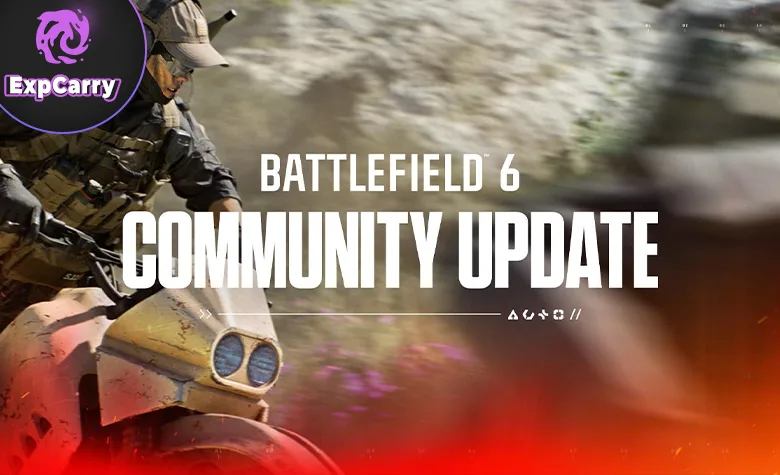
Battlefield 6 has had no shortage of updates framed as bigger turning points than they really were. EA's latest Community Update handles Nightfall more carefully. The post does not sell Season 2 as a total reset. Instead, it lays out what worked during Nightfall, what still needed adjustment, and what Hunter/Prey is set to change next in Multiplayer, Battle Royale, and Portal.
That is the useful angle here. This is not only a recap of what arrived on March 17 with Nightfall. It is also a preview of the next Season 2 phase launching on April 14. If you have been following Battlefield 6 loosely and want the practical version of EA's update without all the filler, this is where the important parts are.
Nightfall Added More Than a New Battlefield 6 Visual Theme
EA's read on Nightfall is fairly direct. Hagental Base landed well, the darker presentation connected with players, and the lower-visibility combat pushed matches toward a more deliberate pace. That matters because Night Vision could easily have been treated as a short-lived gimmick. Instead, EA is presenting it as a ruleset that created a distinct rhythm, especially on a map designed around tighter lanes and more controlled pressure.
The more important signal is what EA chose to preserve. Night Mode and VL-7 Smoke are both set to move into Portal with the next phase of the season. When a limited-time ruleset gets folded into custom experiences, it usually means the studio sees lasting value in it. In practical terms, Nightfall was not just an isolated event. It also served as a live test for systems and modifiers that EA now seems willing to support beyond their original window.
Hunter/Prey Looks More Like a Systems Update Than a Content Drop
Hunter/Prey goes live on April 14, and the biggest changes are aimed less at spectacle and more at friction inside everyday play. EA says the next phase will continue progression cleanup, improve squad communication systems, adjust Battle Royale pacing, and restore VL-7 Smoke to Gauntlet as a permanent modifier. That combination says a lot about where the studio sees the current weak spots. Battlefield 6 does not only need more maps, weapons, or events. It also needs better progression flow, more dependable information, and fewer slow stretches inside matches.
That is why this phase matters more than a standard content beat. Shooters lose momentum quickly when progression feels uneven, when information tools behave inconsistently, or when queueing into a mode feels less rewarding than it should. Based on the Community Update, Hunter/Prey is aimed at those problems first. EA is not presenting it as a flashy reinvention. It is presenting it as another pass on systems that were still creating drag in Season 2.
Battlefield 6 Progression Is Still Being Reworked During Season 2
Progression has been one of the most visible complaints since launch, and EA more or less acknowledges that by outlining how much has already changed since Season 2 began. Challenges were streamlined, Battle Pass progress from XP was accelerated, early Career ranks gained more Career Rank Boost rewards, camo unlocks were moved earlier, Mastery XP requirements were reduced, and the broader XP curve was sped up. That is a substantial list, and it only exists because the original pace did not land well enough.
Hunter/Prey adds another round of changes. Weapon and vehicle Mastery XP will now come from use as well as eliminations, Multiplayer playlists are getting adjusted XP rates to smooth progression differences between modes, and REDSEC will reward time spent in matches more heavily instead of leaning so hard on final placement. In Battle Royale, kills and damage assists are being raised by 50 percent for score, which should also improve weapon progression per match. The direction is clear even if the full result still needs to be tested in live play: EA wants Battlefield 6 to reward active participation more consistently and reduce how much the grind depends on narrow outcomes.
Ping Fixes Could Matter More Than Another Balance Tweak
Some of the most useful changes in this Community Update are not flashy at all. EA says Hunter/Prey will improve spotting and ping reliability across Multiplayer and Battle Royale, including more consistent long-range spotting for vehicles and drones, better prioritization of enemy soldiers over nearby interactable objects, and fixes for pings disappearing when marking from certain vehicles. That may sound minor in patch-note form, but squad readability has always mattered in Battlefield more than many shooters.
Battle Royale is getting an even more practical cleanup pass. Loot pings are supposed to register more reliably, update correctly when items are picked up, and clear properly when canceled, including on the big map. That is the kind of repair work players notice immediately if it works as intended. When pings are unreliable, the match gets messier for no good reason. EA is clearly treating this as a real usability problem rather than a minor technical footnote.
Battle Royale Changes Are Focused on Faster and Cleaner Match Flow
EA's Battle Royale changes are all aimed at pacing. Ammo Drops will carry more ammunition and armor plates, MRAPVs and Safes will offer extra plates instead of grenades, chest opening animations are being sped up, and a new Armor Drop Strike Package will deliver a larger stack of plates for squads preparing for longer fights. None of this reinvents the mode. The point is to reduce friction in the early and mid game and make basic resupply less annoying.
There are also two more interesting adjustments. The Traverser Mark 2 is returning without weapons, which suggests EA did not like how its armed version affected match flow. At the same time, the Sledgehammer is being made stronger against destructible walls and objects in Battle Royale, which should promote more aggressive breach options and less passive front-door play. Taken together, the message is simple enough: EA wants more movement, more pressure, and fewer rounds that stall because squads are under-resourced or locked into overly safe patterns.
Gauntlet and Solos Still Show Where Battlefield 6 Has Player Interest
Gauntlet continues to look like one of the healthier spaces in Battlefield 6. EA says players completed more than 190 million Gauntlet matches during Season 1, with millions of objective actions across Vendetta, Wreckage, Decryption, and Heist. Numbers like that help explain why VL-7 Smoke is returning there as a permanent modifier after being disabled during Nightfall. The mode is still getting support because players are clearly engaging with it at scale.
The Solos test is useful for a different reason. EA says the March 6 to 9 Battle Royale Solos test reinforced that Solos remains one of the most requested ways to play. Players liked having a mode where they could learn pacing and make decisions without depending on random teammates, but the test also surfaced clear issues around Recon dominance, vehicle impact, and overall flow. That makes Solos more than a throwaway experiment. It is now a design problem EA has openly acknowledged and will need to solve properly if the mode is going to return in a stronger state.
Portal Is Becoming More Important to Battlefield 6 Over Time
The most forward-looking part of this update may be the new Portal Gadget arriving on April 14. EA is describing it as a cleaner way for creators to trigger custom gameplay logic inside Portal experiences without relying on clumsy scripting workarounds. That sounds technical on paper, but the practical takeaway is straightforward: custom modes may soon become easier to build with more precise behavior.
If Portal Gadget works the way EA describes, creators should have better control over when and how scripted interactions happen during a match. That matters because sandbox tools often decide whether a custom ecosystem grows or ends up ignored after a brief novelty phase. EA also used this update to spotlight community-made Portal experiences, which fits the larger direction. The studio is not only trying to keep official playlists active. It is also investing in the part of Battlefield 6 that can create variety between major updates.
What This Battlefield 6 Community Update Actually Shows
The clearest takeaway is not that Battlefield 6 has solved all of its problems. It is that EA is now talking more specifically about the problems it is trying to solve. This Community Update is built around progression that felt too slow, pings that felt unreliable, Battle Royale rounds that lost momentum, Solos balance concerns, and limited-time ideas players did not want to lose. That is a more useful signal than broad language about listening to feedback.
The other notable point is that EA is already looking beyond Nightfall and Hunter/Prey. The studio says it is looking ahead to Golmud Railway, while Battlefield Labs has also been testing vehicle control changes and broader vehicle improvements. That gives Season 2 a little more structure than a one-off themed event. Battlefield 6 is still being tuned in public, but the current update suggests EA is trying to link near-term system fixes with the next wave of content instead of treating them as separate tracks.
Final Thoughts
Battlefield 6's Nightfall debrief works best when read as a practical status check rather than a victory lap. EA is using Nightfall to highlight what connected with players, then using Hunter/Prey to address areas that still felt rough. Faster progression, cleaner pings, steadier Battle Royale pacing, continued Gauntlet support, more careful Solos evaluation, and stronger Portal tools all point in the same direction. Season 2 is being shaped as much by systems repair as by new content.
That does not mean every concern is settled. Solos still needs more balance work, vehicles remain an open question depending on mode, and several of Hunter/Prey's most useful changes still need to prove themselves in live play after April 14. But as a Community Update, this is one of the more grounded ones Battlefield 6 has had in a while. Nightfall was not treated as disposable filler, and the next phase of Season 2 is clearly being positioned as a direct follow-up rather than a hard pivot.