




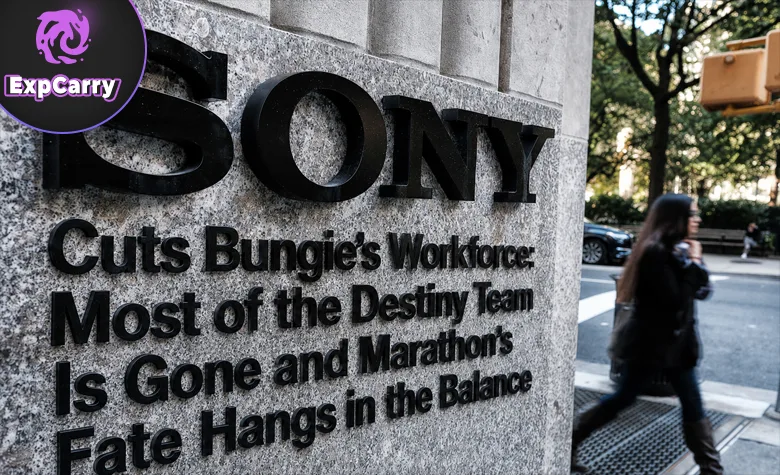
Sony Interactive Entertainment confirmed on June 25, 2026 that Bungie is reducing its workforce by a significant number of employees, cutting most of the Destiny team, a portion of the Marathon staff, and SIE personnel who supported Bungie's operations. Sony Interactive Entertainment confirmed on June 25, 2026 that Bungie is reducing its workforce by a significant number of employees, cutting most of the Destiny team, a portion of the Marathon staff, and SIE personnel who supported Bungie's operations. Readers following Marathon can use the main Marathon hub for related services. The announcement came through a public memo from Hermen Hulst, CEO of Sony's Studio Business Group. A Worker Adjustment and Retraining Notification (WARN) filing submitted to Washington State confirmed at least 292 separations at Bungie's Bellevue headquarters, with effective dates beginning July 9, 2026. Separate reporting from journalists who monitored the internal layoff call placed the total above 400, suggesting roughly half of Bungie's remaining staff was cut in a single day. The WARN filing also lists a Chief Vision Officer among affected roles, a title held by co-founder Jason Jones since 2021. Studio Head Justin Truman, who had been in the position since August 2025, stepped down the same day.
Three Rounds, One Outcome: How Bungie Got Here
This is Bungie's third major round of layoffs since Sony completed its $3.6 billion acquisition in 2022. The first wave removed approximately 100 positions in October 2023. The second, larger round in July 2024 eliminated 220 roles and transferred another 155 directly to Sony Interactive Entertainment. Before June 25, 2026, the studio held around 800 employees. The latest reduction, covering at minimum 292 confirmed Bellevue-based positions and reportedly more than 400 total, leaves Bungie operating at a fraction of its peak headcount of over 1,400. Across three rounds, the studio has shed more than 600 jobs, not counting transfers.
The commercial driver behind this collapse is documented in Sony's own financial disclosures, which recorded an impairment loss of approximately $565 million against the Bungie acquisition. Destiny 2, the live-service shooter Bungie had developed since 2017 and the primary asset Sony paid for, consistently fell short of Sony's revenue targets. Hulst's memo described a months-long review in which Sony and Bungie leadership examined the studio's long-term direction, development priorities, resource needs, and position within the broader PlayStation portfolio before determining that layoffs were unavoidable. Multiple alternatives were reportedly considered before that conclusion was reached.
Context from former employees further complicates the picture. Ex-community manager Liana Ruppert stated publicly that significant portions of Destiny's development budget did not reach the game itself due to leadership decisions, limiting its ability to retain and grow its player base. Reporting from Windows Central also cited a former employee who described the 2022 acquisition as an emergency intervention: Bungie was reportedly close to financial collapse without it. If accurate, the $3.6 billion valuation was less a reflection of market position and more a rescue premium. Sony has now effectively written that premium down by more than half a billion dollars. For additional context, 2026 has already seen Sony shut down Dark Outlaw Games and Bluepoint Games as part of broader portfolio restructuring. Bungie is not being closed outright, but the scale of these cuts places it closer to a studio restart than a standard reorganization.
The Destiny Team After the Final Update
Destiny 2 shipped its final content update on June 9, 2026, ending a nine-year live-service run. Sixteen days later, the team responsible for it was largely dissolved. The cuts covered art, gameplay design, analytics, narrative, visual effects, and quality assurance, with former Bungie developers noting publicly that identifying which departments were not affected was the harder question to answer. Bungie's own Bluesky statement acknowledged that Destiny 2 fell short of expectations in recent years and that, with future projects still in early incubation, the studio could not continue at its previous size. Bungie's own Bluesky statement acknowledged that Destiny 2 fell short of expectations in recent years and that, with future projects still in early incubation, the studio could not continue at its previous size. If Marathon returns on schedule, the Marathon Battle Pass will be part of the conversation around launch content. A Game Director role also appears in the WARN filing as affected. Given Destiny 2's concluded live service, this likely refers to Tyson Green, who took over as Destiny 2's game director in 2024 and has spent approximately 25 years at Bungie. His departure has not been officially confirmed but has been noted by multiple reporters covering the story.
What the WARN Notice Shows
The Washington State WARN notice lists business titles without employee names. Affected roles span the full production stack: artists, engineers, producers, designers, technical animators, audio leads, and quality assurance staff. The filing covers only permanent employees at Bungie's Bellevue facility and does not capture remote workers, contractors, or staff in other locations. The 292 figure is therefore a floor, not a ceiling. Paul Tassi, citing direct contacts inside Bungie, reported that over 400 people were on the layoff notification call on June 25. Employees receive notice and pay in lieu of the standard 60-day WARN requirement, with separations effective July 9, 2026.
| Layoff Round | Date | Jobs Cut | Context |
|---|---|---|---|
| Round 1 | October 2023 | ~100 | First post-acquisition restructuring |
| Round 2 | July 2024 | 220 eliminated + 155 transferred to SIE | Studio refocus toward Marathon |
| Round 3 | June 2026 | 292+ confirmed, 400+ reported | Post-Destiny 2 final update shutdown |
| Cumulative (2022-2026) | - | 600+ eliminated | From 1,400+ to a fraction of original size |
Marathon Carries the Studio's Entire Weight

Hulst's memo committed publicly to Marathon's future, stating the remaining team would continue building on the foundation from Seasons 1 and 2 and work on incubation projects for future releases. The WARN filing tells a more complicated story about what happened to that team. Several Marathon-linked roles appear in the filing, identified through the game's internal development codenames: Goliath, used during pre-launch development, and Run, which mapped to part of the team structure. Among the confirmed affected positions is the General Manager of Marathon, a role held by Scott Taylor since at least March 2019, whose LinkedIn profile lists the position as ending in June 2026. At least one Engineering Director role tied to Marathon also appears, along with producers and creative leads. Because the broader filing uses non-specific titles like Designer, Engineer, and Artist, the actual Marathon headcount reduction is almost certainly higher than what can be traced by codename alone.
Marathon launched on March 5, 2026, priced at $39.99 on Steam, PlayStation 5, and Xbox Series X/S. Its Steam concurrent peak reached 88,337 players on launch day. By late March, roughly three weeks post-launch, total cross-platform sales had reached approximately 1.2 million units, with Steam accounting for around 70 percent of that figure. The drop after launch was steep: player count had already declined 59 percent from its peak by early April. Average daily Steam concurrents settled at around 10,000 before Season 2 launched in early June alongside a free trial week, which temporarily pushed the figure to roughly 40,600. Even that recovered number sits below half of the launch-day concurrent peak. A former Xbox executive cited by TechRadar described Marathon as a game built at a scale and cost that the extraction shooter market currently does not reward.
Sony has pledged continued content support. A PvE-focused mode called Vault Breaker is scheduled for July 21, offering players a structured run through the Cryo Archive with a match-based progression system separate from standard extraction. Game Director Joe Ziegler outlined earlier in the Season 2 cycle that the team was addressing matchmaking, solo and duo play, onboarding, UI improvements, and grind reduction. Whether a team that has now lost its General Manager, Engineering Director, and other senior roles can maintain that roadmap on schedule is the operational question the rest of 2026 will answer.
Founders Gone, Leadership Wiped
The layoffs reached the very top of Bungie's history. Justin Truman, studio head since August 2025 when he replaced Pete Parsons, stepped down on the day of the announcement. Truman had been part of Bungie's Destiny team since 2010, making the end of his tenure the conclusion of a 16-year relationship with the franchise. His exit was confirmed by Bloomberg's Jason Schreier. More historically significant is the apparent departure of Jason Jones. The WARN filing lists Chief Vision Officer among affected roles, a title Jones has held since 2021. Jones co-founded Bungie in 1991, programmed much of the studio's 1990s catalog, and served as game director on the original Destiny. His last public appearance was at the pre-show reveal of Destiny 2's The Witch Queen expansion. While the WARN notice does not list names, reporting from multiple outlets identifies the Chief Vision Officer role in the filing as pointing to Jones, making this the apparent end of his operational presence at the studio he co-founded more than 30 years ago. Poria Torkan, Bungie's former VP of Operations, has reportedly stepped in to run the studio on a temporary basis, according to Paul Tassi.
Pete Parsons, who oversaw the Sony acquisition in 2022, had already departed the CEO role before the 2024 layoffs. In the period between his exit and the current round of cuts, former employees described internal dysfunction under his leadership, with one departing developer calling the experience the most toxic and dysfunctional of his professional career. Claims also emerged regarding leadership decisions that diverted funding away from Destiny's actual development. Parsons was replaced by Truman; Truman is now gone. The interim leadership structure that exists as of late June 2026 has no publicly announced permanent replacement. The studio that existed when Sony signed the $3.6 billion acquisition has been dismantled from the top down and from the inside out across four years.
Final Thoughts
Bungie enters the second half of 2026 having shed more than 600 jobs across three rounds, lost the franchise it was acquired to develop, and seen its co-founder apparently cut from the company he built from scratch. Sony paid $3.6 billion for this outcome and has already disclosed a write-down exceeding half a billion dollars against it. Marathon is not a lost cause on paper: the game has a committed player community, content updates confirmed through at least the rest of the year, and the institutional backing of Sony's portfolio. But the loss of its General Manager and Engineering Director alongside an already-challenged engagement curve creates real execution risk in a genre analysts have consistently called oversaturated and cost-inefficient at current AAA scale. For Destiny, the picture is more final. The community petition for Destiny 3 reflects a hope that the studio's current priorities and staffing cannot support. Bungie is not building what it built. The question for the remainder of 2026 is whether what it is building can sustain a studio that has spent three years being taken apart.