



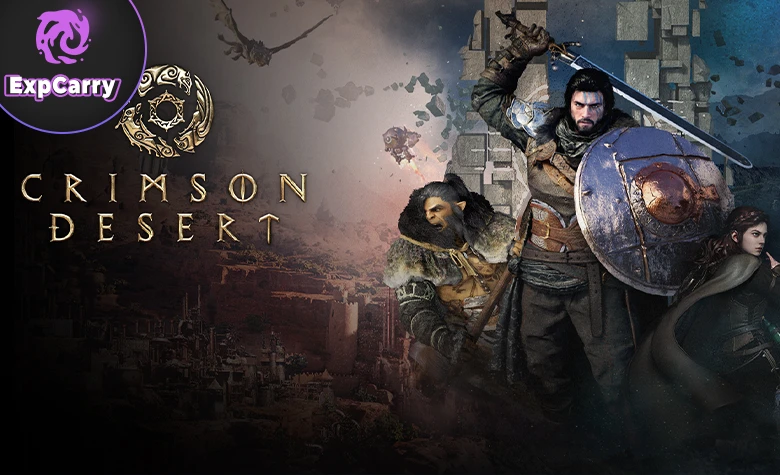
Crimson Desert did not land as an easy win. It launched on March 19, 2026 with exactly the kind of divided response its previews had been pointing toward. Some players and critics see a huge, forceful fantasy sandbox with uncommon scale, striking combat spectacle, and enough mechanical density to feel exciting rather than safe. Others run straight into awkward controls, messy onboarding, UI friction, and a story that struggles to carry the experience when the world itself is not doing the heavy lifting.
That split is not random noise around release. It is the clearest way to describe how Crimson Desert feels right now. The game has real strengths, and those strengths are obvious fast. Pywel feels large, dangerous, and full of momentum. Combat can look and feel brutal in the best way. Exploration often pays back your time. But the same launch reviews that praise the game's ambition keep circling the same problems: too many systems thrown at the player too quickly, too much input awkwardness, and too little polish in the way the whole thing introduces itself.
Crimson Desert Launch Reviews Keep Coming Back to the Same Split
The current critical picture is not confused. It is divided, but it is divided in a consistent way. Reviewers are not arguing over whether Crimson Desert has ambition. That part is settled. The game is large, visually impressive, mechanically stuffed, and often capable of moments that look bigger and stranger than what safer open-world games usually attempt. The real disagreement is over how much friction a player should tolerate to enjoy those highs.
That matters because Crimson Desert is not being judged as empty or generic. It is being judged as a game with real identity and very uneven execution. Critics who are more willing to accept roughness in exchange for freedom, spectacle, and scale tend to come away impressed. Critics who value readability, usability, tighter pacing, and stronger narrative cohesion are much harsher. That is why the reaction has settled into a recognizable pattern instead of a vague middle.
A Strong World Carries More of the Game Than the Story Does
One of the clearest post-launch takeaways is that Crimson Desert works better as a world to inhabit than as a tightly authored story adventure. Reviews that like the game usually spend more time talking about Pywel itself, its density, traversal, side activity, boss encounters, and the sensation of getting pulled across the map than they do talking about the emotional force of the narrative. That is revealing. It suggests the game's strongest hook is not the main plot but the act of living inside its oversized systems.
That is not fatal, but it does shape the kind of recommendation this game can sustain. If a player wants a polished narrative action game with elegant pacing and a story carrying every hour forward, Crimson Desert does not look like a clean match. If a player wants a huge fantasy space with a lot of energy, detours, and uneven but memorable moments, the game makes a much stronger case for itself.
Crimson Desert Feels Best When Exploration Takes Over
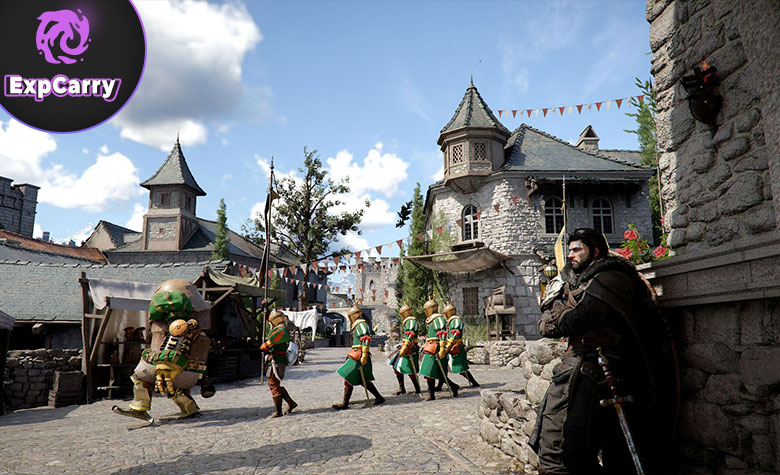
The strongest praise at launch keeps pointing toward the same thing: the world has pull. Pywel does not feel like a sterile map filled by formula. It feels dense, broad, and mechanically restless. There is enough visual drama, traversal variety, combat pressure, and side-path curiosity to make wandering through the world feel rewarding even when the game is not at its most polished. Crimson Desert sells scale quickly, and in its best stretches that scale becomes a real source of momentum rather than empty space.
This is where the game separates itself from more cautious open-world design. It is not trying to feel tightly controlled and perfectly restrained. It wants to feel excessive. Sometimes that excess turns into genuine excitement. You move from a stronghold to a battlefield to a strange puzzle space to a boss encounter and come away feeling like the game is constantly throwing another idea at you. That abundance is messy, but it is also one of the biggest reasons the game does not feel forgettable.
Why the Sandbox Side Lands Better Than a Straight Prestige Adventure
Crimson Desert makes more sense once you stop expecting a smooth prestige campaign and start reading it as a sandbox-heavy action RPG with a lot of pressure points. In that frame, several of its contradictions become easier to understand. The game is impressive because it is overbuilt, but it is also frustrating for the same reason. It has a wider mechanical appetite than many of its peers, and that appetite gives it both its personality and its mess.
That is why some of the warmer reviews sound impressed without sounding fully comfortable. They are reacting to a game that can still feel special despite its rough edges. The world keeps giving the player enough to investigate, fight through, or stumble into that the friction does not automatically kill the experience. A weaker open world would have collapsed under the same usability problems. Crimson Desert survives them more often because the world itself has enough presence to keep dragging attention back.
Combat Is Powerful, But the Controls Keep Starting Fights of Their Own
Combat is the other major pillar of the launch response. When Crimson Desert clicks, it looks heavy, aggressive, and physically convincing. Hits land with force, larger encounters have real spectacle, and boss fights can sell the kind of severe fantasy action the early marketing promised. This is not limp combat. The game clearly wants fighting to feel dangerous and forceful, and plenty of reviews give it credit for that.
The problem is that the same conversation keeps turning back to how awkward the game can be in the hands. This is not a small complaint. It is one of the defining release complaints. The issue is not that Crimson Desert lacks ideas in combat. The issue is that accessing those ideas can feel clumsy. Input friction, camera trouble, and a general lack of smooth readability keep interrupting a combat system that is otherwise trying very hard to feel expressive and hard-hitting.
Boss Fights Show Off the Best and Worst Parts at the Same Time
Boss encounters are where the game's strengths and weaknesses collide most clearly. At their best, they show scale, tension, and visual force. They make Crimson Desert look like the kind of large-budget fantasy action game that could generate real fan loyalty despite its flaws. But boss fights also punish control awkwardness much harder than ordinary exploration does. Camera issues, input confusion, or combat readability problems become impossible to ignore when the game asks for precision under pressure.
That is why launch reactions to the combat can sound almost contradictory while still being honest. One player sees brutal, high-impact action with memorable set pieces. Another sees the same fight and comes away annoyed by the control language needed to survive it. Both reactions fit the current state of the game because both are responding to something real inside the same system.
The Real Weak Point Is Not Ambition - It Is Usability
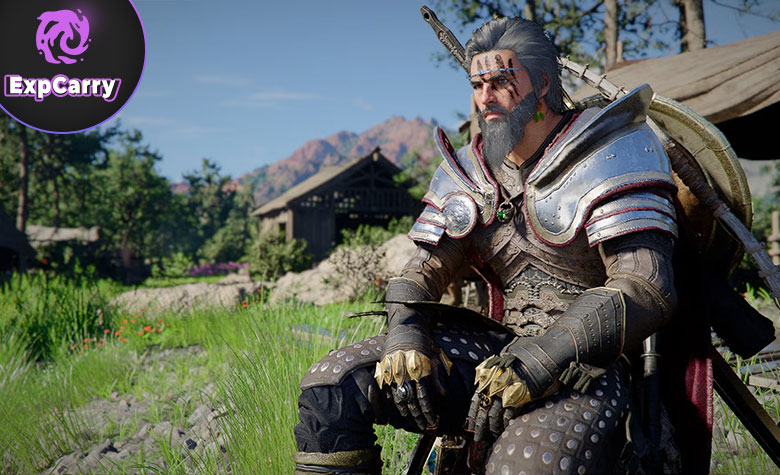
If you strip away the surface-level arguments, the launch criticism is remarkably focused. Crimson Desert is not getting hit hardest for lacking content, lacking visual identity, or lacking ambition. It is getting hit for the way it teaches, communicates, and controls that ambition. The opening hours do too poor a job of easing the player into the game's logic. Systems arrive fast, explanations can feel thin, and the interface does not always reduce complexity into something readable enough to feel exciting instead of exhausting.
That distinction matters because difficult and overloaded are not the same thing. A demanding game can still feel fair and coherent. Crimson Desert too often drifts into a kind of friction that feels self-inflicted. It wants the player to absorb a lot, but it does not always provide a smooth path for learning. That leaves some players feeling challenged in a good way and others feeling worn down before the game has fully shown what makes it worth sticking with.
Why Reviews Stay Positive, Mixed, and Frustrated at Once
This is the main reason the review spread makes sense. Crimson Desert is easier to admire than to recommend universally. There is enough here to earn real praise. The world is impressive. The combat has force. The overall production can feel genuinely bold. But the friction is too visible to ignore, and it touches core parts of the experience rather than optional side content. That keeps the praise from becoming uncomplicated.
So the final picture is not that Crimson Desert is secretly bad or secretly misunderstood. It is that the game is visibly impressive and visibly awkward at the same time. That combination produces exactly the kind of launch reception it has now: strong admiration, real irritation, and a lot of disagreement over whether the highs justify the work required to reach them.
Crimson Desert Is Worth Watching, But Not for Everyone Right Now
Crimson Desert is not a clean crowd-pleaser, and pretending otherwise would be dumb. It looks best suited to players who can absorb a rough onboarding process, tolerate some control friction, and still enjoy the payoff of a huge fantasy sandbox with real character. If you love open worlds for the act of inhabiting them, experimenting inside them, and finding your own rhythm in them, there is a lot here that can still grab you.
If you want smooth controls, clean tutorialization, strong narrative drive, and minimal resistance between you and the fun, this is a riskier buy. The game does not consistently smooth out its own roughness. It asks the player to meet it halfway, and not everyone is going to think that bargain is worth it. That is the honest state of Crimson Desert after launch.
Conclusion
Crimson Desert feels huge, forceful, overloaded, and uneven in exactly the ways its most interesting supporters and critics keep describing. It launched with a strong enough world, a heavy enough combat identity, and a strange enough sandbox energy to make people care. It also launched with enough control friction, onboarding weakness, and UI strain to keep that admiration from becoming easy.
That is why the post-launch conversation is so split without being random. People are not reacting to a hollow game. They are reacting to a game with real ambition and real resistance in the same package. When Crimson Desert clicks, it feels alive in a way many safer open-world games do not. When it does not, it feels like it is tripping over its own systems. Both readings are fair, and both are central to how the game plays right now.The cleanest way to describe Crimson Desert in its current state is simple: it is a bold fantasy sandbox wrapped inside a game that still fights its own usability. For the right player, that will be enough to make it memorable. For the wrong player, it will be exhausting before the best parts can take over. That tension is not side noise around launch. It is the release version of Crimson Desert in one sentence.