
Diablo 4 Season 12 does not look like the kind of season that should dominate the conversation for months on scale alone. Blizzard has already framed Season of Slaughter as a more focused, streamlined season on the road to Lord of Hatred, which naturally makes it sound smaller than a full expansion-era shake-up. That surface read is exactly why it may still catch players off guard. A season does not need a giant list of additions to matter if the systems it introduces press directly on the parts of Diablo 4 that players interact with every minute they are online.
That is the real angle here. Based on what Blizzard has officially shown so far, Season 12 is not built around one isolated gimmick that only matters inside a narrow seasonal lane. It reaches into combat flow, reward targeting, endgame pressure, seasonal routing, event structure, and the game's short-term identity before the next expansion. When a season starts pushing on how players chain kills, what drops they care about, and which activities feel worth repeating, it has a chance to influence far more than a lighter marketing pitch suggests. Players tracking the new loot layer may also compare it with Diablo IV Unique Items as Season 12 settles.
The reason this matters now is simple. Enough of the season has already been officially confirmed that the usual "we still do not know much" excuse no longer fits. Blizzard has shown the shape of the season clearly enough to judge what it is trying to test. The pattern is hard to miss: Season 12 is built around momentum, aggression, clearer risk-reward channels, and a stronger connection between how players perform and what rewards they can realistically chase.
What Blizzard has already put on the table
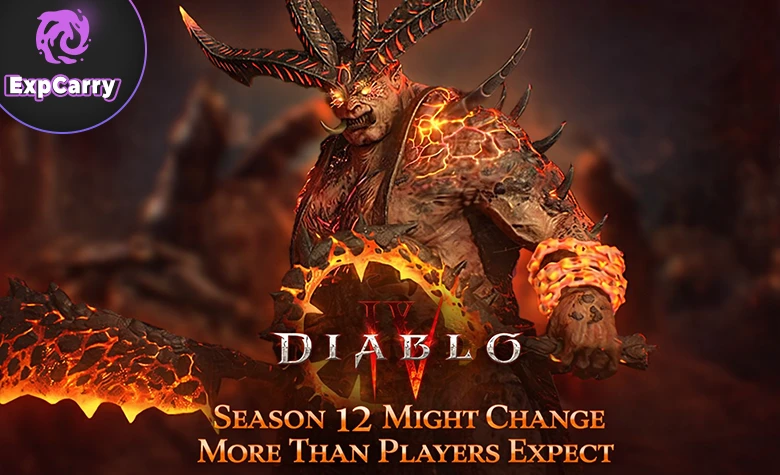
Before judging whether Season 12 is being underestimated, it helps to lay out the confirmed structure without hype. The season launches as Season of Slaughter and ties nearly everything together around The Butcher fantasy, but the actual content is broader than the theme alone suggests. The season includes a dedicated questline, a transformation system, a game-wide Killstreak mechanic, a new Bloodied loot layer, Bloodied Sigils and Bloodsoaked Sigils for endgame activities, Slaughterhouses, new Unique items, seasonal blessings, and a new Butcher Lair Boss that will remain in the game permanently after the season ends.
That last point is especially important because it means Season 12 is not only about temporary flavor. Part of its structure is clearly feeding permanent Diablo 4 content. That automatically raises the ceiling on how influential the season can be. A season starts feeling less disposable the moment some of its additions are being used to expand the long-term game rather than only fill the gap before the next release.
| Confirmed system | What Blizzard confirmed | Why it matters |
| Killstreaks | A seasonal system meant to affect play across activities throughout Diablo 4 during the season | Pushes combat tempo, routing, and sustained aggression closer to the center of the game |
| Bloodied Items | A new item layer with affixes tied to Killstreak Tier | Adds a sharper loot chase linked directly to how you play, not only what you kill |
| Bloodied Sigils | Available for Nightmare dungeons-services">dungeons-service">dungeons-services">Dungeons, Infernal Hordes, and Lair Bosses from Torment I | Turns familiar endgame content into a more targeted seasonal reward loop |
| Bloodsoaked Sigils | A much harder version with multiple guaranteed Bloodied Item drops | Creates a high-end aspirational grind instead of a flat seasonal farm |
| Butcher transformation | Seasonal questline, Helltide interactions, PvP-zone event flow, and Slaughterhouses | Makes the season theme alter real gameplay behavior instead of acting as pure flavor |
| New Butcher Lair Boss | Drops the season's new Uniques and stays permanent after the season | Gives the season a permanent gameplay footprint |
The real pressure point is combat tempo, not the season theme
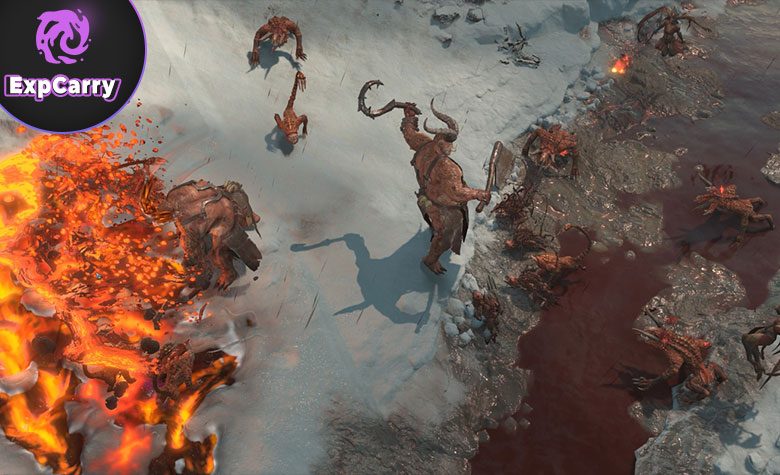
The part of Season 12 that may end up changing the most is not the marketing hook. It is the Killstreak system. Blizzard did not describe it as a bonus that only matters in one seasonal mode. It was introduced as a mechanic that changes how players engage across the game during the season. That immediately puts it in a different category from the average seasonal toy. Instead of asking players to step into one isolated event for a temporary burst of novelty, Blizzard is asking them to think about momentum as a layer over much of what they do while Season 12 is active. Players focused on dungeon routing may revisit Diablo IV Dungeons as Killstreaks change pacing.
That changes more than raw power. Diablo 4 players do not just optimize damage. They optimize tempo. They care about whether a dungeon route keeps enemies close enough to maintain pressure, whether a build loses too much speed between packs, and whether an activity rewards aggressive chaining instead of segmented, stop-and-start play. A Killstreak system built around maintaining momentum naturally changes how players read the map, how they choose content, and how they judge what efficient gameplay looks like. In other words, it is not only a power system. It is also a pacing system.
That is why Season 12 could feel bigger than its first presentation suggests. A mechanic does not need to add an entirely new world layer to reshape how a game feels. It only needs to make players perform the familiar game differently. If Killstreaks succeed in making momentum a defining part of efficient seasonal play, then the season will have changed Diablo 4 at one of the deepest practical levels available to a temporary update: not by adding endless new things to do, but by changing how satisfying it feels to do the things already there.
The loot chase is being tightened, not widened
Season 12 also looks more substantial when you stop thinking about loot in terms of quantity and start thinking in terms of direction. Bloodied Items are not just extra drops scattered into an already crowded item pool. They are designed around Killstreak interaction, which means the strongest rewards are being tied more directly to the way players maintain flow and pressure. That gives the season a clearer loot identity than many Diablo seasons have at first reveal.
The crucial detail is that Bloodied Items are not isolated from the rest of the endgame. Blizzard has already tied them to Bloodied Sigils and Bloodsoaked Sigils, which extend into Nightmare Dungeons, Infernal Hordes, and Lair Bosses. That matters because it turns the season from a narrow gimmick into a broader reward-routing problem. Players are not just asking whether Bloodied Items are strong. They are asking where the best Bloodied Item opportunities live, which difficulty spikes are worth taking, and whether their build is good enough to cash in on the more dangerous versions of that loop.
That is where the season becomes more interesting than it first appears. A lot of seasons feel large but scatter their rewards too loosely. Season 12 appears to be doing the opposite. It is narrowing the most desirable outcomes into clearer challenge channels. That often creates a stronger season than one with more content but weaker structure, because players can immediately see what they are chasing and why it is worth changing their behavior to get there.
Bloodsoaked Sigils are the part that could quietly define the endgame
The sharpest example is the Bloodsoaked Sigil tier. Blizzard has already said these are scaled roughly around Pit Tier 100 difficulty and reward players with multiple guaranteed Bloodied Items. Recent Season 12 patch notes also reinforced that loop by confirming guaranteed Bloodied and Ancestral rewards from Bloodsoaked boss kills. That is not a decorative piece of endgame content. It is a clear statement that the top end of this seasonal loop is meant to feel materially better, not merely harder.
If that structure lands well, then Season 12 may end up influencing future Diablo 4 design more than players expect. It would show that the game's endgame feels healthier when danger is paired with a precise and visible loot payoff. That is the kind of lesson Blizzard often carries forward even when the full seasonal wrapper disappears later.
The Butcher fantasy is being used as real gameplay structure
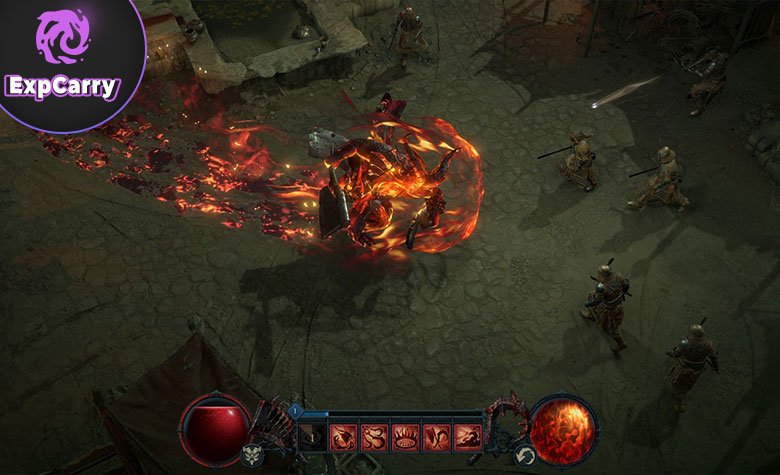
It would be easy to write off "Become the Butcher" as just the season's costume. That would miss what Blizzard has actually shown. The theme is tied into too many live systems to be treated like surface flavor. The season starts with the A Taste of Power questline in Gea Kul, then branches into multiple ways to become The Butcher. In Helltide, players can use Meaty Offerings on Shrines of Slaughter to trigger a Butcher-themed enemy rush. In the Fields of Hatred, Blizzard is replacing normal PvP flow during Ceremony of Slaughter with a kill-driven supremacy event that culminates in The Butcher's Idol for the strongest contender. Slaughterhouses go even further by letting players stay as The Butcher for the full run.
That spread matters because it means the theme is not sitting on top of Diablo 4. It is wired into how the season actually functions. The game is asking players to route around Butcher-linked objectives, chase Butcher-specific resources like Fresh Meat, and repeatedly interact with the seasonal identity through different activity types instead of one narrow instance. That is how a season becomes memorable in a meaningful way. It stops being about the look of the fantasy and starts being about the behavior the fantasy creates.
There is also a practical design benefit here. By giving the season multiple Butcher entry points instead of one, Blizzard avoids turning the fantasy into a one-note novelty. Players can experience it through the questline, through Helltide, through PvP-zone event structure, and through Slaughterhouses. That variety matters because it helps keep the seasonal mechanic from feeling siloed, which is one of the fastest ways for a season to lose relevance after the first week.
This season looks like a bridge, but it is acting like a test
The timing of Season 12 is one of the strongest reasons not to underrate it. Blizzard has openly said the season is designed as a focused, streamlined season that supports the roadmap toward Lord of Hatred, which arrives on April 28, 2026. Season 12 itself begins on March 11, 2026. That places it directly in front of the expansion, in the exact slot where Blizzard would be most likely to test systems, reward logic, and player behavior before a larger release changes the game's context again.
Bridge seasons often matter more than they seem to in the moment because they reveal what the developers want players to get used to. In this case, the signals are fairly clear. Faster chain-based combat. More explicit reward escalation. A seasonal identity that touches multiple parts of the game. A permanent new boss carrying the season's new Uniques. This does not look like a season that exists only to fill time. It looks like a season designed to test whether Diablo 4 feels better when momentum and targeted challenge become more central than before.
That does not mean every feature in Season 12 will survive forever in its current form. It does mean the season can still have a larger effect than its smaller frame implies. Even temporary mechanics matter if they teach Blizzard what players respond to and what players start expecting from the core game. In that sense, Season 12 may be more important as a directional season than as a raw content season, and those are often the seasons people appreciate more clearly in hindsight.
Conclusion
Diablo 4 Season 12 might change more than players expect because it is not really trying to win through scale. It is trying to win through pressure on the parts of the game that matter most in actual play. Killstreaks could make tempo and chain efficiency far more central across much of the seasonal experience. Bloodied Items and their sigil ecosystem could tighten the loot chase into a much clearer risk-reward ladder. The Butcher fantasy could matter because Blizzard has turned it into a network of systems rather than just a themed animation set.
That is why the season may feel larger after launch than it does right now on paper. The official reveals already show enough to say this much with confidence: Season 12 is not just one more seasonal gimmick standing between players and the expansion. It is a live test of faster combat flow, more directed item pursuit, and more integrated seasonal structure. Those are not small levers in an ARPG. Those are the levers that shape what the game feels like hour after hour. The smartest read on Season 12 is not that it is a small season before a bigger one. The smarter read is that Blizzard may be using a smaller frame to test some of its biggest practical ideas. If that is true, then Season 12 will matter for more than what it adds in March. It will matter for what it teaches Blizzard and players to expect by the time Lord of Hatred arrives.