



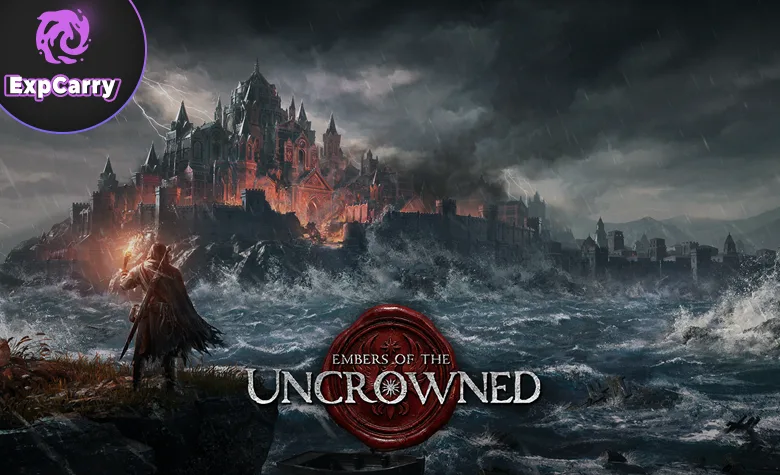
Embers of the Uncrowned is an upcoming dark fantasy MMORPG from NEXON, built around isometric action combat, brutal visuals, large-scale online progression, and the restoration of a fallen noble house. The game is not available yet, so this is not a final review based on live servers, long-term balance, monetization, or endgame testing. This is a full overview of the officially revealed details so far, with the important caveat that class depth, progression pacing, PvP structure, server performance, and the full live-service model can only be judged properly once players get meaningful hands-on time.
The core pitch is direct: you play as the illegitimate heir of House Harborwell, return from a mercenary life, and try to reclaim a continent ravaged by an elven invasion. Around that premise, NEXON is building a PC MMORPG with three initial classes, companion synergy, tactical boss combat, domain bosses, raids, settlement growth, gear enhancement, Skill Gems, House Legacy progression, Bloodline power, customization, and a stated Non-P2W philosophy. That is a lot of promise for a newly announced MMO, which means the interesting question is not whether the concept sounds strong. It does. The real question is whether the systems can hold up after the cinematic trailer glow wears off, as it always does, because gravity is cruel and marketing departments are worse.
Embers of the Uncrowned Release Status and PC Scope
Embers of the Uncrowned is currently listed for PC via Steam, with NEXON named as both developer and publisher. The Steam page lists the release date as Coming soon, meaning there is no fixed public launch date yet. That matters because any claim about a final release window, launch content count, finished monetization structure, or full endgame loop would be speculation unless NEXON gives a more exact update later.
In scope, the game is being positioned as a full MMORPG rather than a small co-op action RPG with online features stapled on top. Steam tags and official descriptions point to MMO, online PvP, online co-op, PvE, action RPG combat, character customization, and class-based progression. Official messaging also mentions long-term systems like settlement development, companions, raids, domain bosses, gear enhancement, Skill Gems, House Legacy, Bloodline power, and future ambitions beyond the initial hero journey.
The first public testing milestone is tied to Steam Next Fest in June 2026, when NEXON plans to present the first playable demo and gather player feedback. That is the more practical date for players to watch right now, because it should provide a broader chance to test how combat, classes, boss mechanics, UI, progression pacing, and server responsiveness actually work outside of trailers and curated screenshots. Trailers can make a loading screen look heroic. A public demo is less polite.
House Harborwell Story and the Dark Fantasy Hook
The story centers on House Harborwell, a fallen noble house trying to survive after the continent is devastated by a ruthless elven invasion. The player character is described as the illegitimate child of the house, someone who left home and became a mercenary before being pulled back by bloodline, duty, and the collapse of everything familiar. That gives Embers of the Uncrowned a personal hook instead of starting with the usual MMO routine where a chosen stranger kills six wolves and somehow becomes geopolitically important.
The main fantasy is restoration through violence, territory recovery, and legacy building. You are not only fighting corrupted creatures and elven forces for loot. You are trying to reclaim lost land, rebuild your domain, and restore the honor and strength of House Harborwell. That gives the game a stronger kingdom-recovery frame than many dark fantasy MMORPGs, where the world is miserable mostly because misery photographs well under blue lighting.
The tone is clearly dark fantasy, with official descriptions emphasizing blood, invasion, corruption, brutal combat, and cruel hidden stories across the continent. The available material suggests a world built around war damage and noble decline rather than a clean heroic adventure. That is a useful identity for an MMO, especially if the settlement and domain systems make the world feel like something the player is actually pushing back against rather than just passing through on the way to another damage number.
Embers of the Uncrowned Classes and Combat Roles
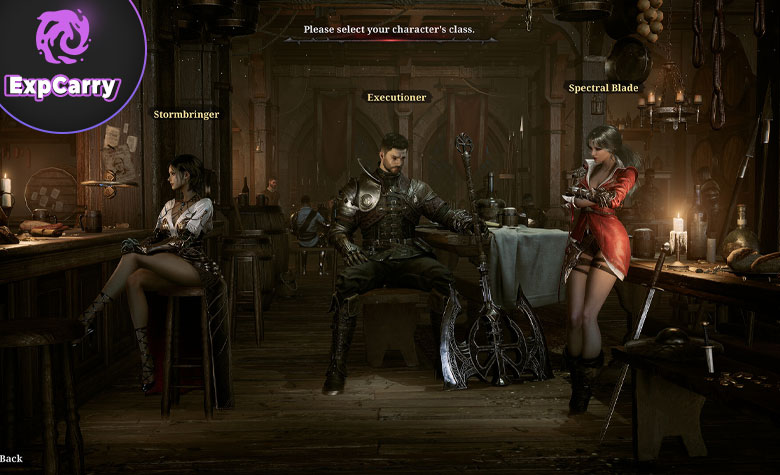
NEXON has presented three core classes so far: Spectral Blade, Executioner, and Stormbringer. Each class has a distinct weapon fantasy and combat identity, which is important because isometric MMORPGs live or die by whether classes feel meaningfully different in motion. Different armor silhouettes are not enough. Players need rhythm, resource pressure, range, recovery windows, and build choices that actually change decisions in combat.
Spectral Blade and fast longsword combat
Spectral Blade is the agile sword class. Official descriptions frame her as a longsword fighter built around swift and elegant swordsmanship, carving through enemies with speed rather than raw weight. In practical terms, this class looks positioned for players who prefer mobility, clean attack flow, and precise melee engagement over slow, heavy hits.
The class will likely be judged by how well its movement and animation recovery support the game's stated emphasis on control. Fast melee classes in isometric games can feel excellent when hit detection, dodge timing, and boss readability are sharp. They can also feel like trying to fence inside a washing machine if enemy telegraphs, input buffering, or camera clarity are weak. Spectral Blade will probably be the class most exposed to that difference.
Executioner and heavy axe pressure
Executioner fills the heavy melee role, using a giant axe to crush enemies with single, forceful blows. This is the class fantasy for players who want impact, commitment, and large damage windows rather than constant rapid strikes. If the combat system supports stagger windows and interruption timing well, Executioner could become the clearest expression of burst punishment after a boss is opened up.
The risk is obvious: heavy classes need to feel powerful without becoming sluggish in a game that also demands evasion and tactical positioning. If Executioner has strong payoff for correct timing, it could work well inside the boss-focused structure. If it becomes slow for the sake of looking heavy, it will attract the usual crowd of people who say "skill issue" while quietly rerolling after two evenings.
Stormbringer and wind-lightning magic
Stormbringer is the elemental caster, built around wind and lightning magic. This class gives Embers of the Uncrowned its ranged magical identity and should appeal to players who prefer area control, spell timing, and visual spectacle. The official description presents Stormbringer as a class that channels destructive storm power rather than a passive backline support role.
For Stormbringer, the key will be whether spellcasting interacts meaningfully with the game's tactical systems. If boss interruption, stagger, SP-based evasion, and skill trees all matter, then Stormbringer could be more than a screen-clearing lightning machine. If not, it risks becoming the familiar MMO caster loop of standing slightly far away and pressing the glowing button until loot appears, because apparently civilization fought wars for centuries so we could optimize cooldown rotations.
Isometric Combat, Stagger Windows, Interrupts, and SP Evasion
Combat is one of the biggest selling points in Embers of the Uncrowned. NEXON describes it as fast-paced isometric action with tactical decision-making, not a simple gear-check auto-battle. Official developer messaging specifically highlights spell interruption, a Stagger system, and evasion tied to a limited SP resource. Those three pieces tell us the combat is meant to reward control, timing, and encounter knowledge rather than only character power.
Spell interruption is especially important for boss design. If enemies have devastating skills that can be interrupted, then players need to read animations, manage cooldowns, and coordinate with teammates. That can add real tension to MMO combat, because failure is not just "your gear score was too low." It becomes "someone missed the interrupt and now the party is decorating the floor." Annoying, but at least honest.
The Stagger system creates another layer. When enemies are staggered, players can unleash massive burst damage within a limited window. This naturally rewards groups that understand timing, class synergy, and burst sequencing. It also gives heavy hitters like Executioner and burst-capable builds a clear role if the system is tuned properly.
SP-based evasion may be the most important mechanical detail. Unlimited dodge systems often trivialize danger, while overly restricted movement makes action combat feel stiff. By tying evasion to a finite SP resource, Embers of the Uncrowned appears to be pushing players to dodge intentionally rather than panic-roll through every mechanic like a caffeinated beetle. The success of this system will depend on SP regeneration, enemy tracking, animation locks, and whether boss attacks are readable enough to make failure feel fair.
Companions and Class Synergy in Embers of the Uncrowned
Companions are another confirmed system. NEXON says players will recruit companions who fight and grow alongside them, with synergies that help overcome major challenges. This suggests companions are not just cosmetic followers, although the exact depth of their builds, gear, abilities, and progression has not been fully detailed yet.
The companion system could become one of the game's stronger identity pieces if it affects combat choices in a meaningful way. A good companion setup can support class weaknesses, amplify burst windows, help with survival, or enable specific builds. A weak companion system becomes a dressed-up stat stick with a name and a tragic backstory, because apparently even spreadsheets need emotional branding now.
For solo players, companions may also help smooth the MMO experience outside group content. That does not mean raids or domain bosses will be soloable, and NEXON has made cooperation part of the pitch for larger threats. Still, companions can make open-world progression, questing, and build experimentation feel less empty when players are not grouped.
Domain Bosses, Raids, and Group PvE Content
Embers of the Uncrowned includes two major group PvE pillars already named by NEXON: Domain Bosses and Raids. Domain Bosses are open-field threats tied to reclaiming occupied land, while Raids are presented as encounters against overwhelmingly powerful bosses that require cooperation and precise tactics. This split is sensible for an MMORPG because it gives the game both world-scale public danger and more structured group challenges.
| Activity | Core idea | Why it matters |
|---|---|---|
| Domain Bosses | Open-field bosses occupying parts of the player's land | Connects boss fights to territory recovery and House restoration |
| Raids | Large boss encounters built around cooperation and tactics | Gives organized groups a harder PvE target with rare rewards |
| Companion-supported combat | Recruitable allies fight and grow alongside the player | Adds build synergy and support outside standard party play |
Domain Bosses and reclaiming your land
Domain Bosses fit directly into the game's House Harborwell premise. These bosses are not just big monsters placed in a field because someone had a model and a health bar lying around. They are described as enemies occupying your domain, and defeating them becomes part of reclaiming land and restoring the house's honor.
That connection is useful because it makes open-field bosses feel less detached from the world. If territory recovery, settlement growth, and House progression are all tied together, Domain Bosses could become more than repeatable loot events. They could act as milestones in the player's wider campaign to rebuild power across the continent.
Raids and high-coordination boss fights
Raids are framed as fights against overwhelmingly powerful bosses where victory depends on cooperation and precise tactics. That wording points toward encounter mechanics rather than simple health scaling. Given the confirmed interrupt, stagger, and evasion systems, raids may lean heavily on timing windows, positioning, boss skill denial, and coordinated burst phases.
The raid design will be one of the biggest tests for Embers of the Uncrowned. The game can have beautiful environments and dramatic lore, but MMORPG players will eventually ask the only question that matters after week two: is the group content worth repeating? If raids have strong mechanics, meaningful rewards, and enough variation, they can carry the long-term PvE audience. If they are just giant enemies with more health, players will solve them once and then complain professionally on Discord.
Settlement Growth, House Legacy, and Bloodline Progression
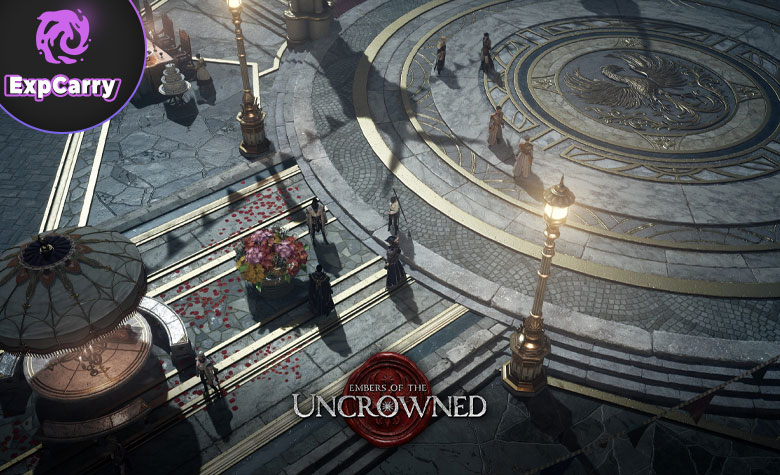
Progression in Embers of the Uncrowned is tied closely to the strength of House Harborwell. NEXON says that as players liberate more regions, their settlement grows from a humble camp into a thriving city. Buildings can be constructed to produce essential items for the journey, while House Legacy and Bloodline upgrades are described as key parts of unlocking the character's full potential.
This is one of the more interesting parts of the game on paper. A settlement system gives progression a visible shape outside gear numbers. If your camp becomes a city because of what you reclaim and build, the game can make advancement feel physical and persistent. That is much stronger than another invisible account-wide stat page pretending to be a legacy system.
Skill Gems, gear enhancement, House Legacy, and Bloodline progression suggest several overlapping character-growth layers. The danger is system clutter. MMORPGs often confuse depth with menus, and then players need a spreadsheet, three guides, and divine intervention to understand whether their character is bad or just underfed by seven currencies. Embers of the Uncrowned needs these systems to connect cleanly: combat builds, companion synergy, settlement production, gear upgrades, and bloodline power should support each other instead of becoming separate chores.
Customization, Costumes, mounts-farm">Mounts, and Player Identity
Character customization is confirmed through face and body customization, with gender selection described as coming soon. The Steam page also mentions distinctive costumes, while official descriptions add mounts to the identity and collection side of the game. This is standard MMO territory, but it still matters because players in online RPGs will endure unspeakable grind if the reward is looking mildly better than someone standing next to them.
The key question is monetization. NEXON has presented Embers of the Uncrowned with a Non-P2W philosophy and has said it aims to avoid excessive microtransactions that affect game balance. That is an encouraging statement, especially for an MMORPG, where monetization debates usually arrive before the login screen fully loads.
Still, the wording should be read carefully. A Non-P2W philosophy does not automatically reveal the full shop model, cosmetic pricing, battle passes, convenience items, account services, regional monetization differences, or future live-service changes. The stated direction is positive, but the final store structure will need to be judged when it is visible. Until then, optimism is allowed in small doses, like medicine with side effects.
AI Disclosure, Anti-Cheat, and Steam Platform Details
The Steam page includes an AI Generated Content Disclosure. NEXON states that AI-based tools may be used during development and live service to support in-game visual content creation, marketing materials, live chat translation features, and partial in-game dialogue and script localization. The developer also states that the final product remains a reflection of the team's own creative work.
This disclosure is worth mentioning because AI use in game development is now a real point of concern for many players, especially around art consistency, localization quality, and live-service content pipelines. The important part is that NEXON is disclosing the categories of use instead of burying the topic. Whether players are comfortable with that use will depend on how visible it feels in the final game.
The Steam page also lists NGS, or Nexon Game Security, as kernel-level anti-cheat, with a note that it requires manual removal after uninstall. That is another practical detail players should not ignore. Kernel-level anti-cheat is common in online games, especially competitive or MMO titles, but it is also a frequent privacy and system-access concern. Players who avoid kernel-level anti-cheat on principle will want to know this before installing.
Embers of the Uncrowned PC System Requirements
The listed PC requirements are not extreme by current standards, but the recommended GPU target is notably higher than the minimum. NEXON lists Windows 11 64-bit, DirectX 11, broadband internet, and 30 GB of storage for both minimum and recommended setups. Since this is an online MMORPG, the network requirement is not decorative. It is the whole point, sadly, because even fantasy kingdoms now require stable broadband.
| Requirement | Minimum | Recommended |
|---|---|---|
| OS | Windows 11 64-bit | Windows 11 64-bit |
| CPU | Intel i5-3570 / AMD FX-8350 | Intel i5-9600 / AMD Ryzen 5 2600X |
| Memory | 8 GB RAM | 16 GB RAM |
| Graphics | NVIDIA GeForce GTX 1060 / AMD RX 580 / Intel Arc A380 | NVIDIA GeForce RTX 2060 / AMD RX 5700 XT / Intel Arc A770 |
| DirectX | Version 11 | Version 11 |
| Network | Broadband internet connection | Broadband internet connection |
| Storage | 30 GB available space | 30 GB available space |
The recommended CPU includes Ryzen 5 2600X, which is useful because that processor still appears in many older but capable gaming PCs. The recommended GPU tier, however, points toward a stronger expectation for smooth play, especially if raids, dense spell effects, and large open-field encounters push the engine harder than ordinary questing.
Steam Next Fest Demo and the First Real Player Test
NEXON has said Embers of the Uncrowned will join Steam Next Fest in June 2026, with the demo intended to gather player feedback and improve polish. This is the first major moment where the game can move beyond screenshots, class blurbs, and cinematic mood. For an MMO, that matters more than usual because combat feel, server responsiveness, readability, UI flow, and progression pacing cannot be properly judged from a trailer.
The demo should also help clarify how much of the game's identity is already playable. Players will want to test class feel, dodge responsiveness, SP pressure, companion usefulness, boss mechanics, enemy telegraphs, and whether the isometric camera keeps combat readable when effects stack up. The strongest marketing line in the world cannot save an action MMO if players feel like they are fighting the interface instead of the monsters.
Unanswered Questions Before Embers of the Uncrowned Launches
Even with a strong reveal, Embers of the Uncrowned still has several major unknowns. NEXON has shown the shape of the game, but not enough to judge the durability of its systems. The most important missing details are the exact release date, the full monetization model, the depth of class builds, the scale and structure of raids, the practical value of companions, the PvP ruleset, the endgame loop, server performance, regional availability, and how much grind the settlement and Bloodline systems will demand over time.
That uncertainty does not make the game weak. It simply means the current material should be treated as a reveal-stage overview, not a final verdict. MMORPGs are not judged by feature lists alone. They are judged by how those features survive repetition, balance patches, live-service pressure, player economy problems, and the ancient MMO ritual of turning every fun activity into a weekly checklist.
The Full Picture Around Embers of the Uncrowned So Far
Embers of the Uncrowned currently looks like a dark fantasy MMORPG with a clear pitch: isometric action combat, class-based builds, tactical boss mechanics, companions, domain recovery, raids, settlement growth, and long-term House progression. The House Harborwell premise gives the game a sharper identity than a generic "save the world" setup, and the combination of territory recovery with settlement development could give progression a satisfying visible arc.
The biggest strengths on paper are the combat systems and the House-based progression structure. Spell interruption, stagger windows, and SP-based evasion suggest a game that wants players to engage with mechanics rather than simply inflate stats. Companions, Skill Gems, gear enhancement, House Legacy, and Bloodline progression suggest multiple build layers. Domain Bosses and Raids give the game obvious PvE anchors for group play.
The biggest unanswered questions are equally obvious. NEXON still needs to show how combat feels in real hands, how monetization works in detail, how deep the skill trees are, how companions affect builds, how settlement production avoids becoming a chore, how raids scale, and whether the Non-P2W philosophy remains convincing once the full live-service model is visible. Those are not small details. They are the difference between a promising MMO and another beautifully announced future uninstall.
Final Thoughts on Embers of the Uncrowned
Embers of the Uncrowned has a strong foundation for an MMORPG reveal. The dark fantasy setting has a clear conflict, the House Harborwell storyline gives the player a personal reason to reclaim territory, and the three initial classes cover fast melee, heavy melee, and elemental magic without blurring into the same combat fantasy. The confirmed systems also point toward a game that wants to combine ARPG-style impact with MMO-scale progression and group content.
The most promising part is the way the game links character growth to House restoration. If settlement upgrades, liberated regions, companions, Bloodline power, gear enhancement, and raids all feed into each other cleanly, Embers of the Uncrowned could feel more coherent than many MMOs that scatter progression across unrelated systems. The danger is that the same ambition can turn into clutter if every feature becomes another checklist. NEXON needs restraint as much as scope here.
The Steam Next Fest demo in June 2026 will be the first real test. If the combat feels sharp, the dodge system has weight, the classes feel distinct, and the boss mechanics reward timing rather than raw stat bloat, Embers of the Uncrowned could earn serious attention from MMO players looking for something darker and more action-driven. Until then, the correct position is cautious interest: the concept is strong, the systems sound promising, and the final judgment has to wait for hands-on proof, because trailers are basically perfume sprayed over uncertainty.