



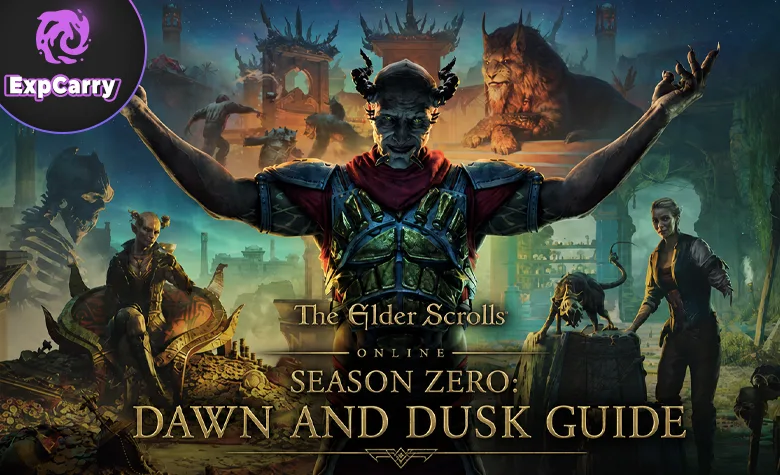
The Elder Scrolls Online: Season Zero - Dawn and Dusk is the first major step into ESO's new seasonal model. Instead of building the year around one large paid Chapter, ZeniMax Online Studios is moving ESO toward shorter seasons with free gameplay updates, limited-time event content, reward tracks, system refreshes, and rotating stores. Season Zero runs from April 2 to July 8, 2026, and acts as the first live test of that structure.
The season is not just a renamed event calendar. It brings the Tome of Dawn and Dusk, the Night Market Event Zone, Trade Bars, the Gold Coast Bazaar, a Dragonknight refresh, Two-Handed animation updates, broad player experience improvements, and later Season Zero systems tied to Update 50. Some parts launched with Update 49, others arrive during the season, and the Night Market opens later than the season itself. That staggered rollout is important, because Season Zero is less about one single content drop and more about ESO testing a new rhythm for updates, rewards, and long-term player engagement.
ESO Season Zero Release Dates and Update Timeline
Season Zero: Dawn and Dusk begins on April 2, 2026, and ends on July 8, 2026. Update 49 launched before the season and laid the groundwork for its systems, while the seasonal reward track went live with the season start. The Night Market does not open on April 2. It launches on April 29 and remains available until June 17, which makes it the main playable event-zone content inside the season rather than the first thing players see on day one.
| Feature | Date or Window | Role in Season Zero |
|---|---|---|
| Update 49 | March 9, 2026 | Base-game patch with Season Zero groundwork, combat refreshes, player experience changes, Gold Coast Bazaar support, and base game expansion. |
| Gold Coast Bazaar | March 25, 2026 | New Trade Bar store with seasonal and evergreen reward sections. |
| Season Zero: Dawn and Dusk | April 2 - July 8, 2026 | First season under ESO's new seasonal model. |
| Tome of Dawn and Dusk | April 2 - July 8, 2026 | Seasonal Tamriel Tome reward track with free and Premium options. |
| Night Market Event Zone | April 29 - June 17, 2026 | Limited-time Fargrave event zone with factions, activities, bosses, achievements, and rewards. |
| Update 50 systems | June 2026 | Challenge Difficulty, PvP Veterancy, Class Mastery, Werewolf updates, and additional seasonal features. |
This schedule shows the biggest difference between Season Zero and the older Chapter cadence. A Chapter usually arrived as one clear paid release with a new zone, story arc, and feature package. Season Zero spreads its content across several points in the spring and early summer. That gives ESO more chances to refresh the game during the season, but it also means players need to track which features are already live, which are timed, and which are still waiting for Update 50.
ESO Night Market Event Zone in Season Zero
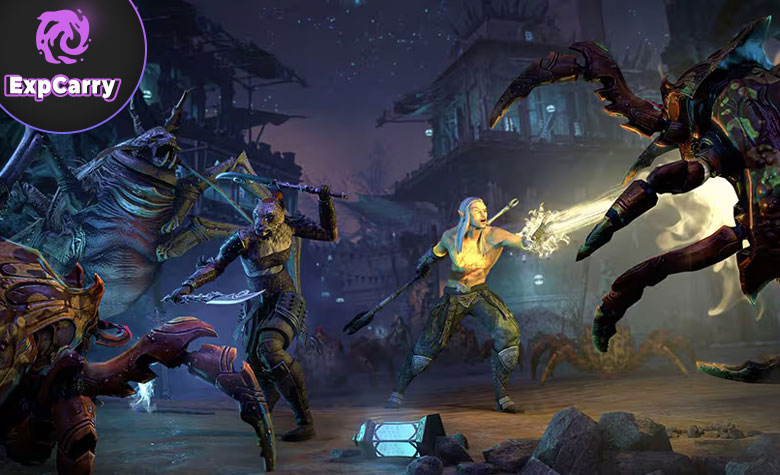
The Night Market is the most important playable content inside Season Zero. It is ESO's first Event Zone, a new zone type built for limited-time seasonal play rather than the permanent Chapter-zone format. It is located in Fargrave and opens a trade hub normally hostile to mortals, where three rival patrons compete for control after the old leadership disappears and the districts fall into danger.
This is not a simple holiday event with a quest giver and a reward box. The Night Market is designed as a harder group-focused PvE space. Players pledge to one of three factions, earn favor, explore themed districts, complete activities, fight dangerous enemies, and work toward rewards tied to faction progress and zone achievements. The zone is temporary, but the structure is more ambitious than ESO's usual event loop, which is exactly why players should judge it carefully rather than treating it as another checkbox on the MMO calendar.
Night Market factions, districts, and activities
The Night Market is built around three patron factions: the Glittering Goad, The Ruckus, and the Thousand Eyes. The Glittering Goad is tied to wealth, auctions, and status inside the market. The Ruckus is built around force, intimidation, and control. The Thousand Eyes is an older, quieter faction that gathers power through information, numbers, and hidden knowledge. Players pledge to a patron faction and earn favor through Night Market activities, which gives the zone a stronger identity than a basic public event rotation.
The zone also has three themed districts: The Parch, Skittering Precinct, and Sorrow's Friend. Each district supports different dangers and activities. The official Update 49 notes list challenging monsters, races, puzzle-like oddities, public-style skirmishes, 4-player bosses, and the Opulent Ordeal, a 12-player trial encounter. That matters because the Night Market is trying to sit somewhere between open-world seasonal content and organized group PvE, rather than serving only solo questing or only high-end players.
Night Market rewards and progression hooks
The Night Market reward structure is also larger than the old "do dailies, open boxes, forget everything next week" routine. Update 49 lists 61 achievements, 6 titles, 3 dyes, mementos, furnishings, faction vendor rewards, and Dragonknight-related skill styles. The zone also connects to the Night's Den house, giving Season Zero a housing angle alongside combat and reward progression.
The strongest part of the Night Market is that it gives Season Zero a real playable identity. The risky part is its limited window. If the zone feels rewarding and substantial between April 29 and June 17, it can prove that ESO's seasonal model can carry meaningful gameplay without a Chapter purchase. If it feels too brief or too dependent on reward pressure, players will see the familiar live-service trap immediately: a temporary zone wrapped around a progress bar, because apparently every modern game needs a second job with fantasy lighting.
Tamriel Tomes, Tome Points, and Premium Rewards in ESO Season Zero
Tamriel Tomes are the new seasonal reward system introduced with Season Zero. The first Tome is the Tome of Dawn and Dusk, available from April 2 to July 8, 2026. Every player has access to the free side of the Tome during the season. A Premium upgrade adds more rewards, and a Premium + Bonuses option includes additional cosmetics and instant Tome Points. The important difference from many battle pass systems is that a purchased Premium Tome remains owned permanently, so players can continue progressing it after the season ends.
Progression runs through Tome Points earned from Weekly Challenges and Seasonal Challenges. Weekly Challenges rotate and can accumulate up to a limit, which makes the system less punishing for players who do not log in every day. Seasonal Challenges are larger, more thematic goals tied to the season and cannot be rerolled. This structure replaces some of ESO's older routine reward pressure with one central seasonal track.
That replacement is not a small change. Update 49 removed the Endeavors and Daily Login Rewards systems, with many of those reward types moving into the free side of Tamriel Tomes. This simplifies the reward interface, but it also concentrates more player attention into one seasonal system. For casual players, that can be cleaner. For players already tired of battle pass-style design, it will look like ESO removed several chores and put one larger chore in ceremonial robes.
Trade Bars and Gold Coast Bazaar Replace ESO Event Tickets
Trade Bars are the new reward currency">currency-farm">currency connected to Season Zero and ESO's broader seasonal economy. They replace Event Tickets and can be earned mainly through Tamriel Tomes, with additional sources including in-game events and Vengeance Campaigns. ZeniMax has also stated that Trade Bars are not sold for Crowns, which is an important line because it keeps this currency from becoming a direct premium-store shortcut.
The Gold Coast Bazaar is the new Trade Bar store. It launched its first offerings before Season Zero, on March 25, 2026, and lives inside the Crown Store UI as its own dedicated tab. Despite that placement, items in the Bazaar are purchased with Trade Bars rather than Crowns. The store includes mounts, pets, outfits, cosmetics, style-related items, consumables, and gameplay items, including rewards that previously came from Golden Pursuits, in-game events, Twitch Drops, Amazon Prime Gaming, and similar limited promotions.
The Bazaar is split into Seasonal and Gold Coast Wares sections. Seasonal rewards rotate with each season, while Gold Coast Wares are intended to remain more stable across seasons, though items can still be added or removed later. This gives ESO a cleaner place to reintroduce older limited rewards, but it does not remove the usual pressure around rotating items. It reorganizes that pressure into a new currency economy, which is tidier than the old Event Ticket sprawl but still something players will need to watch.
Update 49 Combat Refreshes and Player Experience Changes
Update 49 starts ESO's class and combat refresh work with Dragonknight and Two-Handed Weapons. The Dragonknight refresh includes updated abilities, animations, visual effects, sounds, and balance changes across class skills and passives. The Two-Handed skill line receives refreshed animations as part of the same combat modernization push. These changes matter because they are not just spreadsheet tuning. They affect how older combat options feel in actual play, especially for players returning after years away from the game.
The Dragonknight changes also connect directly to the Night Market reward structure, since Dragonknight-related skill styles are available through Night Market vendors for players who have mastered Dragonknight as a class or subclass. That makes the class refresh more than a patch-note footnote. It becomes part of the seasonal loop: updated class feel, new cosmetic expression, and seasonal content that points players toward the refreshed kit.
Update 49 also delivers a broad player experience pass. The patch improves housing, customization, Vampire and Werewolf quest access, sourcing for several items, treasure map behavior, and other daily usability points. ESO has years of layered systems sitting on top of one another like an archaeological site with a subscription button, so these cleanup changes matter. They may not sell the season by themselves, but they make the game easier to return to and easier to manage once players are back.
ESO Base Game Expands With Warden and Classic DLCs
One of the most important Update 49 changes sits outside the seasonal reward track: ESO's base game expands. With Update 49, the Warden class, Imperial City, Orsinium, Thieves Guild, and Dark Brotherhood are included in the base game. Players who did not already own those DLCs receive access after logging in once Update 49 is live.
This is a major access change for new and returning players. Warden is a full class, while Orsinium, Imperial City, Thieves Guild, and Dark Brotherhood represent some of ESO's older but still relevant content. Adding them to the base game makes the entry package stronger and supports the seasonal model by giving players more permanent content to play alongside temporary seasons. That is the correct direction if ESO wants seasons to feel like a living layer on top of the game rather than a replacement for actual content.
This also changes the value equation around Season Zero. The season itself is free for ESO players in terms of gameplay access, while the base-game expansion makes the underlying game broader at the same time. That combination is stronger than a reward track alone. It gives returning players a clearer reason to reinstall and gives new players more content before they have to think about ESO Plus, Crown Store purchases, or the next paid content decision.
Update 50 Features Inside ESO Season Zero
Season Zero does not end with Update 49. Update 50 continues the season in June 2026 with several systems that carry more long-term design weight than a normal event reward refresh. The planned additions include Challenge Difficulty, PvP Veterancy, Class Mastery systems, Werewolf updates, a daily quest limit increase, motif sourcing improvements, and improved Companion XP rates.
Challenge Difficulty is aimed at players who want a more demanding experience in selected content. PvP Veterancy adds a new progression layer for PvP players, with titles and rewards attached to long-term participation. Class Mastery is tied to deeper class identity and combat progression, while the Werewolf update gives the skill line a visual and gameplay refresh later in the season. These additions are important because they show that the seasonal model is not only about temporary zones and reward pages.
The timing is also worth noting. Several of the most mechanically interesting Season Zero systems arrive near the end of the season rather than at launch. That creates a stronger late-season reason to return, but it also means the April launch can feel lighter if players are only looking for new permanent systems. This is the core tradeoff of ESO's new model: more frequent drops across the calendar, but less of the old single-day expansion impact.
ESO Season Zero Access, Monetization, and Long-Term Risks
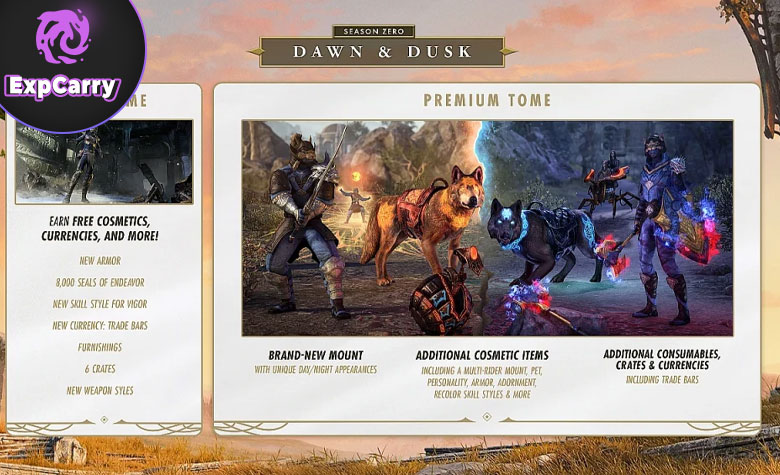
The cleanest read of Season Zero is that gameplay access and premium reward access are now more clearly separated. Players who own ESO can access the Season Zero gameplay updates without buying a new Chapter. The Tamriel Tome has a free path, while Premium Tome upgrades add more cosmetics, currencies, instant Tome Points, and bonus rewards depending on the tier. The Gold Coast Bazaar uses Trade Bars rather than Crowns, and Premium Tomes remain completable after purchase without a time limit.
That does not make Season Zero free of monetization pressure. ESO still has ESO Plus, Crowns, Crown Crates, store cosmetics, paid upgrades, and now Premium Tome options. The difference is that Season Zero does not ask players to buy a new Chapter just to access the main seasonal gameplay package. That is a meaningful shift, but it does not magically turn ESO into a charity project operated by benevolent Daedra.
The long-term risk is not that Season Zero exists. The risk is that future seasons could lean too heavily on reward tracks, rotating stores, and temporary content while offering too little permanent gameplay. Season Zero avoids that problem better than it could have because it includes the Night Market, combat refreshes, base-game expansion, player experience changes, and Update 50 systems. The model will only hold up if future seasons keep that balance instead of treating Premium rewards as the main attraction.
Final Thoughts on The Elder Scrolls Online Season Zero
The Elder Scrolls Online: Season Zero - Dawn and Dusk is a major shift because it changes ESO's content delivery model, not just its next reward list. It replaces the old Chapter-centered rhythm with a more modular seasonal structure built around free gameplay updates, limited-time event zones, reward tracks, class refreshes, currency changes, and system updates. Season Zero is not as simple as "new expansion" or "just an event." It sits between those labels, which is why players are right to judge it carefully.
The strongest parts of Season Zero are the Night Market, the base-game expansion, the Dragonknight and Two-Handed refreshes, and the fact that Premium Tomes do not expire after purchase. Trade Bars and the Gold Coast Bazaar also give ESO a more organized way to handle returning rewards, especially after Event Tickets, Endeavors, and Daily Login Rewards were removed or folded into the new structure. The weakest part is the uncertainty around cadence. Some of the season's best mechanical systems arrive later, and the Night Market is available only for a limited window.
Season Zero gives ESO a credible foundation for its next era, but it does not settle every concern. The model can work if future seasons keep adding meaningful gameplay, permanent system improvements, and fair reward access. It will sour quickly if the playable side thins out while premium reward management expands. For now, Dawn and Dusk is a careful reset: lower Chapter-style access friction, more frequent seasonal beats, a real event zone, and enough unresolved questions to keep ESO players arguing productively until the next update gives them fresh material.