




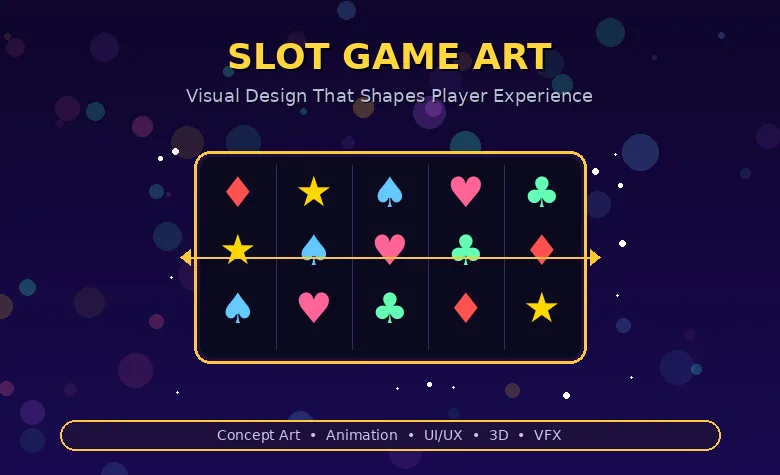
The online gambling industry has evolved far beyond the clunky fruit machines of the early internet era. Today's slot games are immersive visual experiences — rich with animation, storytelling, and polished graphic design that rival the production quality of mainstream video games. Behind every spinning reel lies hours of creative work from concept artists, illustrators, animators, and UI designers who bring these games to life.
For studios looking to deliver that level of quality without building massive in-house teams, professional slot game art services have become an essential part of the development pipeline. Outsourcing art production allows game companies to scale faster, access specialized talent, and maintain visual consistency across multiple titles — all while keeping budgets under control.
What Makes Slot Game Art Unique
Slot game art operates under a very specific set of constraints that separate it from other forms of game design. Every visual element must serve dual purposes: it needs to look stunning as a standalone piece and function flawlessly within the mechanical framework of a slot game.
Designing for the Reel Grid
Unlike open-world environments or side-scrolling levels, slot art lives inside a rigid grid structure. Symbols must be instantly readable at small sizes, maintain clarity during rapid spin animations, and look equally compelling whether displayed on a desktop monitor or a mobile phone screen. This demands a particular discipline from artists — bold shapes, high contrast, and clean silhouettes are non-negotiable.
The Psychology of Visual Reward
Color theory and visual hierarchy play an outsized role in slot design. High-paying symbols need to feel premium and exciting. Scatter and bonus icons must stand out immediately without clashing with the overall theme. Win animations have to deliver a satisfying dopamine hit through particle effects, light bursts, and dynamic motion. Every pixel is engineered to keep players engaged.
Core Art Assets Every Slot Game Needs
A typical slot title requires a surprisingly deep library of visual assets. Here are the essential categories that studios and outsourcing partners work through during production:
- Symbol sets — usually 10 to 13 unique icons ranging from low-pay fillers to high-value thematic symbols
- Background art — the environment behind the reel grid that establishes the game's theme and mood
- UI elements — spin buttons, bet selectors, paytables, menus, and information panels
- Bonus round visuals — distinct screens, mini-game environments, and pick-and-click assets
- Animations — idle loops for symbols, win celebrations, transition effects, and anticipation sequences
- Logo and branding — the game's title treatment, often the first thing a player notices in a lobby
Each of these categories demands a different skillset, which is one reason outsourcing to a dedicated studio often makes more sense than relying on a small generalist team.
Why Studios Are Turning to Outsourced Art Production
The math behind outsourcing slot game art is compelling. A mid-sized iGaming company might need to release six to twelve new titles per year to stay competitive. Building and maintaining an art team capable of that output is expensive, slow, and inflexible.
Speed and Scalability
External art studios can spin up dedicated teams for each project, working in parallel on multiple titles simultaneously. When a deadline shifts or a new project appears on the roadmap, scaling up or down happens without the overhead of hiring or layoffs.
Access to Specialized Talent
Slot game art is a niche discipline. Finding artists who understand both the aesthetic demands and the technical constraints — symbol sizing, animation frame budgets, mobile optimization — takes time. Established outsourcing studios already have these specialists on staff, with portfolios that prove their capability.
Consistency Across a Portfolio
When a studio outsources to a single art partner across multiple projects, it builds a shared visual language and workflow. Style guides get refined, communication becomes efficient, and the quality bar stays consistent from one release to the next.
Trends Shaping Slot Game Art in 2025 and Beyond
The visual bar in the iGaming space continues to rise. Several trends are pushing slot art into new territory:
3D and Hybrid Styles
Pure 2D illustration is giving way to 3D-rendered symbols and environments, or hybrid approaches that combine hand-painted textures with three-dimensional modeling. This adds depth and allows for more dynamic camera work during bonus rounds and win sequences.
Narrative-Driven Themes
Players are responding to games that tell stories. Rather than generic "Egyptian" or "fruit" themes, studios are investing in original characters, plot arcs that unfold through bonus stages, and world-building that gives each title a distinct identity.
Mobile-First Design
With the majority of slot play now happening on smartphones, art direction increasingly starts with the smallest screen. Symbols are designed for thumb-sized clarity first, then scaled up — a reversal of the traditional desktop-first workflow.
Choosing the Right Art Partner
Not every outsourcing studio is equipped for the specific demands of slot game production. When evaluating potential partners, studios should look for a few key indicators: a portfolio with shipped iGaming titles, demonstrated understanding of regulatory requirements for different markets, flexibility to work within established style guides or develop new ones from scratch, and a proven pipeline for delivering animation-ready assets — not just static illustrations.
The best partnerships are collaborative, with the external art team embedded into the client's production workflow rather than operating as a disconnected vendor.
Final Thoughts
Slot game art is one of the most demanding and rewarding niches in the broader game art landscape. It requires artists who can balance beauty with function, creativity with constraint, and speed with quality. As the iGaming market grows and player expectations rise, the studios that invest in exceptional visual production — whether in-house or through trusted outsourcing partners — will be the ones whose games stand out in an increasingly crowded lobby.