
League of Legends Patch 26.2 is the first major follow-up after the Season 2026 launch patch, and it is designed to stabilize the new meta instead of flipping it upside down. Patch 26.1 introduced wide system changes that pushed the game toward turret pressure and lane progress, and 26.2 responds by tuning early winners down while helping champions that struggled to adapt to the new season.
This guide is built for efficiency and real gameplay impact. You will get the full Season 2026 overview (so the new map mechanics actually make sense), the most important Patch 26.2 follow-ups, champion balance highlights you will feel immediately, and a practical plan to climb without wasting games learning the hard way.
How Patch 26.2 Fits Into Season 2026
Season 2026 started with Patch 26.1, and it came with large system changes that affect how every role plays lane phase, how vision works, and how games end. Patch 26.2 does not replace those systems. It is a tuning patch that adjusts the early-season outliers and smooths out the most disruptive friction points (especially for supports and control wards).
The fastest way to win in 26.2 is understanding one key idea: the season is rewarding consistent lane progress and turret pressure more than last year. You can still win through epic monster fights, but the baseline strategy is now about building small advantages, cashing them into turret progress, and turning that into clean mid-game tempo.
- Season 2026 changed the foundation of lane phase, tempo, and vision.
- Patch 26.2 tunes champion power around those new rules and fixes usability pain points.
- Climbing is easier if you play for steady turret progress instead of coinflip fights.
Season 2026 Systems You Must Understand
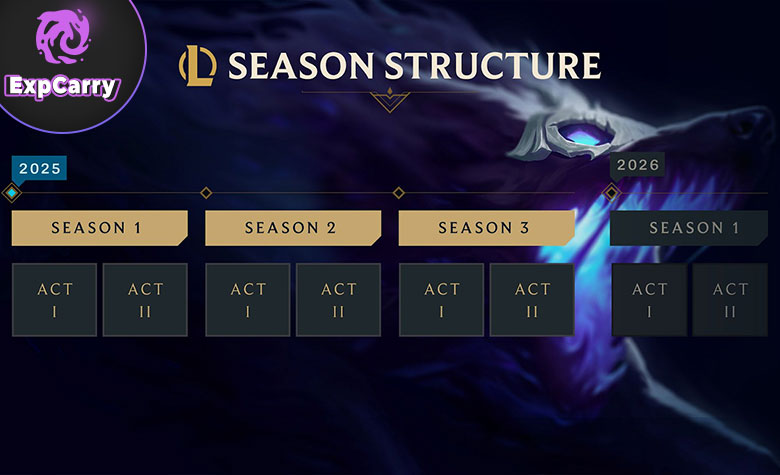
If you are coming back to ranked and games feel different, it is because they are. Season 2026 introduced multiple systems that change how lane pressure converts into gold and tempo. Once you understand these, Patch 26.2 starts to feel predictable instead of random.
| Season system | What changed | Why it matters in real games |
|---|---|---|
| Crystalline Overgrowth | Turrets build up crystals that burst for bonus true damage when hit | Small pushes create real progress even without Baron setups |
| Role Quests | Every role has a lane-phase quest and rewards tied to role actions | Lane phase is more structured and punishes low-tempo autopilot play |
| Faelights vision | Ward rings that grant a temporary extra vision zone that enemies do not automatically see | Vision plays feel more window-based and stronger for side lane setups |
| Faster game start | Earlier minion spawn and earlier jungle camp timings | Less downtime and earlier action pressure across roles |
| Baron timing | Baron is back to spawning at 20 minutes | Mid-game tempo matters sooner and mistakes get punished faster |
Crystalline Overgrowth: Why Turret Pushing Feels Strong
Crystalline Overgrowth is a new turret mechanic that works like a built-in turret cracking tool. Over time, crystals automatically build up on lane turrets. When an enemy champion hits the turret, the overgrowth bursts for bonus true damage based on how much it has accumulated. It does not scale with your stats, which means almost any champion can convert a short window into meaningful turret progress.
This changes how you should play mid-game. Instead of waiting for a perfect 5v5 or a Baron buff, you can create value with smaller wave states and short pushes. The best solo queue teams are the ones that understand when to take a safe chunk on a turret and leave, instead of forcing fights after every won trade.
- Look for short push windows after winning a trade or forcing a recall.
- Do not overstay for a full turret if you can take a clean chunk and reset.
- Side lane pressure becomes more valuable because small progress stacks up.
Role Quests: Lane Phase Is Not Optional Anymore
Season 2026 introduced Role Quests for every position. Instead of only jungle and support having a quest-like system, each role now has lane actions and progress tied to a quest reward. This is meant to reward playing out the lane and reduce low-interaction patterns that skip lane fundamentals.
In practice, Role Quests push players toward cleaner early decision-making. You win more games by playing lane properly, maintaining tempo, and getting reliable quest progress rather than flipping early roams that sacrifice waves and plates.
- Play for lane tempo first, then convert it into turret progress.
- Do not trade your lane state away for low-value roams.
- If you want to roam, shove first so the roam does not break your quest rhythm.
Faelights: Vision Is More Tactical Than Before
Faelights are new map features that appear as glowing rings. When you place a ward on a ring, it temporarily reveals a nearby area of the map. That bonus vision is not automatically revealed to enemies unless they use a detection effect or ping the ward directly, which makes Faelight wards feel different from normal “set and forget” vision.
If you play support or jungle, you should treat Faelight placements as high value tempo plays. You do not need permanent full-map coverage. You need a strong vision window to execute the next move cleanly.
- Use Faelights to protect split pushes and side lane pressure.
- Ward for the next objective window, not for permanent map control.
- If you are behind, Faelights can create safer recovery paths.
Patch 26.2 Highlights: What Actually Changed
Patch 26.2 is built around early-season tuning. Riot is monitoring how 26.1 landed and is adjusting champions that became too strong in the new season environment while giving help to champions that fell behind. The patch also includes ranked rule updates, item tuning for new Season 2026 builds, mode updates, and quality-of-life improvements tied to the new quest system.
One practical macro note for 26.2: Baron is now being taken earlier because it spawns at 20 minutes again, but the first Baron take is less “game ending” than players expect because the reward has been toned down compared to the old snowball feeling. That creates more playable mid-games where you can defend one Baron and still win later if your lanes are stable.
| Patch area | What to expect | Who benefits most |
|---|---|---|
| Champion tuning | Early winners nerfed, struggling picks buffed | Players who adapt quickly to meta shifts |
| Support quest usability | Double-bind role slot and pre-game keybind setup | Support mains and coordinated bot lanes |
| Ranked rules | Apex Duo restrictions tightened for fairer gaps | High elo players and duo climbers |
| Items | New Season items tuned up/down for healthier builds | Players optimizing builds early in the season |
| Modes | ARAM bugfixes, Arena adjustments, ARURF returns | Players farming fast games and practice reps |
| Events | Clash: Demacia Cup returns | Premades and coordinated teams |
| Swiftplay | FF time reduced to match shorter games | Players warming up fast or grinding quick matches |
| Controls | WASD moving-attack delay tuned | Players using WASD controls |
Support Role Quest Quality-of-Life Fixes
One of the most practical changes in Patch 26.2 is improving how the new role quest slot interacts with control wards and keybinds. The goal is to reduce disruption and make support muscle memory cleaner, especially for players who felt forced to relearn inventory patterns mid-match.
- You can now double-bind the role quest slot so it matches your preferred hotkey behavior.
- The role quest hotkey is being added to the client keybind menu so you can set it before loading into a match.
- In the following patch, control wards will move to the support role quest slot at the start of the game instead of halfway through the match.
This matters because small usability friction becomes a real win rate issue over dozens of games. Cleaner controls make supports more consistent, especially during fast rotations.
Explore services related to this guide, selected from our League of Legends catalog.
View All League of Legends Services

Champion Balance Highlights in Patch 26.2

Patch 26.2 focuses heavily on jungle and lane outliers that spiked due to the new season’s tempo and turret pushing environment. Some champions became too efficient at clearing and skirmishing inside the faster pacing. Others could not keep up and needed buffs to remain relevant.
Below is a practical highlight list that matches what most players will feel in ranked. The exact numbers matter, but the real impact is how these changes alter pick value and game plans.
| Type | Champion | What changed (practical meaning) |
|---|---|---|
| Buff | Aatrox | More damage scaling and better jungle clear consistency |
| Buff | Ashe | Better scaling through stronger attack damage growth |
| Nerf | Gwen | Jungle power reduced so she cannot dominate camp clearing as hard |
| Nerf | Jayce | Jungle damage reduced to stop overperforming power-farm patterns |
| Nerf | Lillia | Lower sustain vs camps and slightly lower late-game damage output |
| Nerf | Malphite | Less trading and jungle clear power, longer ultimate cooldown |
| Buff | Master Yi | More reliable carry output and better dueling throughput |
| Nerf | Nunu & Willump | Lower PvP and PvE pressure so opponents get more breathing room |
| Nerf | Sivir | Lower scaling stats so she is less dominant as a default ADC pick |
| Nerf | Smolder | Less durability scaling so late-game power has clearer tradeoffs |
| Buff | Taliyah | Jungle clear improves in mid game so she returns as a viable option |
| Buff | Varus | Both on-hit and AD caster builds gain more reliable damage output |
| Buff | Viego | Stronger fighting power and better crit scaling on key damage patterns |
| Nerf | Zed | Jungle clear slowed down so he is less oppressive as a flex jungler |
What This Means for the Early 26.2 Meta
The early read is simple: extreme jungle dominance picks are being pulled down to keep the role from overwhelming the season’s strategic pacing. Riot also wants laners to feel like turret progress and lane tempo matter, not just the first jungler who spikes and runs over the map.
- If you play jungle, expect less room for autopilot power farming into free wins.
- If you play bot lane, consistent DPS and reliable lane phase matter more than random flips.
- If you play top, turret pressure and wave control are higher value than last season.
Most players will climb faster by selecting champions with stable early patterns and clear lane-to-turret conversion rather than high volatility snowball picks.
Modes and Events: ARAM, Arena, ARURF, Clash
Patch 26.2 also brings multiple non-ranked additions that affect how players practice and spend time between ranked sessions. If you are a grind player, modes matter because they change how quickly you can warm up mechanics and learn matchups without risking LP.
ARAM and ARAM Mayhem Updates
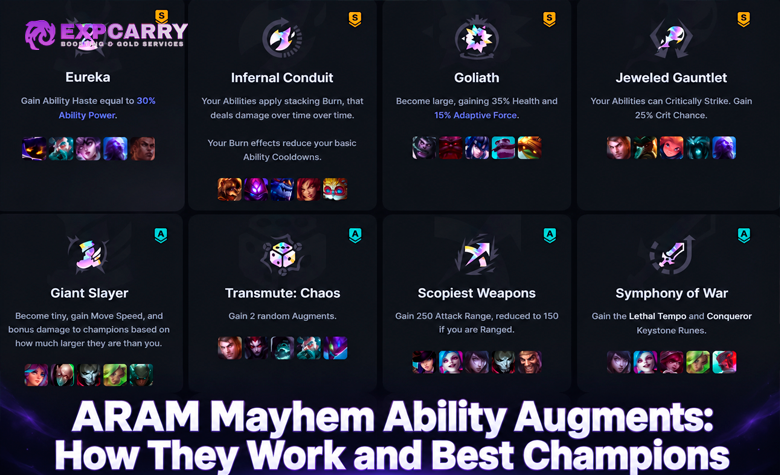
ARAM changes in Patch 26.2 are mostly bugfix-oriented, targeting unstable interactions and reducing “randomly broken” outcomes. If you warm up with ARAM, you should notice slightly cleaner and more consistent game flow rather than huge balance swings.
The practical benefit is simple: fewer games decided by one bugged interaction and more games decided by execution and teamfight decisions.
Arena Adjustments
Arena updates in 26.2 focus on reducing frustration from long CC chains via Combo Breaker tuning, while also adjusting a handful of champions and augments for healthier rounds. Arena remains one of the best tools for mechanics reps, spacing, and fast decision-making because it compresses combat into repeatable rounds.
- Use Arena to sharpen dueling patterns and cooldown tracking.
- Use Arena to test champions without committing to full ranked pacing.
- Do not overlearn Arena habits that fail in lane-based macro games.
ARURF Returns and Why It Matters
ARURF is back in Patch 26.2. Even if you do not take it seriously, ARURF is useful for two things: mechanics reps and champion familiarity. It can make you more confident on champions you do not normally play, which helps when you get banned out or need backup picks.
Just remember that ARURF teaches fighting frequency and hyper aggression. You still need to translate that into wave control and objective timing in ranked.
Clash: Demacia Cup
Patch 26.2 brings the first Clash of the year with the Demacia Cup. Clash is a different skill test than solo queue because scouting, draft planning, and coordinated objective play matter more. If you want fast improvement, Clash games expose macro mistakes very clearly.
- Pick comfort champions with stable lane patterns.
- Draft for turret pressure and clean objective transitions.
- Do not gamble on “outplay only” comps without a plan.
Fast Plan to Win More Games in Patch 26.2
This plan is designed to convert patch knowledge into wins immediately. It is not about learning every detail. It is about playing the season correctly, avoiding trap habits, and building consistency.
| Session goal | What to do | Why it works in 26.2 |
|---|---|---|
| Game 1 warm-up | Play a stable comfort pick and focus on clean lane phase | Role Quests reward disciplined early play and tempo |
| Macro focus | Convert every won trade into turret progress, then reset | Overgrowth makes short pushes highly valuable |
| Vision discipline | Use Faelight warding for the next play window | Vision is more tactical and time-window based now |
| Win condition | Prioritize turret pressure over forced coinflip fights | Season 2026 rewards lane progress and structured mid-game |
| Build discipline | Do not autopilot old builds, adapt to item tuning | 26.2 adjusts new Season items and meta ADC choices |
If you want a simple rule that wins games: stop taking 50/50 fights when you could instead take guaranteed turret progress and keep your tempo advantage alive.
Common Mistakes That Lose LP in the New Season
| Mistake | What it causes | Best fix |
|---|---|---|
| Ignoring lane tempo for random roams | Quest progress slows and you lose turret pressure | Shove first, then roam with a plan |
| Forcing dragons as a default win condition | Bad fights that throw turret leads | Take turrets, then take objectives when you are stronger |
| Warding like last season | Vision feels weaker and you get punished for bad timing | Ward for play windows, use Faelights intelligently |
| Overchasing kills | Lost resets, lost waves, lost tower progress | Cash advantages into structures, then reset cleanly |
| Picking only high volatility champs | More unwinnable games when you fall behind early | Use stable picks until you fully understand the new tempo |
| Autopiloting old builds | You lose DPS thresholds and mid-game tempo fights | Track the new item winners and adjust week to week |
Conclusion
Patch 26.2 is the first true stabilizer patch of Season 2026. The season systems are still the main story: Crystalline Overgrowth makes turret progress easier to convert, Role Quests make lane phase more structured, and Faelights shift vision into a more tactical, time-window based tool. Patch 26.2 tunes champion outliers that became too strong in the new pacing while helping picks that struggled to function under the updated rules.
If you want consistent wins in 26.2, focus on clean lane tempo, reliable turret pressure, and smart resets. Stop forcing objectives when you could take guaranteed structure progress, and treat vision as a setup for your next move instead of a passive habit. When you play the season the way it was designed, the patch becomes easier, your games become cleaner, and your climb becomes faster.