



Throne and Liberty looks simple at first because you pick two weapons and start fighting, but that choice is not cosmetic. Your weapon pair defines your role, your skill package, your stat priorities, and how efficiently your account grows in the first days. New players usually make the same bad start: they test too many weapons at once, split books and mastery across side ideas, then wonder why their damage, survivability, and gear progress all feel behind.
A strong beginner start comes from focus. Pick one weapon pair with a clear purpose, build around it, and spend your early materials on that setup instead of scattering them across backup plans. The game gives you more freedom than it used to, but freedom does not cancel out bad resource decisions. It just gives you more ways to make them.
The Best Weapon Setup for a New PvE Player
If your main goal is PvE and you want the safest first setup, Staff and Wand is still one of the easiest starting combinations to recommend. It gives you ranged damage, comfortable farming, debuffs, sustain, and a much more forgiving loop than greedier damage-first setups. That matters for a first character because you are not only learning combat, but also enemy patterns, positioning, cooldown timing, and how to spend your materials without sabotaging your account.
Staff and Longbow is another strong PvE route if you want a cleaner damage-focused ranged style. It has excellent damage and good clear, but it is more static and less forgiving than Staff and Wand. If you already know you prefer a pure ranged DPS feel and do not mind a stricter rotation, Staff and Longbow is a good second option.
You should also take Orb seriously now. Since later updates added Orb and the current meta has had time to settle around it, Orb-based combinations are no longer a niche thing to ignore. For a brand-new player, though, the practical rule is simple: Orb can be very strong, but Staff and Wand or Staff and Longbow remain easier recommendations if you want a cleaner learning curve and less risk of building badly in your first days.
Longbow and Dagger is the easiest all-round fallback
If you do not want a caster setup, Longbow and Dagger is one of the best all-round fallback choices for a new account. The range makes basic survival easier, the dagger adds pressure and utility, and the overall playstyle works across solo PvE, open world content, and early PvP without forcing you into awkward melee commitment before you understand the game. It is not the only viable starter, but it is one of the easiest to live with while your account is still weak.
The Best Weapon Setup for a New PvP Player
If your real goal is PvP from the start, the most beginner-friendly answer is still Longbow and Dagger. It gives you safer target access, range, useful control, and more room to learn spacing and timing before every mistake turns into a death screen. For a new player, that matters more than chasing the flashiest burst setup on paper.
The stronger but harder route is Crossbow and Dagger. It can hit very hard and punish people fast, but it demands quicker reactions, tighter execution, and better awareness. That makes it a good setup to grow into after your hands and positioning catch up, not always the smartest first pick for someone still learning the game.
The Best First Weapons by Playstyle
| Playstyle | Best starter setup | Why it works | Who should pick it |
|---|---|---|---|
| Safe PvE start | Staff and Wand | Ranged damage, sustain, farming power, more forgiveness | Brand-new players who want the smoothest leveling |
| Ranged PvE damage | Staff and Longbow | High ranged damage and strong clear speed | Players who want to stay at range and kill fast |
| Beginner PvP | Longbow and Dagger | Range, control, easier survival, flexible utility | New players who want to learn PvP without hard melee commitment |
| PvP goal setup | Crossbow and Dagger | Excellent burst and pressure, but harder to pilot | Players ready for faster inputs and cleaner execution |
| Melee beginner option | Greatsword and Spear | Strong pressure, gap closers, burst, and clear melee identity | Players who insist on melee from day one |
If you insist on melee, Greatsword and Spear is a more reasonable beginner lane than jumping straight into a twitchier dagger-first setup. It still asks more from your positioning than a ranged start, but it gives you a direct playstyle with clear pressure tools, gap closers, and burst windows. It is not as forgiving as the ranged recommendations above, but it is easier to build around than many melee-first experiments.
The First Hours That Save You From a Bad Start
Your first job is not to chase a meta fantasy. Your first job is to lock a weapon pair and let the game help you build it correctly. Path of the Stars exists for exactly that reason. It recommends weapon combinations, active skills, passive skills, specialization choices, stat direction, mastery modes, and guardian picks while you level. New players should use it instead of trying to improvise a perfect build before they understand what any of the systems are doing.
The second job is to stop pretending you can level everything at once. Skill progression still uses training books, gear progression still uses Growth Stones, and both systems still punish waste. Every book spent on a side weapon and every stone burned on temporary nonsense slows down your real build. The game is more generous than it was at launch, but it still rewards focus far more than random experimentation in the early game.
Fast Skill Growth Without Wasting Materials
If you want to level skills quickly, the correct method is simple. Upgrade only the core active skills and passives tied to your chosen two-weapon setup. Do not spread books across backup weapons just because you might use them later. Books can be earned and crafted, but the limiting materials still come from actual gameplay loops, so bad early investment creates real drag on your first character.
The best practical rule is this: choose one main damage package, one support package, and one survival package. On Staff and Wand, that means your primary ranged damage and farming tools first, then the debuff and sustain skills that stabilize the rotation. On Longbow and Dagger, it means your core bow damage and control first, then the dagger utility that boosts pressure or helps disengage. A beginner bar that tries to do everything usually ends up doing nothing well.
Weapon mastery is easier to manage than it used to be
Weapon mastery is much easier to manage now than it was in the older system. You gain Weapon Mastery Seals through content and choose which weapon receives that mastery progress, with mastery levels going up to 200 per weapon. That makes it easier to stay focused on a pair and catch up a secondary weapon that actually belongs in your build. It does not mean you should start feeding random weapons just because the system gives you more control.
The Fastest Way to Get Stronger Early
The fastest early progression is not clever. It is clean. Follow the main growth path, use Path of the Stars recommendations, claim your leveling rewards, keep your primary weapon pair updated, and funnel your materials into the gear and skills that belong in your actual setup. The game now also uses Path of Ascension as a progression mission system to push accounts upward more efficiently, so new players should lean into that structure instead of trying to brute-force progress through random side activity.
There is also a real early-account advantage window. First-time accounts receive a temporary New User Benefits buff for 50 days, including extra Sollant and bonus NPC kill experience. That makes your first main character the best place to push hard instead of wasting the opening stretch on multiple half-built alts before one character is properly established.
What to Upgrade First on Gear
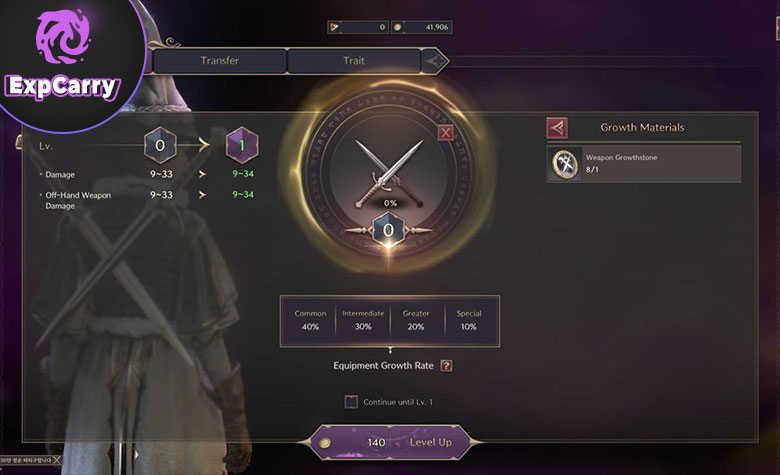
Your first gear priority is simple: upgrade the items that keep your chosen build functioning. Do not try to level gear, traits, off-build weapons, and side experiments all at once. Gear score still depends on Growth Stones, and your combat performance still rises faster when your live build is being fed consistently instead of being starved by curiosity.
Traits matter, but they should not be your first obsession. Trait progression becomes much more important once you know which items you are actually keeping. Early on, your job is to stabilize your build, keep your main pieces upgraded, and avoid dumping serious trait investment into temporary gear that will be replaced soon. New players lose a lot of progress by trying to perfect gear that is not worth preserving.
A clean early upgrade order
- Lock your main weapon pair first.
- Upgrade the core skills that define that pair.
- Push weapon and armor growth on pieces you are actively using.
- Add trait investment only when the item is worth keeping.
- Use mastery seals on the same two weapons instead of chasing side experiments.
The Best Early Goal for PvE and PvP Players
If you are PvE-first, your first goal should be a reliable farming and dungeon setup that clears consistently and survives cleanly. That is why Staff and Wand remains such a safe recommendation. It gives you room to learn the game without forcing perfect positioning or punishing every small mistake.
If you are PvP-first, your first goal is not the highest burst on paper. It is a setup that teaches movement, pressure windows, and survival without collapsing every time someone gets on top of you. Longbow and Dagger does that better for most new players than Crossbow and Dagger because it is easier to pilot from range and still useful in several types of content.
The Build You Start With and the Build You Grow Toward
The smartest beginner approach is to start with the forgiving version of your future role, not the hardest version. For PvE, that usually means opening on Staff and Wand or Staff and Longbow, then deciding later whether you want to stay there or shift into a more demanding damage setup. For PvP, that often means starting Longbow and Dagger, then moving into faster or more punishing combinations once your account and mechanics are in a better place.
This matters because Throne and Liberty still punishes messy early progression. Skills need books, gear needs stones, traits need proper investment, and mastery still needs seals and time. The systems are more flexible now, but the core rule has not changed: focused accounts grow faster than confused ones.
The Straightest Beginner Path
Pick Staff and Wand if you want the smoothest PvE start. Pick Longbow and Dagger if your long-term interest is PvP. Use Path of the Stars instead of guessing. Funnel your skill books into your real core skills, not backup fantasies. Spend mastery seals on the same two weapons. Upgrade gear in the order that supports your live build, then care about deeper trait investment once you know which pieces are worth keeping.
That is the clean version. Not glamorous, not chaotic, not built for players who need every weapon half-started by the end of the weekend. Just effective, which is usually less exciting than nonsense and much more useful for a beginner.