

If your goal in WoW housing is to make a home that actually looks finished, the real grind is not unlocking the house. It is building a decor catalog that gives you enough variety to create themes, fill empty space, and add detail without repeating the same few objects everywhere. The good news is that housing decor is not locked behind one narrow activity. You get decorations from many parts of WoW: crafting, vendors, achievements, dungeons and raids, events, and long-term progression systems.
This guide is a practical map of all major decor sources and how to farm them efficiently. It explains how the decor catalog works, what types of sources are best for fast collection growth, and what to prioritize if you want results this week instead of "eventually." The focus is on reliable routes and decision-making, not on one-off rumors or niche edge cases.
How to Get Housing Decor in WoW: The Big Picture
If you are searching "how to get housing decor WoW" and expecting one best method, you will waste time. The housing system is designed so your catalog grows from many lanes at once. The fastest progress comes from stacking reliable sources first, then adding one or two longer lanes that fit your theme.
Think of your decor collection as a toolbox. Vendors and crafting are your foundation tools. Achievements and reputations are your upgrade kits. Dungeons, raids, and events are your signature pieces that give identity and prestige.
Use the table below as a quick "WoW housing items list & sources" snapshot. It is not meant to replace the detailed sections, but it helps you choose where to spend your next hour.
| Source | Best for | Speed | Repeatable? | Notes |
|---|---|---|---|---|
| Vendors | Staples and fast variety | Fast | Yes | Best early catalog growth, buy breadth first |
| Crafting | Matching sets and duplicates | Fast to medium | Yes | Great for consistent themes and volume |
| Achievements | Deterministic trophies | Medium | Some | Strong value for returning players and legacy progress |
| Dungeons and raids | High-identity set pieces | Medium | Yes | Best for trophy rooms and themed props |
| Events and holidays | Seasonal mood items | Fast (limited window) | Limited-time | Do "catalog sprints" while active |
| Reputations and renown | Cohesive cultural sets | Slow | Yes | Worth it when you want multiple pieces from one theme |
| Neighborhood systems | Unique themed drip-feed | Slow to medium | Ongoing | Best as a steady layer, not your only source |
| Auction House | Buying time with gold | Instant | Yes | Use for gaps, avoid overspending on duplicates early |
How Housing Decor Works: Catalog vs Placed Items
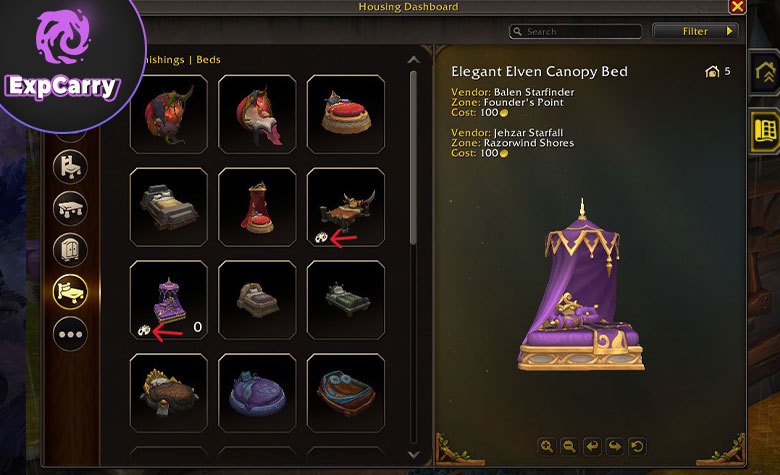
Before you farm anything, you need to understand the difference between owning a decor item and placing it. Housing is built around a catalog. When you obtain a decor piece, it becomes available for placement in your home, subject to placement rules and limits.
Duplicates matter. If you want to place multiple copies of the same object, you generally need to own multiple copies. A single chair in your catalog is one chair you can place. If you want a dining table with six matching chairs, you should plan to acquire six chairs.
Also note that the way you get extra copies depends on the source. Some rewards are naturally repeatable (like vendors, crafting, and assigned decor rewards from instanced content). Other rewards are one-and-done (like many quests and achievements), and extra copies may come from an appropriate vendor or a separate purchase path rather than repeating the same one-time reward.
Repeatable staples vs unique trophies
Some items are unique and are restricted to a single placement. These pieces are usually designed as trophies or centerpieces. They are great for focal points, but they do not solve the day-to-day problem of filling a room.
A strong catalog has both: a handful of standout trophies, and a deep bench of repeatable, low-drama basics. The basics are what make rooms feel complete: lighting variety, wall fillers, shelves, rugs, containers, plants, and small props that add texture.
If you build trophies first and ignore staples, your home looks like a museum with empty hallways. If you build staples first, trophies become multipliers instead of crutches.
The Three Decor Tiers: Common, Investment, Trophy
Most housing systems end up with three practical tiers of decor, even if the game never labels them that way. Understanding these tiers helps you avoid wasting time chasing rare centerpieces while your rooms still feel empty.
Common decor is easy to get and is meant to give every player a functional starter kit. Think simple furniture, lighting, rugs, shelves, crates, plants, and general room-fillers. Your fastest catalog growth comes from stacking common decor sources early, because they are predictable and do not rely on narrow progression gates.
Investment decor takes longer or costs more. This includes crafted pieces that require materials and recipes, vendor pieces that require special currencies, and rewards that require deliberate progress like reputations or long quest chains. Investment decor is where your house starts to look personal instead of generic.
Trophy decor is the flex layer. It comes from achievements, challenging content, or rare rewards. Trophy items are not required to make a great home, but they are the pieces that make people stop and look.
How to use the tiers to plan your week
If you want progress that feels real, plan your week around all three tiers. Use common sources for fast coverage. Add one investment lane for cohesion. Then pick one trophy lane that matches content you already like.
This matters because common sources solve the "unfinished" look immediately, investment sources create consistent theme, and trophies add personality. When you skip one tier, your house usually looks either empty, generic, or noisy.
A clean rule is: foundations first, then identity. The more you respect that order, the less you rebuild and the less gold you burn on low-impact clutter.
Explore services related to this guide, selected from our World of Warcraft catalog.
View All World of Warcraft Services


Vendor Decor: The Fastest Way to Build a Starter Catalog
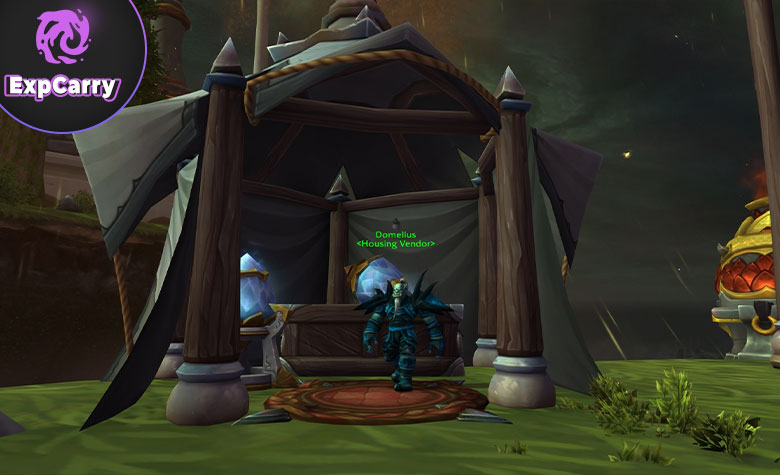
Vendor decor is the fastest, cleanest way to go from "empty house" to "this looks like a real place." Vendors are predictable. You know what you will get, you can target specific styles, and you can fill out basics without praying for drops.
When you farm vendor decor, the most efficient approach is breadth first. Buy one of each unique piece that fits your style so your catalog gains variety. After you have a baseline set of furniture types, shift into duplicates for the specific staples you need in volume.
Chairs, benches, stools, small tables, candles, wall lights, books, bottles, baskets, and storage props are the objects you will place repeatedly in almost every build. If your catalog is missing those, no trophy will save the space.
Breadth first, then duplicates
Early on, variety beats perfection. One of each item type gives you options and flexibility. Once you can build a full room without gaps, duplicates become valuable because they let you create matching sets that look intentional.
The best way to avoid waste is to duplicate only after you have tested placement budgets and room scale. A chair you love is only a "must-buy in stacks" after you know it fits your layout and budget reality.
Vendor farming also keeps your progress deterministic. Even if you hate farming, you can do short, repeatable sweeps and still see your home improve weekly.
Currency vendors and when they are worth it
Many vendor pieces are tied to currencies. That is not automatically bad. Currency-based decor is often more efficient than RNG farming because you can convert time into guaranteed purchases.
The trap is spending a premium currency on one flashy centerpiece while your house still lacks basics. Early, spend currency on flexible staples and wall-filling pieces that upgrade many rooms, not one screenshot item.
Once your foundation is strong, premium currency items become better value because they enhance a complete theme rather than trying to substitute for missing structure.
Crafting Recipes for Housing WoW: Professions as a Decor Factory
Crafting is one of the largest decor pipelines because it scales. Once you have access to recipes and materials, you can mass-produce the staples you need for real builds. Crafting also tends to deliver themed sets: matching woods, matching metals, matching fabrics, matching lighting styles.
The key decision with crafting is whether you are crafting for catalog breadth or for placement volume. If your catalog is shallow, you want unique crafts across multiple item types to unlock variety. If your catalog is already broad, you craft duplicates to support full-room builds with consistent style.
Crafting is also one of the cleanest ways to solve "I need six of this" problems, especially for chairs, shelving, lighting, containers, and small clutter props that carry a room.
Crafting from all professions
If your goal is "crafting recipes for housing WoW," the important point is that decor crafting is not limited to one profession. Decor recipes are spread across all crafting professions, so your best results come from either having broad profession coverage on your warband or using the Auction House to buy crafted pieces you do not want to produce yourself.
This also means crafting naturally supports both breadth and volume. You can unlock many different item types for catalog variety, then commit to one style family and mass-produce duplicates for cohesive room builds.
New Lumber resource: build your material pipeline
Lumber is a dedicated housing reagent used across many decor recipes. For most players, Lumber flow becomes the real bottleneck that decides how fast crafting can grow the catalog. If you want to farm housing items fast through crafting, secure a steady Lumber pipeline first, then convert that into staples and matching sets.
Breadth vs volume: choose your crafting goal
Crafting for breadth means building a library of different item types. That gives you more design options, and it usually improves how finished your home looks faster than spamming one furniture piece.
Crafting for volume means committing to a consistent style and producing enough duplicates to decorate full rooms. This is how you get cohesion instead of a random mix of mismatched furniture.
The best path for most players is breadth first, then volume. That keeps you from overproducing items you later decide you do not actually like in your final theme.
Trading and the Auction House as a crafting shortcut
Crafting interacts with the Auction House. If a crafted decor piece can be traded, you can buy it instead of crafting it, which is often cheaper than leveling a profession for one specific item.
On the other hand, if you plan to build multiple themed homes across your warband, investing in crafting access can be worth it because it turns your playtime into repeatable production instead of constant shopping.
Use the Auction House to fill gaps quickly, but treat crafting as your long-term infrastructure when you care about consistent style and reliable duplicates.
Housing Decor Vendors and Achievements: Deterministic Progress
Achievement decor is one of the best sources for two reasons. First, it is deterministic. You complete a requirement, you get a reward. Second, achievements often award items that feel meaningful, because they represent something you actually did.
Achievement rewards also stack well with legacy progress. If you are a returning player with deep account history, you may already qualify for a surprising number of rewards. That can instantly bulk up your catalog and give you trophy-quality pieces without grinding brand new content.
The best way to use achievements for housing is to pick clusters that match your goals and your theme, instead of chasing everything randomly.
How to target achievement clusters without drowning
If you want a trophy hall, prioritize boss-kill and raid completion achievements. If you want cozy city life, prioritize exploration, story, and collection achievements that award everyday decor. If you want a workshop vibe, prioritize crafting and profession achievements that award practical props.
This approach keeps your progress coherent. You are not just ticking boxes. You are building a catalog that supports a specific kind of home.
Achievements are also a clean "no-luck" lane. When you need a break from RNG farming, achievement progress keeps your catalog moving forward predictably.
Dungeons and Raids: Trophy Hunting and Themed Set Pieces

Instanced content is where you get decor with strong identity. Dungeons and raids naturally produce items that look like their environment: banners, weapons on display, statues, cursed relics, ritual objects, and faction-themed furniture.
There is one big advantage to instance decor farming when decor is assigned to bosses: it is designed to be reliable. Some dungeons and raids have assigned decor rewards on specific bosses. When a boss is configured to award decor, you can plan around it and build a repeatable route for extra copies instead of treating it like a rare drop lottery.
Targeted farming vs portfolio farming
Targeted farming is simple: you want one item or one theme, so you repeatedly run the content that matches it. This is best when you are building one signature room and you want duplicates or a consistent look.
Portfolio farming means rotating through a set of instances to maximize unique decor variety and avoid burnout. Portfolio farming is better for catalog breadth, especially early when you need more options rather than more copies.
Use portfolio farming to build your baseline and discover pieces you actually like, then switch to targeted runs when you know exactly what you want to stock up on.
Legacy raids as high-density decor runs
Legacy raids can be especially useful for housing because they are fast to clear and packed with visual identity. Even if your goal is not gear, older raids can be a high-density source of decor variety.
They also fit naturally into a weekly routine because you can clear them quickly, then return to modern content without feeling trapped in one farm. This makes legacy content a strong "catalog growth" lane for players who prefer PvE trophy themes.
If you want a home that feels like a timeline of your WoW history, legacy instance decor is one of the cleanest ways to build that story visually.
World Events and Holidays: Seasonal Decor You Do Not Want to Miss
Events are where you get decor that instantly changes the mood of your home: holiday trees, lantern sets, spooky props, feast tables, fireworks themes, and seasonal outdoor items.
These pieces are often not replaceable by normal content because they carry seasonal identity. They also solve a common problem: your catalog can be functional but still feel emotionally flat without mood items.
The biggest mistake with event decor is procrastination. Seasonal windows are limited. If you skip an event, you may be waiting a long time for the next chance.
The "catalog sprint" rule for events
Treat events as short sprints. Collect the unique event pieces while they are available, then go back to your normal farming. This keeps your catalog growing without forcing you into event grinds year-round.
Also watch for limited-time systems outside holidays that still behave like seasonal windows. Rotating reward tracks and time-limited programs can introduce housing decor for a short period, and those sources are easy to miss if you only think in terms of classic holidays.
If you care about variety, events are one of the highest value lanes because they add styles you cannot easily reproduce with normal vendors and crafting.
Reputations, Renown, and Long Progress Tracks
Reputation and renown sources are slow but reliable. They are often where you get decor sets that are cohesive and high quality. This is the decor that makes a home look like it belongs to a faction, a culture, or a zone.
The practical strategy here is to avoid grinding a reputation just for one item early on. If you are building a theme that will use multiple pieces from the same faction or zone, then the grind is worth it because you get a set.
If you only want one decoration, it is usually more efficient to buy or trade for alternatives, or to pick a different source that gives a similar vibe faster.
Sets beat single items
Reputation decor pays off when you treat it like a set purchase, not a one-off. A set gives you cohesion: matching lighting, matching fabrics, matching cultural motifs, and repeated shapes that make rooms feel designed instead of improvised.
When you chase a single rep item too early, you often end up with a mismatch: one great piece and nothing that supports it. That forces extra farming later just to make the item look like it belongs.
Commit to a rep lane only when the theme matches your house vision, and you know you will use multiple pieces from that track.
Neighborhood Systems and Themed Vendors
Housing also has its own neighborhood layer. Over time, neighborhood participation unlocks new ways to earn themed decor and special purchases. This is the part of housing that rewards community.
If your neighborhood is active, you will see more consistent access to themed opportunities and more reasons to check in regularly. That can become a steady source of unique items that do not come from normal PvE loot tables.
From a collection standpoint, neighborhood systems are best used as a steady drip feed, not as your only source. Major Endeavors-driven progression is planned to expand later, so do not treat neighborhoods as your only path for fast catalog growth.
Use neighborhood rewards as a finishing layer
Neighborhood sources are excellent once you already have foundations. They tend to add flavor pieces that make a theme feel specific rather than generic. Think of them as identity upgrades, not starter furniture.
They also work best when you are consistent. Small, regular participation is usually more effective than binge farming, because these systems are designed for ongoing engagement.
If your goal is "farm housing items fast," focus first on vendors and crafting, then let neighborhood systems slowly add rare seasoning on top.
Trading and the Auction House: Buying Time With Gold
The Auction House is the fastest decor source if you have the gold, because it converts currency into immediate catalog expansion. The danger is overspending on duplicates or buying flashy pieces before you have a functional base.
If you want to use the Auction House efficiently, buy for gaps. Identify the missing categories in your home, then buy one or two options in each gap category. Lighting, wall decor, rugs, small clutter props, and shelves usually deliver the biggest improvement per purchase.
Also, do not ignore crafted decor on the market. If crafted pieces are tradable, you can often get an entire themed set without investing time into profession progression.
A safe shopping rule that prevents gold waste
Buy one first, then duplicate later. A piece that looks good on the Auction House might look wrong in your lighting and room scale, or cost more placement budget than you expect.
Once you have tested the item in your home and confirmed it fits your theme, then it makes sense to buy duplicates for full-room builds. This keeps your gold spending tied to real results.
The Auction House is at its best when it solves missing categories quickly, not when it tempts you into collecting expensive clutter you never place.
A Practical Farming Plan That Works for Most Players
If you want a plan that produces results without forcing you into content you hate, the best approach is to split your effort into three lanes: vendor breadth, one long-term progression lane, and one trophy lane.
Vendor breadth means you regularly pick up predictable basics so your house never feels empty. Long-term progression lane means you choose one slow track that matches your theme. Trophy lane means you pick one content type you already enjoy and let it feed your home naturally.
This three-lane approach prevents burnout because you always have a predictable source, a slow meaningful source, and a fun flex source. Your catalog grows steadily and your home keeps improving because your routes are repeatable and your goals are clear.
A simple weekly routine you can actually follow
The table below turns the three-lane approach into a realistic routine. Use it as a template and swap sources based on what you enjoy. The point is consistency, not perfection.
| Lane | What you do | Goal | Why it works |
|---|---|---|---|
| Vendor breadth | Short vendor sweeps for unique basics | Fill gaps (lights, rugs, wall art, shelves) | Deterministic, fast, immediate visual upgrade |
| Long-term lane | Pick 1 track: crafting, reputation, or neighborhood | Build cohesive sets | Creates theme consistency over time |
| Trophy lane | Run content you already like (dungeon, raid, legacy) | Earn identity pieces | Makes your home feel earned, not purchased |
| Event lane (when active) | Quick sprint for unique seasonal items | Expand style variety | Limited windows, high mood value |
Common Problems: Why a Decor Item Will Not Place
If you own an item but cannot place it, it is usually one of a few issues. Most placement problems are not mysterious, and you can diagnose them quickly if you check the same list every time.
The first is copy count. You may have already placed your only copy. If you want another, you need another copy in your collection. The second is uniqueness. Some items are restricted to one placement per plot or per house.
The third is placement rules. Some decor types are restricted to interior or exterior, or to specific surfaces. The fourth is budget. If your placement budgets are full, the game will block placement even if you own the decor.
Placement blockers checklist
Check copy count first, because it is the fastest fix. Then check whether the item is unique, because that tells you whether you should treat it as a centerpiece instead of a repeatable prop.
Next, test placement surfaces. If it is a wall piece, try a clean wall surface. If it is a yard object, try outside placement. If placement still fails, look at your budgets and remove a high-cost item to confirm you are not hard-capped.
In the current early period, outdoor placement budget can feel tight, so plan your yard around big shapes first, then spend the remaining budget on small detail passes.
Fast Decor Option: When You Want the Look Without the Grind
Decor collection is a time sink because it is spread across many systems. That is part of the design. It gives collectors a long runway. But if your goal is to build a specific theme quickly, the slow part is not placing items. The slow part is acquiring the exact pieces and the duplicate counts you need for a complete build. If you would rather skip weeks of farming and focus on design, ExpCarry can help accelerate the parts that cost the most time, such as targeted farming for specific decor sources, completion help for content that gates trophy items, or efficient collection-building routes so you can start decorating with a real catalog sooner.