

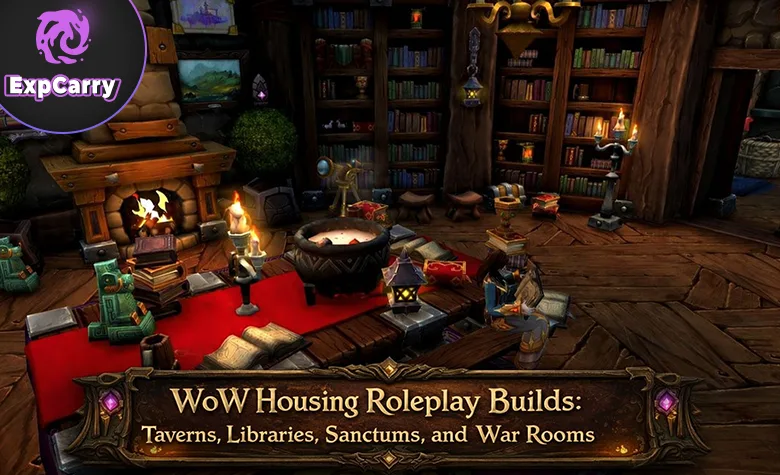
WoW Housing roleplay builds are not really about how many expensive decorations you can stack into one room. The real question is whether the house tells a clear story the moment someone walks through the door. That is what decides whether a build feels immersive or turns into a storage room with better lighting. If the layout is confused, the furniture scale is wrong, or the room has no social purpose, even beautiful decor starts to feel flat. Housing works best when you treat each build like a scene with a job to do instead of a random collection of good-looking items.
This guide focuses on four roleplay build directions that fit World of Warcraft especially well: taverns, libraries, sanctums, and war rooms. These are not official Housing categories from Blizzard. They are practical RP themes that line up naturally with how WoW presents social, scholarly, ritual, and command spaces across Azeroth. Taverns create easy gathering hubs, libraries support slower character-driven scenes, sanctums give strong faction or class identity, and war rooms turn a house into a planning space for guilds, campaigns, and military-style roleplay. The practical goal here is simple: how to make each theme feel believable, playable, and strong from the first impression instead of decorative but empty.
WoW Housing roleplay builds feel stronger when the theme feels lived-in
The best Housing roleplay builds begin with function, not decoration. Before you place a single table, shelf, banner, or candle, you need to know what kind of scene the room is supposed to host. Is this a tavern where several characters can sit, drink, and talk without colliding with oversized props? Is this a sanctum that should feel quiet, ceremonial, and slightly intimidating? Is this a war room where the center of the room needs to pull people into a briefing instead of pushing them into the walls? Those questions matter because roleplay builds succeed through flow, not through item count.
That design mindset matters even more in Player Housing because the system is built around self-expression, social use, and flexible decorating tools rather than one fixed house fantasy. Between Basic and Advanced decorating, layout saving, item resizing, and broad decor mixing, players can build around very different stories. The room should not just look good in isolation. It should quietly teach visitors where to stand, where to sit, and what kind of behavior the scene invites.
Why WoW Housing layout matters more than clutter in roleplay builds
Many players instinctively overdecorate roleplay interiors because they want the room to look rich from every angle. That usually hurts the build. Taverns need walking space. Libraries need sightlines. Sanctums need focal points. War rooms need structure and hierarchy. Once the room becomes too crowded, it stops reading as a believable social environment and starts reading like a prop showcase. The most effective WoW Housing roleplay builds usually feel edited, not stuffed.
This is where theme discipline matters. The strongest room is not always the most detailed room. It is the room where every major object supports the same story. If the build says frontier tavern, the shapes, materials, and spacing should all support warmth, noise, and easy gathering. If the build says void sanctum, the room should feel intentional, spare, and dangerous. Players remember clarity much more than they remember how many tiny props were on the floor.
WoW Housing tavern builds work best when every corner supports social roleplay
A tavern is usually the easiest roleplay build to make usable, but it is also the easiest one to ruin with bad spacing. The best tavern builds are social machines. They should give visitors an obvious entrance view, a natural bar or hearth-side focal point, and several conversation pockets that let different groups roleplay without the whole room feeling fragmented. In practical terms, that means you want one strong center of gravity and then smaller clusters around the edges. If every table feels equally important, the room loses rhythm.
The most believable tavern interiors also understand class and faction tone. A rough Horde-style tavern should not feel arranged like a polished Silvermoon salon, and a refined city winehouse should not read like a hunter camp with better chairs. The room needs a cultural voice. Wood-heavy layouts, visible drink storage, serving surfaces, and warmer light sources help taverns feel lived in instead of staged. The goal is not just to create a fantasy inn. The goal is to create a place where players instantly know how to occupy the space.
A smart tavern layout for WoW Housing roleplay nights
One of the most reliable tavern layouts starts with three zones: arrival, service, and seating. Arrival gives the room its first impression and should not dump visitors straight into furniture. Service is the bar, counter, cask wall, or food-prep corner that makes the room function as a tavern instead of just a dining hall. Seating is where the roleplay actually lives, and it should be broken into a few clear clusters rather than one giant hall of identical tables. That gives the room multiple scene scales, from private conversations to louder public events.
One of the smartest choices in a tavern build is to leave a little emptiness around the busiest points. That empty space is not wasted. It is what lets the room breathe when players arrive, emote, move, or gather around one storyteller. In roleplay builds, circulation is part of the decor. The room should guide traffic without making people think about traffic at all.
| Build element | What makes it work | What breaks the theme |
| Bar area | Strong focal point with bottles, casks, shelves, and serving space | A tiny counter that feels decorative instead of usable |
| Seating clusters | Small groups of tables and chairs with walking space between them | One overcrowded floor that feels like a furniture warehouse |
| Lighting | Warm, low, welcoming atmosphere with visible sources | Flat brightness that kills mood and depth |
| Cultural flavor | Materials and decor that match faction, zone, or guild identity | Random mixed styles with no shared visual language |
WoW Housing library builds need purpose, not just bookshelves
A roleplay library succeeds when it feels like a place where knowledge is stored, guarded, and used, not just displayed. That means bookshelves alone are not enough. The room needs hierarchy. A reading table, research desk, archive corner, or elevated study nook gives the space purpose and stops it from becoming a wallpaper build made of books. Libraries work best when they feel slightly more controlled than taverns, with stronger symmetry, clearer desk placement, and visual cues that suggest patience and order.
The easiest mistake in a library build is making everything the same height and density. Realistic-looking fantasy libraries rely on contrast. Tall shelving makes the room feel important, but open desk space gives characters somewhere to actually roleplay. A room full of stacked shelves may look impressive at first glance, but it becomes less useful the moment people try to inhabit it. The best WoW Housing libraries use shelves to define the perimeter and then preserve the center for study, debate, magical reference work, or secretive character scenes.
Why a WoW Housing library needs a clear identity
A strong library is a room of intent. That intent can be scholarly, arcane, religious, or political, but it needs to be visible. A neutral reading room feels very different from a forbidden archive, a mage research chamber, or a noble family collection. Once you decide which one it is, the details become much easier. Clean desks, upright chairs, scroll storage, curated lighting, globes, relics, or locked display objects all help tell the visitor what kind of knowledge lives here.
That is why the best library builds often have one featured corner that slightly shifts the room's identity. A hidden ritual shelf can push the space toward shadow or void research. A formal central reading table can make it feel institutional. A personal writing desk with trophies and travel relics can turn it into a private scholar's retreat. Libraries become memorable when they stop being generic and start feeling owned.
Explore services related to this guide, selected from our World of Warcraft catalog.
View All World of Warcraft Services


WoW Housing sanctum builds need atmosphere before they need detail
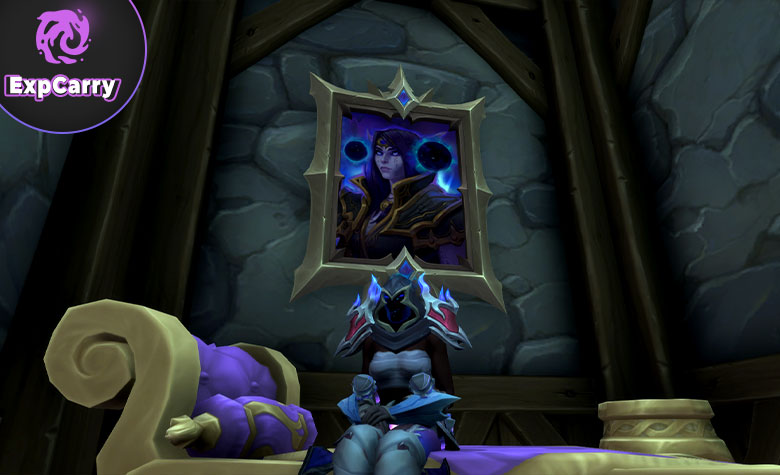
A sanctum should feel more deliberate than any other roleplay room in the house. Whether the theme is holy, druidic, necromantic, arcane, void-touched, or class-specific in some other way, the space needs a ritual center. Without that, it reads like a decorated chamber instead of a true sanctum. Altars, circles, focal relics, elevated platforms, and restrained seating all help establish that this room is meant for reverence, secrecy, power, or transformation rather than casual social use.
Sanctums also benefit from restraint more than taverns or libraries do. The room should not feel busy unless the theme specifically demands unstable magical excess. Most sanctums become stronger when the eye is pulled toward one powerful object or one clearly sacred axis through the room. That is what gives the space gravity. Players entering the room should immediately know where attention belongs. If the eye scatters in five directions, the sanctum loses authority.
Strong sanctum themes for WoW Housing class and faction roleplay
The easiest way to make a sanctum feel convincing is to anchor it to a clear identity. Paladin and priest sanctums usually work best with ceremonial symmetry, luminous focal objects, and a sense of discipline. Warlock and void-touched sanctums often feel stronger with harsher contrast, narrower movement lines, and a more dangerous emotional tone. Druidic sanctums benefit from less furniture and more organic framing, while death-themed sanctums often gain power from colder spacing and stronger vertical emphasis through banners, statues, or relic stands.
The important thing is not to mix emotional signals carelessly. A sanctum can absolutely be hybrid if your character fantasy calls for it, but the room still needs one dominant voice. If holy, fel, and aristocratic luxury all fight for control at once, the room stops reading as powerful and starts reading as undecided. Sanctums feel memorable when the build commits.
| Sanctum type | Core visual idea | Best room priority |
| Holy sanctum | Light, symmetry, altar focus | Clean central axis and ceremonial spacing |
| Arcane sanctum | Study, instruments, magical focal points | Research center with controlled visual complexity |
| Void sanctum | Tension, contrast, secrecy, unstable power | Single dominant focal object and darker edges |
| Druidic sanctum | Natural framing, calm flow, spiritual retreat | Open floor and softer transitions between objects |
| Necromantic sanctum | Cold authority, relic emphasis, ritual staging | Platform or altar that defines the room instantly |
WoW Housing war room builds work when the room feels ready for orders
War rooms are one of the strongest roleplay builds for guilds and campaign-focused groups because they instantly create purpose. That matters even more now that WoW Housing is tied to Neighborhoods and social play instead of being just a private decorating box. The room tells players that planning happens here, orders happen here, and major decisions happen here. But that only works if the layout supports hierarchy. A war room should have a command focal point, a strategy surface, and enough supporting decor to suggest logistics without burying the room in props. Maps, banners, storage, armaments, and records all help, but they must serve the room's chain of attention instead of competing with it.
The strongest war rooms usually avoid trying to become full barracks, forges, and trophy halls at the same time. A war room is not every military fantasy crammed together. It is a decision chamber. That is why one large central table or map surface is often more powerful than ten smaller military references scattered around the walls. The room should make people want to gather around the center, not drift aimlessly through the perimeter.
How to make a WoW Housing war room feel sharp and believable
The best war room builds create rank through placement. The leader's seat or standing position should be obvious. Officers or trusted advisors should have meaningful positions near the center. Visitors or lower-ranking participants should naturally collect at the edges or along the long axis of the room. That subtle hierarchy makes even a casual guild scene feel more grounded, because the architecture itself reinforces the roleplay.
Visual discipline matters here too. Pick one military culture and push it. A scrappy Horde campaign room should not feel like a polished Alliance command chamber unless that contrast is part of the story. The build becomes much stronger when the banners, table shape, lighting, and wall dressing all agree on what kind of war is being prepared in the room.
WoW Housing hybrid roleplay builds get stronger when rooms connect naturally
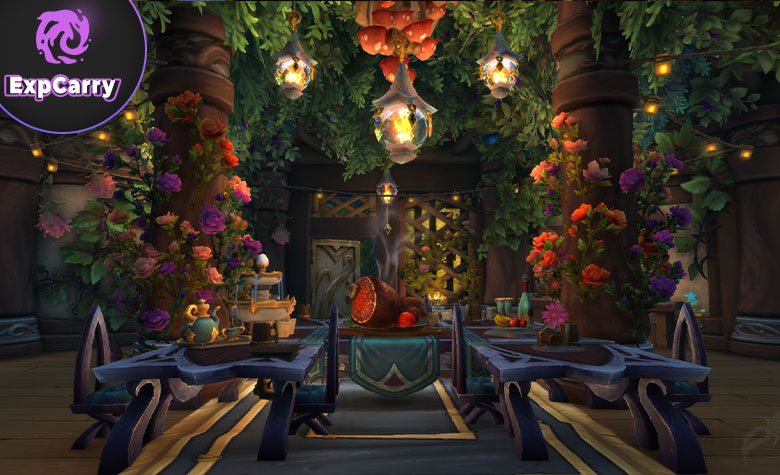
The smartest Housing roleplay builds often combine more than one theme, but they only work when the transitions feel intentional. A tavern with an upstairs library can work beautifully because the social noise below and the private scholarship above naturally reinforce each other. A war room connected to a sanctum can also work if the story is that the group's strategy is guided by magical, religious, or forbidden knowledge. These combinations become especially strong in shared guild or charter spaces where different rooms can support different kinds of scenes without competing for the same mood.
The mistake is blending everything into one open-plan fantasy showroom. When every theme shares the same room, each one gets weaker. A much better approach is to let each build type claim a clear zone and then use corridors, stairs, alcoves, or threshold decor to shift the mood between them. That gives the house narrative flow. Visitors feel like they are moving through a story, not scanning four disconnected inspiration boards under one roof.
Best hybrid WoW Housing roleplay builds for guilds and solo characters
For solo roleplayers, one of the strongest hybrids is often library plus sanctum because it creates a natural public-private split between knowledge and power. For guilds, tavern plus war room is usually one of the strongest combinations because it gives both a casual gathering point and a command space for formal scenes. For players who want a more prestigious or secretive house, tavern below with sanctum or archive above creates excellent narrative layering, especially if the lower room feels public and the upper room feels restricted.
The rule is simple: one room should host, another should reveal. When the whole house follows that logic, the build feels much more believable and much easier to use in real roleplay sessions.
WoW Housing roleplay builds lose power fast when the theme gets messy
The most common mistake is decorating for screenshots instead of interaction. A room can look rich and still be terrible for roleplay if nobody can move, gather, or claim a natural speaking position. The second mistake is mixing too many visual languages at once. A tavern, sanctum, and command post all ask for different emotional signals, and when those signals collide without structure, the build loses clarity. The third mistake is forgetting scale. Oversized props, tiny seating, or badly proportioned focal pieces can quietly break immersion even when the theme itself is strong.
Another common mistake is treating empty space like failure. In Housing, negative space is one of the strongest roleplay tools you have. It creates ceremony in sanctums, circulation in taverns, authority in war rooms, and readability in libraries. A build that leaves room for players is almost always stronger than a build that fills every inch just to prove the item collection is large.
Mistakes to cut from WoW Housing roleplay builds right away
Stop overcluttering your centerline. Stop mixing themes without a story reason. Stop placing every interesting prop in the same room. Stop ignoring movement, seating, and focal points because the screenshots look good. Those mistakes waste more roleplay value than most missing decorations ever will.
Conclusion
WoW Housing roleplay builds are really a scene-design decision. Taverns work when they feel socially alive, libraries work when they feel purposeful, sanctums work when they feel symbolic, and war rooms work when they feel structured. The strongest builds do not just show off decoration. They quietly tell players how to enter, where to stand, what mood to adopt, and what kind of story belongs in the room.
The best Housing layouts are also simpler than many players make them. Start with function, commit to one emotional identity per room, and let focal points do the heavy lifting. That is what keeps a build immersive. Not endless clutter, not random visual excess, and not treating every space like a general showroom for your entire decor collection. There is also one final reason these themes work so well in WoW specifically. The game's world already supports them culturally. Azeroth is full of inns, archives, ritual chambers, and command halls, which means players immediately understand these spaces on instinct. Housing tools now give players enough freedom to recreate that kind of identity in a personal or guild setting without being locked into one narrow style. That makes taverns, libraries, sanctums, and war rooms especially effective as roleplay directions even though they are player-driven themes rather than official labels.