
Midnight is not an "all addons are dead" expansion. It is a reset of where Blizzard now draws the line between UI customization and combat assistance. The goal is not to wipe out cosmetic layouts, cleaner bars, custom frames, or readability tools. The goal is to stop addons from turning live combat information into real-time logic that solves mechanics, recommends actions, or makes decisions for the player.
That distinction matters because too many Midnight addon discussions still lump everything together. A raid-frame skin is not in the same category as a rotation helper. A cleaner cast bar is not in the same category as a package that interprets incoming mechanics and tells you exactly what to do. A timeline display is not the same thing as an encounter-solving engine. Once you separate those categories, the Midnight addon picture stops looking chaotic and starts looking much more predictable.
This guide focuses on the practical version of the issue. It lays out the single Midnight rule that matters most, the addon categories taking the hardest hit, the UI tools Blizzard now expects players to use instead, and the workarounds that still make sense if you want a clean setup without clinging to old combat crutches.
The Midnight addon rule that changes everything
The cleanest way to understand Midnight is simple: presentation still has room, combat logic does not. If the game already shows information, addons can often still present that information in a different way. Blizzard has been clear that customization of frames, bars, panels, fonts, art, and other visual layers is still part of WoW. The cutoff is not style. The cutoff is whether an addon uses live combat state to drive custom logic, solve mechanics, or make decisions for the player.
That one rule explains most of the fallout. A boss timeline displayed as bars can still fit. A raid-frame skin can still fit. A nameplate addon focused on readability can still fit. A package that watches combat events, interprets them, and decides which warning, assignment, or priority you should receive is where Midnight pushes back hard. The same goes for rotation helpers and mechanic-solving stacks. And there is one more practical point players need to stop missing: even harmless-looking addons are not automatically safe just because their category is less targeted. If they have not been updated by their authors for Midnight, they will not load at all.
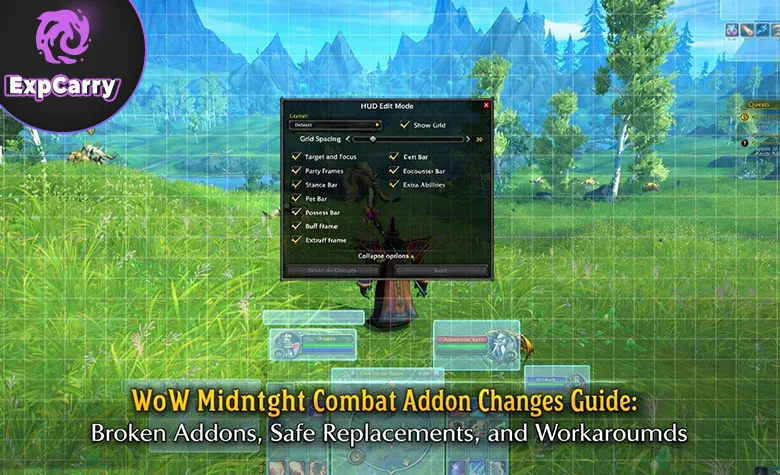
That is why Blizzard's replacement strategy matters so much. Midnight cuts back third-party combat logic while expanding the base UI with Boss Warnings, Damage Meters, stronger raid frames, better nameplates, Combat Audio Alerts, a more capable Cooldown Manager, External Defensives tracking, and an upgraded Personal Resource Display. Blizzard is not trying to give players less information. It is trying to move more of that information into the game itself.
Combat addon fallout at a glance
The fastest useful answer is not a giant list of addon names that will age badly. The useful level is category by category: what gets hit hard, what survives after rewrites, and what Blizzard now replaces natively.
| Addon type | Midnight status | Best replacement or workaround |
| Rotation helpers and priority solvers | Hard hit | Use class knowledge, Blizzard learning tools, cooldown tracking, and simple personal reminders instead of live decision engines. |
| Boss mods built on custom combat logic | Reduced, not erased | Start with Boss Warnings, then add lightweight presentation layers only if the addon author adapts cleanly. |
| Damage meters | Native replacement now exists | Use Blizzard's built-in Damage Meter for core combat stats, spell breakdowns, interrupts, dispels, and review. |
| Mechanic-solving WeakAura packs | Hard hit | Keep only small personal trackers and presentation-only auras that do not act like a combat brain. |
| Healer frame addons that rebuild combat state | Mixed and fragile | Start with Midnight raid frames, then add skins or lighter layers only if the addon has a proper rewrite. |
| Nameplate and cast-bar visual addons | Mostly survivable after updates | Use Blizzard's improved nameplates first, then add appearance tweaks where readability still needs work. |
| Pure cosmetic UI suites | Usually safe after author updates | Keep them if they are truly cosmetic and Midnight-compatible. |
| Break timers, notes, and non-combat utility | Mostly safe | Keep them if updated, because these are not the main target of the combat restrictions. |
Broken combat addons and the categories taking the real hit
The addon categories taking the hardest hit are the ones Blizzard built this system to hit. Midnight is not an anti-customization patch. It is a direct push against third-party tactical logic. If an addon's value came from reading current combat state and turning that into answers, assignments, or optimized next steps, it is now in the danger zone.
Rotation helpers, priority solvers, and giant WeakAura stacks
Rotation helpers are one of the clearest casualties. Their entire value proposition was built around using the current state of the fight to tell you what button to press, when to swap targets, or which priority to follow. That is exactly the kind of combat decision-making Blizzard is cutting back. Some tools may still survive as stripped-down learning aids, but the old model of real-time combat solving is no longer something players should build around.
The same logic applies to many large WeakAura packages. WeakAuras as a framework is not simply deleted, but the most aggressive old setups are sitting in the worst part of the Midnight landscape. If a package solved mechanics, pushed assignments, tracked restricted combat state, or acted like a priority engine, it is the kind of thing Midnight was built to reduce. The strongest adjustment is not to hunt for the least broken clone. It is to stop using WeakAuras as an operating system and keep only the small, personal, readability-driven pieces that still live on the presentation side of the line.
For players who used these tools mostly as training wheels, Blizzard's own Assisted Highlight and One-Button Rotation tools now make more sense than trying to rebuild the old ecosystem through half-functional combat logic packages. Midnight rewards clearer information and better learning tools. It does not reward outsourced thinking.
Boss mods and damage meters after the Midnight reset
Boss mods are not gone, but their job is narrower now. Blizzard added Boss Warnings because it knows players still need encounter visibility, but it also made clear that addons should not be free to build unrestricted combat logic on top of live data. The likely future for boss mods is lighter presentation, cleaner timing displays, notes, and convenience features around a much stronger native baseline, not the old model where raid progression depended on third-party combat brains.
Damage meters are even more straightforward. Midnight no longer leaves this category to external tools by default. Blizzard's built-in Damage Meter already covers the core needs that pushed players toward third-party meters in the first place: damage, healing, interrupts, dispels, avoidable damage, spell breakdowns, multiple windows, and later additions like Enemy Damage Taken and Death Recap. The point is not that every old meter instantly disappears. The point is that the category no longer needs to be outsourced to remain playable.
Explore services related to this guide, selected from our World of Warcraft catalog.
View All World of Warcraft Services

Nameplates, healer frames, and the addons that can still survive
The messiest part of Midnight is not the obviously doomed combat logic layer. It is the middle ground: addons that feel harmless from the player side but are built under the hood in ways that depend on rebuilding combat state. That is why some frame and plate addons can look similar on screen while behaving very differently under Midnight's rules.
Healer frames and frame addons after the rewrite
Healers are the group most likely to feel that tension immediately. If a frame addon mainly skins the default UI, repositions elements, or improves readability, it has a future. If it rebuilds large parts of raid-state handling from raw combat information, it is in a much shakier place. Blizzard clearly understood that healer UI could not be left weak here, which is why Midnight's raid-frame work is much more serious than a token polish pass.
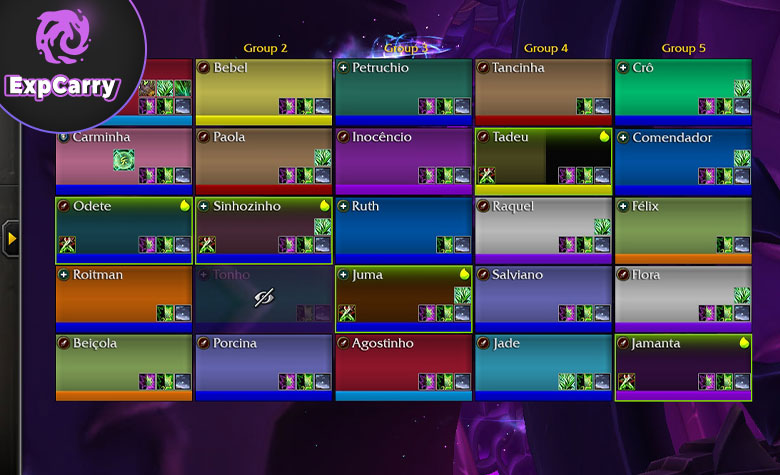
The base raid frames now offer layout templates, stronger dispel visibility, role-debuff emphasis, larger default compact frames, a Center Big Defensives option, border matching for dispellable types, opacity controls, icon-size controls, and later size and background-color improvements. That does not mean every healer will instantly abandon custom frames. It does mean the default UI is no longer walking into Midnight empty-handed. The smartest move for many players is to start with Blizzard's raid frames and add only the smallest extra layer they still genuinely need.
Nameplates, cast bars, and presentation addons still have room
Nameplates are one of the clearest examples of Blizzard replacing old addon pressure from inside the game. Midnight's default nameplates now show more combat-relevant information, better highlight dangerous casts, display more visible buffs and debuffs, improve interrupt clarity, add threat indicators, and offer more style controls. That matters because it moves a lot of the old "you need an addon for this" argument into the native UI.
The rule here is consistent with the rest of Midnight. If your nameplate or cast-bar addon mainly improves readability, scale, layout, or visual consistency, it can still have a future after proper updates. If it tries to smuggle interpretation and tactical logic back into the fight, it is living on borrowed time. Blizzard has even reopened some safe customization space by making all class secondary resources fully non-secret again, which is an important signal that not every advanced UI element is under attack. The attack is on hidden logic, not on visual clarity.
Blizzard UI replacements that now matter more than old addon habits
The biggest Midnight mistake is treating Blizzard's new UI systems like consolation prizes. They are not fallback tools anymore. They are the foundation Blizzard expects players to use before layering anything else on top. If you want a setup that is more stable across patches and closer to the direction the game is actually moving, these native systems now matter first.
Boss Warnings and Damage Meter are now part of the baseline
Boss Warnings are Blizzard's direct answer to the old "everyone needs boss mods" baseline. The system already covers a Boss Timeline for upcoming casts and center-screen text alerts for Minor, Medium, and Critical warnings. It is enabled by default, supports Edit Mode customization, and later gained timer-bar display options and cursor-anchored tooltips. In plain English, Blizzard is building the essential alert layer into the game and leaving third-party tools to compete mostly on presentation, not on raw combat control.
The Damage Meter follows the same philosophy. It is not just a simple DPS widget. It is a configurable combat-stat system with server-side validation, per-spell breakdowns, multi-window support, encounter tracking, and later quality-of-life additions like session persistence, Enemy Damage Taken, Death Recap, and number-format controls. For most players, the safest Midnight answer is no longer "which parser survives best?" It is "start with the native meter and only add visual preference on top."
Raid frames, nameplates, audio alerts, and cooldown tracking close the old gaps
Blizzard has also filled in the smaller gaps that old addon stacks used to cover. Improved raid frames give healers far more usable default information. Nameplates now highlight dangerous casts more clearly and expose more combat data without extra setup. Combat Audio Alerts add text-to-speech and configurable voice support for health, resources, casts, target changes, and later even debuff callouts. The Cooldown Manager has grown into a much more serious system, with debuff tracking on your target, sound and visual alerts, layout sharing, aura-based alerts, and better polish in later updates.
Midnight also adds a curated External Defensives tracker and upgrades the Personal Resource Display into a true HUD element. None of these systems alone fully replaces every old niche addon habit, but together they erase a huge amount of the baseline demand that used to prop up bloated UI stacks. That is the real shift. Blizzard is not asking players to accept less information. It is reducing the reasons they used to outsource core combat visibility in the first place.
Workarounds that actually make sense in Midnight
The smartest Midnight workaround is not to wait for every old addon to come back in its old form. That mindset assumes the old stack is still the right target. It is not. The better approach is to rebuild from the base UI outward, then add back only the layers that still solve real problems without leaning on outlawed combat logic. In practice, that means a smaller and cleaner addon stack than many players ran before Midnight.
The first good workaround is to separate your setup into three piles. Keep true cosmetic addons that mainly change layout, bars, fonts, textures, and art. Replace old combat essentials with Blizzard's native tools wherever possible: Boss Warnings, Damage Meter, improved raid frames, stronger nameplates, Combat Audio Alerts, Cooldown Manager, External Defensives, and Personal Resource Display. Then rebuild any missing comfort features with small presentation-only addons instead of giant combat suites.
The second good workaround is to stop treating WeakAuras as a universal platform for every friction point in the game. Midnight punishes that habit. Small trackers, cursor helpers, personal bars, and simple reminders can still make sense. Massive mechanic-solving stacks do not. If a feature exists only because the old addon ecosystem trained players to expect third-party combat logic for everything, it is exactly the kind of habit Midnight is trying to break.
The third good workaround is patience in the right places. Blizzard has been explicit that some addons will work fine once their authors update them, and expansion boundaries have always broken all but the simplest addons to some degree. The right question is not always "is this addon dead forever?" Sometimes the right question is "was this addon truly combat-logic heavy, or does it just need a Midnight rewrite?" If it mainly reskinned the default UI or presented already-visible information, waiting for a proper update can still be the correct play.
Conclusion
Midnight does not kill WoW addons. It kills the assumption that competitive combat should depend on them. That is the real change. Addons built around presentation, readability, layout, and honest customization still have a future. Addons built around real-time combat logic are the ones taking the real hit. Blizzard is not declaring war on UI modding. It is forcing combat decision-making back into the game and the player.
The practical result is cleaner than the panic makes it sound. Some addons are genuinely broken for design reasons. Some survive, but in a smaller role. Some remain safer than people expected because Blizzard never meant to remove visual customization in the first place. Once you sort your setup by function instead of by habit, the Midnight addon landscape becomes much easier to read.
If you want the most stable plan, stop chasing perfect one-to-one replacements for an old stack that was built for a different era of WoW. Start with Blizzard's native tools, configure them properly, and then add only the cosmetic or presentation layers that still earn their place. Midnight is a forced UI reset, but it is not just subtraction. It is also Blizzard finally taking responsibility for a lot of baseline combat visibility that players used to patch together on their own.