
WoW Solo Shuffle in Midnight Season 2 is a rated six-round Arena format with specialization-specific rating, standard PvP milestones up to 2300 Elite, the Legend achievement, healer rewards and the end-of-season Venomous Legend title. You queue without a permanent Arena team, play six rounds with the same lobby and rotate teammates between rounds.
If your goal is a specific rating rather than learning the system, use the WoW Solo Shuffle Boost for progression to a selected rating target on EU or US Retail.
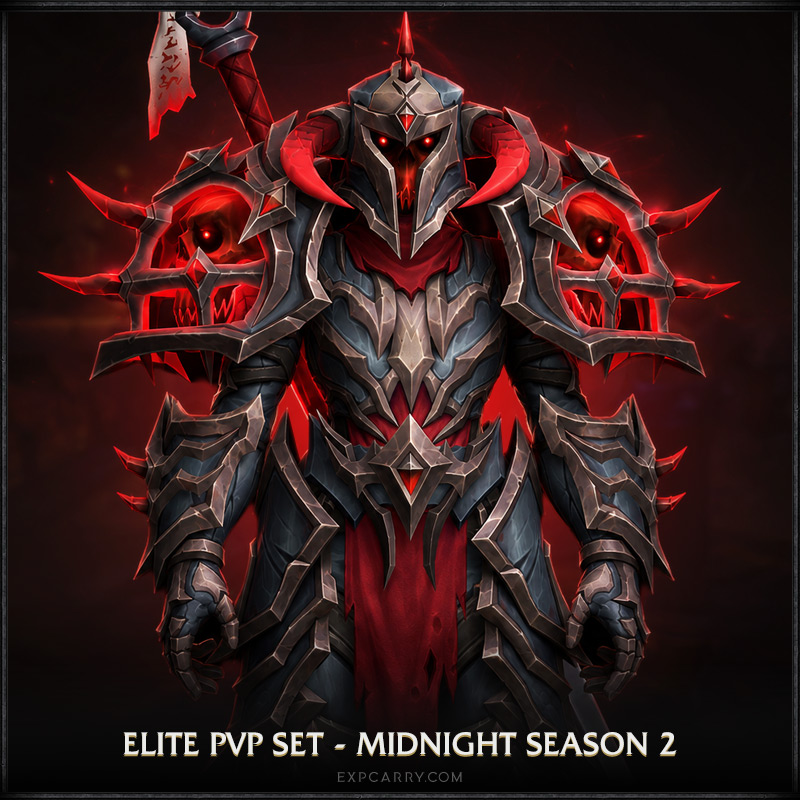
The most important Season 2 milestones are 1000 Combatant I, 1400 Challenger I, 1800 Rival I, 1950 Rival II, 2100 Duelist and 2300 Elite. The main class-specific Elite armor appearance is completed at 1800, while 2300 Elite unlocks the seasonal tabard, Elite title and access to Elite-based objectives such as Legend.
How Solo Shuffle Works in Midnight Season 2
A standard Solo Shuffle lobby contains six players: two healers and four damage dealers. The lobby plays six Arena rounds and changes team combinations between rounds.
Each healer remains on opposite sides while the four damage dealers rotate. This produces six individual round results for each player instead of one simple match win or loss.
Your final result depends primarily on how many rounds you win relative to the expectations created by your personal rating and matchmaking rating. Going 4–2 or better is generally a positive result, but the exact rating change depends on the strength of the lobby and your current MMR.
Solo Shuffle is separate from traditional 2v2 and 3v3 Arena. It also has its own rating for each specialization, meaning progress earned on one specialization does not simply become the rating of another spec.
Midnight Season 2 Solo Shuffle Rating Rewards
| Rating | Rank | Main Season 2 Reward |
|---|---|---|
| 1000 | Combatant I | Elite cloak appearance and Combatant milestone |
| 1200 | Combatant II | Elite legs and bracers appearances |
| 1400 | Challenger I | Elite gloves and boots appearances |
| 1600 | Challenger II | Elite chest and belt appearances |
| 1800 | Rival I | Elite helm and shoulders, completing the main class-specific armor appearance |
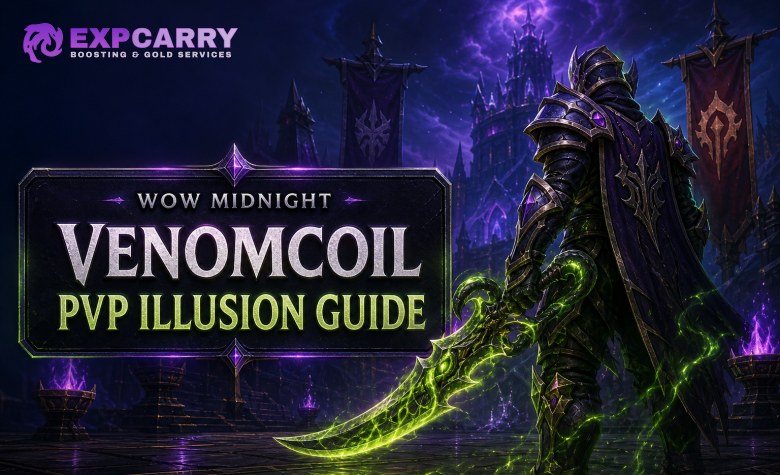
| 1950 | Rival II | Illusion: Venomcoil |
| 2100 | Duelist | Venomous Gladiator's Prestigious Cloak and Duelist title |
| 2300 | Elite | Venomous Gladiator's Tabard, Elite title and Elite-based objective eligibility |
| Elite + 100 round wins | Legend | Venomous Legend's Pennant + seasonal “the Legend” title |
The primary Elite armor appearance is therefore completed at 1800 Rival I, not at 2300. The higher milestones add separate prestige rewards.
For the complete rating-reward structure across all PvP modes, see our Midnight Season 2 PvP rewards guide.
How to Earn Legend in Midnight Season 2
Legend: Midnight Season 2 requires winning 100 Rated Solo Shuffle rounds while at Elite rank.
Elite begins at 2300 rating. Reaching 2300 alone does not complete Legend — the qualifying round wins must then be accumulated while the character remains at Elite.
- A 6–0 lobby can contribute six qualifying round wins.
- A 5–1 lobby can contribute five.
- A 4–2 lobby can contribute four.
- A 3–3 lobby can contribute three.
- Only eligible round wins earned while at Elite count toward Legend.
The reward includes Venomous Legend's Pennant and the seasonal character title “the Legend”.
If Legend is the actual objective rather than only 2300 rating, use the WoW Legend Title Boost.
Explore services related to this guide, selected from our Arena catalog.
View All Arena Services

Venomous Legend — Solo Shuffle Rank 1
Venomous Legend: Midnight Season 2 is a separate end-of-season ladder reward and should not be confused with the normal Legend achievement.
To qualify, the character must:
- finish Midnight Season 2 in the top 0.1% or top 8 of the relevant Solo Shuffle specialization ladder, whichever is higher;
- win at least 50 games during Midnight Season 2.
There is no universal fixed rating that guarantees Venomous Legend. The required cutoff differs by specialization and region and changes as the ladder develops.
For this reason, do not use an old Reddit post, leaderboard screenshot or fixed rating estimate as a guaranteed target. Check Blizzard's current leaderboard when evaluating the cutoff.
If the objective is Venomous Legend rather than a fixed Solo Shuffle rating, use the WoW Rank 1 PvP Boost.
Legend vs Venomous Legend
| Legend | Venomous Legend | |
|---|---|---|
| Type | Seasonal achievement | End-of-season ladder title |
| Rating requirement | Elite | Dynamic specialization cutoff |
| Win requirement | 100 Solo Shuffle round wins at Elite | 50 games won during Season 2 |
| Ladder placement | Not required | Top 0.1% or top 8, whichever is higher |
| Main reward | “the Legend” + Venomous Legend's Pennant | Venomous Legend title |
Solo Shuffle Rating Is Specialization-Specific
Solo Shuffle ratings are tracked by specialization. A player can therefore have different ratings on different specs of the same class.
This matters when:
- pursuing Elite;
- tracking Legend progress;
- evaluating Venomous Legend cutoff;
- switching between healer and DPS specializations;
- comparing your rating to Blizzard's leaderboard.
If your primary goal is a rating reward, choose the specialization before starting a serious climb and avoid unnecessary switching that resets the practical progression path.
How Solo Shuffle Rating and MMR Work
Solo Shuffle uses both personal rating and matchmaking rating (MMR).
Personal rating determines your visible progression and normal rating rewards. MMR helps the system form appropriate lobbies and determines the result expected from you in that lobby.
Important practical consequences include:
- A 3–3 result is not automatically a gain or loss.
- Going 4–2 or better generally produces the clearest positive progression.
- Rating gained from a strong result varies according to lobby MMR.
- A player expected to dominate a lower-rated lobby may gain less for the same round score.
- A player performing above expectation in a stronger lobby can receive better progression.
- Leaving before the shuffle is complete can result in rating and queue penalties.
Do not calculate the exact number of required lobbies only from the difference between your current and target rating. MMR and individual round results make progression non-linear.
How to Climb Solo Shuffle Rating
Use a PvP-specific build
Do not enter rated Solo Shuffle with an unchanged Raid or Mythic+ build. Arena PvP requires different defensive tools, crowd control, mobility and talent choices.
Before serious rated play, prepare:
- current PvP equipment with the correct PvP scaling;
- two compatible PvP trinkets;
- the correct PvP talents;
- interrupt and crowd-control keybinds;
- arena1/arena2/arena3 or equivalent targeting binds;
- accessible defensive and utility abilities;
- clear enemy cooldown and diminishing-return tracking.
For the current class meta across Solo Shuffle and other modes, see our Midnight Season 2 PvP tier list.
Understand your win condition
Every specialization creates kills differently. Some builds win through repeated crowd-control chains, some through sustained pressure and others through short burst windows.
Before each round, identify:
- the most realistic kill target;
- the enemy healer's main defensive tools;
- your teammate's major offensive cooldowns;
- the biggest enemy burst window;
- the positioning required for your opener.
A simple and repeatable plan is usually more reliable than trying to invent a completely different strategy every round.
Trade defensives before the round is lost
One of the most common Solo Shuffle mistakes is dying with major defensive cooldowns unused.
Use defensives when there is a real lethal threat rather than saving every button for a perfect future situation. At the same time, avoid overlapping several long defensive cooldowns when one would have been sufficient.
The objective is to survive the opponent's meaningful offensive window while preserving enough resources for the next one.
Respect positioning and line of sight
Positioning decides many Solo Shuffle rounds before the final kill.
Damage dealers should avoid:
- chasing around a pillar and losing line of sight of their healer;
- standing in an exposed position without pressure;
- forcing the healer to cross the map into crowd control;
- splitting damage without a clear reason.
Healers should maintain access to both teammates while limiting unnecessary exposure to enemy crowd control.
Use crowd control to create an advantage
Do not use stuns, silences and disorients only because they are available.
Good crowd control should:
- stop enemy offensive pressure;
- prevent healing during your kill attempt;
- force an important defensive cooldown;
- create positioning pressure;
- extend an existing crowd-control chain without wasting diminishing returns.
How to Improve After a Losing Shuffle
Review the moment where the round became difficult to recover rather than focusing only on the final death.
- If you died with defensives available, improve threat recognition.
- If your team could not connect to a target, review positioning and mobility.
- If the opposing healer recovered every offensive push, review interrupts and crowd-control timing.
- If one specialization repeatedly defeats you, learn its major offensive and defensive cooldowns.
- If your results vary wildly between lobbies, simplify the opener and defensive plan.
Do not change talents, macros, gear and keybinds simultaneously after one losing lobby. Make one meaningful adjustment and evaluate whether it solves the actual problem.
Solo Shuffle Queue Times
Solo Shuffle requires two healers for every four damage dealers. DPS queues can therefore be substantially longer than healer queues, especially at particular rating ranges or during quieter regional hours.
Queue time varies with:
- region;
- rating and MMR range;
- time of day;
- specialization;
- available healers;
- current season activity.
Healers can also have separate seasonal or role-specific incentives and achievements.
Healer Rewards in Solo Shuffle
Battle Mender: Midnight Season 2
Battle Mender is a Season 2 healer achievement.
It requires:
- playing Solo Shuffle as a healer;
- being at least Rival I;
- winning 50 Solo Shuffle rounds at or above Rival I during Midnight Season 2.
The reward is the seasonal Battle Mender title.
Solo Shuffle Medic: Midnight
Solo Shuffle Medic: Midnight is a broader Midnight healer objective rather than a Season-2-only Rank 1 reward.
It requires 100 Solo Shuffle round wins as a healer at or above Rival I during Midnight and awards Nightfall Legend's Pennant.
Solo Shuffle Gear in Midnight Season 2
Rated Solo Shuffle contributes to normal Honor and Conquest PvP progression. Current PvP equipment scales above its normal item level when PvP scaling is active.
The main gearing tiers are:
- Venomous Aspirant: Honor gear scaling to item level 331 in PvP;
- Venomous Gladiator: Conquest gear scaling to item level 344 in PvP;
- crafted Gladiator gear: eligible crafted pieces with competitive PvP scaling and customizable stats.
PvP no longer has a dedicated Great Vault row. Do not delay a guaranteed Honor, Conquest, crafted or Catalyst upgrade while waiting for a weekly PvP Vault item.
For the full gearing route, weapon tokens, Catalyst and Conquest cap, see our Midnight Season 2 PvP gearing guide.
If the character needs a completed competitive setup rather than information about gearing, use the WoW PvP Gear Boost.
Solo Shuffle Does Not Award Gladiator
Solo Shuffle rating cannot replace the requirements for the seasonal Gladiator achievement.
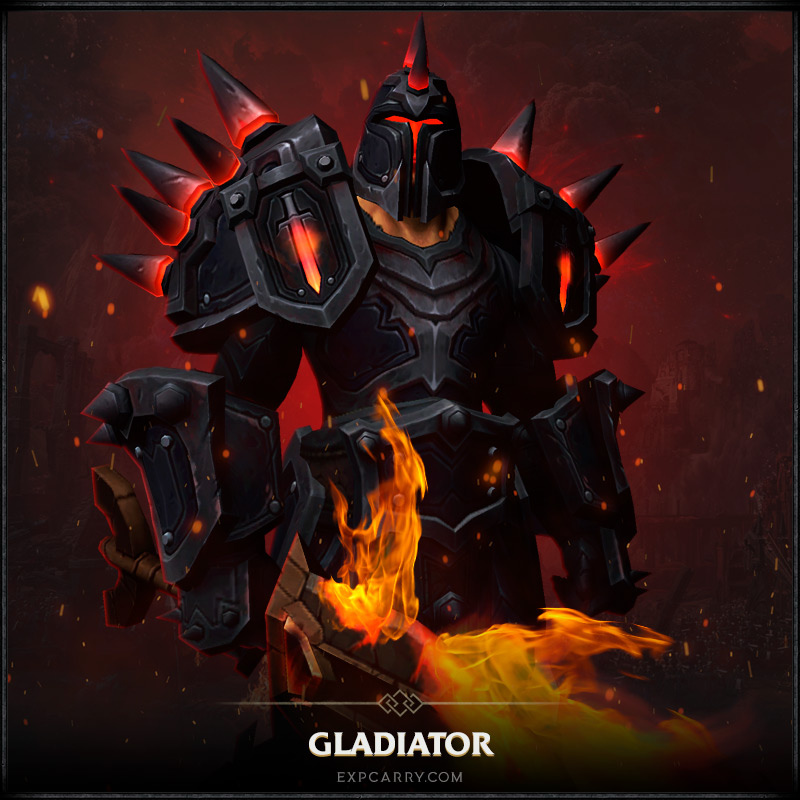
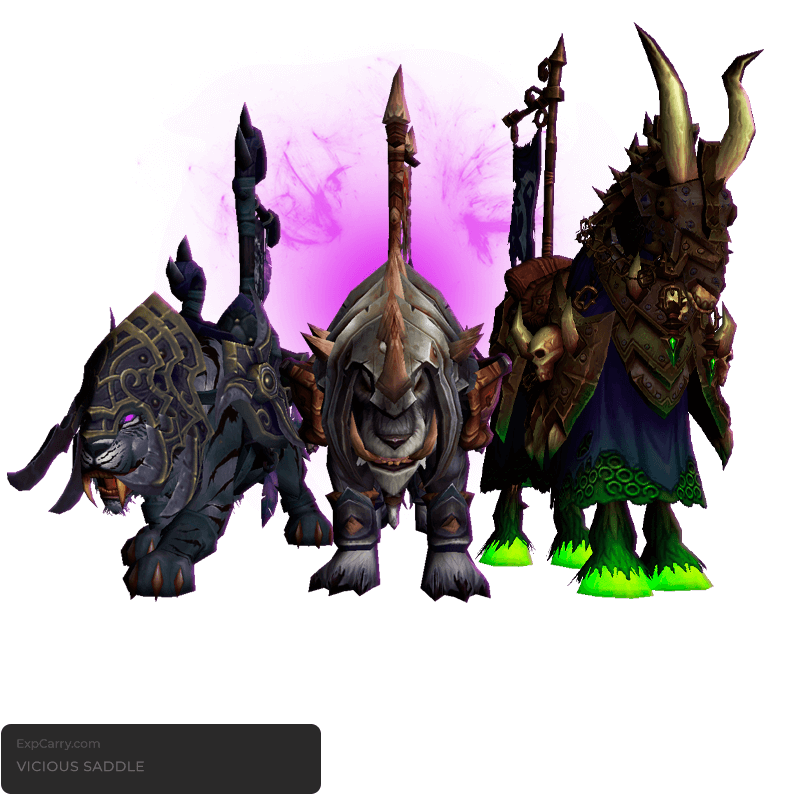
Gladiator requires qualifying victories in Rated 3v3 Arena while at Elite rank. The Gladiator mount therefore belongs to the 3v3 route rather than Solo Shuffle.
Solo Shuffle instead offers its own:
- rating milestones;
- Legend achievement;
- healer achievements;
- Venomous Legend end-of-season title.
Common Solo Shuffle Mistakes
- Thinking 2300 completes the Elite armor set: the main armor appearance is completed at 1800; 2300 is Elite rank.
- Confusing Legend with Venomous Legend: they have completely different requirements.
- Using an outdated PvE build: rated Arena requires PvP-specific talents and utility.
- Holding every defensive: unused cooldowns provide no value after death.
- Ignoring line of sight: chasing a target can disconnect you from the healer.
- Overlapping crowd control: track diminishing returns.
- Changing target constantly: swaps should have a tactical reason.
- Queueing while tilted: repeated poor decisions can erase several positive lobbies.
- Leaving a bad lobby: penalties are generally worse than completing difficult rounds.
- Using an old fixed Rank 1 cutoff: Venomous Legend placement changes throughout the season.
- Waiting for a PvP Great Vault reward: there is no dedicated PvP Vault row.
Recommended Solo Shuffle Climb Plan
- Finish the current basic PvP gear setup.
- Choose the specialization you intend to push.
- Use a current Arena PvP build and proper keybinds.
- Queue in manageable sessions and track round results.
- Use 1400, 1600, 1800 and 1950 as practical intermediate goals.
- Push 2100 Duelist when the character and MMR are stable.
- Reach 2300 Elite if you need the Elite title, tabard or Legend eligibility.
- After Elite, track the 100 qualifying round wins if Legend is the goal.
- For Venomous Legend, follow the live specialization leaderboard rather than a fixed rating estimate.
Solo Shuffle Rating or Reward — Which Target Should You Choose?
| Goal | Target |
|---|---|
| Main Elite class armor appearance | 1800 Rival I |
| Venomcoil weapon illusion | 1950 Rival II |
| Duelist cloak and title | 2100 Duelist |
| Elite tabard and title | 2300 Elite |
| Legend | Elite + 100 qualifying round wins |
| Venomous Legend | Final top 0.1% / top 8 specialization placement + 50 season wins |
For a fixed rating target, use the Solo Shuffle rating service. For the complete Legend achievement, use the Legend Title service. End-of-season Venomous Legend objectives belong to the Rank 1 PvP service.