




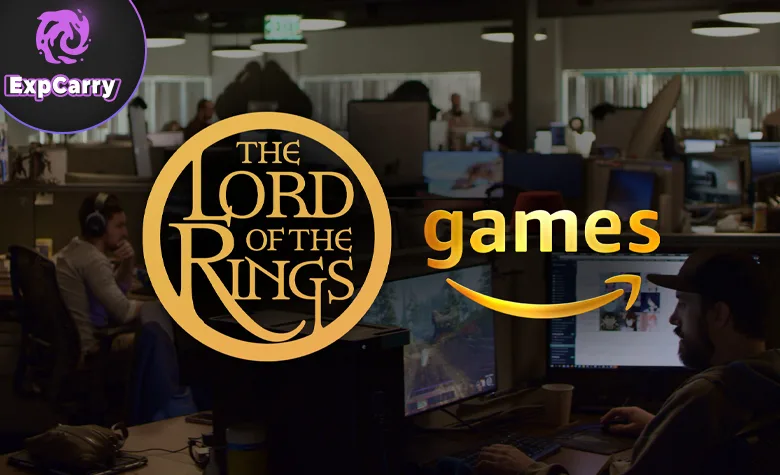
Amazon's Lord of the Rings MMO looks dead again, which is becoming less of a shocking twist and more of a grim franchise tradition. The project announced in 2023 was supposed to be Amazon's second serious attempt at building a massive online Middle-earth game, this time with Embracer Group's Middle-earth Enterprises and Amazon Games Orange County leading development. Now, after layoffs, a retreat from first-party AAA MMO development, New World's final shutdown plan, and Amazon's careful shift toward vague comments about future Middle-earth game ideas, the MMO itself appears to have slipped into the same shadow realm as the first canceled attempt.
The important detail is precision. Amazon has not delivered a clean public blog post titled "the Lord of the Rings MMO is canceled." Instead, the project has been widely reported as dead, recent comments from Amazon avoided defending the MMO directly, and the company is now talking about continuing to work with Middle-earth partners on a new game experience. That is not a resurrection. That is corporate fog around a corpse, because apparently even canceled games now need brand management.
Amazon Lord of the Rings MMO Cancellation Rumors Hit Harder This Time
The latest wave around Amazon's Lord of the Rings MMO is not just another random rumor from a forum thread trying to turn silence into prophecy. The project has been under suspicion since Amazon's 2025 layoffs hit its games division and the company began stepping away from large first-party MMO development. Reports at the time said the Lord of the Rings MMO was affected, while New World: Aeternum stopped receiving new content updates after Season 10 and later received a final shutdown date.
That context matters because Amazon's LOTR MMO was not a small side experiment. When the game was announced in 2023, Amazon described it as an open-world MMO adventure set in a persistent Middle-earth, based on The Hobbit and The Lord of the Rings literary trilogy. Amazon Games Orange County, the studio behind New World, was leading development, with Amazon planning a global release for PC and consoles. On paper, this was meant to be one of Amazon Games' biggest long-term projects.
Now the language around the project has changed. Instead of talking about the MMO's development, Amazon is talking more broadly about continuing to work closely with Middle-earth Enterprises and Embracer Group on a compelling new game experience. That wording matters. It keeps the license relationship alive while quietly moving away from the MMO as originally pitched. In plain terms, Middle-earth may still be in Amazon's game plans, but the open-world MMO version announced in 2023 no longer looks like the active project.
A Second Lord of the Rings MMO Death Makes Amazon's Pattern Hard to Ignore
This is not the first time Amazon has watched a Lord of the Rings MMO collapse. The earlier version, announced years before the 2023 reboot, was canceled in 2021 after business complications involving Tencent and Leyou. That first cancellation already made the idea feel cursed. The 2023 announcement was supposed to be the reset: a new partner structure, a clearer rights deal, New World's MMO experience behind it, and a chance for Amazon to prove it could finally turn Tolkien's world into a long-term online game.
Instead, the second attempt now appears to have run into Amazon Games' larger identity crisis. The company has spent years trying to establish itself as a major gaming force, but its record is uneven at best. New World launched with huge attention, then declined into a smaller live service before Amazon ended active content development and set its shutdown for January 31, 2027. Crucible was launched, pulled back into closed beta, and then killed. Blue Protocol's Western release was canceled. The Lord of the Rings MMO now looks like another ambitious project that could not survive Amazon's internal priorities.
That pattern is the real story. A Tolkien MMO is not impossible. The IP is strong, the MMO audience still exists, and Middle-earth remains one of the most natural fantasy settings for a persistent online world. The problem is not the idea. The problem is Amazon's ability to carry a giant MMO from announcement to launch without corporate restructuring, layoffs, strategy shifts, or management fog swallowing the project before players even see gameplay.
New World's Shutdown Made the Lord of the Rings MMO Look Even Weaker
New World was always tied to the LOTR MMO conversation because both projects were connected through Amazon's internal MMO ambitions. New World proved Amazon could launch a large online RPG with serious visibility, but it also exposed the company's problems with long-term retention, endgame direction, live-service pacing, and MMO identity. The game had a massive opening, then spent years fighting population decline, design reworks, console repositioning, and uneven player trust.
When Amazon announced that New World: Aeternum would stop receiving new content updates, it sent a clear message about the company's appetite for first-party MMO support. The later shutdown plan made that message even clearer: New World: Aeternum has been removed from sale, existing owners can continue playing until January 31, 2027, and the game is no longer a long-term growth pillar for Amazon Games. If Amazon could not sustain its own released MMO, the future of an even larger licensed MMO based on The Lord of the Rings looked fragile.
That is why the LOTR MMO cancellation reports landed with such force. Players were not looking at one isolated project failure. They were looking at a company stepping back from the exact category the Lord of the Rings game belonged to. A new Tolkien MMO would need years of expensive development, long-term live operations, heavy content updates, server infrastructure, community support, and constant design investment. Amazon Games was moving in the opposite direction.
| Amazon Games signal | Impact on the LOTR MMO | Player reading |
|---|---|---|
| New World ending active content updates | Weakens confidence in Amazon's MMO support model | Amazon is retreating from long-term first-party MMOs |
| New World shutdown set for January 31, 2027 | Turns the studio's biggest MMO into a managed sunset | Amazon's MMO era looks effectively over |
| Large layoffs across Amazon and Amazon Games | Reduces development capacity for expensive projects | Big online games are no longer safe internally |
| Vague Middle-earth statements | Keeps the IP relationship alive but not necessarily the MMO | The announced MMO may be replaced by another format |
| Second LOTR MMO collapse | Turns one cancellation into a pattern | The project looks cursed under Amazon |
Amazon's Latest Middle-earth Comments Sound Like a Pivot, Not a Save
The most telling part of the current situation is Amazon's wording. When asked about the project, Amazon did not come out swinging with a clear defense of the MMO. Instead, the company emphasized continued collaboration with Middle-earth Enterprises and Embracer Group and talked about exploring a compelling new game experience set in Tolkien's world. That is carefully shaped language. It reassures fans that the license is not dead while avoiding a direct commitment to the MMO that was announced in 2023.
That distinction is important for accuracy. A Lord of the Rings game from Amazon could still happen. A different Middle-earth game could be in planning. Another studio connected to Embracer could be involved with a Tolkien project. Amazon could publish something smaller, more contained, or less expensive than a full MMO. None of that means the announced open-world MMO survived.
For players, this is the usual problem with corporate game cancellations. The company rarely says the clean thing immediately. Instead, the language shifts from a specific product to a broader brand relationship. A named MMO becomes a "new game experience." A development plan becomes "exploration." A canceled project becomes "we remain committed to the world." Somewhere in a meeting room, someone probably called this messaging elegant. The rest of us call it fog.
The Lord of the Rings Still Deserves a Real MMO
The frustration around this cancellation is strong because the idea still makes sense. Middle-earth is one of the best possible settings for a massive online RPG. It has geography that players already understand emotionally: the Shire, Bree, Rivendell, Moria, Rohan, Gondor, Mordor, and the wilderness between them. It has factions, races, travel routes, ancient ruins, wars, crafting cultures, social spaces, and enough lore density to support years of content.
Standing beside The Lord of the Rings Online, a modern LOTR MMO would not need to copy every modern live-service trend. It could focus on exploration, regional identity, fellowship-style group play, dangerous travel, crafting, housing, server communities, and long-form adventure. The audience is there. The fantasy is obvious. The problem is that making an MMO is expensive, slow, and operationally brutal. Companies like the idea until they remember the actual cost of keeping one alive.
That is where Amazon's track record becomes hard to ignore. A successful Lord of the Rings MMO would need patience, a stable development team, a clear long-term vision, and a publisher willing to support years of iteration before and after launch. Amazon has money, but money alone does not build trust. It also needs continuity. So far, Amazon Games has struggled to prove it can keep that continuity around large internal game projects.
Embracer, Middle-earth Rights, and the Strange Future of Tolkien Games
The rights situation around Tolkien games has become more complicated since Embracer Group acquired Middle-earth Enterprises. That deal created room for more games based on The Lord of the Rings and The Hobbit, but it also placed the license inside a company that has spent years restructuring, cutting costs, selling studios, and rethinking projects. The result is a strange mix: the IP is more active than ever, but individual games still face unstable business realities.
Amazon's partnership with Middle-earth Enterprises was supposed to turn that opportunity into a major online game. If the MMO is now dead, it does not mean Tolkien games are finished. It means the most ambitious Amazon-led version appears to have failed. Other projects can still exist, including smaller games, single-player RPGs, survival games, cozy games, mobile titles, or publishing partnerships that do not require Amazon to operate a massive MMO for a decade.
That may be the practical direction now. The industry has become more cautious around giant online bets. MMOs require huge budgets and long live-service commitments, while licensed games already carry approval layers, revenue sharing, brand constraints, and audience expectations. A smaller Lord of the Rings game may be easier to greenlight than another attempt at building the next giant persistent Middle-earth world.
Player Reaction: Exhaustion, Jokes, and Very Little Surprise
The player reaction has been exactly what anyone with internet access and mild pattern recognition would expect: disappointment mixed with jokes, cynicism, and a general lack of shock. Many players wanted a modern Lord of the Rings MMO, but few trusted Amazon to deliver one cleanly. After New World's decline, its final shutdown plan, and Amazon's broader gaming cuts, the cancellation reports felt less like a twist and more like the final line in a story people had already guessed.
There is also a clear split in how players respond. Some are relieved because they did not want Amazon handling Middle-earth again after New World and the broader public baggage around Amazon's Tolkien projects shaped perception of the brand. Others are frustrated because, despite Amazon's issues, a big-budget Tolkien MMO still sounded more exciting than the safer projects publishers usually choose. A third group simply sees this as another example of the modern games industry announcing too early, restructuring later, and leaving players to read the smoke signals.
The harshest reaction is not anger. It is fatigue. Players have seen too many ambitious online games disappear before release or launch in broken states. A Lord of the Rings MMO should feel like a landmark project. Instead, under Amazon, it now feels like a recurring obituary.
The Bigger MMO Problem Behind Amazon's Failure
Amazon's apparent second LOTR MMO failure is also part of a larger industry issue. Publishers still love the idea of MMOs because the successful ones can generate long-term revenue and build durable communities. But the genre is punishing. It demands enormous content pipelines, stable technology, strong social design, careful progression, constant moderation, and years of updates before the investment fully pays off.
That makes MMOs uniquely vulnerable during corporate strategy shifts. A single-player game can sometimes survive a rough production cycle if it reaches completion. An MMO needs a whole operating structure around it before and after launch. If leadership changes, costs rise, layoffs hit, or company strategy moves toward safer products, a pre-release MMO becomes an obvious target.
Amazon's retreat from first-party MMO development fits that pattern. The company entered gaming with huge ambition and almost absurd resources, but the MMO market does not bend just because a tech giant arrives with a budget. Players still need a good game. Developers still need stable direction. Live operations still need long-term commitment. The genre remains very good at humiliating companies that mistake scale for competence.
A Different Lord of the Rings Game Could Still Rise From the Ashes
The most likely positive outcome is not that the exact Amazon MMO returns unchanged. It is that the Middle-earth partnership produces something else. Amazon's comments leave room for a different game, possibly one with a smaller scope, a different genre, or another development partner. That would fit the current industry mood better than another giant MMO promise.
A single-player open-world RPG, a co-op adventure, a survival-focused Middle-earth game, or a more contained online RPG would all be easier to manage than a true MMO. That does not make them automatically better. It only makes them more realistic. After two failed Amazon-linked LOTR MMO attempts, realistic may be the only word left with any dignity.
The danger is that publishers overcorrect. If the lesson becomes "players do not want ambitious Tolkien games," that would be wrong. Players do want them. The real lesson is that a giant licensed MMO needs a publisher and studio structure built for long-term online development, not a company that keeps changing its gaming strategy every time the quarterly weather shifts.
Final Thoughts
Amazon's Lord of the Rings MMO appears to be dead again, and the word "again" is doing a lot of work. The 2023 project had the right ingredients on paper: a massive fantasy IP, Middle-earth Enterprises, Amazon's publishing reach, and the MMO experience of the New World team. But the surrounding reality changed. Amazon Games suffered cuts, New World lost active development and now has a final shutdown date, Amazon stepped back from first-party AAA MMO work, and the company's public language around Middle-earth shifted away from the announced MMO toward a broader "new game experience."
The result is a familiar kind of industry failure: not one dramatic public explosion, but a slow disappearance through layoffs, restructuring, vague statements, and strategic retreat. That makes the situation less clean but not less obvious. The MMO that Amazon announced in 2023 no longer looks like a living project. Middle-earth may still get another Amazon-connected game, but that is a different claim from saying the MMO survived.
The saddest part is that The Lord of the Rings still fits the MMO genre beautifully. A serious, patient, well-built Middle-earth MMO could be one of the strongest fantasy online games on the market. But Amazon has now been attached to two failed attempts, and that pattern is difficult to ignore. At this point, the question is not whether Tolkien's world can support a great MMO. It clearly can. The question is whether Amazon was ever the company that could carry it across Mordor without dropping it into a production chasm halfway there.