




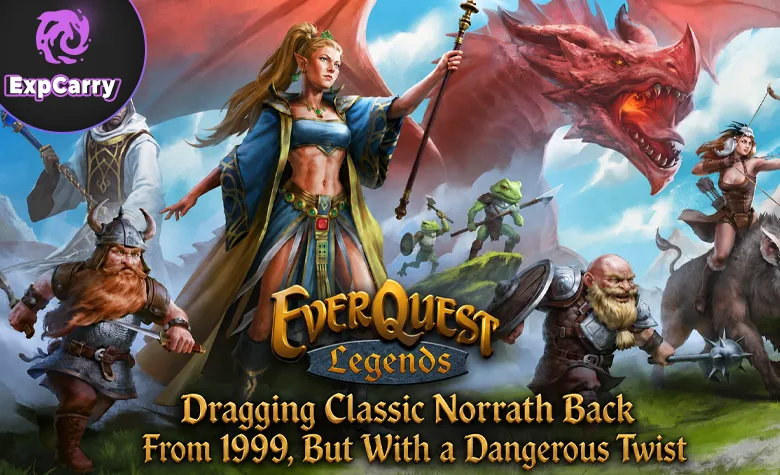
EverQuest Legends is not EverQuest 3, not a normal progression server, and not another attempt to simply preserve 1999 in a glass box while everyone pretends they still have six free hours every evening. It is a standalone reimagining of classic EverQuest, built around the original game's world, art style, zones, music, loot, and atmosphere, but redesigned so solo players and small groups can actually see the content without assembling a small labor union first.
Daybreak Games is publishing EverQuest Legends in partnership with Game Jawn, a studio formed by veteran EverQuest community developers with deep roots in projects like Project 1999 and Project Quarm. That background matters. This is not a random outsourced nostalgia product. It is being built by people who clearly understand why old EverQuest mattered, while also understanding that many of its original demands feel hostile to modern schedules. Shocking development: adults have jobs now.
EverQuest Legends Release Window, Platform, and Beta Plans
EverQuest Legends is currently planned for PC, with a targeted launch in July 2026. Closed beta access began on April 24, 2026, starting with a few hundred randomly selected players before expanding over the following days and weeks. Players can sign up through the official EverQuest Legends website using a Daybreak account.
The game is officially described as an MMORPG, but the design pitch is very different from traditional EverQuest. Classic EverQuest was famous for danger, downtime, social dependency, harsh travel, slow progression, and group pressure. EverQuest Legends keeps the old world and presentation, but gives players far more power and flexibility so the full game can be experienced solo or with a smaller crew.
| Category | Known details |
|---|---|
| Game title | EverQuest Legends |
| Publisher | Daybreak Games |
| Developer | Game Jawn |
| Platform | PC |
| Genre | MMORPG |
| Beta | Closed beta access began on April 24, 2026 |
| Planned launch | July 2026 |
| Business model | Upfront purchase plus separate subscription |
| Krono support | No Krono support confirmed |
| All-Access support | Not included in standard All-Access membership |
The most important thing to understand is that EverQuest Legends is not trying to replace EverQuest Live. It is also not trying to be a museum-accurate 1999 server. It sits somewhere stranger and more interesting: classic EverQuest rebuilt as a solo-friendly and small-group-friendly MMO for people who want Norrath without the full historical punishment package.
Classic EverQuest Reimagined Instead of Simply Re-Released
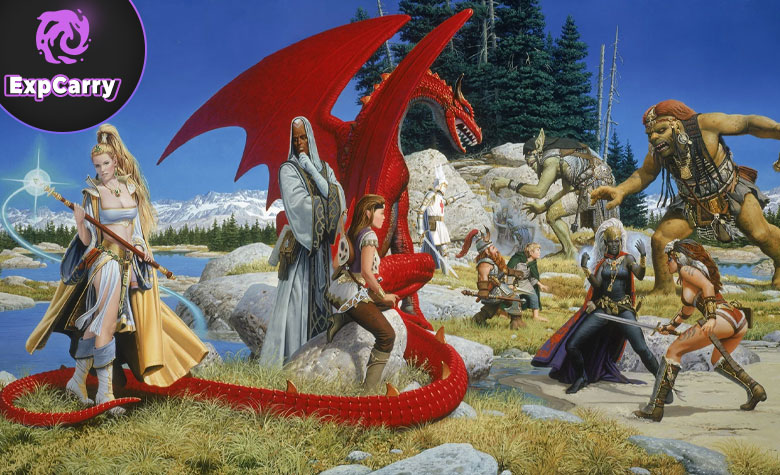
EverQuest Legends uses the original EverQuest foundation: the old visual style, classic zones, familiar spell effects, original-style music, old-school loot, and the pre-Kunark version of Norrath. At launch, the game is set to include Antonica, Faydwer, and Odus, which means the initial scope is centered on the earliest era of EverQuest before expansion sprawl started reshaping the world.
This is where the project becomes more than another nostalgia server. Daybreak and Game Jawn are not just asking players to replay classic EverQuest under the old rules. Instead, they are changing the player power curve, party size, raid size, progression systems, user interface, gear systems, and accessibility. The world remains old. The structure around it is new.
That direction will immediately split the audience. Players who want strict classic authenticity may see EverQuest Legends as too generous, too altered, or too friendly to solo play. Players who love the idea of classic Norrath but cannot live like a 1999 college student may see it as exactly the version of EverQuest they can finally touch without reorganizing their life around corpse runs and group finding. Both reactions are predictable, because MMO communities are physically incapable of accepting a design decision without turning it into a courtroom drama.
Solo Play Is the Core EverQuest Legends Design Bet
The biggest change is solo viability. EverQuest Legends is being designed so the entire game can be played solo, including the hardest content. That does not mean grouping disappears. Groups still exist, and raids still exist, but they are no longer mandatory gates that block most players from seeing the best parts of the game.
This is a massive philosophical shift for EverQuest. The original game's identity was built around dependency. You needed groups. You needed travel help. You needed class roles. You needed people who could pull, heal, crowd control, rez, teleport, and save a dungeon crawl when everything collapsed because someone walked two steps too far. EverQuest Legends keeps the MMO world, but reduces the social barrier by making the individual character powerful enough to cover more roles.
That is the central tension of the project. EverQuest became legendary partly because it forced players together. EverQuest Legends exists because that same friction now pushes many players away. The new game is betting that Norrath can still feel alive even when the player is not required to beg strangers for a group every time they want meaningful progress.
Multiclass Characters Are the System That Changes Everything
The defining feature of EverQuest Legends is multiclassing. Each character can use up to three active classes at the same time, keeping the benefits, stats, spells, skills, disciplines, and abilities from those classes. Official examples include combinations like rogue/paladin/wizard, which already sounds like something a theorycrafter would build at 3 a.m. and then insist is perfectly balanced.
This system is what makes solo play possible. Instead of needing a full group to cover damage, healing, utility, crowd control, mobility, or buffs, one character can combine roles into a much stronger build. Available information describes this as a major power shift compared to classic EverQuest, with players choosing an initial class setup and later gaining access to a third class. The result is a character that is far stronger and more self-sufficient than anything in original vanilla EverQuest.
| System | EverQuest Legends version | Why it matters |
|---|---|---|
| Class structure | Up to three active classes per character | Allows one character to cover multiple roles |
| Class combinations | More than 500 possible combinations | Creates huge build variety for theorycrafting |
| Solo progression | Entire game can be played solo | Removes the biggest barrier in classic EverQuest |
| Groups | Up to 4 players | Supports smaller modern party play |
| Raids | Up to 8 players | Replaces large old-school raid dependency with smaller coordination |
The risk is obvious. If characters become too powerful, EverQuest Legends could lose the danger and dependency that made Norrath feel special. If they are not powerful enough, the solo-friendly promise falls apart. The entire game depends on whether Game Jawn can tune content so players feel strong without turning classic EverQuest into a theme park ride with polygons.
Races, Zones, and the Pre-Kunark Norrath Launch Scope
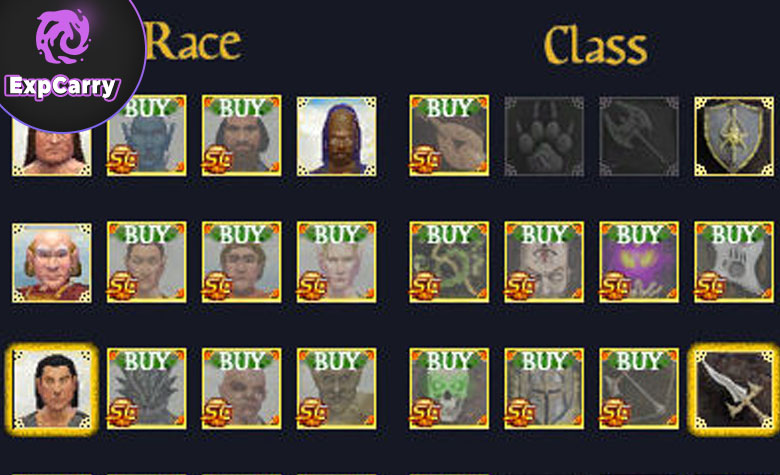
At launch, EverQuest Legends is focused on pre-Kunark Norrath, but with a wider race list than strict 1999 purists might expect. The game is set to include 15 launch races: the 12 original EverQuest races plus Kerran, Iksar, and Froglok. That is one of the clearest signs that Legends is not trying to be a historically exact recreation.
The launch continents are Antonica, Faydwer, and Odus. That gives the game the core old-world map: human cities, elven lands, dwarven and gnomish spaces, Erudin, Qeynos, Freeport, Kelethin, Felwithe, Kaladim, Ak'Anon, and the many dangerous routes between them. The point is not visual novelty. The point is the return to the classic geography of Norrath, with modern systems layered over it.
The pre-Kunark framing matters because it gives the project a tight identity. Instead of launching with decades of expansion complexity, EverQuest Legends starts with the oldest version of the world and rebuilds from there. If the game succeeds, that gives Daybreak and Game Jawn room to expand carefully instead of dumping the entire franchise timeline onto players at once like a lore avalanche.
Modern Quality-of-Life Changes Without Replacing the Old Look
EverQuest Legends keeps the old graphics, old zones, and old presentation, but adds modern quality-of-life features. Official materials mention a streamlined user interface, upgraded spell and ability management, smoother progression, difficulty systems, and passive alternate advancement progression from level 1. Community FAQ roundups and beta-system summaries also point to changes such as no XP loss on death and no coin weight.
Those changes matter because original EverQuest can feel hostile to new or returning players. Some of that hostility is part of its charm. Some of it is just ancient friction from a time when user experience design apparently meant "good luck, scholar." EverQuest Legends is trying to keep the danger and atmosphere while removing enough outdated pain to make the game playable in 2026.
| Modern change | Expected impact |
|---|---|
| Streamlined UI | Makes spells, inventory, and character systems easier to manage |
| Upgraded ability management | Helps support multiclass characters with large ability pools |
| No XP loss on death | Reduces one of classic EverQuest's harshest penalties if retained through launch |
| No coin weight | Removes a famous old annoyance without damaging core gameplay |
| Passive AAs from level 1 | Adds long-term character power earlier than classic EQ did |
| Difficulty scaling | Gives players optional challenge tiers and better loot incentives |
The trick is restraint. EverQuest Legends cannot modernize so much that the old world becomes meaningless. It needs to feel like classic EverQuest made more playable, not a modern MMO wearing a 1999 skin because the marketing department found a nostalgia lever.
Gear Upgrades, Exaltations, and Character Power Growth
Gear progression is another major change. EverQuest Legends lets players upgrade gear up to +10 and use new systems to modify weapons and armor. Official descriptions mention combining focus, click, and proc effects on gear, while community summaries and preview coverage have discussed systems that allow effects to be moved or enhanced through Exaltations. In plain English: old items are being pulled into a deeper character-build system.
This is important because a solo-friendly EverQuest needs more than raw stat inflation. If players can combine three classes, upgrade gear, move effects, and shape builds around specific bonuses, then progression becomes more flexible than simply hunting the same best-in-slot items everyone already knows from old EverQuest databases.
The upside is obvious: buildcraft becomes a major part of the game. The downside is also obvious: balance could become a crime scene. With more than 500 class combinations and upgradeable gear effects, some builds will almost certainly become absurd unless tuning is very careful. That may even be part of the fun, but it will need active control if Legends wants a healthy economy and endgame.
Groups and Raids Are Smaller, But Not Removed
EverQuest Legends does not remove multiplayer. It changes the scale. Groups are capped at 4 players, and raids are capped at 8 players. This is a major departure from old EverQuest, where large groups and raid forces were part of the identity. The new setup is designed around the reality that many players want social play, but not necessarily the logistics of managing dozens of people through ancient raid content.
This smaller structure fits the solo/casual design. A player can progress alone, but grouping should still feel useful. A group of four powerful multiclass characters could cover an enormous number of roles, while an eight-player raid can still demand coordination without recreating the old recruitment nightmare.
The real test will be encounter design. If raids are just old bosses scaled down, they may feel too simple. If they are reworked with proper mechanics for smaller teams, they could become one of EverQuest Legends' strongest features. The game needs raids that respect classic danger without requiring players to run a second life as a guild spreadsheet administrator.
Monetization: Box Price, Separate Subscription, No Krono
EverQuest Legends will not be free-to-play. Current information points to an upfront purchase and a separate subscription. That subscription is not part of the existing Daybreak All-Access membership, and Krono will not work in EverQuest Legends. This is one of the most important business details because Krono has shaped EverQuest's economy and player behavior for years.
Removing Krono from Legends gives the new game a cleaner economy at launch. Players will not be able to bring wealth or market leverage from EverQuest Live, progression servers, or other Daybreak ecosystems. That is a smart move if the goal is to create a fresh economy where early progression is not immediately distorted by imported value.
The cash shop is expected to include cosmetics and utility items such as XP potions and character customization options, but not direct power items. That line will need to be watched closely. Utility shops in MMOs always live near a slippery slope, and players are very good at noticing when "convenience" starts quietly dressing up as power.
| Monetization element | Current status | Why it matters |
|---|---|---|
| Upfront purchase | Planned | Creates an entry price rather than a free-to-play launch |
| Subscription | Separate EverQuest Legends subscription | Not bundled into standard All-Access |
| Krono | Not supported | Protects the new economy from imported Krono markets |
| Cash shop | Cosmetic and utility items expected | Needs careful limits to avoid pay-to-win concerns |
| Final pricing | Not fully revealed | The game's value perception depends heavily on price |
This monetization model is both sensible and risky. A subscription can support a more stable old-school MMO environment, but asking for a box price and a separate sub means the game has to prove its value quickly. Nostalgia is powerful, but it is not unlimited. Sadly for publishers, memories do not automatically renew monthly.
No PvP Servers and No Character Transfers From EverQuest
Current information says there are no planned PvP servers for EverQuest Legends. Characters also will not transfer between EverQuest and EverQuest Legends. That makes sense because Legends is not just another server ruleset. The mechanics, power curve, class structure, gear systems, and economy are too different for normal character transfer logic.
This separation is healthy. If characters could move from old EverQuest into Legends, the entire progression structure would be compromised immediately. The same applies in reverse. A three-class Legends character with upgraded gear systems does not belong inside normal EverQuest balance. The games need a wall between them, otherwise the whole thing turns into a migration disaster wearing nostalgia armor.
The lack of PvP servers may disappoint a niche group, but it fits the project's current priorities. EverQuest Legends already has enough balancing risk with multiclassing, solo viability, gear upgrades, difficulty tiers, and small raids. Adding PvP on top of that would be less a feature and more a public invitation for chaos.
Who EverQuest Legends Is Really For
EverQuest Legends is built for three main groups. The first is former EverQuest players who miss Norrath but no longer want the full time commitment of classic EQ. The second is current EverQuest players who want a fresh, official alternate version with new systems and a clean economy. The third is curious MMO players who know EverQuest is important but have never found a reasonable way to try it.
The game may be hardest to sell to complete newcomers. Early impressions and system discussions suggest that while the game is more accessible than old EverQuest, the moment-to-moment experience still looks and feels old. Combat remains tab-target and auto-attack-driven. The visuals are deliberately retro. Zone layouts and navigation can still feel obscure. Some players will find that charming. Others will bounce off it in the first hour and return to games that explain themselves without requiring archaeology.
| Player type | Likely appeal | Possible problem |
|---|---|---|
| EverQuest veterans | Classic Norrath with less time pressure | May dislike changes to old-school dependency |
| Returning MMO players | Solo-friendly progression and smaller group sizes | May find the old presentation too rough |
| Theorycrafters | More than 500 class combinations and gear customization | Balance may become messy |
| New players | A more approachable entry into EverQuest history | Still looks and plays like an old MMO |
| Classic purists | Original zones, music, graphics, and atmosphere | Major systems may feel too modern or too powerful |
The strongest audience is probably not "everyone." It is old MMO players who still love the idea of EverQuest but no longer want to live inside it like a second job. That is a smart target, because the original EverQuest audience has aged. Time became the raid boss, and apparently it has excellent resistances.
Beta Impressions Point to Promise, Jank, and a Very Old Soul
Early beta and preview impressions are broadly consistent with the game's pitch. The multiclass system works as the main solo-enabler, the quality-of-life changes make progression less punishing, and the world still feels like EverQuest. At the same time, the game remains visually and mechanically old. It is not trying to hide that. It is trying to make that age playable.
That reaction fits the project's identity. EverQuest Legends is strongest for players who already love EverQuest or want a return to its world without the old scheduling burden. The obvious friction points are also exactly where expected: rough onboarding, old-school controls, low-poly visuals, and beta jank. That is not a contradiction. It is the whole argument of the game. Legends is not trying to erase EverQuest's age. It is trying to make that age less hostile.
The real question is whether Game Jawn can polish the new systems before launch without sanding away the old identity. If the game becomes too comfortable, it loses the EverQuest danger. If it remains too obscure, new players will bounce. EverQuest Legends has to walk a narrow bridge between preservation and accessibility, which is conveniently one of the hardest design problems in old-school MMO development.
EverQuest Legends Compared With Classic Servers and Modern MMOs
EverQuest Legends should not be confused with a standard Time-Locked Progression server. TLP servers replay EverQuest's expansion timeline under specific rules. Legends instead changes the structure of the game itself. It is more like an official Classic+ experiment for EverQuest: same old foundation, new progression logic, new power curve, new group scale, and a different economy.
It is also not trying to compete with modern MMOs through graphics or cinematic presentation. Anyone expecting Final Fantasy XIV production values, World of Warcraft pacing, or Guild Wars 2 movement polish is wandering into the wrong tavern. EverQuest Legends is selling a specific thing: old Norrath made more accessible through systems rather than spectacle.
That could be its advantage. The MMO market is full of games trying to look modern while feeling empty. EverQuest Legends may look ancient, but if the world, progression, and community hold together, it could offer something more distinct than another polished online RPG with a seasonal roadmap and a cash shop pretending to be a personality.
The Biggest Unknowns Before Launch
Even with the official site, producer letters, FAQ details, preview coverage, and beta information, several major questions remain. Pricing is the biggest one. A box price plus separate subscription can work, but only if the final cost feels fair for the audience. If Daybreak prices it too aggressively, players may reject the model before the game has time to prove itself.
Balance is the second major unknown. With more than 500 class combinations and upgradable gear effects, the build system could become the game's best feature or its biggest design problem. If a handful of combinations dominate everything, theorycrafting collapses into a solved meta. If too many builds feel weak, the multiclass promise loses force.
Content cadence is the third unknown. Launching with pre-Kunark Norrath gives the game a strong identity, but players will eventually ask what comes next. Will expansions be reimagined? Will new content be added? Will the game stay in a curated classic era? Daybreak and Game Jawn do not need to answer every future question now, but the long-term plan will matter quickly after launch.
Final Thoughts
EverQuest Legends is one of the more interesting legacy MMO projects because it does not simply ask players to replay the past. It asks whether classic EverQuest can survive a structural redesign built around solo play, smaller groups, multiclass power, quality-of-life changes, and a clean economy without Krono. That is a stronger pitch than another museum server, even if it will inevitably annoy purists who believe inconvenience is sacred.
The project has a clear identity. It wants to preserve the look, sound, geography, and danger of old Norrath while making the game playable for people who no longer have the time or patience for 1999's harshest demands. Groups and raids still exist, but they are smaller. The world is still old, but the progression is more flexible. The visuals are not modernized, but the systems around them are.
The risk is that EverQuest Legends may satisfy neither extreme. Strict classic players may reject the power creep and solo focus. Modern MMO players may reject the old combat, rough onboarding, and dated visuals. But the middle audience is real: players who want EverQuest's world without EverQuest's old time tax. If Game Jawn tunes the systems well and Daybreak keeps the monetization restrained, EverQuest Legends could become a rare thing in the MMO space: nostalgia with an actual design argument behind it, rather than a dusty logo dragged out for one more subscription cycle.