




EVE Frontier Cycle 6 is called Sanctuary, which is either a fitting name for a survival sandbox reset or the kind of bleak joke only an EVE-related game could make with a straight face. The update is scheduled to launch on June 25, 2026 for Founder Access players, and it brings a full server wipe, modular ships, expanded exploration, harsher environmental hazards, and new PvE threats built around resource pressure instead of simple target practice.
This is not just another balance pass. Cycle 6 looks like the point where EVE Frontier tries to make its core pitch sharper: build a ship, push deeper into dangerous space, survive unstable systems, and make decisions that matter because the galaxy is actively working against you. Modular ships, Dormant Gates, Ferals, Leeches, Wreck Stalkers, and new space hazards all answer the same problem from earlier testing: players needed stronger reasons to explore, adapt, risk resources, and care about what happens beyond the starter systems.
EVE Frontier Cycle 6 Release Date and Full Server Reset
EVE Frontier Cycle 6: Sanctuary is set to begin on June 25, 2026. The update will wipe Cycle 5 activity, resetting the galaxy and giving both new and returning Founder Access players a cleaner starting line. That matters in a survival sandbox because early advantage can harden fast. Once groups claim resources, build infrastructure, and learn the safest routes, latecomers can feel like they are walking into someone else's already-solved spreadsheet.
The wipe does not mean every trace of player effort disappears. Grace Points remain the permanent carryover from Cycle 5, and players can convert them into EVE Points. That creates a useful compromise: the world resets, but previous participation still leaves some account-level value. In other words, the game burns down the board but lets you keep a receipt, because even space apocalypse apparently needs loyalty accounting.
| Cycle 6 detail | Current information | Why it matters |
|---|---|---|
| Cycle name | Sanctuary | Marks a major new phase for Founder Access testing |
| Launch date | June 25, 2026 | Gives players a clear reset point for the next cycle |
| Access | Founder Access players | The game remains in pre-1.0 development |
| Server wipe | Cycle 5 activity resets | Creates a cleaner test environment for new systems |
| Permanent carryover | Grace Points, convertible into EVE Points | Preserves some long-term reward for previous participation |
The reset is important because Cycle 6 is not only adding content. It is changing how progression, exploration, ship development, and survival pressure are supposed to work together. A clean slate lets the team test how players behave when modular ships, new hazards, new routes, and new enemies enter the galaxy at the same time.
Modular Ships Turn Progression Into the Center of EVE Frontier Cycle 6
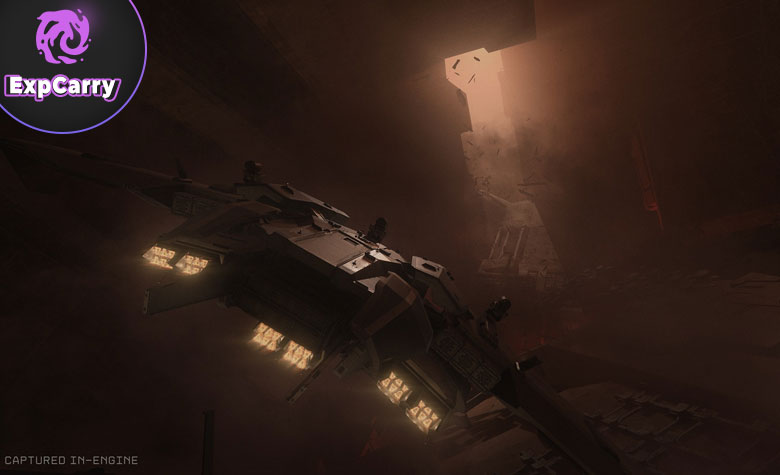
The headline feature of Cycle 6 is modular ships. Players begin with the seed of a vessel and expand it over time by acquiring, evolving, and integrating new modules. These modules are meant to unlock new capabilities, specializations, and strategic choices, giving ship development a more personal route than simple linear upgrading.
This is a strong direction for EVE Frontier because ship identity is the heart of the game. In EVE Online, ships are tools, status symbols, economic objects, and disposable weapons. In EVE Frontier, the ship is closer to a survival body. It is how players move, fight, gather, escape, and endure. Making that ship modular gives the survival loop a clearer backbone.
The system also gives exploration a cleaner reward structure. If deeper space can reveal modules that change what a ship can do, exploration becomes more than travel with extra steps. Players are no longer only searching for resources or territory. They are searching for the next part of their own survival machine.
| Modular ship layer | Expected role in Cycle 6 | Gameplay impact |
|---|---|---|
| Base vessel | Starting foundation for ship growth | Gives every player a progression anchor |
| Discovered modules | Found through exploration and world interaction | Links ship development to risk and discovery |
| Specializations | Modules shape the ship's function and strengths | Supports different survival routes and playstyles |
| Long-term upgrades | Ships evolve instead of staying static | Creates stronger attachment and loss tension |
The risk is balance. If some module paths become clearly superior, the system will collapse into a solved meta. If modules are too weak, players will treat them as decorative junk. The design has to land between those extremes: powerful enough to change decisions, restrained enough to avoid turning every serious player into the same optimized wrecking ball.
Dormant Gates Expand Exploration Beyond the Starter Systems
Dormant Gates are another major Cycle 6 addition. These ancient structures are scattered across starter systems, and players can repair, re-energize, and reactivate them to open routes into new star systems. That turns exploration into a shared infrastructure problem rather than a simple matter of flying into the dark and hoping the dark remembered to contain content.
This system fits EVE Frontier's player-driven identity. A gate is not just a marker. It is a project. Players have to find it, understand it, restore it, power it, and then deal with whatever lies beyond. That gives corporations, groups, and solo survivors a reason to care about map knowledge and route control. In a game built around scarcity and danger, a new route is not just convenience. It is power.
Dormant Gates also help the game avoid one of the most common survival sandbox problems: early space becoming too familiar too quickly. If new systems are tied to repair and activation, the world can open gradually through player action. That creates a better sense of discovery than simply dropping everyone into a giant map where the only real mystery is which resource node respawns first.
Environmental Hazards Make Space Itself the Enemy
Cycle 6 makes space more dangerous through environmental status effects tied to thermal, electromagnetic, and gravitational conditions. These hazards can come from deep space cold, nearby stars, planetary conditions, and other unstable cosmic phenomena. The important part is that survival is no longer defined only by enemies, fuel, and resource scarcity. Traversal itself becomes a threat.
This is one of Sanctuary's better ideas because EVE Frontier needs to feel different from a standard space MMO. The world should not be empty distance between combat encounters. It should be hostile territory. If environmental conditions meaningfully affect navigation, scanning, route planning, and ship survival, then preparation starts to matter. Ship modules start to matter. Bad decisions start to matter, which is basically EVE's natural food source.
| Hazard type | Source examples | Possible gameplay pressure |
|---|---|---|
| Thermal hazards | Stars, planetary conditions, deep space extremes | Can pressure ship survival and route planning |
| Electromagnetic hazards | Cosmic phenomena and unstable space conditions | Can interfere with scanning and system behavior |
| Gravitational hazards | Large celestial bodies or dangerous regions | Can make movement and navigation riskier |
The success of this system depends on visibility and readability. If hazards are clear, dangerous, and counterable, they become meaningful survival design. If they feel random or poorly explained, players will treat them as another invisible tax. EVE players will tolerate pain. They will not tolerate pain that refuses to explain the invoice.
Ferals, Leeches, and Wreck Stalkers Give PvE a Sharper Bite
Cycle 6 also expands PvE through new Feral enemies and updated drone behavior. Ferals are described as resource competitors that can defend key areas and respond more dynamically to player actions. That is a stronger setup than basic hostile NPCs because it connects enemies to the same scarcity loop players are already fighting over.
Leeches are the more specific new threat. They can attach to ships and extract resources directly from their targets. Once filled, they disengage and retreat to hidden locations, where they turn into chrysalises and eventually emerge as Wreck Stalker mini-bosses. That gives PvE a useful lifecycle: annoying at first, dangerous if ignored, and potentially rewarding if hunted down later.
The system creates a chain of decisions. Do you stop to deal with a Leech immediately? Do you let it escape and track the later result? Do you risk fighting a Wreck Stalker for a better payoff? The best PvE in a sandbox is not just "kill thing because marker says so." It creates pressure, choice, and consequences. Leeches sound designed for that, assuming implementation does not turn them into flying tax collectors with teeth.
Cycle 6 Pushes EVE Frontier Further Away From EVE Online
EVE Frontier is tied to the EVE universe, but Cycle 6 makes the split from EVE Online even clearer. This is not a standard spaceship MMO about empire wars, markets, and fleet doctrines inside New Eden. It is a survival sandbox where players are Riders trying to endure a broken, hostile galaxy. The focus is ship construction, loss, scarcity, environmental danger, and player-built systems.
That distinction matters because confusion still surrounds the project. EVE Frontier is not EVE Online 2. It is not a safer EVE. It is not just EVE with blockchain terminology sprinkled on top like cursed seasoning. It is a separate game trying to combine survival design, sandbox systems, player infrastructure, and EVE-style consequence into something harsher and stranger.
Cycle 6 strengthens that identity. Modular ships make the vessel feel more personal. Dormant Gates make expansion feel more physical. Environmental hazards make travel less passive. New enemies make PvE more reactive. The whole update pushes the game toward survival as the main lens, not just space simulation.
The Full Wipe Makes Cycle 6 a Better Entry Point for New Players
The full reset is one of the main reasons Cycle 6 could be a better entry point for players who skipped earlier Founder Access cycles. Starting late in a survival sandbox can feel miserable if established groups already control routes, resources, knowledge, and infrastructure. A wipe cuts that advantage down and lets more players test the new systems from the ground floor.
That does not mean new players will have an easy time. EVE Frontier is still built around danger, scarcity, and loss. The wipe removes old progression advantage, not the learning curve, threat of other players, environmental hazards, or the usual EVE-family tradition of discovering that the tutorial did not prepare you for the real game. Charming, in the same way a locked airlock is charming.
For returning players, the reset is more complicated. Losing Cycle 5 progress may sting, but this is still pre-1.0 Founder Access development. Wipes are part of how the team tests systems at scale. If Cycle 6 changes the core loop through ship modules, routes, hazards, and enemies, then carrying old progression forward would make the test less useful.
Community Reaction Is Still Mostly a Question Mark
The player reaction around Cycle 6 is not something that can be judged fully before the update goes live. The announcement gives players a strong feature list, but the real verdict will depend on how Sanctuary feels after the June 25 reset. For now, the safest read is simple: the wipe makes sense for testing, the new systems sound more coherent than a small content pass, and the actual reception will depend on whether those systems feel readable, dangerous, and worth rebuilding for.
Founder Access players are likely to judge the update through two filters. The first is wipe value. A full reset is easier to accept if the new cycle gives players a better game loop, stronger progression, and more interesting risks. The second is system clarity. Modular ships need clear progression logic. Dormant Gates need understandable goals and rewards. Hazards need visible warnings and useful counters. Leeches and Wreck Stalkers need behavior that feels dangerous without becoming cheap.
The broader skepticism around EVE Frontier also has not disappeared. The game still carries the baggage of being an EVE-universe survival sandbox with blockchain and player-built systems attached, which is enough to make some players cautious before they even reach the login screen. Sanctuary can improve that conversation only by being a better game first. Nobody cares how ambitious the tech stack is if the moment-to-moment survival loop feels like paperwork with thrusters.
Sanctuary Is Really About Player Agency Under Pressure
The strongest theme across Cycle 6 is player agency under pressure. Modular ships give players more control over their vessel's development. Dormant Gates let players open access to new systems. Environmental hazards force route planning and adaptation. Ferals and Leeches create enemies that interact with resources rather than only existing as targets.
That is the right direction for EVE Frontier because the game cannot survive on danger alone. Danger is only interesting when players have tools to answer it. A hostile galaxy with no meaningful adaptation becomes frustration. A hostile galaxy where players can build, modify, route, risk, and recover becomes a sandbox.
Sanctuary seems designed to move EVE Frontier closer to that second version. The update does not just add more things. It adds systems that should connect to each other: ships change because exploration matters, exploration matters because gates and hazards change the map, hazards matter because ship configuration can help manage them, and enemies matter because they compete for resources and create follow-up threats.
The Big Risk: Cycle 6 Needs Systems That Actually Connect
The danger with EVE Frontier Cycle 6 is not lack of ambition. The danger is integration. Modular ships, hazards, gates, enemies, and wipes all sound strong separately, but the update only works if they reinforce each other. A modular ship system means little if modules feel like stat padding. Dormant Gates mean little if new systems do not justify the work. Hazards mean little if players cannot read, avoid, or counter them. New enemies mean little if they become predictable resource drains.
This is where survival sandboxes often fail. They add friction and call it depth. They add punishment and call it consequence. They add grind and call it progression. EVE Frontier has to be sharper than that. Players should lose ships because they made bad calls, took risks, ignored warnings, or got outplayed. They should not lose ships because the game buried key information under vague systems and then acted smug about it.
Cycle 6 is promising because its parts point toward a more coherent game. But promise is cheap. Execution is the expensive part, and the genre has a landfill full of ambitious survival games that understood danger better than fun.
EVE Frontier Cycle 6 Features That Matter Most
Cycle 6 has several headline systems, but not all of them matter for the same reason. Some are about progression, some are about map expansion, some are about survival pressure, and some are about PvE behavior. The update's real strength is the way these categories appear to support one another.
| Feature | Core function | Best-case impact |
|---|---|---|
| Full wipe | Resets Cycle 5 progress | Creates a cleaner starting point for testing and new players |
| Modular ships | Lets vessels evolve through acquired modules | Makes ship progression more personal and strategic |
| Dormant Gates | Unlock routes to new systems after repair and activation | Turns exploration into player-driven expansion |
| Environmental hazards | Adds thermal, electromagnetic, and gravitational threats | Makes travel and route planning part of survival |
| Ferals | Compete for resources and defend key areas | Makes PvE more reactive and connected to scarcity |
| Leeches | Attach to ships and drain resources | Creates immediate pressure and follow-up threats |
| Wreck Stalkers | Mini-bosses emerging from the Leech lifecycle | Turns a resource loss event into a possible hunt |
This is the table that matters because it shows the design pattern. Cycle 6 is less about one giant feature and more about a set of systems that make the galaxy less passive. The ship changes. The map changes. The environment pushes back. PvE pushes back. The reset gives everyone a reason to test those changes without old progression distorting the picture.
Player Reaction Will Depend on Wipe Value and System Clarity
Cycle 6 has a strong pitch, but player reaction will probably depend on two things: whether the wipe feels worth it, and whether the new systems are readable. Founder Access players know wipes are part of development, but that does not make lost progress emotionally weightless. If Sanctuary gives them a clearly better game loop, the reset becomes easier to accept. If the new systems feel half-formed, the wipe will feel like ritualized inconvenience.
System clarity is just as important. Modular ships need clear progression logic. Dormant Gates need clear goals and rewards. Hazards need visible warnings and useful counters. Leeches and Wreck Stalkers need behavior that feels dangerous without becoming cheap. Players can handle harsh systems when they understand them. They become much less patient when the game turns confusion into a feature.
This is especially true because EVE Frontier already has a niche pitch. It is not trying to be a broad comfort MMO. It is aiming at players who want risk, systems, construction, scarcity, and player-shaped outcomes. That audience is willing to suffer. It just wants the suffering to be interesting, which is the most EVE sentence possible.
Cycle 6 Could Become the First Real Test of EVE Frontier's Core Loop
Earlier cycles helped EVE Frontier test pieces of its survival sandbox, but Cycle 6 looks like the first cycle where several major pillars arrive together. Ship development, exploration expansion, environmental danger, PvE resource pressure, and a full reset all land in the same update. That makes Sanctuary more important than a normal content drop.
If it works, Cycle 6 could give EVE Frontier a clearer identity: a survival sandbox where the ship is your build, the map is something players reopen, space itself is a threat, and enemies interact with the same scarce economy as everyone else. That is a stronger pitch than "EVE, but survival," which was always too vague to carry the project alone.
If it fails, the problems will also become obvious. Weak module progression, unreadable hazards, dull new systems, or PvE that feels more irritating than reactive would expose the gap between concept and execution. That is not necessarily bad for Founder Access. Testing exists to find those failures. Still, Cycle 6 looks like the point where EVE Frontier has to start proving that its hostile, player-shaped galaxy can produce compelling sessions instead of just impressive design documents.
Sanctuary Gives EVE Frontier Its Clearest Test Yet
EVE Frontier Cycle 6: Sanctuary is one of the most important updates the game has shown so far because it targets the core experience instead of just adding surface content. The June 25 reset gives players a fresh start, while modular ships, Dormant Gates, environmental hazards, Ferals, Leeches, and Wreck Stalkers all push the sandbox toward deeper risk and stronger player agency.
The update's best idea is that survival should come from connected pressures. Your ship matters because modules change what it can do. Exploration matters because gates can open new systems. Space matters because hazards can damage or disrupt you. PvE matters because enemies can compete for resources and create follow-up threats. That is the kind of system web EVE Frontier needs if it wants to become more than a harsh curiosity attached to a famous name.
The cautious verdict is simple: Cycle 6 sounds like the right update, but it still has to survive contact with players. Sanctuary has the ingredients for a stronger EVE Frontier, especially for Founder Access players looking for a clean entry point after the wipe. The question is whether the new systems feel dangerous, readable, and worth rebuilding for. If they do, Cycle 6 could be the moment EVE Frontier starts looking like a real survival sandbox instead of another ambitious space experiment floating around with a very expensive name tag.