




Delta Force and Arena Breakout: Infinite get compared constantly because both are free, both pull from the extraction shooter formula, and both come out of the Tencent ecosystem. Spend a few hours in each and it becomes clear they are not competing for the same player. One is built for someone who wants 64-player combined arms chaos. The other is built for someone who wants to spend an afternoon tuning recoil patterns one attachment at a time before risking everything in a raid. Here is where each game wins, where it loses, and which kind of player walks away satisfied.
Scale: Delta Force Has No Competition Here
If raw battlefield scale is the priority, Delta Force wins without contest. Havoc Warfare puts up to 64 players into 32v32 matches across maps built around tanks, helicopters, jets, and boats, and the best moments draw direct comparisons to peak Battlefield 3 in terms of combined arms chaos. Arena Breakout: Infinite has nothing close to this. Its identity is built entirely around small three-person squads running PvPvE extraction, so the absolute ceiling for a firefight in ABI is a handful of squads colliding over the same loot room, not dozens of players contesting a military compound with vehicle support. Delta Force also carries a third mode beyond Warfare and Hazard Operations: the Black Hawk Down co-op campaign, a 16-mission recreation of the 1993 Mogadishu operation built in Unreal Engine 5 with licensed footage from Ridley Scott's film. Critics at IGN called Delta Force competent at both large-scale PvP and extraction, while Eurogamer praised Warfare and Operations as meticulously designed despite calling the Black Hawk Down campaign atrocious for solo players. Arena Breakout never promised large-scale warfare, so its loss here is not a flaw exactly, but a player coming in hoping for anything resembling Battlefield-style mayhem will find it only in Delta Force.
Progression in Delta Force also runs across all modes through a shared system ranking players from Private to General, with cross-platform save covering PC, PS5, Xbox Series X/S, and mobile. The game launched globally on PC in December 2024, came to iOS and Android in April 2025, and hit consoles in August 2025. Its all-time Steam peak hit 247,028 concurrent players in September 2025, and daily peaks through June 2026 remain around 130,000. That active population matters specifically in Warfare mode, where filling 64-player lobbies depends entirely on healthy concurrent numbers.
Gunsmith: Arena Breakout Wins on Depth
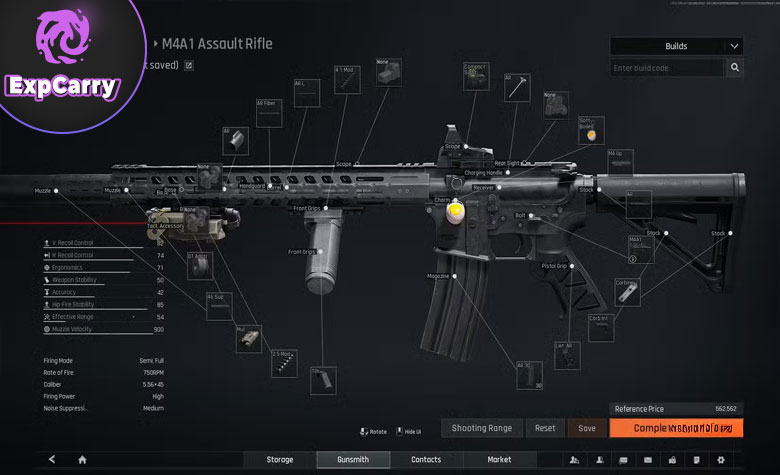
Flip the comparison to weapon customization and Arena Breakout takes the win just as decisively. The Gunsmith system covers more than 75 weapons and over 900 individual mods across more than 20 attachment slots, and it enforces real firearm logic rather than a flat stat menu. Certain optics require a compatible mount before they can be installed, so building toward a specific setup means working through prerequisite parts in the correct order, the same way a real scope needs a base before mounting. Stats that change with each part are visible and specific: vertical recoil, horizontal recoil, ergonomics, muzzle velocity, and more. The in-game firing range lets players test any build before taking it into a raid where losing that gun means losing it permanently. By Season 3 in September 2025, the total weapon roster had grown to 72 guns with 921 available attachments, and the Season 5 update added the FAMAS and T192 on top of that.
Delta Force has its own attachment system, and its weapon feel has been praised specifically for how well the guns handle mechanically. But the system was built to serve a faster, more accessible game, and it does not come close to Gunsmith's prerequisite-based depth or raw attachment count. That is not a flaw in Delta Force so much as a different set of design goals: a game built around 64-player vehicle battles was never going to simultaneously offer the deepest gunsmithing system in the genre. The practical result is that a player who finds genuine value in min-maxing recoil patterns attachment by attachment, or building a dedicated night-raid kit around NV-capable optics, gets a system in Arena Breakout that Delta Force has no real answer for.
Pace and Stakes: Two Different Kinds of Tension
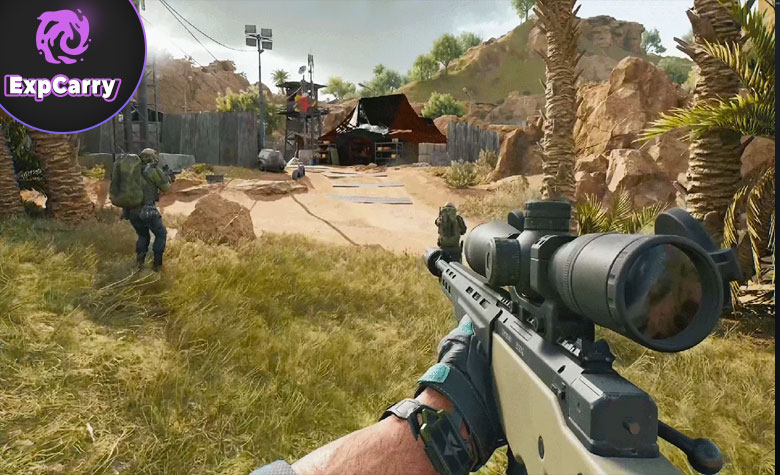
The two games disagree on what should make a fight feel tense, and that disagreement is where each game's personality actually lives. Arena Breakout builds tension out of slowness. Time to kill is forgiving enough that a single hit rarely ends a fight immediately, so every engagement becomes a question of positioning, peeking angles, and knowing exactly what your ammo tier can punch through before committing to a push. Higher-tier armor creates a real, lasting advantage across the full length of a raid rather than just the next exchange. Death means permanent loss of everything you brought in, and that weight shapes every decision from the moment you load in.
Delta Force's Hazard Operations runs the opposite approach. Armor functions as a shield that depletes and breaks before bullets reach the body underneath, there is no food or water management pulling attention away from combat, and fights move faster with players committing to pushes with noticeably less hesitation than Arena Breakout trains into its players. The Delta Force player base has pushed back on the armor system specifically, arguing that gear tiers feel less consequential once armor starts degrading after repairs, which is a real mark against it if persistent gear value is what you are looking for. Neither pace is simply better, but each one rewards a specific kind of player and punishes the wrong one. Drop an Arena Breakout veteran into Delta Force's faster Hazard Operations and their cautious instincts will get them killed by players who have learned to push first. Drop a Delta Force player into Arena Breakout's deliberate pace and they will likely die wondering why their gear did not protect them the way it does at home.
System Requirements and Storage
The comparison stops following the obvious pattern here. You would expect the slower, more tactical game to have the lighter install and the faster, vehicle-heavy game to demand the beefier PC. It is backwards.
| Spec | Arena Breakout: Infinite | Delta Force |
| Min GPU | GTX 960 / RX 560 | GTX 660 / Radeon HD 7870 |
| Rec GPU | RTX 2080 | GTX 1060 / RX 5500 XT |
| Min RAM | 12 GB | 8 GB |
| Rec RAM | 32 GB | 16 GB |
| Storage | ~100 GB (recommended) | ~60 GB |
Arena Breakout needs up to 100 GB of storage as the developer recommends given how much the game has grown through seasonal updates, and its recommended GPU tier climbs to an RTX 2080 for a comfortable 1080p experience. Delta Force, despite throwing 64 players and full vehicle combat onto the same map, sits as low as a GTX 660 at minimum and only asks for a GTX 1060-class card at recommended. If available disk space or an older PC is the actual deciding factor, Delta Force wins this category in addition to the scale argument.
Anti-Cheat: Same Engine, Different Track Record

Both games run Tencent's Anti-Cheat Expert (ACE), a kernel-level system with behavioral analysis and machine learning detection built in. Neither game has a uniquely stronger or weaker foundation than the other at the technical level because they share the same base technology. Where they differ is in how each handled rollout and how transparent they have been since.
Delta Force drew significant backlash at its December 2024 PC launch for installing ACE without clearly disclosing it upfront. Players reported ACE's services remaining active on their systems after uninstalling the game, specifically causing conflicts with Easy Anti-Cheat and preventing games like Fortnite, Apex, and Rust from launching until ACE services were manually deleted via command line. The developers acknowledged the uninstaller failure as a bug and issued a fix on December 6, 2024, but the controversy hit Steam reviews hard during the game's opening week.
Arena Breakout built a more visible enforcement layer on top of the same ACE foundation. The Player Inspector program, launched in January 2026, allows vetted community members to review flagged match footage, with over 24,765 players participating and 1,617,674 cases reviewed in a single season. Ban waves are published publicly, including breakdowns of standard bans, 10-year bans, and hardware-plus-IP bans, alongside Koen currency restitution for players proven to have lost gear to cheaters. The May 2026 enforcement window alone produced 5,810 bans and distributed over 20.41 billion Koen in compensation to 18,925 affected players. Cheating in Operations remains a persistent problem on high-loot maps, but the enforcement cadence is documented and regular. If transparency about how bans work matters to you as a player, Arena Breakout has built a more visible system around the same underlying tech.
Final Thoughts
Neither game wins this comparison outright, and that is the point worth taking away. Delta Force is the better choice if you want vehicle combat, 64-player battles, a game that runs on hardware from a decade ago, and three distinct modes under one free install. Arena Breakout is the better choice if Gunsmith's prerequisite-based customization, gear that feels consequential for a full raid, and a slower, more deliberate pace around permanent loss mechanics are what you are actually looking for. The anti-cheat situation is a technical draw since both games run the same engine, but Arena Breakout's public enforcement record and Inspector program give it a transparency edge. The question to answer honestly before installing either one is simple: do you want to feel like you are commanding part of an army, or do you want to feel like every screw on your rifle matters before you risk losing it forever.