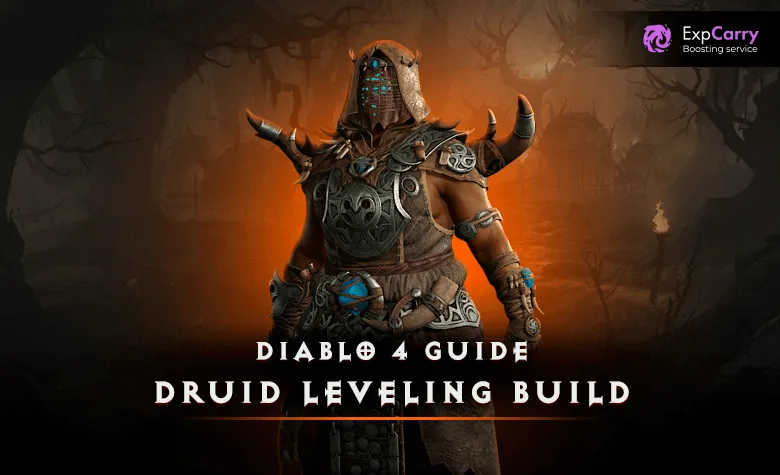
The Druid in Diablo 4 can switch between human, Werewolf, and Werebear forms, combine physical attacks with nature magic, and survive difficult encounters through barriers, healing, and defensive bonuses. However, successful leveling depends on choosing skills that work together. This guide uses Shred, a mobile Werewolf Core skill, as the foundation of a complete progression path from character creation to level 70 and the first stages of the endgame.
The guide reflects Season 15, Season of Hell's Legacy, and patch 3.2.3. It covers skill allocation, Spirit management, Spirit Boons, attributes, Legendary Aspects, equipment, tempering, gems, runes, Paragon boards, glyphs, and the transition to an endgame build. The core leveling setup does not require a Unique item. Features tied to Vessel of Hatred, Lord of Hatred, or the Seasonal Realm are identified separately.
Short answer: Start with Claw to generate Spirit, unlock Shred as your main damage skill, and support it with Earthen Bulwark, Blood Howl, Wolves, and Cyclone Armor. Prioritize weapon damage, Willpower, Shred ranks, Critical Strike Chance, and reliable Spirit generation. Unlock Spirit Boons at level 15, reach level 70, then develop your Paragon boards and glyphs before switching to a gear-dependent endgame variation.
Diablo 4 Druid Leveling Build Overview
Shred Druid is a practical leveling choice because its attacks move you toward enemies while dealing damage. Instead of standing still to cast a long sequence of abilities, you can advance through packs, eliminate priority targets, and continue moving. Defensive skills cover the moments when melee combat becomes dangerous, while Claw and Spirit-related bonuses prevent your main attack from becoming unusable.
The current character level cap is 70, and the older World Tier and level-60 progression advice no longer describes the full game. Blizzard's leveling and systems overview explains the expanded level cap, revised skill trees, and additional Torment difficulties. Your objective while leveling is to kill enemies consistently, not to force the highest available difficulty.
| Stage | Main priority | Expected result |
|---|---|---|
| Levels 1–14 | Unlock Claw, Shred, and your first defensive skills. | Establish a repeatable Spirit-building and Spirit-spending rotation. |
| Levels 15–29 | Unlock Spirit Boons, improve Shred, and complete the six-skill setup. | Better Spirit sustain, movement, healing, and pack clearing. |
| Levels 30–49 | Strengthen skill upgrades, gear affixes, and Legendary Aspects. | More consistent damage against elites and bosses. |
| Levels 50–70 | Optimize Spirit generation, Critical Strike Chance, defenses, and equipment. | A stable build ready for endgame progression. |
| Level 70+ | Develop Paragon boards, upgrade glyphs in The Pit, and acquire endgame items. | A transition toward a specialized Shred or Storm Shred build. |
Druid Attributes, Shapeshifting Forms, and Spirit
The Druid benefits from all four primary attributes, but they do not have equal value. Willpower is the main offensive attribute, while the remaining stats help with survival, critical hits, and resource management. Do not copy old launch-era tables that assign fixed bonuses to every stat point: Diablo 4's attribute scaling and itemization have changed substantially.
Which Stats Should a Leveling Druid Prioritize?
During the campaign and early leveling, weapon damage and useful skill bonuses often matter more than a small difference in primary attributes. Once your equipment becomes more stable, prioritize the attributes and affixes that directly support Shred.
- Willpower: Your main attribute for increasing Druid skill damage. Look for it on weapons, armor, and other eligible equipment.
- Dexterity: Supports Critical Strike Chance and avoidance. Critical hits become more valuable as Shred's Spirit recovery and attack-speed effects develop.
- Intelligence: Helps with elemental resistances and resource-related bonuses. It is useful, but not your main damage stat.
- Strength: Contributes to Armor and physical durability. Treat it as a supporting defensive stat rather than your main offensive target.
For practical gearing, follow this general priority: higher weapon damage, Willpower, additional Shred ranks, Critical Strike Chance, Attack Speed, Spirit Generation, Maximum Life, Armor, and resistances. Against difficult bosses, fixing a resistance or survivability problem can be more valuable than gaining a small amount of damage.
How Shapeshifting and Spirit Work
Claw is a Basic skill that generates Spirit when it hits enemies. Shred is a Core skill that spends Spirit; it is not a free generator. Its three-hit sequence includes powerful finishing damage, and its movement makes it effective for clearing groups. If Spirit runs low, return briefly to Claw rather than repeatedly attempting to cast Shred with an empty resource pool.
Each form provides different advantages. Werewolf form supports movement and attack speed, Werebear form emphasizes durability, and human form supports resource recovery and cooldown efficiency. Shred puts you into Werewolf form automatically, so you do not need to select a separate shapeshift button. Defensive skills may change your form as part of their normal use.
Spirit does not work exactly like the Barbarian's Fury. The Druid normally relies on attacks, skills, equipment, and class bonuses to restore it. After unlocking Gift of the Stag, however, you gain a steady source of Spirit regeneration. This makes the class significantly smoother than it feels during the first few levels.
Best Druid Leveling Skills and Skill Bar
The recommended setup uses one Basic attack, one Core damage skill, and four supporting abilities. It requires no particular Unique item and gives you options for normal packs, elites, and boss encounters. When comparing different Diablo 4 character builds, distinguish leveling setups from endgame versions that assume several rare items are already equipped.
| Skill | Role | How to use it |
|---|---|---|
| Claw | Basic skill and Spirit generator | Attack whenever you need Spirit or want to maintain its supporting bonuses. |
| Shred | Main Core damage skill | Dash between targets and complete its three-hit attack sequence. |
| Earthen Bulwark | Barrier and emergency defense | Use before heavy incoming damage or when you need defensive protection. |
| Blood Howl | Healing and utility | Recover health and take advantage of its selected Spirit or defensive upgrade. |
| Cyclone Armor | Resistance and crowd control | Benefit from its passive defense; activate it to push nearby enemies away. |
| Wolves | Companion damage and support | Direct the active companion attack toward elites and bosses. |
Wolves do not provide a general travel-speed bonus simply by being equipped. Their value comes from companion effects and the damage or buffs granted by their selected upgrades. Similarly, Earthquake is not a standard Druid active skill to place on this bar; earthquake effects belong to particular items or mechanics rather than the proposed leveling rotation.
Skill Point Order: Levels 1–14
Your first objective is to unlock Shred quickly while keeping enough Spirit to use it. The sequence below follows skill-point priority; bonus points earned from account or seasonal progression can move individual purchases earlier. Always select a required preceding upgrade before taking a deeper modifier.
- Put your first point into Claw to establish Spirit generation.
- Unlock Shred as soon as the Core skill becomes available.
- Add another rank to Shred for early damage.
- Unlock Earthen Bulwark so you have protection in melee range.
- Take the Ferocity upgrade associated with Claw.
- Work toward Shred's Berserking and Spirit-related support upgrades, following the prerequisite nodes in the current skill tree.
- Improve Earthen Bulwark with its Fortify, healing, or Unstoppable options as they become available.
- Unlock Wolves and Blood Howl when their skill groups become accessible.
- Spend the next offensive points on additional Shred ranks before spreading points across several unrelated damage skills.
Do not worry if your early skill bar is incomplete. Until all six abilities are available, Claw, Shred, and Earthen Bulwark already form a functional combination. Keep a newly found weapon with meaningfully higher damage even if its secondary stats are imperfect.
Skill Point Order: Levels 15–29
This is the point where the build begins to feel much faster. Complete the Druid class quest for Spirit Boons, obtain Gift of the Stag, and add Cyclone Armor to your active setup. Prioritize Shred's damaging ranks and its resource-supporting upgrades, then improve Blood Howl and Earthen Bulwark.
For pack clearing, the Roundhouse variation is a practical Shred choice because it improves the reach of the combo's finishing strike. Alternative skill variations, including Storm Shred, lead toward different damage types and gear requirements. Choose one available variation in its branch rather than assuming every mutually exclusive upgrade can be active simultaneously. Some additional options depend on expansion ownership.
Skill Point Order: Levels 30–49
By this stage, all six skills should be available. Continue prioritizing Shred and the upgrades that keep it usable. Improve the defensive and utility skills you activate most often, then invest in the passive or supporting nodes available in your version of the skill tree that strengthen Werewolf damage, Critical Strikes, Spirit Generation, and survival.
A useful rule is to solve problems in order. If enemies die slowly, increase Shred damage and weapon quality. If you spend more time using Claw than Shred, improve Spirit recovery. If you die to elite attacks, strengthen Earthen Bulwark, Maximum Life, Armor, or the resistance relevant to the encounter. Avoid buying every possible offensive node while leaving defenses underdeveloped.
Skill Point Order: Levels 50–70
Finish the important Shred ranks and chosen branch upgrades, then spend remaining points on effective supporting skills and compatible passive bonuses. The current system offers additional skill points through the applicable account and seasonal progression systems, so two characters at the same level may not have identical totals. Use extra points to complete your priority skills rather than changing the basic rotation.
At level 70, stop treating the character as a leveling build. You can keep the same six active skills while building Paragon, but your next major increases in power will come from glyphs, stronger gear, useful Legendary effects, and eventually items that support a specialized endgame version.
Explore services related to this guide, selected from our Diablo IV catalog.
View All Diablo IV Services


Unlocking Druid Spirit Boons at Level 15
Spirit Boons are the Druid's class mechanic and one of the most important leveling milestones. At level 15, begin the quest Druid: Spirits of the Lost Grove, clear the Túr Dúlra Stronghold in Scosglen, and complete the associated objectives to access the animal spirits. Collect and turn in the required offerings as you play.
You can initially select one boon from each animal spirit. Once the system is fully unlocked, Spirit Bonding lets you select a second boon from one chosen animal. This creates five active boon choices in total.
| Animal spirit | Boon | Why it matters |
|---|---|---|
| Deer | Gift of the Stag | Adds 30 Maximum Spirit and restores 5 Spirit per second, directly improving Shred uptime. |
| Eagle | Scythe Talons | Improves Critical Strike Chance and Lucky Hit Chance for damage and supporting effects. |
| Wolf | Energize | Provides a Lucky Hit chance to restore Spirit when dealing damage. |
| Snake | Masochistic | Critical Strikes from Shapeshifting skills can grant Berserking, increasing their damage. |
| Spirit Bond | Swooping Attacks (Eagle) | Adds Attack Speed as your fifth boon; choose a defensive alternative if needed. |
Unlock Gift of the Stag first. The combination of increased maximum Spirit and passive regeneration makes the largest immediate difference to this build. Follow with Energize and your critical-hit bonuses. If your attacks already feel fast enough but survival is inconsistent, use the flexible fifth boon for a suitable defensive benefit instead.
Shred Druid Rotation, Boss Strategy, and Survival
The build works best when you maintain movement without interrupting Shred's main damage sequence. Basic attacks are a resource tool, not your primary damage source once Spirit recovery becomes reliable. Defensive cooldowns should be used deliberately rather than all at once.
- Enter a group with enough Spirit for several Shred attacks. Use Claw first if your resource pool is empty.
- Use Shred to reach the most dangerous enemy and continue the combo through nearby targets.
- Finish Shred's attack sequence to benefit from its stronger third strike, especially with Roundhouse selected.
- Use Earthen Bulwark when a dangerous attack is approaching or you need an emergency barrier.
- Activate Blood Howl when you need healing or the benefit of its selected upgrade.
- Use Cyclone Armor's active knockback if enemies surround you, and direct Wolves toward durable enemies.
- Return to Claw briefly whenever Spirit recovery cannot keep up with Shred's cost.
Against bosses, do not chase damage while standing in large telegraphed attacks. Save Earthen Bulwark for dangerous mechanics, keep moving between Shred sequences, and use Wolves' active command when the boss is vulnerable or stationary. A slower kill with uninterrupted attacks is usually better than repeated deaths.
Trample is a valid alternative if you prefer another movement or control tool, but it operates through its own skill and cooldown mechanics. It is not a Spirit-costing substitute for Shred. You can replace a support slot after deciding which defensive effect you can safely give up.
Best Druid Gear and Stat Priority While Leveling
Equipment upgrades should support three goals: kill enemies quickly, keep enough Spirit for Shred, and survive close-range encounters. Early in the game, a weapon's damage is particularly important. Later, Shred ranks, critical-hit effects, resource bonuses, and damage multipliers become increasingly valuable.
| Item slot | Recommended affixes |
|---|---|
| Weapon | High weapon damage, Willpower, Physical Damage multiplier, Critical Strike Damage multiplier, Maximum Life. |
| Helm | Willpower, Maximum Life, Armor, Spirit Generation. |
| Chest armor | Willpower, Maximum Life, Defensive Skill ranks, Spirit Generation. |
| Gloves | Shred ranks, Critical Strike Chance, Attack Speed, damage multipliers. |
| Pants | Willpower, Maximum Life, Armor, Spirit Generation. |
| Boots | Movement Speed, Willpower, Maximum Life, Spirit Generation. |
| Amulet | Movement Speed, Core/Werewolf/Shapeshifting Skill ranks, Critical Strike bonuses. |
| Rings | Critical Strike Chance, Attack Speed, Spirit Generation, Critical Strike Damage multiplier. |
For a physical Roundhouse setup, physical damage bonuses are appropriate. If you later switch to Storm Shred, update the relevant damage bonuses to match its Lightning and Storm interactions instead of keeping every physical-damage modifier. Maintain enough Armor and elemental resistance for your difficulty level; more damage does not compensate for being killed by ordinary enemy attacks.
Legendary Aspects for Shred Druid
Legendary Aspects improve the build without forcing you to hunt a specific Unique item. Salvaging Legendary equipment can update the relevant power in your Codex of Power, allowing you to use that effect on suitable gear. Focus on effects that solve a problem you actually experience.
- Crushing Aspect: A strong damage option while Fortified. It pairs well with defensive skills that help maintain Fortify.
- Aspect of the Followed Path: Improves attacks used in their base shapeshift form, making it relevant to Werewolf-focused Shred.
- Accelerating Aspect: Rewards Core Skill critical hits with Attack Speed, allowing you to complete Shred sequences more quickly.
- Vigorous Aspect: Adds protection while using supported shapeshifting forms.
- Aspect of Coagulation: Improves Fortify-related defense and survivability.
- Balanced Aspect: Increases Maximum Spirit and improves resource generation after using a cooldown skill.
- Vulpine's Aspect: Supports resource recovery while a Barrier is active, making Earthen Bulwark more valuable.
- Ghostwalker Aspect: Provides movement utility around periods of Unstoppable, helping with dangerous encounters and travel.
Do not use an old description of Shifter's Aspect without checking it. In Season 15, its effect was changed to provide temporary damage reduction after shapeshifting rather than simply increasing the old form bonuses. If your damage is already sufficient, resource and defensive Aspects often produce a smoother leveling experience than an additional offensive effect.
Tempering, Crafting, and Uniques
Use the Blacksmith to apply relevant Tempering bonuses as your equipment improves. Useful targets include Worldly Destruction for Critical Strike Chance, Druid Finesse for Werewolf damage, Worldly Endurance for Maximum Life or Armor, Natural Motion for Movement Speed, and Worldly Stability for Resource Generation. The allowed item slots depend on the manual category.
Do not spend all your materials perfecting temporary low-level items. Replace clearly outdated weapons, imprint helpful Aspects onto equipment you expect to keep for a while, and save expensive rerolls for more durable upgrades. Reserve enough gold for equipment crafting, imprinting, and later endgame improvements.
Waxing Gibbous is a valuable Shred-related Unique because it strengthens the skill and can add extra attacks. It is helpful but not required to level. If you own Lord of Hatred, the craftable Insight runeword item is another option for resource-heavy leveling; its crafting method is explained below. Do not delay progression while waiting for either item.
Best Gems and Runes for Druid Leveling
Socket choices should reinforce the damage type and defensive needs of your current build. Runes provide additional effects when the relevant expansion systems are available, but they do not replace the need for good gear, Spirit Boons, or a working skill rotation.
Recommended Gems
For a standard physical Shred setup, use the following baseline. Gem quality should improve naturally as crafting materials become available; early on, filling a useful socket is more important than chasing a perfect gem.
- Weapon — Skull: Supports Physical Damage multipliers for standard Shred.
- Armor — Sapphire: Adds Willpower, your main offensive attribute.
- Jewelry — Diamond: A dependable all-resistance option, especially on the Eternal Realm or before obtaining useful seasonal alternatives.
- Storm Shred alternative — Topaz in the weapon: Use when your chosen skill variation deals Lightning damage and your other bonuses support that conversion.
Two-Rune Runewords: Ritual and Invocation
The runeword system introduced with Vessel of Hatred uses a pair of runes placed in two sockets on the same item. A Ritual Rune generates Offering when its condition is met, while an Invocation Rune consumes that Offering to trigger an effect. You can maintain up to two such runeword pairs. Blizzard's official explanation of Ritual and Invocation runes describes the basic system.
- Moni + Ceh: Casting Mobility skills generates Offering that can summon Spirit Wolves. This provides additional support during mobile combat.
- Poc + Gar: Spending a portion of your maximum resource generates Offering for a Critical Strike Chance bonus. It works naturally with frequent Shred casts.
- Moni + Ber: An optional later-game pairing for builds that can activate Moni consistently and benefit from the associated offensive effect.
- Poc + Que: A possible later-game defensive pairing that can trigger Earthen Bulwark. If it supplies the protection you need reliably, you may reconsider the skill's place on your active bar.
For straightforward leveling, start with Moni + Ceh and Poc + Gar if the required runes and sockets are available. The later-game combinations are alternatives, not extra pairs to equip beyond the system limit. Base-game-only players should skip this section rather than building their character around unavailable runes.
Horadric Cube Runeword Items and Insight
Lord of Hatred also features runeword items created through the Horadric Cube. This is a separate crafting process from placing one Ritual Rune and one Invocation Rune into an item. It requires access to the expansion's Cube and the correct base item and recipe.
For Shred leveling, Insight is a useful example: combine a suitable Common staff or polearm with Ral + Tir + Tal + Sol in the Horadric Cube. The resulting item offers valuable offensive and resource-related properties. These four runes form a Cube recipe; they are not a four-rune socket combination. Check the item's level requirement and compare its actual damage with your existing weapon before equipping it.
Season 15 Powers, Talismans, and Mercenaries
Season of Hell's Legacy introduces seasonal mechanics that can help leveling, but they should be treated as optional additions to the permanent Shred build. Blizzard's Season of Hell's Legacy overview explains Prime Evil powers, Waking Nightmares, Soul Splinters, and the season's progression systems. These temporary features are not part of the Eternal Realm's standard build.
Prime Evil Powers and Soul Splinters
Follow the seasonal questline to unlock the Prime Evil mechanics and their associated progression. Choose the activity track that matches the content you enjoy farming, then upgrade the available power as you complete objectives. These bonuses supplement Shred's existing rotation rather than replacing its main damage skill.
Season 15 Soul Splinters are special jewelry gems with significant tradeoffs. Splinter of Anguish can improve critical hits and attack speed but increases Spirit costs, making it risky for a Shred Druid with weak resource recovery. Splinter of Lies improves certain farming rewards and experience but leaves you permanently Weakened and Vulnerable. Splinter of the Black Soulstone offers stacking damage at the cost of taking more damage. Choose these effects according to your survivability and Spirit sustain, particularly in Hardcore mode.
Lord of Hatred Talisman Priorities
If you own Lord of Hatred, you can use a Talisman assembled from a Seal and Charms. During leveling, prefer useful individual bonuses over forcing an incomplete set. Look for Shapeshifting, Core, or Werewolf Skill ranks, Critical Strike Chance, Willpower or other useful attributes, Maximum Life, and Armor.
More specialized Druid sets become important in the endgame. Rush of the Red Wolf Moon and Storm Shepherd's Call can support different Shred variants, but the exact choice depends on the complete build. Neither is necessary for the level 1–70 route.
Best Mercenaries for Shred Druid
With the relevant expansion access, mercenaries add another source of damage, defense, and utility. Varyana is a strong main mercenary for an aggressive Shred character because her skill options can improve attack speed. Raheir is a useful reinforcement choice for additional protection. If you prefer exploration convenience, Subo is another practical option.
Progress mercenary Rapport as you play, but do not confuse companion and mercenary systems. Your Wolves skill occupies a Druid skill slot; hired mercenaries are managed separately and do not turn Wolves into a movement-speed ability.
Fast Druid Leveling Route from 1 to 70
Efficient leveling is a combination of build quality and choosing activities that you can complete quickly. A high difficulty setting may show better theoretical rewards, but it becomes inefficient if every elite requires a lengthy fight. Begin on Normal or Hard if necessary, then increase difficulty once Shred consistently clears packs without repeated Spirit shortages or deaths.
- Levels 1–14: Complete the campaign if this is your first character, or use available open-world activities on a character with campaign-skip access. Prioritize unlocking Shred and improving your weapon.
- At level 15: Complete the Druid class quest and unlock Gift of the Stag. This is more important than grinding several extra levels without your class mechanic.
- Levels 15–29: Rotate between Helltides, Tree of Whispers objectives, suitable dungeons, and seasonal objectives that offer useful equipment and experience.
- Levels 30–49: Continue fast-clearing activities and collect Aspects or crafting materials that directly improve Shred. Replace weak weapons promptly.
- Levels 50–70: Prioritize reliable pack clearing, finish your core skill upgrades, stabilize defenses, and prepare your first endgame equipment set.
- At level 70: Begin systematic Paragon progression and glyph upgrades. Move into higher Torment difficulties when your build can handle them efficiently.
Players with Lord of Hatred can also use War Plans and other expansion activities once unlocked. Season 15 characters can follow Waking Nightmare objectives when the rewards fit their progression. These options expand your leveling route but do not make Helltides, Whispers, and ordinary dungeon play obsolete.
For repeated characters, the time spent on Diablo 4 leveling is best judged by actual experience gained per session rather than the nominal difficulty selected. If a stronger difficulty causes frequent deaths or long interruptions, reduce it and return after upgrading your weapon and resource recovery.
Paragon Boards and Glyphs After Level 70
Paragon becomes the main long-term progression system after reaching level 70. Build your boards around useful Legendary Nodes, nearby attribute clusters, and glyph sockets rather than spending points randomly. You can use up to five connected boards, including the Starter Board. The exact route depends on your gear, available Paragon points, and whether you remain physical Shred or convert to Storm Shred.
Recommended Paragon Boards
Start with the Starter Board and work toward a useful glyph socket. From there, prioritize the boards that solve your current build's largest weaknesses. The following boards form a reasonable progression pool for Shred, although an optimized endgame layout may change their order.
- Starter Board: Build an efficient route through attributes and a glyph socket. Do not spend excessive points on low-value detours.
- Lust for Carnage: A useful early target for Spirit-related Werewolf support, particularly if Shred frequently exhausts your resource pool.
- Ancestral Guidance: Helps develop the Core Skill and Spirit-spending side of the build.
- Thunderstruck: Becomes especially relevant when moving toward Lightning and Storm interactions.
- Constricting Tendrils: Offers another route for damage and utility synergies depending on your chosen setup.
Connect the boards so that you can reach meaningful Legendary Nodes and glyph sockets without wasting large numbers of Paragon points. A physical leveling build and an optimized Storm Shred endgame build will not necessarily use the same connection order or board rotations.
Best Glyphs for Shred Druid
Five useful glyphs to consider are Keeper, Earth and Sky, Fang and Claw, Spirit, and Fulminate. Their relative value depends on your damage type and how many relevant attribute nodes fall within their socket radius. Fang and Claw and Spirit are logical early considerations for a shapeshifting and resource-focused character, while Lightning and Nature Magic interactions become more important with Storm Shred.
Glyphs are upgraded through The Pit, not by spending experience in Nightmare Dungeons. Rare glyphs begin with a smaller radius, expand at upgrade milestones, and can develop into Legendary glyphs as you invest in them. Prioritize a few glyphs that are actually socketed in your boards instead of dividing upgrades across many unused options.
When planning Paragon glyph progression, inspect each glyph's required attributes and the nodes within its current radius before committing to a board path. A theoretically powerful glyph can underperform if its nearby stat requirements are not met.
Transitioning from Leveling Shred to Endgame Storm Shred
Reaching level 70 does not mean you must immediately replace the leveling build. A well-equipped physical Shred Druid can continue farming initial Paragon points, gear, and glyph upgrades. Switch to a specialized endgame setup when you have the items and supporting effects that make its mechanics reliable.
Storm Shred changes the skill's damage interactions and opens different ways to scale Lightning and Storm effects. This requires more than selecting a new skill variation. You must also adjust weapon gems, damage modifiers, Legendary Aspects, resource generation, and eventually glyph priorities.
- Waxing Gibbous: A valuable Shred-specific Unique that improves the skill's offensive potential.
- Ifeh's Dire Totem: Important for endgame versions that use Grizzly Rage while continuing to attack as a Werewolf. Do not assume ordinary Grizzly Rage automatically allows the same Shred rotation without the required conversion.
- Dark Howl: Supports setups that convert Debilitating Roar into a Werewolf-compatible skill.
- Storm Shepherd's Call: A Talisman set option for eligible Lord of Hatred builds, with Spirit and Storm-related interactions determined by its current bonuses.
- Damage and gem conversion: Replace physical-only bonuses with compatible Lightning and Storm effects, including Topaz in the weapon when appropriate.
- Paragon refinement: Reassess Thunderstruck and glyphs such as Keeper, Earth and Sky, and Fulminate once Storm damage becomes central to the build.
Several endgame versions also replace Claw or defensive skills once their equipment provides reliable resource generation, automatic effects, or protection. Make those changes only after the required item interactions are functioning. Dropping Claw too early can leave you with impressive theoretical damage and no Spirit to use it.
Common Druid Leveling Problems and Fixes
Most problems with Shred leveling come from resource shortages, weak weapons, or trying to copy an item-dependent endgame build before the required gear has been obtained. Correcting these issues is usually more effective than repeatedly changing every skill.
- Shred cannot be cast regularly: Use Claw, unlock Gift of the Stag and Energize, equip Spirit Generation bonuses, and consider Balanced Aspect or another resource effect.
- Boss damage feels weak: Check weapon damage, Shred ranks, critical-hit bonuses, and whether you are completing the skill's full attack sequence.
- You die in melee: Improve Maximum Life, Armor, resistances, Earthen Bulwark timing, and defensive Aspects. Lower the difficulty if necessary.
- Wolves are not increasing travel speed: That is not their standard role. Use movement-speed gear, Werewolf form bonuses, and appropriate movement effects instead.
- You cannot find the listed runes or Talisman: Confirm expansion ownership and whether the system has been unlocked. Runewords and the Talisman are not universal base-game features.
- An old guide tells you to use Earthquake as an active Wrath skill: That setup is outdated or incorrect. Follow the actual Druid skill tree and the six-skill setup above.
- Your Paragon glyphs are not improving: Upgrade equipped glyphs through The Pit and verify their board requirements. Blizzard's current Diablo IV patch notes are the reference for subsequent game changes.
Final Druid Leveling Checklist
Before leaving the leveling phase, make sure the essentials are complete. You should have a functional Claw and Shred rotation, all six support skills available, Spirit Boons unlocked, a strong weapon for your level, and enough defensive stats to survive your chosen difficulty. A useful selection of Legendary Aspects and correctly matched gems will make the transition considerably smoother.
- Reach level 70 with Shred as your main Core skill.
- Unlock Spirit Boons and obtain Gift of the Stag, Energize, and useful offensive bonuses.
- Prioritize weapon damage, Willpower, Shred ranks, Critical Strike Chance, and Spirit sustain.
- Maintain practical defenses through Earthen Bulwark, Maximum Life, Armor, and resistances.
- Use appropriate Aspects, Tempers, gems, and expansion-specific runes when available.
- Develop Paragon boards and upgrade your chosen glyphs through The Pit.
- Transition to Storm Shred only when the required items and supporting mechanics are ready.
The strength of this Druid leveling build is its flexibility. Shred provides mobility and dependable damage, Claw solves early resource shortages, and defensive abilities give you room to learn difficult encounters. Build those foundations first, then use Paragon, glyphs, and specialized endgame equipment to turn a reliable leveling character into a much stronger Werewolf.