




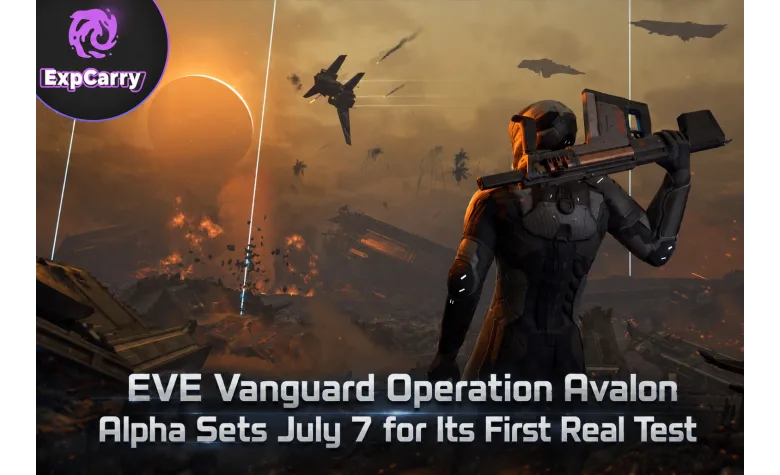
EVE Vanguard: Operation Avalon starts on July 7, 2026, and this is the first Alpha playtest for CCP's in-universe extraction-adventure FPS after a major rebuild. The playtest runs until July 20 through Steam and the EVE Launcher, giving players a limited window to test the new foundation before EVE Vanguard moves toward its always-on Alpha through the EVE Launcher in November 2026.
This is not being framed as a simple stress test or a small return weekend. Operation Avalon brings rebuilt combat, expanded enemies, new weapons, a deeper risk-and-extraction loop, Warbarge progression, modular weapon systems, and a clearer connection to EVE Online's wider war economy. In plain terms: CCP is trying to prove that EVE Vanguard can be more than another extraction shooter wearing a famous universe like a borrowed coat.
EVE Vanguard Operation Avalon Alpha Release Date and Access
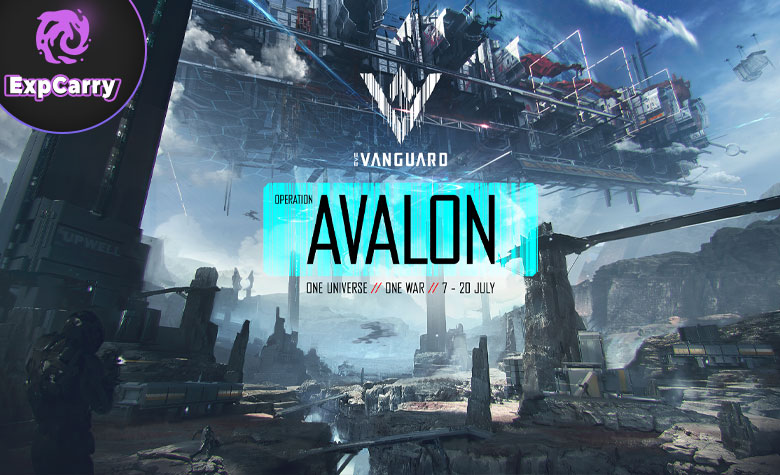
Operation Avalon begins on July 7, 2026, and ends on July 20, 2026. Players will be able to access the test through Steam and the EVE Launcher. The official EVE Vanguard site lists the Alpha playtest window and directs players to request access through Steam, while the Steam page presents EVE Vanguard as an upcoming PC title with playtest access available by request.
The timing matters because Operation Avalon is not the final launch. It is a limited Alpha playtest designed to gather data and feedback before the larger 24/7 Alpha phase planned for November 2026. Based on current wording, that November phase is planned through the EVE Launcher on PC, while the July playtest is available through both Steam and the EVE Launcher. July is the hands-on checkpoint, not the finish line.
| Detail | Current information |
|---|---|
| Playtest name | EVE Vanguard: Operation Avalon |
| Start date | July 7, 2026 |
| End date | July 20, 2026 |
| Access platforms | Steam and EVE Launcher |
| Genre positioning | Extraction-adventure FPS with PvPvE combat |
| Developer and publisher | CCP |
| Next major step | Always-on Alpha planned for November 2026 via EVE Launcher |
For anyone expecting a polished commercial release, the answer is simple: this is still early. The Steam page lists the planned release date as Q3 2026, but the surrounding messaging makes clear that Operation Avalon is an Alpha test. Expect rough edges, unfinished systems, balance issues, and feedback-driven changes. In other words, expect an alpha, not a miracle with a launcher button.
Operation Avalon Rebuilds the EVE Vanguard Combat Foundation
The biggest point of Operation Avalon is the new combat foundation. CCP says the playtest showcases rebuilt combat, expanded enemies, new weapons, and a deeper risk-and-extraction loop. That is a broad list, but it points to the correct problem: an extraction FPS lives or dies on whether each deployment feels tense, readable, and worth repeating.
EVE Vanguard is built around Warclones dropping onto hostile planets in New Eden, raiding wreckage and enemy structures, collecting valuable resources and advanced technology, then trying to extract before the situation collapses. The loop is familiar if you know extraction shooters, but Vanguard is trying to tie it to EVE's larger universe rather than leave it as a detached match-based shooter.
The pressure system is central. The longer players stay active, the more dangerous the response becomes. Alarms escalate, hostile reinforcements arrive, and the battlefield becomes harder to control. That gives every deployment a clear decision point: leave with what you have or push deeper for more valuable rewards while the game quietly sharpens the knife.
Warclones, Planetary Combat, and the New Eden Hook
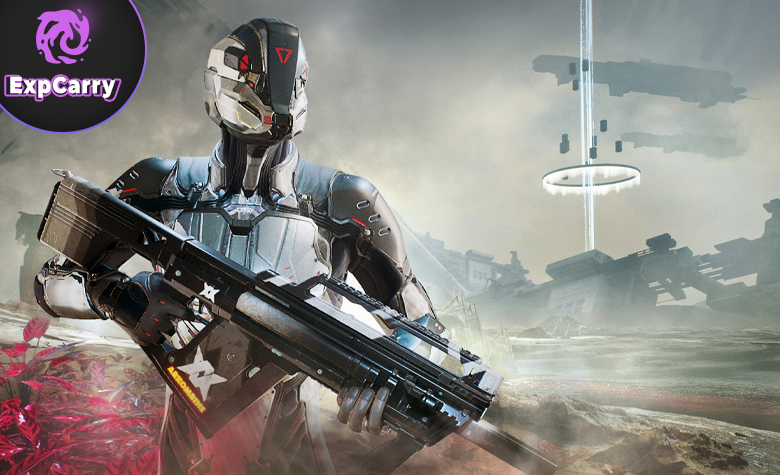
EVE Vanguard is set on the planets of New Eden, the same universe as EVE Online. Players are Warclones, technologically immortal soldiers whose consciousness can be transferred between expendable bodies through neural implants. That gives the game a lore reason for repeated deployments, death, recovery, and progression.
The Warclone setup matters because EVE's universe has always treated bodies, ships, clones, and loss as systems rather than simple story decoration. Vanguard is trying to bring that logic down from orbit to the ground. You are not just a shooter character respawning because the match demands it. You are a disposable body in a wider war machine. Pleasant little setting, if you enjoy being corporate ammunition.
The planetary zones are described around wreckage, poisoned swamps, hazardous jungles, crash sites, and corporate-controlled installations. The idea is clear: every run should feel like a raid into a hostile industrial battlefield, not a clean arena with sci-fi wallpaper.
Warbarge Progression Gives EVE Vanguard Its Between-Run Structure
Operation Avalon introduces the Warbarge as the command space between deployments. This is where Warclones return after missions, craft equipment, procure gear, prepare loadouts, and decide how to approach the next incursion. That makes the Warbarge more than a menu. It is the progression hub that ties repeated deployments together.
This system is important because extraction games need meaningful preparation. If the only real decision is what gun to carry, the loop goes stale quickly. Vanguard's Warbarge gives CCP a place to build crafting, equipment management, black market systems, specialization, and long-term Warclone identity.
The Steam description also frames Avalon as a vast wandering flotilla hunted through deep space. From its industrial decks, players manufacture weapons and equipment, trade through the Black Market, and launch Expeditions into hostile worlds. That gives Vanguard a stronger structure than just "select mission, press deploy, hope the server behaves like a trained mammal."
Modular Weapons and Chipsets Could Make Loadouts More Than Stat Math
One of the more practical Operation Avalon features is the modular weapon system. Weapons can be reconfigured with multiple fire modes and damage types through chipsets. The Steam page gives examples like switching from burst to full-auto or from energy to kinetic. That means weapons are not meant to be fixed tools. They are meant to adapt through preparation and progression.
This is the kind of system Vanguard needs if it wants tactical depth without drowning players in spreadsheet worship. Modular guns can let players adjust to enemies, squad roles, and extraction risk. The question is whether those choices feel meaningful in combat or become another gear optimization layer that players solve in a week and then complain about forever, as tradition demands.
| System | What it does | Why it matters |
|---|---|---|
| Warbarge | Acts as the command hub between deployments | Gives progression, crafting, trading, and loadout prep a physical base |
| Modular weapons | Allows guns to use different modes and damage setups | Supports adaptation instead of fixed weapon roles |
| Chipsets | Modify weapon behavior and damage type | Turns loadout building into a tactical choice |
| Nova Blade | Provides a close-range finishing weapon | Adds melee pressure to the ranged FPS loop |
| Black Market | Supports equipment and trade between deployments | Connects risk, loot, and preparation |
The Nova Blade also gives Vanguard a close-range identity point. It is not enough by itself to define combat, but it adds a finishing option that could make ground fights more aggressive. The key is balance. If modular weapons and melee tools create real tactical decisions, Operation Avalon has a stronger combat loop. If they become cosmetic variants with slightly different numbers, then everyone gets to enjoy the ancient ritual of pretending loadout depth exists.
PvPvE Extraction Is the Real Test of Operation Avalon
EVE Vanguard's core loop is PvPvE extraction. Players are not only fighting AI enemies. They are also competing with rival Warclones while planetary defenses escalate around them. That is a hard design space. Too much PvE pressure and players feel buried. Too much PvP pressure and the world becomes another ambush simulator. Too little of either and the extraction loop loses teeth.
Operation Avalon gives CCP a chance to test the balance between those pressures. Roaming drones guard resource sites. Higher-value rewards must be hacked or forced open under pressure. Alarms can escalate. Reinforcements arrive if players push too far or stay too long. The final threat can include Oppressors descending from the sky to eliminate remaining targets.
That escalation is the smartest part of the design on paper. It forces players to evaluate greed. Take the safe loot and leave, or push deeper and risk losing everything. Extraction games are at their best when every extra minute feels like a bad idea that might still be worth it. Humanity invented this and then complains about stress, which is at least consistent.
Nemesis Encounters Bring Boss Pressure Into the Extraction Loop
Nemesis encounters are one of the biggest combat hooks listed for EVE Vanguard. Steam describes them as brutal, multi-stage boss fights against flying war machines built to annihilate players. These encounters are not just random elite enemies. They are meant to function as major threats that force coordination, preparation, and risk calculation.
The official framing is simple: players can risk fighting Nemesis threats for valuable technology or escape to preserve what they already have. That fits the extraction structure well. A boss is not just a dungeon endpoint. It becomes a gamble inside a live deployment. Do you have the firepower, coordination, and time to take it down, or are you about to donate your loadout to the planet?
This system could become one of Vanguard's defining features if it lands correctly. Extraction shooters need memorable pressure events, and Nemesis encounters give CCP a way to make PvE threats feel large enough to matter beside player conflict. The danger is readability. If a boss feels unfair or unclear, players will not call it dangerous. They will call it broken, and then they will be right.
EVE Online Integration Is the Feature CCP Has to Prove
The most important long-term promise is the connection between EVE Vanguard and EVE Online. CCP uses the phrase "as above, so below" to describe the idea: campaigns in EVE Online influence the battlefields below, while planetary operations in Vanguard contribute back to wider New Eden conflicts. That is the part that can make Vanguard different from a normal extraction shooter.
If the link works, Vanguard becomes a ground-level front in EVE's ongoing war economy. Capsuleer conflicts could shape deployments, objectives, and rewards, while Warclone actions could support broader campaigns. That would give FPS players a way into EVE's player-driven universe without forcing them to become spreadsheet pilots on day one.
But this is also the hardest promise. EVE Online is complicated, player-driven, and politically strange in ways most shooters are not built to handle. Vanguard has to connect to that universe without becoming unreadable to new players or irrelevant to EVE veterans. That is a narrow bridge. CCP has tried ground-war connections before with Dust 514, and everyone involved remembers how difficult that road was, probably while staring quietly into a mug.
| Vanguard layer | Connection to EVE Online | What still needs proving |
|---|---|---|
| Planetary operations | Ground combat takes place inside New Eden's wider conflict | Whether missions feel meaningfully tied to EVE events |
| Campaign support | Warclones can support active war efforts | Whether ground actions create visible strategic value |
| Extraction rewards | Advanced tech and resources feed progression | Whether loot connects cleanly to long-term systems |
| Capsuleer influence | Space wars can shape ground battlefields | Whether EVE Online players can affect Vanguard without dominating it |
| New player gateway | FPS players can enter the EVE universe from the ground | Whether onboarding avoids EVE's usual intimidation wall |
Operation Avalon Is Not Early Access, and That Wording Matters
One detail worth noting is the language around the November phase. Earlier expectations pointed toward Early Access, but recent wording now points to an always-on Alpha instead. That may sound like a small label change, but it matters for player expectations.
Early Access implies a more public-facing development product on a storefront. Alpha signals something rougher, more controlled, and more explicitly unfinished. For a game like Vanguard, that wording is probably healthier. The project still needs to prove its basic combat, extraction, progression, and EVE Online integration before it gets judged like a commercial live shooter.
Operation Avalon is therefore a test of fundamentals. Does combat feel sharp? Does extraction pressure work? Do enemies escalate in a way that feels fair? Do modular weapons matter? Does the Warbarge create a useful between-run loop? Does the EVE connection feel like more than branding? Those are the questions July needs to answer.
Why EVE Vanguard Still Has a Hard Road Ahead
EVE Vanguard has a strong hook, but it also has obvious risks. The extraction shooter market is crowded and harsh. Vanguard cannot win by being just another drop-loot-extract game. It has to use New Eden, Warclones, player-driven conflict, and long-term consequence in ways competitors cannot copy easily.
The other risk is identity. EVE players may want deep strategic consequence and meaningful integration with the MMO. Shooter players may want immediate gunfeel, clean readability, fast matchmaking, fair PvP, and strong progression. Those audiences overlap, but not perfectly. If Vanguard leans too hard into EVE complexity, new FPS players may bounce. If it becomes too simple, EVE veterans may dismiss it as a side project with lore stickers.
That is why Operation Avalon matters. It is not just about whether the test has enough content. It is about whether Vanguard's central loop can survive first contact with a broader audience. CCP does not need to prove everything in July, but it does need to prove that the foundation is worth building on.
What Players Should Watch During the July Alpha
The July test should be judged by the systems that define the loop, not by polish alone. Alpha builds can be rough. That is normal. What matters is whether the rough parts are surrounding a strong core or hiding the absence of one. A crash can be fixed. A boring extraction loop is a more expensive funeral.
Players should pay close attention to combat feel, enemy behavior, extraction pacing, time-to-kill, loot value, Warbarge progression, modular weapon clarity, squad coordination, and the way escalation changes decision-making. If those pieces work, Vanguard has a real foundation. If they do not, the EVE name will not save it.
| Alpha test focus | Good sign | Bad sign |
|---|---|---|
| Combat feel | Weapons feel readable, responsive, and distinct | Gunplay feels flat or unclear |
| Extraction pressure | Players constantly weigh risk against reward | Runs feel either too safe or unfairly punishing |
| Enemy escalation | Threats build logically as players push deeper | Reinforcements feel random or cheap |
| Warbarge progression | Between-run choices feel meaningful | Hub systems feel like menus with extra walking |
| EVE Online integration | Ground actions feel connected to New Eden | The EVE connection feels cosmetic |
This is also where player feedback can be useful if it stays specific. "This is bad" helps nobody. "Extraction timers create pressure too early," "chipsets are hard to read," "Nemesis attacks lack clear counters," or "Warbarge crafting needs better reward clarity" actually helps development. Civilization does occasionally produce functional sentences when properly cornered.
Operation Avalon Could Be the Moment EVE Vanguard Finds Its Shape
EVE Vanguard has been a strange project to track because its promise is bigger than its visible footprint. Everyone understands why CCP wants a ground-combat game inside New Eden. The harder question has always been what form that game should take. Operation Avalon gives the clearest answer so far: a PvPvE extraction FPS built around Warclone identity, modular weapons, escalating battlefield pressure, and eventual campaign links with EVE Online.
That is a coherent direction. It does not guarantee success, but it gives Vanguard a clearer identity than simply "EVE, but shooter." The Warbarge gives progression a home. Nemesis encounters give PvE a recognizable threat. Modular weapons give loadouts room to evolve. The extraction loop gives each deployment tension. The EVE Online connection gives the whole thing a reason to exist beyond trend-chasing.
The remaining question is execution. If Operation Avalon feels sharp, Vanguard could finally look like a serious second front for New Eden. If it feels generic, players will treat it like another extraction shooter trying to borrow depth from a famous universe. The EVE name opens the door. It does not carry the game through it.
Final Thoughts
EVE Vanguard: Operation Avalon starts on July 7, 2026, and it is the most important public step for the project so far. The July 7-20 Alpha playtest brings rebuilt combat, expanded enemies, new weapons, Warbarge progression, modular weapon systems, PvPvE extraction pressure, Nemesis encounters, and the first real groundwork for deeper EVE Online integration.
The most interesting part is not the date by itself. It is the structure around it. Vanguard is trying to turn ground combat into a meaningful part of New Eden, not just a disconnected shooter spin-off. Warclones drop into hostile planetary zones, steal valuable technology, fight drones and rival players, manage escalating alarms, return to the Warbarge, rebuild their loadout, and prepare for the next deployment. That loop has the bones of something distinct.
The cautious verdict is simple: Operation Avalon is the test that needs to prove EVE Vanguard has a real core. CCP has the setting, the lore, and the long-term ambition. Now the game has to show that its shooting, extraction pressure, enemy escalation, progression, and New Eden connection actually work in the hands of players. If July delivers that foundation, Vanguard becomes much more interesting. If it does not, the project risks becoming another reminder that attaching a famous MMO universe to a shooter is easier than making the shooter worth playing.