




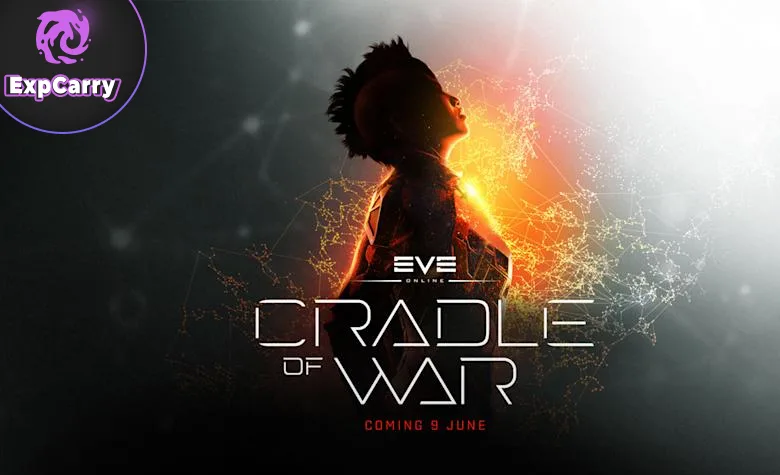
EVE Online: Cradle of War launches on June 9, 2026, and it is not another small seasonal patch pretending to be a turning point. This expansion opens Theatres of War, a three-expansion saga built around escalating empire conflict, structured Military Campaigns, new ships, a safer rookie region, achievements, titles, and a new Epic Arc that pulls players into the history and future of New Eden's four empires.
The core pitch is simple: CCP wants more players to matter in large-scale conflict, even if they are not already part of a massive null-sec bloc or a veteran war machine with spreadsheets older than some rookies. Cradle of War is built around the idea that combat pilots, miners, haulers, explorers, industrialists, scouts, and logistics players can all push campaign goals forward. Whether that becomes a meaningful living-war system or another activity panel players optimize into paste will depend on execution. EVE players are extremely good at turning noble design into weaponized accounting.
EVE Online Cradle of War Release Date and Core Expansion Details
Cradle of War is scheduled to launch on June 9, 2026. The expansion was revealed around EVE Fanfest 2026 and is positioned as the opening chapter of Theatres of War, a three-part arc focused on empire warfare and player-driven consequences across New Eden.
The biggest feature is Military Campaigns, a new system that gives players structured objectives tied to the goals of the four great empires. These campaigns are designed to run across regions and multiple fronts, letting players contribute through different forms of activity rather than only direct combat. That is a smart direction for EVE because the game has never been only about who has the biggest fleet. It is also about supply chains, scouting, industry, intelligence, logistics, and the quiet horror of someone realizing the fuel was not moved.
| Cradle of War detail | Current information |
|---|---|
| Expansion name | EVE Online: Cradle of War |
| Release date | June 9, 2026 |
| Main system | Military Campaigns |
| New ships | 8 total: 4 Tech II Command Carriers and 4 Navy Destroyers |
| New rookie space | Exordium, a non-PvP starter region with 53 systems |
| Progression features | Titles and Achievements |
| Story content | A new Epic Arc based on defining empire battles |
| Long-term arc | First chapter of the three-expansion Theatres of War saga |
The feature list is broad, but the expansion has one clear theme: making empire conflict more visible, more structured, and easier to enter. That matters because EVE's biggest stories often look impressive from the outside but inaccessible from the inside. Cradle of War is trying to create clearer on-ramps into war without flattening the depth that makes EVE worth watching in the first place.
Military Campaigns Are the Real Test of Cradle of War
Military Campaigns are the expansion's most important feature. CCP describes them as seasonal, region-spanning conflicts where the empires call on capsuleers to complete objectives that support larger war goals. Players can contribute by fighting, mining, exploring, running logistics, building, hauling, or supporting coordinated operations.
This is the correct kind of EVE feature on paper because it recognizes that war in New Eden is not only decided by final-killmail pilots. Supply work matters. Industry matters. Intelligence matters. Movement matters. The problem is that EVE systems live or die by whether player action feels visible and valuable. If Military Campaigns create clear stakes and lasting outcomes, they could become a strong connective layer between casual participation and empire warfare. If they feel like another progress bar wearing a uniform, players will see through it instantly.
CCP is framing the system around lasting consequences. If an empire succeeds in a campaign, monuments may rise, infrastructure may be built, and history may record that success. If it fails, territory can be lost, scars can remain, and the universe is supposed to remember. That is the hook. EVE is strongest when outcomes persist, not when everyone gets a participation badge and the map resets like nothing happened.
| Campaign role | How players can contribute | Why it matters |
|---|---|---|
| Combat pilots | Fight on campaign fronts and contest objectives | Gives direct PvP and PvE pilots a visible war role |
| Industrialists | Build and supply campaign needs | Connects production to empire conflict |
| Miners | Provide raw materials for campaign progress | Makes resource gathering part of the war effort |
| Haulers and logistics players | Move goods and support operations | Rewards the work that keeps wars alive |
| Explorers and hackers | Support intelligence and objective completion | Lets non-frontline pilots influence campaign direction |
The best-case version of Military Campaigns gives every type of player a reason to care about empire war. The worst-case version becomes another system that veterans solve, alts farm, and rookies misunderstand. The design target is good. The danger is the usual one: EVE players are not passive consumers. They are optimization gremlins with capital ships.
Theatres of War Gives EVE Online a Longer Conflict Arc
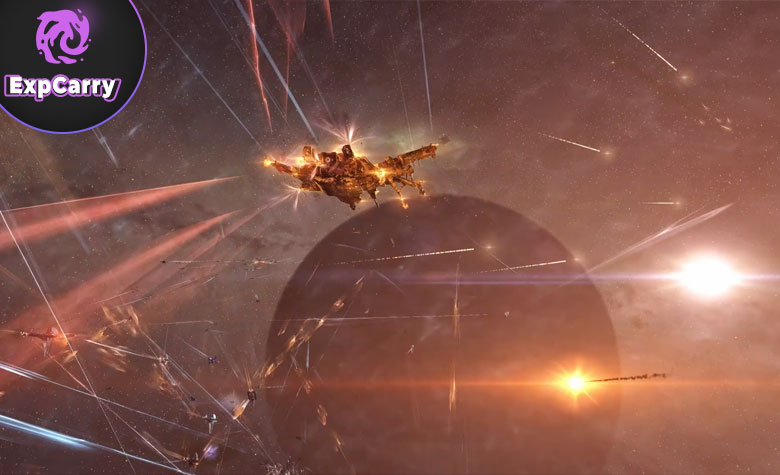
Cradle of War opens Theatres of War, a three-expansion saga focused on the future of large-scale empire conflict. That framing matters because it tells players this is not meant to be a one-patch experiment. CCP is setting up a longer arc where the results of campaign participation are supposed to influence what happens next.
This is a healthier approach than dropping isolated features into the sandbox and hoping players invent all the meaning themselves. EVE works because players create conflict, but developer structure can still help focus that conflict. Theatres of War gives CCP a way to stage empire tensions, connect campaign outcomes, and create visible stakes over multiple expansions.
The obvious risk is follow-through. A three-expansion arc needs momentum. If Cradle of War launches with strong campaign goals but later updates fail to make those outcomes matter, players will remember. EVE's audience has a long memory, mostly because half of them seem to store grudges in cold backup.
New Command Carriers Push Fleet Support Into the Spotlight
Cradle of War adds four new Tech II Command Carriers, one for each empire. CCP describes them as powerful fleet-support vessels capable of running three command burst modules at once and applying armor, shield, skirmish, or information effects with stronger bonuses than existing command platforms.
The point is not raw damage. These ships are designed to make fleets hit harder, survive longer, move better, and coordinate more effectively. That gives them a clear battlefield role if their final numbers and costs make sense. If a Command Carrier becomes the ship that keeps a fleet functioning at peak strength, enemies will naturally focus it. That creates a strong tactical identity: powerful support, obvious target, heavy responsibility.
For veteran groups, Command Carriers could become important tools in organized fleet warfare. For smaller or newer groups, they will likely feel distant at first because Tech II capital-level support is not exactly the first thing a fresh pilot trains into. Still, their presence fits the expansion's theme. Cradle of War is about organized conflict, and these ships are built for the command layer of that conflict.
Navy Destroyers Bring the War Effort Closer to Newer Pilots
The four new Navy Destroyers are the more accessible side of the ship lineup. CCP presents them as fast to skill into, affordable to fly, and effective in both PvE and PvP when used well. They are also tied clearly to Factional Warfare and early frontline combat.
This is important because the expansion cannot only serve veteran fleet commanders and capital pilots. If Cradle of War wants more capsuleers involved in empire conflict, it needs ships that newer players can realistically train into and lose without financial trauma. Navy Destroyers fit that role better than Command Carriers.
Destroyers also occupy a useful tactical space. They are small enough to feel accessible, dangerous enough to matter, and fragile enough that bad decisions still hurt. In Factional Warfare, that combination can produce active fights without requiring every player to mortgage their hangar for a single doctrine ship.
| New ship category | Main role | Likely audience |
|---|---|---|
| Tech II Command Carriers | Advanced fleet support with powerful command burst effects | Veteran fleet groups, capital pilots, organized alliances |
| Navy Destroyers | Affordable frontline combat for PvE and PvP | Factional Warfare pilots, newer combat players, small gangs |
The ship split makes sense. Command Carriers give endgame fleets new support tools, while Navy Destroyers give more accessible warships to players closer to the entry and midgame. That is a better spread than adding eight ships aimed entirely at one player tier and then pretending everyone got served equally.
Exordium Tries to Solve EVE Online's Rookie Problem Without Breaking the Sandbox
Cradle of War introduces Exordium, a new non-PvP starter region for rookie capsuleers. It is a 53-system area with new starter and career agent systems, and CCP says all new players will begin there. The goal is to give rookies a safer place to learn the basics, train alongside other new pilots, form early social bonds, and prepare for the wider universe before entering the harsher security regions of New Eden.
This is one of the most important features in the expansion, even if veterans may dismiss it as soft. EVE has always had a brutal onboarding problem. The game can be fascinating, but it also has a talent for making new players feel like they opened a spaceship manual written by hostile accountants. Exordium gives CCP a controlled space to teach core ideas without immediately feeding rookies to the full sandbox.
The non-PvP rule is the controversial part by EVE standards, but the design logic is clear. New players need room to understand movement, UI, fittings, mining, combat, missions, social tools, and basic risk before the full game starts punishing every naive assumption. The key is that Exordium cannot become a permanent safe shelter with meaningful rewards. It needs to be a training ground, not an alternate life where danger never calls.
Titles and Achievements Add Identity Without Replacing Real Reputation
Cradle of War adds Titles and Achievements as a new progression and identity layer. Achievements track activity across New Eden and unlock titles that players can display. Campaign goals can also reward titles tied to a player's role in ongoing conflicts.
This is a modern feature, but it fits EVE better than it might sound. The game already runs on reputation, but reputation is often invisible unless you know the politics, killboards, corporation history, or market scars behind a character name. Titles give players a more readable way to signal accomplishments, focus, and playstyle in normal interactions.
The danger is cosmetic emptiness. Titles mean something only if the activities behind them mean something. If a title says a player shaped a campaign, survived a historic battle, or mastered a meaningful role, it has weight. If it is just a checklist badge, it becomes UI confetti. EVE does not need more confetti. It has enough wreckage.
New Epic Arc Missions Turn Empire History Into Playable Lessons
Cradle of War adds a new Epic Arc built around defining battles from New Eden's past. CCP describes it as playable, hyper-real simulations of major historical moments, with one major episode tied to each empire. Mentioned examples include the Caldari Prime Breakout, the Battle of Pator, the Liberation of Intaki, and Golgothan Fields.
This feature has two jobs. First, it gives rookies a better way to understand the empires beyond reading lore pages like homework. Second, it lets long-time players experience key pieces of EVE history that have shaped faction identity. That is a smart use of PvE story content in a game mostly known for player-driven chaos.
The Epic Arc also supports the expansion's broader theme. If Cradle of War is about escalating empire conflict, players need emotional and historical context for why those empires are fighting. Without that, Military Campaigns risk becoming colored progress bars for factions with logos. With it, campaign participation has a better chance of feeling like part of a larger war story.
Cradle of War Player Reaction Is Already Split
Early player reaction appears mixed, which is exactly what happens whenever EVE announces anything more complex than a login reward. Some players are interested in Military Campaigns because the system could make empire warfare more structured and more accessible. Others are skeptical, mainly because EVE players want details before they trust any promise about lasting consequences.
The new ships are also easy to read in two different ways. Command Carriers could give organized fleets a stronger support layer, but their real value will depend on final stats, cost, skill requirements, fittings, and whether the current carrier ecosystem gives them enough room to matter. Navy Destroyers are easier to understand as an accessible combat addition, but final balance will decide whether they become useful frontline tools or hangar decorations with better names.
The overall mood is not pure hype. It is cautious, skeptical interest. That is normal for EVE. Players have seen ambitious systems before. They want the detail layer: rewards, risks, balance, exploit potential, campaign pacing, ship stats, cost, fitting pressure, and whether actions actually produce permanent consequences. The announcement sets a strong direction. The patch notes and live results will decide whether players believe it.
Cradle of War Looks Built to Pull More Players Into Conflict
The strongest read on Cradle of War is that CCP is trying to widen the mouth of EVE's conflict machine. Military Campaigns create structured goals. Navy Destroyers give newer pilots accessible combat ships. Exordium gives rookies a safer training space. Epic Arc content teaches faction history. Titles and Achievements make progress visible. Command Carriers give veteran fleets new strategic tools.
That is a coherent expansion strategy. It does not only add content for one slice of the player base. It creates a path from rookie onboarding to faction identity, from faction identity to campaign participation, and from campaign participation to larger war outcomes. Whether that path holds together is the real question.
For years, one of EVE's biggest strengths has also been one of its biggest barriers: the best stories are often created by players, but new players may not know how to reach them. Cradle of War tries to create clearer bridges. That is a good idea. Now CCP has to make sure those bridges lead somewhere dangerous and memorable, not just to another menu with medals.
| Expansion system | Best-case result | Main risk |
|---|---|---|
| Military Campaigns | Players of many roles shape lasting empire-war outcomes | Becomes another progress bar with weak consequences |
| Command Carriers | Fleet support gains a powerful new strategic role | Balance or cost limits them to narrow veteran use |
| Navy Destroyers | Newer pilots get affordable and useful warships | They become either disposable meta tools or ignored hulls |
| Exordium | Rookies learn EVE without immediate sandbox trauma | It feels too detached from the real game |
| Titles and Achievements | Players can display meaningful identity and progress | Rewards feel cosmetic and shallow |
| Epic Arc missions | Empire history becomes playable and understandable | Story content fails to connect with the war systems |
The Big Question: Will Campaign Outcomes Actually Matter?
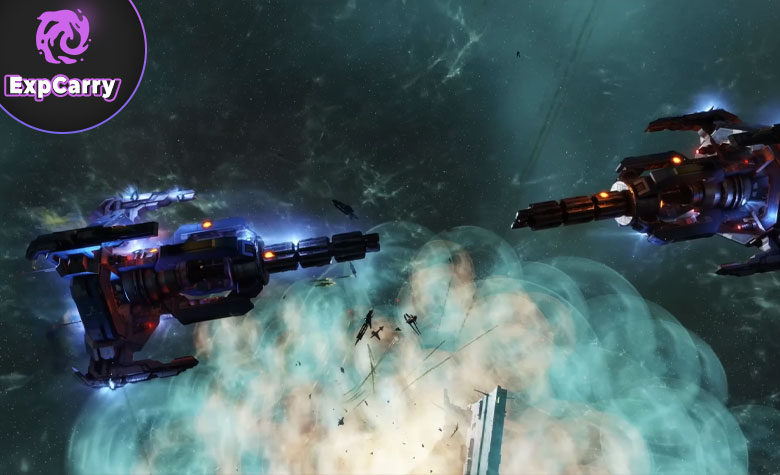
The entire expansion depends on one question: will campaign outcomes matter enough for players to care? EVE's audience is unusually sensitive to fake consequence. If CCP says players can shape the war, players will test exactly how much shape is actually possible. If the answer is mostly a monument change and a title unlock, the response will be savage. If infrastructure, territory, access, faction strength, and future story paths actually change, then Cradle of War could become important.
Permanent outcomes are difficult because they must be meaningful without breaking the wider sandbox. Too much consequence can distort the game in ways CCP cannot easily control. Too little consequence makes the campaign feel fake. That balance is hard, and EVE players will not grade gently. They never do. They are the kind of people who can smell bad incentive design through a bulkhead.
The encouraging part is that CCP is framing Military Campaigns around many contribution types. That gives the system more room to work than a simple kill-count war. The concerning part is that broad participation systems often become farming systems unless rewards, pacing, and objectives are carefully controlled.
Cradle of War Could Help Rookies, But Veterans Will Decide the Shape
Exordium and the new Epic Arc show that Cradle of War is paying attention to rookies. That is necessary. EVE cannot rely forever on veteran institutions to absorb every new player and explain the game through Discord lectures and trauma bonding. A stronger official starting path is overdue.
But veterans will still shape the expansion's real outcome. Organized groups will solve Military Campaigns, test reward loops, map optimal objectives, determine which Navy Destroyers are worth flying, and decide whether Command Carriers matter in serious fleet environments. That is not a flaw. That is EVE. The question is whether the expansion gives veterans enough depth without letting them suffocate the entry path for everyone else.
If Cradle of War works, it could create a better ladder: rookies begin in Exordium, learn faction identity through the new Epic Arc, join Military Campaigns through accessible roles, graduate into Factional Warfare or larger operations, and eventually become part of the broader war machine. If it fails, Exordium becomes a waiting room, campaigns become chores, and veterans return to complaining in more advanced dialects.
Final Thoughts
EVE Online: Cradle of War launches on June 9, 2026, and it is clearly built around one goal: making empire war more structured, visible, and accessible without removing the player-driven depth that defines EVE. Military Campaigns are the centerpiece, supported by eight new ships, Exordium starter space, Titles and Achievements, a new Epic Arc, and the opening chapter of the Theatres of War saga.
The expansion's best idea is that war should include more than final blows and fleet commanders. Miners, haulers, industrialists, explorers, logistics pilots, scouts, and combat pilots all need ways to matter. If Military Campaigns can connect those activities into real outcomes, Cradle of War could make empire conflict feel more alive and more approachable. If the system turns into a dressed-up task board, the community will gut it quickly and probably with diagrams.
The cautious verdict is that Cradle of War has the right structure but still needs proof. The feature list is strong, especially for onboarding and faction conflict, but EVE expansions live by their details: ship stats, rewards, campaign permanence, exploit resistance, objective pacing, and whether players can feel their contribution in the wider universe. CCP is promising a war machine that every capsuleer can feed. On June 9, players will find out whether that machine actually changes New Eden or just makes a louder noise while eating ore.