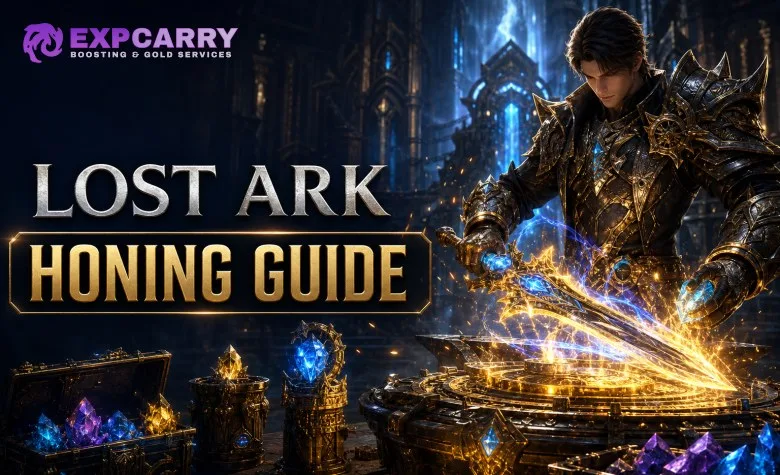
As of July 22, 2026, Lost Ark’s Western progression system no longer uses the old honing route for Tier 2 and lower Tier 3 gear. Honing begins with Tier 3 upper Ancient gear, including Akkan gear, at Item Level 1525. For most players, the correct strategy is to use the gear granted by the current progression path, avoid spending resources on obsolete materials, and save your most valuable honing resources for Akkan, Tier 4, and Tier 4 upper gear.
Lost Ark honing guide: the current answer
Honing still upgrades equipment and raises Item Level, but the old “hone every piece from 302 gear onward” advice is outdated in the Western version. The progression revamp removed gear honing for Tier 2 and lower-tier Tier 3 equipment, including Brelshaza gear and earlier sets.
Characters now receive appropriate gear sets from major story progression and eligible Knowledge Transfer results. These gear grants are designed to meet the Item Level requirement for the next continent, allowing new and returning players to move through the early game without farming the former Tier 1 and Tier 2 honing materials.
The first major honing decision begins with Tier 3 upper Ancient gear, also known as Akkan gear. Honing starts at Stage 0 and Item Level 1525. From there, your priorities are to reach the next relevant content thresholds, preserve bound resources for the correct character, and avoid converting or selling materials before checking their current use.
Who this honing guide is for
- New players: to understand when honing actually begins and which materials matter.
- Returning players: to replace outdated Tier 1, Tier 2, and Brelshaza-era advice.
- Roster builders: to decide where bound honing materials, gold, silver, and tradeable resources should go.
- Endgame players: to plan Tier 4, Advanced Honing, and Tier 4 upper progression.
If you are still progressing through the story, follow the game’s current gear rewards instead of buying large quantities of old honing materials. If you are already at or above Item Level 1525, the relevant question is no longer “how do I hone from the beginning?” It is “which gear tier should receive my limited resources next?”
What changed in the Western honing system
| Progression stage | Current Western status | Practical meaning |
|---|---|---|
| Tier 1 and Tier 2 gear | Gear honing removed from the current progression route | Do not build a long-term material stockpile for old Harmony-tier progression. |
| Tier 3 lower Ancient gear | Honing removed, including Brelshaza gear | Old lower-tier Tier 3 materials are no longer the main progression currency. |
| Tier 3 upper Ancient gear | Honing begins with Akkan gear at Item Level 1525 | This is the first major honing route for the current streamlined progression. |
| Tier 4 gear | Honing remains part of progression with reduced costs compared with older systems | Use current Tier 4 materials and check the honing interface before committing resources. |
| Tier 4 upper gear | Destined Tremor gear can be honed through Level 25 | Levels above 20 require a one-time Breakthrough before further honing. |
The table’s main lesson is simple: old guides that list Harmony Shards, Guardian Stone Fragments, Destruction Stone Fragments, or lower-tier Brelshaza honing as your primary route are not suitable for current Western progression.
Explore services related to this guide, selected from our Lost Ark catalog.
View All Lost Ark Services


Honing materials you should understand
The exact material list depends on the gear tier and honing stage. Always confirm the required quantity in the honing window because costs change between armor and weapon pieces, stages, gear tiers, and special systems.
Tier 3 Akkan honing
Akkan gear is the first current gear set that uses the rebuilt honing progression. The game has significantly reduced some Tier 3 Akkan honing costs, and growth-support systems can further reduce breakthrough material, silver, and gold requirements for eligible stages.
Do not assume that a material labeled for older Tier 3 gear remains useful in the same way. Lower-tier materials can be exchanged for higher-tier materials through the Honing Material Exchange NPC, while some older materials can be dismantled to produce current Tier 3 resources.
Tier 4 honing
Tier 4 honing uses the current Tier 4 material family. The exact requirements are displayed directly in the honing interface and should be checked before opening chests or purchasing from vendors.
Tier 4 progression also interacts with systems such as Advanced Honing, gear transfer, Stronghold research, Guild Bloodstone Shop purchases, and progression support. These systems can change the effective cost of a honing attempt, so the listed base cost is not always the same as your final account cost.
Tier 4 upper honing
Tier 4 upper gear introduces a separate material group for later progression. Confirmed materials include:
- Destiny Crystallized Destruction Stone for weapons.
- Destiny Crystallized Guardian Stone for armor.
- Great Leapstone of Destiny.
- Superior Abidos Fusion Material.
- Special Honing: Transfer Leapstone.
These materials come from high-level content such as Chaos Rift, Haal’s Hourglass, and other endgame activities. Fusion materials can also be crafted in the Stronghold.
Tier 4 upper honing also uses rate-boosting items. Lava’s Breath applies to weapons, while Glacier’s Breath applies to armor. Use them when the increased success chance justifies their value, particularly on expensive late-stage attempts.
How honing success rates work
Every honing attempt shows its current success chance in the in-game honing window. The chance depends on the gear tier, the current stage, and whether you use available rate-boosting materials or support effects.
There is no single success-rate table that applies to every Lost Ark item. A percentage copied from an old Tier 3 guide may refer to removed gear, a different region, a previous balance version, or a different honing stage. Treat the number shown for your character and item as the authoritative value.
Artisan’s Energy and failed attempts
Failed honing attempts are not always wasted progress. The honing interface tracks Artisan’s Energy, which increases after unsuccessful attempts and can eventually guarantee success when the gauge is full. The exact amount gained depends on the attempt and the gear system being used.
This creates two different ways to evaluate an attempt:
- Immediate success value: the chance that the item upgrades now.
- Guaranteed-progress value: the Artisan’s Energy gained if the attempt fails.
Because of this system, a failed attempt still contributes to the eventual upgrade. However, that does not mean every attempt is economically efficient. You still need to compare the material, silver, gold, and opportunity cost against your next Item Level target.
Honing support items
Use success-rate boosters when the additional chance is valuable relative to the cost of the booster. A common mistake is spending every support item on early, inexpensive stages and then having none available for high-cost late-stage attempts.
For Tier 4 upper gear, Lava’s Breath and Glacier’s Breath should generally be reserved for stages where the base attempt is expensive or where reaching the next milestone unlocks important content. The correct choice depends on your available stock, market conditions, and whether the item is bound or tradeable.
What does honing cost?
Honing costs are not fixed across the entire game. A complete cost includes more than the visible material requirement.
- Weapon or armor honing materials.
- Leapstones.
- Shards or the relevant progression currency.
- Fusion materials.
- Silver.
- Gold, where the current gear tier still requires it.
- Optional success-rate or Artisan’s Energy support items.
- The value of resources that could have been used on another character or system.
The Western progression revamp removed gold costs from parts of the former Tier 3 route and significantly reduced some Akkan and Tier 4 honing costs. Do not use a historical calculator without confirming that it supports the current Western gear tier and patch.
For an accurate estimate, open the item’s honing window and record the displayed cost for the next attempt. Then multiply by your expected number of attempts, while remembering that actual costs vary because success is probabilistic and Artisan’s Energy changes the long-term outcome.
Honing cost priorities
Priority 1: Reach the next content threshold
Spend resources when the upgrade unlocks meaningful content, improves your daily route, or allows you to join the next progression activity. Avoid pushing a single piece simply because it is the cheapest attempt if the resulting Item Level does not unlock anything useful.
Check the requirements for the next raid, dungeon, Chaos Rift stage, Guardian activity, or progression event before honing. A small number of targeted upgrades can be more valuable than evenly distributing resources across every item.
Priority 2: Upgrade the weapon when damage is the bottleneck
Weapon honing usually provides a direct offensive improvement, but it also tends to be more expensive than armor honing. Prioritize the weapon when you need damage to meet a raid check or when the upgrade reaches a valuable Item Level breakpoint.
Do not automatically force the weapon to the maximum possible stage. If the next weapon attempt is disproportionately expensive and does not unlock content, upgrading cheaper armor pieces may provide better short-term Item Level efficiency.
Priority 3: Keep armor upgrades balanced
Armor upgrades contribute to Item Level and survivability. Balanced upgrades can be the most efficient way to reach an entry requirement without overinvesting in one item.
Use the honing window to compare the Item Level gained, the total material cost, and your current failure progress on each piece. A piece close to guaranteed success may be a better target than a fresh item with a slightly lower displayed cost.
Priority 4: Protect bound materials
Bound materials are normally best used on the character that earned them. Before opening a chest, check whether the contents become character-bound, roster-bound, or tradeable. Save account-wide or roster-wide resources for the character that benefits most from the next milestone.
Tradeable materials should not automatically be sold. Their value depends on your roster plans, current market conditions, and whether you need gold for honing, gems, engravings, or other progression systems.
Priority 5: Use progression support before personal stockpiles
Check current Guild Bloodstone Shop options, Stronghold research, event missions, exchange NPCs, and milestone rewards before spending your own materials. Some support systems reduce costs or provide materials that would otherwise require daily and weekly farming.
Progression events are especially important for new and returning players, but event rewards and dates change. Confirm that an event is active before planning your entire honing route around it.
A practical honing route
- Identify your current gear tier. Confirm whether you are using Akkan gear, Tier 4 gear, Destined Hellfire gear, or Destined Tremor gear.
- Check the next unlock. Look at the Item Level requirement for the next activity you want to enter.
- Inspect every item’s honing window. Record the displayed materials, gold, silver, success chance, and Artisan’s Energy.
- Use free or discounted progression resources first. Check milestone missions, progression events, guild exchanges, Stronghold research, and current content rewards.
- Choose the most efficient upgrade. Compare Item Level gained, total cost, and existing Artisan’s Energy on each item.
- Use rate boosters selectively. Reserve expensive support items for costly attempts or important milestones.
- Stop at the target threshold. Do not continue honing simply because materials remain if the next attempt does not improve your immediate progression.
- Reassess after each gear transfer. New gear tiers can change which materials, systems, and support items are relevant.
Gear transfer and progression traps
Gear transfer remains important when replacing equipment. It allows progress to move to a new piece of the same general progression path, but transfer rules differ between systems. In particular, not every type of progress transfers in the same way.
When transferring into Destined Tremor gear, gear quality transfers, but Artisan’s Energy, Honing EXP, and fail-rate bonuses do not transfer. Check the transfer preview carefully before confirming the operation.
Common mistakes include:
- Following an old guide that recommends honing Harmony or lower-tier Brelshaza gear.
- Opening every material chest on the wrong character.
- Spending gold on an upgrade that does not unlock new content.
- Using all honing-rate boosters on cheap early attempts.
- Ignoring Artisan’s Energy when choosing the next item.
- Assuming that a historical honing calculator reflects the current Western patch.
- Confusing Advanced Honing with ordinary gear honing.
- Transferring gear without checking which progress types are preserved.
Where to get current honing materials
Your primary source should be the content recommended for your current Item Level. The current Western progression structure is designed around using daily and weekly content, endgame activities, exchanges, Stronghold crafting, guild shops, and progression missions together rather than relying on one activity.
At the upper end of Tier 4, Chaos Rift provides character-bound Tier 4 upper honing materials and can also produce tradeable rewards through Fate Embers. Haal’s Hourglass is a weekly activity with rewards that can be improved using Sand of Trial obtained from Chaos Rift. These activities are intended to support high-level progression rather than early-game honing.
For a broader progression route, use the Lost Ark guides and services hub to find current activity-specific information. If your roster is blocked by a difficult requirement or weekly clear, the Lost Ark Item Level Boost page is the relevant commercial option to review after identifying the exact milestone you need.
When should you stop honing?
Stop when you have reached the Item Level needed for your immediate goal and the next attempt has poor value. That may mean entering a new raid, unlocking a daily activity, qualifying for a progression event, or meeting a roster plan.
Continue honing when the next upgrade unlocks substantially better rewards, removes a Party Finder barrier, or completes a well-defined damage or survivability target. Do not chase maximum Item Level by default. In a live-service game, the most efficient route changes whenever costs, rewards, or entry requirements are adjusted.
FAQ
Does Lost Ark still use Harmony Shards for early honing?
Not as the main current Western progression route. Lower-tier honing was removed, and owned Harmony Shards were converted to Honor Shards at a one-to-one ratio. Older Harmony-related materials should be checked for exchange or dismantling options rather than treated as the primary path to endgame.
At what Item Level does current honing begin?
Current Tier 3 honing begins with upper-tier Ancient Akkan gear at Stage 0 and Item Level 1525. Earlier Tier 2 and lower-tier Tier 3 gear no longer uses the former honing progression.
Are honing success rates fixed?
No single rate applies to every item. The displayed chance changes according to the gear tier, stage, and support items used. Always trust the percentage shown in the current honing interface for your character.
Should I hone weapon or armor first?
Use the upgrade that best supports your next target. Weapon honing is usually the stronger damage investment but can be more expensive. Armor can provide a more efficient Item Level route when you only need to reach an entry threshold.
Is there a current exact honing cost table?
A universal table is unreliable because Western costs and systems have changed substantially. Use an up-to-date calculator only if it identifies the current Western gear tier and patch. Otherwise, use the in-game honing window as the final cost reference.
Related Lost Ark progression guides
- Lost Ark guides and current progression services
- Akkan Legion Raid progression guide
- Tier 4 gear and Serca progression information
- Lost Ark Item Level Boost
Published: July 22, 2026 — Initial version based on official Western information available on this date.