


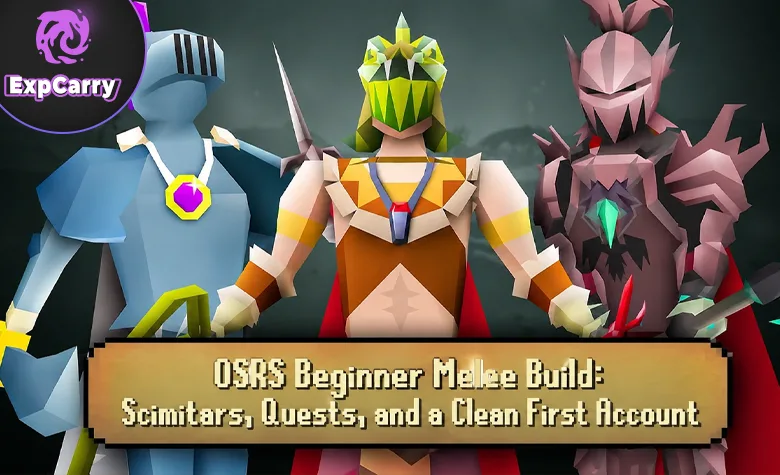
The best melee build for beginners in Old School RuneScape is a balanced melee main built around Attack, Strength, Defence, Hitpoints, and early Prayer. It is not a pure, not a restricted PvP account, and not a strange one-stat experiment that makes the game harder before you even understand why. The goal is simple: build a first account that hits accurately, deals solid damage, survives quests, wears useful armour, and grows naturally into Slayer, mid-game PvM, and stronger melee weapons.
This OSRS beginner melee build focuses on scimitars, smart quest XP, stable armour upgrades, practical Prayer milestones, and training spots that do not require expensive supplies. Melee is the cleanest first combat style because it is cheap to use, easy to understand, and useful across early quests, free-to-play progression, members training, Slayer, and general PvM. You still train other skills later because OSRS is not a class-based game, but this article stays focused on melee progression.
The build works best for a normal main account. That matters. A normal main can train Attack, Strength, and Defence without restrictions, use the Grand Exchange, wear stronger armour, complete major quests, and recover from early decisions. A pure can be fun later, but making one as your first account is like buying a racing bike before learning that roads have corners. Possible, but pointlessly annoying.
OSRS Beginner Melee Build Core Stats
The core of this build is Attack, Strength, Defence, and Hitpoints. Attack improves accuracy and unlocks better weapons. Strength increases your max hit, which makes training faster. Defence reduces how often enemies hit you and unlocks stronger armour. Hitpoints rises naturally while fighting and gives you more room to survive quests, stronger monsters, and early boss-style encounters.
Your first real target should be 40 Attack, 40 Strength, and 40 Defence. This gives a beginner account access to rune weapons and rune armour in free-to-play, while also creating a stable base for members progression. From there, the next major members goal is 60 Attack for dragon weapons, especially the dragon scimitar after Monkey Madness I. Strength should keep climbing because higher damage is what makes melee training feel better instead of feeling like you are politely tapping monsters until they get bored.
| Stat | Beginner target | Next target | Purpose |
|---|---|---|---|
| Attack | 40 | 60 | Unlocks better melee weapons and improves accuracy |
| Strength | 40 | 60+ | Raises max hit and speeds up melee XP |
| Defence | 40 | 60 later | Unlocks stronger armour and improves survival |
| Hitpoints | Trained naturally | Keep rising through combat | Increases total health and safety |
| Prayer | 31 | 43 | Adds melee damage prayers and protection prayers |
This is the cleanest beginner melee structure for a normal main account: unlock weapon tiers with Attack, increase kill speed with Strength, and raise Defence enough to stop basic monsters from chewing through your food supply. Beginners often overthink this because OSRS has enough systems to make a tax form look elegant. For early melee, the priority is simple: weapon first, damage second, survival third, Prayer support when affordable.
Best Melee Combat Style for Early Training
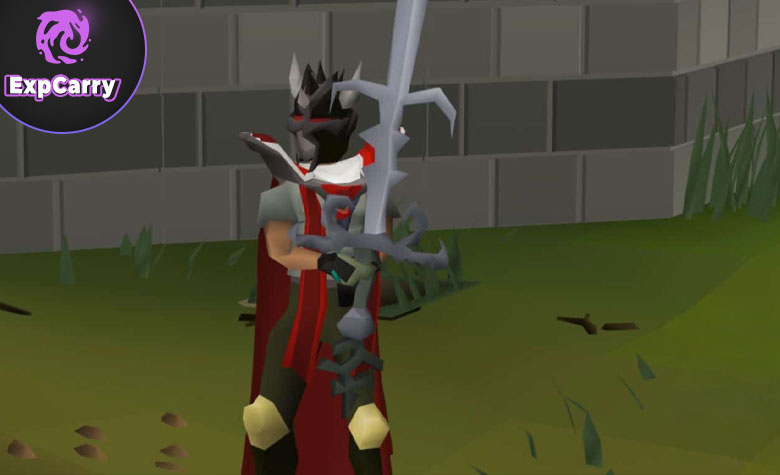
When training melee, set your attack style based on the stat you need. Use Accurate when you need Attack XP to unlock the next weapon tier. Use Aggressive when you want Strength XP for higher max hits. Use Defensive when you need Defence XP for armour upgrades. Controlled can split XP, but beginners usually progress faster by training one goal at a time instead of spreading XP too thin.
The best early order is practical: train Attack until the next scimitar tier, train Strength to improve damage, then raise Defence when enemies start hitting too hard. A beginner melee account should not sit at very low Defence for too long unless it is intentionally becoming a pure. For a normal first account, Defence is not wasted. It keeps questing safer, reduces food costs, and makes longer training sessions smoother.
A simple early rhythm works well: Attack to 20, Strength to 20, Defence to 20, then Attack to 40, Strength to 40, Defence to 40. Members can shortcut much of this through quests, but the logic stays the same. Attack opens weapons. Strength makes those weapons hit harder. Defence lets you stay in combat longer without eating through your bank like a goblin with financial problems.
OSRS Beginner Melee Gear Progression
For beginner melee training, scimitars are the safest default weapon path. They are fast, reliable, easy to understand, cheap to replace, and strong enough to carry early melee progression. Free-to-play players should use the best scimitar they can equip. Members follow the same idea early, then push toward the dragon scimitar after 60 Attack and Monkey Madness I.
Armour progression is just as simple. Wear the best metal armour your Defence level allows when fighting melee enemies. Better armour lowers incoming damage and makes training less supply-heavy. For early accessories, an amulet of strength is usually strong for damage, while an amulet of power gives more balanced bonuses. Pick damage when you can survive comfortably; pick balance when accuracy and defence feel more useful.
| Attack level | Weapon goal | Defence level | Armour goal |
|---|---|---|---|
| 1 | Iron scimitar | 1 | Iron armour if training Defence |
| 5 | Steel scimitar | 5 | Steel armour |
| 10 | Black scimitar | 10 | Black armour |
| 20 | Mithril scimitar | 20 | Mithril armour |
| 30 | Adamant scimitar | 30 | Adamant armour |
| 40 | Rune scimitar | 40 | Rune armour |
| 60 members | Dragon scimitar | 40+ | Rune, granite, fighter torso path, or other affordable upgrades |
Do not waste early gold chasing tiny armour upgrades while your weapon is outdated. A better weapon usually improves training more than a slightly better defensive piece, as long as you are surviving comfortably. The ideal beginner spending order is weapon first, basic armour second, food and supplies third, then Prayer upgrades when the account can afford them. Looking rich while hitting badly is still bad, just with shinier failure.
Members Melee Build Start: Quest XP Before Grinding
Members should start the melee build with quest XP instead of slow manual grinding from level 1. Waterfall Quest is the key early shortcut because it gives 13,750 Attack XP and 13,750 Strength XP with no enemies required to defeat. A fresh account can use that reward to jump straight into useful melee levels, which saves hours of weak early combat.
That does not mean Waterfall Quest is harmless for a brand-new account. You do not need to kill enemies, but the route can still put a low-level player near dangerous monsters. Bring food, use safe travel, keep a teleport option ready, and follow the route carefully. OSRS is perfectly willing to punish a new player for confusing "no required kills" with "nothing can kill you". Charming game design, really.
After Waterfall Quest, the melee route should continue through early combat quests that reward Attack, Strength, Defence, or Hitpoints XP. Good early targets include Vampire Slayer, Fight Arena, Tree Gnome Village, Witch's House, and The Grand Tree when the account is ready. These quests do more than raise stats. They unlock areas, travel routes, quest chains, and account progression that pure monster grinding does not provide.
| Quest | Melee value | Best timing |
|---|---|---|
| Waterfall Quest | Large Attack and Strength XP | As early as possible on members, with food and safe routing |
| Vampire Slayer | Easy Attack XP from a short quest | Early melee account |
| Fight Arena | Strong Attack XP | After basic supplies and safe travel setup |
| Tree Gnome Village | More Attack XP and useful quest progress | Early members route |
| Witch's House | Hitpoints XP for better survival | Early, with preparation |
| The Grand Tree | Combat XP and important members progression | After the account is less fragile |
| Monkey Madness I | Unlocks dragon scimitar access | Major goal after 60 Attack preparation |
This is the biggest difference between members and free-to-play melee progression. Members can skip the worst early levels through quests, then train with stronger weapons and better stats. Manually grinding from level 1 as a member is technically possible, just like eating soup with a fork is technically possible. The question is why you would do that to yourself.
Free-to-Play Melee Build Path
Free-to-play melee progression is slower but still clear. Your main goal is 40 Attack, 40 Strength, and 40 Defence, followed by Dragon Slayer I when you are ready. Dragon Slayer I is the major F2P melee milestone because it unlocks the rune platebody and gives the account a clean early-game target beyond simply hitting monsters until the sun gives up.
Start with simple enemies only long enough to get basic levels, food, and confidence. Chickens, cows, goblins, and monks are fine at the beginning. Then move into stronger options such as minotaurs, flesh crawlers, hill giants, moss giants, and ogress warriors when your stats and supplies support it. The goal is not to stay at the easiest monster forever. The goal is to keep fighting enemies that you can kill consistently without wasting too much food.
| Stage | Combat goal | Training options |
|---|---|---|
| Very early | 1-20 melee stats | Chickens, cows, goblins, monks |
| Early F2P | 20-40 melee stats | Minotaurs, flesh crawlers, hill giants |
| Stronger F2P | 40+ melee stats | Moss giants, ogress warriors, stronger hill giant sessions |
| F2P milestone | Dragon Slayer I preparation | Rune scimitar, rune armour, food, Prayer support |
F2P players should not overcomplicate gear. Use the best scimitar available, wear the best practical armour, bring food, and keep upgrading as your Attack and Defence rise. The rune scimitar is the big early weapon target. Rune armour is the major defensive target. Once those are in place, the account is ready to push Dragon Slayer I and prepare for membership if you decide to continue deeper into the game.
Members Melee Gear After Rune Scimitar
The first major members melee weapon goal is the dragon scimitar. It requires 60 Attack and completion of Monkey Madness I, and it becomes one of the most important early-to-mid melee weapons for a normal account. It is fast, strong, affordable by members standards, and excellent for training Strength. This is the point where the melee build starts feeling much better than basic rune gear.
After the dragon scimitar, your next upgrades depend on budget and progression. Fighter torso is a strong melee body upgrade if you are willing to do Barbarian Assault. Dragon boots become useful later after 60 Defence. Barrows gloves are a major long-term account goal through Recipe for Disaster, though not a beginner unlock. The abyssal whip becomes excellent at 70 Attack for Attack and Defence training, but it does not train Strength directly, so it should not replace your Strength weapon entirely.
| Stage | Main melee goal | Reason |
|---|---|---|
| 40 Attack | Rune scimitar | Best simple early melee weapon path |
| 60 Attack | Dragon scimitar | Core members Strength-training weapon |
| Mid-game body slot | Fighter torso | Strong melee damage bonus without buying expensive armour |
| 60 Defence | Dragon boots | Affordable melee Strength bonus for the boot slot |
| 70 Attack | Abyssal whip | Excellent for Attack and Defence training |
| Long-term gloves | Barrows gloves | Major account upgrade from Recipe for Disaster |
The beginner rule is simple: do not buy gear that your stats cannot make good use of. Raising Strength and unlocking a better weapon usually beats spending your whole bank on a defensive upgrade. OSRS gear progression rewards practical steps. Spend gold where it improves kill speed, survivability, or important unlocks, not where it merely makes your bank tab look briefly important.
Prayer Support for a Beginner Melee Build
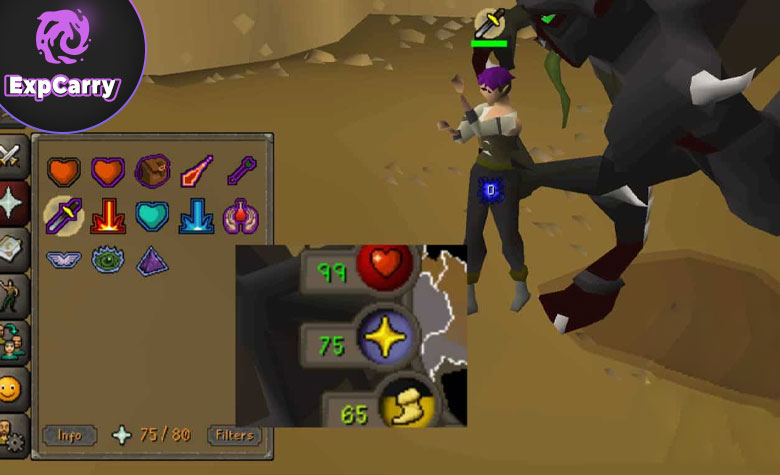
Prayer is not a separate build here. It is melee support. Early Prayer gives damage boosts, better survivability, and eventually protection prayers that make many quests and dangerous fights much safer. The first useful melee Prayer goal is 31 Prayer for Ultimate Strength. The bigger beginner goal is 43 Prayer for Protect from Magic, Protect from Missiles, and Protect from Melee.
Getting 43 Prayer early is especially useful for members because it makes dangerous quest sections much easier. It also helps when learning tougher monsters, Slayer tasks, and early PvM. You do not need to rush it before you can afford bones or training supplies, but it belongs in the first serious account goals for a melee main.
| Prayer level | Unlock | Melee value |
|---|---|---|
| 25 | Protect Item | Useful safety prayer in risky situations |
| 31 | Ultimate Strength | Boosts melee damage for training and fights |
| 34 | Incredible Reflexes | Improves melee accuracy |
| 43 | Protection prayers | Major survival milestone for quests and combat |
Prayer turns a basic melee account into a safer and more flexible one. It does not replace stats, gear, or food, but it gives you tools that matter when enemies hit harder or quests stop being gentle. A beginner melee build with 43 Prayer feels much better than one that treats Prayer like optional decoration.
Best Training Spots for a Beginner Melee Account
The best melee training spot is the one your account can kill consistently with low supply cost. Early on, that matters more than chasing perfect XP rates from a guide made for accounts with better gear, better stats, and less concern for human patience. Beginners should move up gradually as their weapon, Strength, and Defence improve.
Free-to-play players can start with chickens, cows, goblins, and monks, then move to minotaurs, flesh crawlers, hill giants, moss giants, and ogress warriors. Members should use quest XP first, then train on sand crabs or ammonite crabs when available. Crabs are popular because they have high Hitpoints, low pressure, and simple mechanics, which makes them strong for relaxed melee training.
| Account type | Training stage | Good melee options |
|---|---|---|
| F2P | Very early | Chickens, cows, goblins, monks |
| F2P | Early-mid | Minotaurs, flesh crawlers, hill giants |
| F2P | Stronger account | Moss giants, ogress warriors |
| Members | Fresh account | Waterfall Quest and early combat quests |
| Members | Early training | Sand crabs |
| Members | Mid training | Ammonite crabs, Slayer tasks |
| Members | Later melee growth | Slayer, Nightmare Zone after enough quests |
Slayer becomes more valuable once the account has stable melee stats and gear. It is not always the fastest raw XP early, but it gives long-term account progress, unlocks monsters, and teaches combat variety. For a beginner melee account, the clean route is quest XP first, crabs or F2P training second, then Slayer when your stats and supplies can support it.
Melee Build Priority Order From Level 1 to Mid-Game
A clean beginner melee route keeps goals in order. First, unlock usable scimitars. Second, raise Strength so those scimitars hit harder. Third, raise Defence for armour and longer trips. Fourth, add Prayer support. Fifth, push the members path toward dragon scimitar. This keeps the account focused instead of turning it into a collection of half-finished ideas, which is already what most banks become after three days in OSRS.
| Step | Goal | Result |
|---|---|---|
| 1 | Reach 20 Attack, Strength, and Defence | Basic melee base and mithril gear path |
| 2 | Reach 40 Attack | Rune scimitar unlocked |
| 3 | Reach 40 Strength | Better max hits and faster training |
| 4 | Reach 40 Defence | Rune armour unlocked |
| 5 | Reach 31 Prayer | Useful melee damage prayer |
| 6 | Reach 43 Prayer | Protection prayers for quests and harder fights |
| 7 | Members: reach 60 Attack | Dragon weapon tier unlocked |
| 8 | Members: complete Monkey Madness I | Dragon scimitar becomes available |
| 9 | Raise Strength to 60+ | Stronger melee damage and smoother Slayer start |
This order gives a beginner account momentum. Rune scimitar and rune armour create a solid early base. Prayer makes harder content safer. Dragon scimitar creates the first major members melee spike. Strength then carries training speed forward. The build stays simple because simple works, and because OSRS already has enough obscure chores waiting in the bushes.
Final Thoughts on the Best OSRS Beginner Melee Build
The best OSRS beginner melee build for a normal main account is a balanced melee setup with 40 Attack, 40 Strength, 40 Defence, rising Hitpoints, and 31 to 43 Prayer as the first major foundation. Free-to-play players should use the best scimitar available, aim for rune gear, complete Dragon Slayer I, and build a stable account before moving into membership. Members should use Waterfall Quest and other early combat quests to skip weak levels, then push toward 60 Attack and Monkey Madness I for the dragon scimitar.
The stronger early-members version of the build is 60 Attack, 60+ Strength, 40 to 60 Defence, and 43 Prayer. At that point, the account has real melee damage, usable survivability, protection prayers, and access to one of the most important early melee weapons in the game. From there, Slayer, fighter torso, barrows gloves, 60 Defence for dragon boots, abyssal whip, and mid-game questing become natural next steps.
This build is the best beginner melee route because it does not trap the account, waste gold, or force new players into awkward restrictions. It teaches the core of OSRS melee: weapon tiers, damage scaling, armour unlocks, Prayer support, quest XP, and practical training. Start with scimitars, build Attack and Strength first, keep Defence useful, add Prayer, and use quests instead of grinding every bad early level by hand. That gives a new player a clean first account instead of another heroic Lumbridge casualty with a bronze sword and misplaced confidence.