




Perilous Moons is one of the strongest midgame PvM activities in Old School RuneScape because it gives players real bossing practice without demanding expensive supplies every attempt. The dungeon beneath Cam Torum provides its own food, potions, tools, and a clean boss loop built around three Moons: Eclipse Moon, Blue Moon, and Blood Moon. That makes it a useful step between early PvM and harder bossing, especially for players who want profit, mechanics, and account progression without pretending they are raid-ready after watching one guide at 2x speed.
The core loop is simple. Complete the Perilous Moons quest, enter Neypotzli, gather dungeon supplies, kill one or more Moon bosses, and loot the Lunar Chest. Full runs usually kill all three bosses before looting because that gives the best general reward flow and access to all three unique tables. Targeted runs can focus on one Moon if you are chasing a specific set, especially on an Ironman. The fights are not mechanically brutal, but they punish bad gear choices, weak Defence, lazy movement, and players who think Protection prayers solve every problem in the game. They do not. Humanity survives another disappointment.
OSRS Perilous Moons Requirements and Unlocks
Access to the repeatable Moons of Peril boss fights requires completion of the Perilous Moons quest in Varlamore. The dungeon is located in Neypotzli, beneath Cam Torum. After finishing the quest, you can return to the ancient prison and farm Eclipse Moon, Blue Moon, and Blood Moon as repeatable PvM content. This is midgame content, but "midgame" does not mean you should walk in wearing paper armour and moral support. The Moons hit hard enough to expose bad defensive setups very quickly.
The quest has real requirements, not just a vague invitation to suffer. You need Twilight's Promise completed, along with 10 Construction, 20 Fishing, 20 Hunter, 20 Runecraft, and 48 Slayer. Those are the unlock requirements. For actually farming the bosses comfortably, aim much higher in combat: around 70 Attack, 70 Strength, 70 Defence, and 43 Prayer as a practical floor, with 70 Prayer for Piety being a major upgrade. You can attempt the content with lower combat stats, but slower kills and heavier damage make every mistake more expensive.
Useful stats before farming Perilous Moons
For comfortable farming, 70+ melee stats, 70 Defence, and 70 Prayer for Piety are the clean target. Defence is especially valuable because the Moons use rapid multi-hit melee attacks, and preventing successful hits reduces incoming damage, saves food, and keeps your damage uptime stable. Herblore, Cooking, Fishing, and Hunter also matter because Neypotzli lets you create supplies inside the dungeon instead of draining your bank every run.
The best accounts for Perilous Moons are balanced midgame accounts, not fragile melee accounts built only around Strength bonus. Solid defensive armour, correct weapon styles, prayer access, and enough skilling levels to use the dungeon supply system make the entire loop smoother. This content rewards preparation more than raw aggression, which is inconvenient for players whose entire strategy is clicking boss and hoping.
| Requirement type | Requirement or recommendation | Why it matters |
|---|---|---|
| Quest unlock | Twilight's Promise | Required before starting Perilous Moons |
| Skill requirements | 10 Construction, 20 Fishing, 20 Hunter, 20 Runecraft, 48 Slayer | Required for the quest and access to the boss content |
| Practical combat stats | 70+ Attack, Strength, and Defence | Makes kills smoother and reduces supply pressure |
| Prayer | 43 minimum, 70 strongly recommended | Protection prayers help less than usual, but Piety is a major DPS and Defence upgrade |
| Skilling support | Higher Herblore, Cooking, Fishing, and Hunter | Improves the value and convenience of dungeon-made supplies |
Perilous Moons Gear Setup for Midgame Accounts
Perilous Moons strongly favors tanky melee gear. This is not the place to wear your weakest defensive setup just because it gives slightly more Strength bonus. The bosses use fast melee attack sequences, and defensive rolls matter more here than many players expect. Barrows tank armour is excellent because it gives strong protection without requiring absurd endgame money. Torag, Dharok, Guthan, and Verac pieces are all useful depending on your budget and account progression.
You should bring different weapon styles for the three bosses. Eclipse Moon is weak to stab, Blue Moon is weak to crush, and Blood Moon is weak to slash. Using the wrong attack style makes the fights slower and uglier, which is impressive because Blood Moon already does enough emotional damage by itself. A simple midgame setup can use a stab weapon for Eclipse, a crush weapon for Blue, and a slash weapon for Blood, with one high-hit weapon kept for Eclipse clone phase if your normal weapon is not ideal there.
| Slot or role | Budget option | Stronger midgame option | Main reason |
|---|---|---|---|
| Helmet | Helm of neitiznot | Barrows helm or Serpentine helm | Good balance of Strength, Prayer, or Defence depending on setup |
| Body | Rune platebody | Torag, Dharok, Guthan, or Verac body | High defensive value reduces damage and eating |
| Legs | Rune platelegs | Barrows legs | Tank legs are one of the best comfort upgrades |
| Shield slot | Dragon defender | Crystal shield, Dragonfire shield, or another strong defensive shield | Defence can be worth more than small offensive gains while learning |
| Eclipse weapon | Dragon sword or dragon hasta | Zamorakian hasta or another strong stab weapon | Eclipse Moon is weak to stab |
| Blue weapon | Dragon mace or zombie axe on crush | Dual macuahuitl or glacial temotli | Blue Moon is weak to crush and rewards strong crush damage |
| Blood weapon | Dragon scimitar or zombie axe on slash | Dual macuahuitl, sulphur blades, or another strong slash weapon | Blood Moon is weak to slash |
Tank gear beats fragile damage setups at Perilous Moons
The common beginner error is using a normal melee DPS setup with weak defensive stats and then wondering why the bosses feel brutal. Perilous Moons rewards tank gear because reducing incoming hits saves food and keeps your attacks flowing. Eating less is a DPS increase because every panic-eat is another delayed attack. Surviving longer is also useful, a discovery that continues to shock aggressive players across every MMO.
Barrows pieces are especially strong here. Even mixed Barrows armour can make a major difference, and full perfect gear is not required. If your kills feel slow because you are eating constantly, upgrade your defensive armour before chasing small damage upgrades. The fastest improvement for many accounts is not a new weapon. It is simply taking fewer hits.
Best weapon style for each Moon boss
Eclipse Moon should be fought with stab during the normal phase. A Zamorakian hasta, dragon hasta, dragon sword, or another accurate stab weapon works well depending on your budget. During the clone phase, a slower high-hit weapon can be useful because the phase rewards strong individual hits more than weak rapid hits.
Blue Moon should be fought with crush. Zombie axe on crush, dragon mace, dual macuahuitl, and glacial temotli are all realistic options depending on where your account sits. Blood Moon should be fought with slash. Zombie axe on slash, dragon scimitar, sulphur blades, dual macuahuitl, or another strong slash weapon can all work. The important part is not pretending one weapon solves all three bosses. That is how players turn a clean farm into a slow public autopsy.
Neypotzli Supplies and Dungeon Preparation
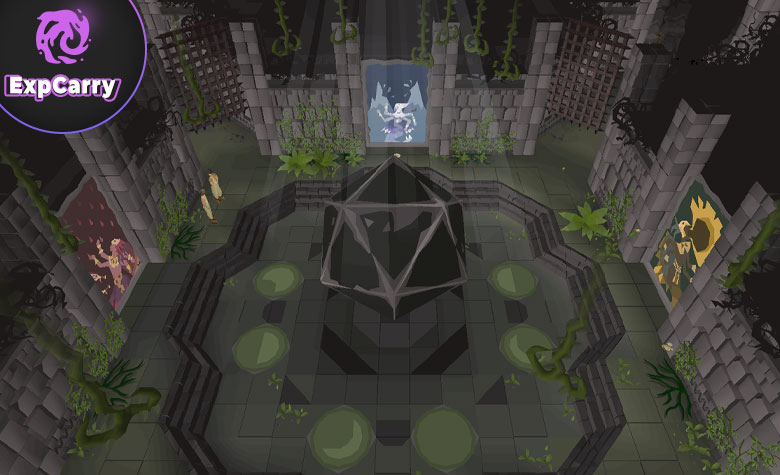
One of the best parts of Perilous Moons is the internal supply system. Neypotzli provides campsites where you can gather tools, prepare food, and create Moonlight Potions. This means you usually do not need to bring stacks of sharks, prayer potions, or super combats from your bank. You bring gear, an emergency teleport, and maybe a few safety supplies while learning. The dungeon handles the rest if your skilling levels are not tragic.
Moonlight Potions are especially important because they restore Prayer and provide combat support inside the dungeon. You gather Moonlight Grubs, process them, and use dungeon resources to create potions. Their strength depends on your Herblore level, so higher Herblore makes the content more comfortable. Food can also be made from dungeon resources, including fish or lizards depending on your Fishing, Hunter, and Cooking levels.
| Supply type | Source inside Neypotzli | Use | Main note |
|---|---|---|---|
| Moonlight Potion | Moonlight Grubs and dungeon resources | Prayer restoration and combat support | Higher Herblore improves value |
| Cooked bream | Fishing and Cooking inside the dungeon | Food for boss fights | Good if your Fishing and Cooking are solid |
| Cooked moss lizard | Hunter and Cooking inside the dungeon | Food for boss fights | Useful if Hunter is stronger than Fishing |
| Moonlight moths | Hunter around camps | Prayer restoration | Useful between fights when available |
| Campsite tools | Supply crates | Gathering and preparation | Lets you prepare without banking every run |
Perilous Moons inventory setup
A normal setup should keep your inventory simple. Bring your weapon switches, a teleport out, and enough empty space to manage dungeon supplies. You do not need a full inventory of bank food once you understand the supply loop. While learning, bringing a few emergency food pieces is reasonable, but relying on outside supplies forever defeats one of the main advantages of this content.
The clean loop is to enter, gather supplies, prepare food and potions, kill the Moons, loot the chest, then repeat. Once you know the route, this becomes one of the smoother midgame boss cycles in OSRS. The dungeon is designed to reduce banking friction, not to reward players for turning every run into a moving company operation.
Core Perilous Moons Mechanics Every Run Uses
All three Moons share several important rules. Each Moon has its own health tracked for your character, even when other players are visible in the arena. That means you can fight near other players, but you still need to deal your own damage to earn your own kill. This gives the dungeon a shared-world feel without letting someone else carry your boss health while you admire the scenery.
The bosses use repeated melee attacks, arena glyphs, and special phases. Protection prayers are not the main answer here. Defensive gear, correct positioning, and boss-specific mechanics matter more. Each boss has its own rhythm, and learning that rhythm is what turns messy first kills into smooth full rotations.
Glyph movement and attack rhythm
During standard attacks, pay attention to the active glyph in the arena. Standing correctly reduces unnecessary damage and keeps the fight stable. The active area changes as the fight continues, so you cannot plant yourself in one place and expect the game to reward your commitment to laziness. Move with the fight, keep attacking, and avoid panic eating unless you actually need it.
The basic attack rhythm also makes Defence valuable. Because the Moons attack in quick sequences, strong defensive gear can prevent damage that would otherwise force repeated eating. Perilous Moons is not only a DPS check. It is a survival and uptime check. The player who deals slightly less damage but eats half as often usually has a cleaner run than the player wearing fragile gear and screaming internally every attack cycle.
Eclipse Moon Strategy and Stab Gear
Eclipse Moon is weak to stab and is usually the cleanest Moon to learn first. It punishes poor movement and weak attack style choices, but its mechanics are readable once you understand the arena. Use your stab weapon during the normal phase, stay aware of the active glyph, and prepare for the two major special phases: the shield phase and the clone phase.
The main mistake at Eclipse Moon is using the wrong weapon for the wrong phase. A stab weapon is preferred during standard attacks, but the clone phase rewards large, accurate hits. Many players bring a slow, hard-hitting weapon for that phase, even if it is not the same weapon they use for normal attacks. That swap can speed up kills dramatically once practiced.
Eclipse Moon clone phase and shield phase
During the clone phase, you are locked near the center while clones appear around the arena. Face the active clone as it appears and attack or parry correctly. Good reactions damage the boss and shorten the phase. A high-hit weapon is useful here because the phase rewards strong individual hits. If you click slowly or face the wrong direction, the phase becomes longer and messier, which is the game's polite way of saying "pay attention."
During the shield phase, follow the moving safe area and avoid the damaging light. Walking is usually enough if you stay calm and move correctly. Running wildly can make the phase worse if you overshoot. This is not a race. It is a positioning check with glowing punishment for players who treat every mechanic like a suggestion.
Simple Eclipse Moon fixes for slower kills
If Eclipse Moon feels slow, check your stab weapon first. A weak slash or crush setup will waste time even if your armour is fine. If the normal phase feels acceptable but the clone phase drags, bring a better high-hit weapon for that specific phase. The fight becomes much cleaner once your weapon choices match the boss's actual weakness and phase design.
Do not waste supplies by eating during safe damage opportunities unless you are genuinely low. Keep attacking during normal windows, move correctly during the shield phase, and focus cleanly during clone phase. Eclipse Moon is usually the best place to build confidence before Blue Moon and Blood Moon start making the dungeon feel less polite.
Blue Moon Strategy and Crush Gear

Blue Moon is weak to crush and rewards weapons that perform well against its defensive profile. Dual macuahuitl, glacial temotli, zombie axe on crush, dragon mace, or other strong crush options can all work depending on your account and budget. This boss is often comfortable once you learn the specials, but sloppy movement can still waste time and supplies.
The main Blue Moon mechanic theme is cold and disruption. It can interfere with your attacks, force movement, and create phases where you need to handle objects instead of simply hitting the boss. Blue Moon is not the hardest fight, but it exposes players who ignore mechanics while hoping their gear solves everything. Gear helps. It does not do your homework.
Blue Moon weapon freeze and brazier phase
During the weapon freeze special, your weapon can become trapped in ice. Your job is to identify the correct ice block, break it quickly, recover your weapon, and return to the boss. Do not waste time hitting random blocks like a man resolving emotional issues with frozen furniture. The faster you recover your weapon, the less damage uptime you lose.
During the brazier phase, focus on relighting the braziers while avoiding storm damage. The boss can recover if the phase is handled poorly, so beginners should learn the mechanic instead of trying to brute-force through it. Move cleanly, interact with the correct objects, and return to attacking as soon as the phase ends. Stronger accounts can reduce the impact through faster DPS, but proper handling is still more reliable than pretending the phase is optional.
Simple Blue Moon fixes for cleaner runs
If Blue Moon feels slow, check whether you are using a real crush weapon. A generic melee weapon on the wrong style will turn the fight into unnecessary labour, which OSRS already provides in many other forms. Zombie axe on crush is a good practical option for many midgame accounts, while dual macuahuitl and glacial temotli are stronger options when available.
If supplies are disappearing too quickly, the problem is usually missed movement or poor special handling. Blue Moon is not just a damage test. The fight wants you to recover your weapon quickly, handle the brazier phase, and return to the boss without wasting half the room's worth of time.
Blood Moon Strategy and Slash Gear
Blood Moon is weak to slash and is usually the boss that makes players complain first. The reason is simple: Blood Moon can heal heavily from its attack pattern if you let it connect too freely. Bad gear and bad movement make the fight feel far worse than it should. Strong slash weapons, tank armour, and clean positioning are the difference between a stable kill and watching the boss undo your progress like a bureaucrat with claws.
This boss is the strongest argument for defensive armour at Perilous Moons. If Blood Moon lands too many hits, it can recover enough health to drag the fight out. Longer fights mean more supplies, more mistakes, and more chances to tilt. Reducing hits is not optional comfort. It is part of the strategy.
Blood Moon healing control and step-under timing
Blood Moon's basic attacks are dangerous because later parts of the sequence can create heavy healing for the boss. A common optimization is stepping under the boss at the right timing to disrupt the most punishing part of the sequence. This can reduce the boss's healing and make the fight much cleaner. It takes practice, but it is one of the most valuable techniques for players struggling with Blood Moon.
Do not spam food during your own attack windows unless you need to survive. Eating delays your damage, and lower damage uptime gives Blood Moon more time to heal and pressure you. Eat during safer windows, use your dungeon supplies intelligently, and focus on reducing the boss's successful hits. This fight rewards calm rhythm more than frantic clicking, a tragic outcome for panic enjoyers.
Blood Rain and Blood Jaguar phases
During Blood Rain, avoid the blood pools. Standing in them can damage the run and make the boss's pressure worse. Your priority is movement, not greed. Keep yourself safe, return to attacking when the phase ends, and do not chase tiny damage if it puts you in a bad tile.
During the Blood Jaguar phase, stand on the correct glyph, manage the jaguar, and avoid the cleave. Attacking the jaguar can restore health, which makes the phase useful instead of purely defensive if handled correctly. The danger comes from trying to ignore the phase and brute-force through it. That strategy works until it does not, which is also the motto of many terrible OSRS decisions.
Simple Blood Moon fixes for failed kills
If Blood Moon feels impossible, upgrade defensive armour before blaming your weapon. Barrows tank pieces are often a bigger improvement than a small Strength bonus upgrade. If the boss keeps healing too much, learn the step-under timing and stop letting the full attack sequence connect freely. Blood Moon is where sloppy defensive setups get punished most brutally.
Use a proper slash weapon, keep Piety active if you have it, and avoid eating during every small damage spike. The goal is to reduce boss healing, maintain your own damage uptime, and avoid turning the fight into a long argument with a vampire-themed health bar.
Best Perilous Moons Kill Order and Farming Route
Most players should farm all three Moons before looting the Lunar Chest. A full rotation gives the best general reward flow and lets you roll across all three unique reward families. A common beginner-friendly route is Eclipse Moon, Blue Moon, then Blood Moon. Eclipse is usually the cleanest fight to warm up on, Blue Moon is manageable once the special phases are learned, and Blood Moon is better handled when you still have enough supplies and focus left to avoid feeding it free healing.
Target farming can make sense if you want a specific set piece, especially on Ironman accounts. Killing only one Moon and looting focuses your unique chance toward that Moon's reward family, but it reduces your broader loot value and skips chances at the other sets. Full clears are usually better for mains and players who want general profit, collection log progress, and consistent account progression.
| Farming style | Best for | Strength | Tradeoff |
|---|---|---|---|
| Full three-Moon run | Main accounts, general profit, collection log progress | Best overall reward spread and access to all three unique tables | Requires consistent kills on all three bosses |
| Single-Moon target run | Ironmen chasing one specific set | Focuses unique rolls toward one Moon's reward family | Less broad loot and lower overall variety |
| Learning route | First-time players | Lets you practice one boss at a time | Lower efficiency until all three fights are learned |
Lunar Chest reward logic
The Lunar Chest gives rewards based on which Moon bosses you defeat before looting. Each defeated Moon gives access to that Moon's unique reward table, and full three-Moon runs give independent chances at Blood Moon, Blue Moon, and Eclipse Moon uniques. The overall chance of seeing at least one unique is much better when all three bosses are defeated before looting, which is why full clears are the default farming method for most players.
Single-Moon farming is not useless. It is simply more specialized. If you only care about Blood Moon gear, for example, killing Blood Moon and looting can keep your unique rolls focused on that family. If you care about profit, broad progression, or collection log completion, full runs are usually cleaner. OSRS players love turning loot math into theology, but the practical rule is simple: full runs for overall value, target runs for specific set chasing.
Perilous Moons Rewards and Moon Armour Sets
The main reason to farm Perilous Moons is the Moon equipment. Blood Moon, Blue Moon, and Eclipse Moon each provide a themed armour set and weapon. These sets are especially important for midgame accounts because they offer meaningful combat options before more expensive gear. They are also valuable for Ironmen because the content is self-contained and does not require massive supply drain.
The reward sets are not identical in purpose. Blood Moon is melee-focused and built around aggressive close-range damage. Blue Moon is a Magic and melee hybrid set. Eclipse Moon is a Ranged and melee hybrid set with the Eclipse Atlatl as its signature weapon. This gives Perilous Moons more identity than a simple loot chest full of generic armour pieces.
| Reward set | Main weapon | Combat identity | Best value |
|---|---|---|---|
| Blood Moon | Dual macuahuitl | Melee damage with multi-hit pressure | Strong midgame melee gear and useful slash or crush applications |
| Blue Moon | Blue Moon spear | Magic and melee hybrid play | Hybrid utility and niche combat setups |
| Eclipse Moon | Eclipse atlatl | Ranged weapon using melee Strength value | Useful hybrid ranged option with burn-based identity |
Blood Moon set for melee progression
The Blood Moon set is often the most attractive reward for players looking at direct melee progression. Its armour has strong offensive value, and the dual macuahuitl give the set a distinct multi-hit identity. For midgame players, this can be a serious stepping stone before more expensive melee gear. For Ironmen, it can be even more valuable because it comes from content that is repeatable without heavy outside supplies.
The set is not automatically best everywhere, but it fills a real progression gap. That is the point. Perilous Moons rewards are not only collection log bait. They can actively improve the way a midgame account farms, bosses, and trains combat.
Blue Moon and Eclipse Moon set value
The Blue Moon set is more specialized because it leans into Magic and melee hybrid play. That makes it less universally obvious than Blood Moon gear, but still useful for accounts that want flexible combat options. The Blue Moon spear and armour give the set its own identity rather than acting as a plain mage robe replacement.
The Eclipse Moon set is built around Ranged and melee interaction, with the Eclipse Atlatl being the standout item. It uses melee Strength in its damage profile, which makes it unusual and valuable in specific setups. The full set also has a burn-based theme, giving it a more distinct role than a generic ranged armour set.
Perilous Moons Money Making and Farming Value
Perilous Moons can be a strong midgame money maker, but the exact GP per hour depends heavily on Grand Exchange prices, your kill speed, how often you complete full rotations, and whether you hit unique drops. Current player-facing money-making routes often place efficient Moons of Peril farming around the low-million GP-per-hour range, but that number moves with the market. Treat any fixed GP number as a snapshot, not scripture. This is OSRS economics, not a stable society.
The value comes from a mix of unique equipment and steady standard loot. Full three-Moon runs are usually the best option for mains because they give access to all reward families and keep the loop consistent. Ironmen may value the activity even more because the supplies are largely self-contained and the unique sets can unlock useful combat options without relying on expensive tradeable upgrades.
Main account profit vs Ironman progression
For main accounts, Perilous Moons is valuable because it combines low supply cost with sellable uniques. You are not burning through large amounts of banked supplies once you understand the dungeon preparation loop, so even average runs can feel efficient. The better your kill speed, the more the activity turns into a stable midgame farm rather than a slow mechanics lesson with loot attached.
For Ironmen, the value is broader than GP. Blood Moon, Blue Moon, and Eclipse Moon gear can all fill progression gaps, and the self-contained supply system makes repeated attempts less punishing. This is one of the reasons Perilous Moons remains attractive even after players outgrow the quest itself. It gives practice, loot, and progression without asking your bank to bleed every run.
Perilous Moons Tips That Make Runs Cleaner
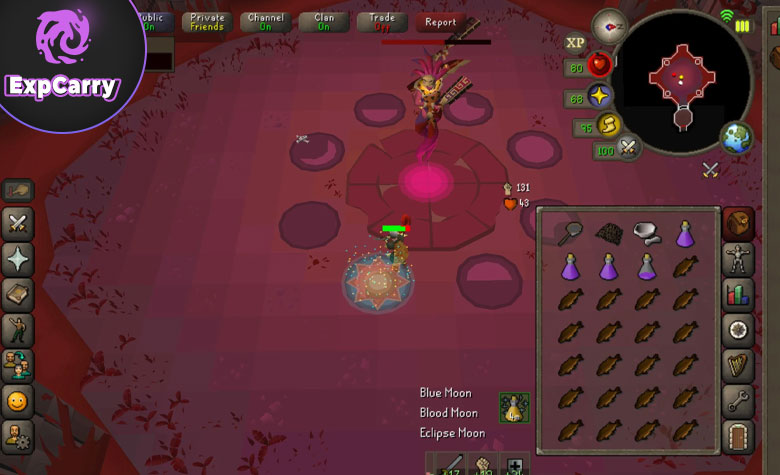
The fastest way to improve at Perilous Moons is to stop treating it like Barrows with prettier lighting. The content is inspired by older midgame PvM, but the bosses have real mechanics. Gear matters, movement matters, and correct weapon styles matter. If your kills feel awful, the problem is usually one of three things: weak defensive gear, wrong attack style, or poor special-phase handling.
Start by improving survival. Use tank armour, bring the correct weapon styles, prepare enough dungeon supplies, and learn each special phase properly. Once you stop dying or eating constantly, then start optimizing speed. Trying to speedrun before you can perform mechanics cleanly is just failing faster, which is efficient only in the most depressing sense.
Simple fixes for slow Perilous Moons kills
If Eclipse Moon feels slow, check your stab weapon and clone-phase weapon. If Blue Moon feels slow, use a better crush weapon and handle the brazier phase properly. If Blood Moon feels impossible, upgrade your tank gear and learn the step-under timing. Blood Moon is often the boss where bad defensive setups get exposed most brutally.
Piety is a major upgrade if you have 70 Prayer. Better Herblore also improves your dungeon potions. Barrows armour can be more valuable than a minor weapon upgrade. Use defensive boots, useful rings, and a shield if your damage uptime is being ruined by constant eating. The goal is not to look like a max-efficiency spreadsheet. The goal is to kill all three bosses smoothly and loot the chest without turning every run into a medical emergency.
Beginner route for first full clears
For your first stable full clears, use a simple route: prepare supplies, kill Eclipse Moon, move to Blue Moon, finish with Blood Moon, then loot the Lunar Chest. This order is not mandatory, but it works well for learning because Eclipse is usually the cleanest fight, Blue Moon teaches object handling, and Blood Moon tests whether your defensive setup and rhythm are actually good.
Once you are comfortable, route order becomes personal preference and efficiency. The important thing is consistency. Learn one route, build muscle memory, and only optimize after the kills are stable. Changing everything every run is a reliable way to stay mediocre, a proud human tradition.
OSRS Perilous Moons Farming Verdict
Perilous Moons is worth farming for midgame accounts, Ironmen, and players who want a self-contained PvM loop with useful rewards. The content teaches positioning, gear selection, boss-specific mechanics, and efficient supply management without demanding raid-level skill. It also gives meaningful unique rewards that can push an account forward instead of handing out novelty items destined for a forgotten bank tab.
The best general strategy is to farm full three-Moon runs once you can kill every boss comfortably. Target farming one Moon is useful when chasing a specific set, but full clears are cleaner for broad rewards and account progression. If you are still learning, practice each boss separately until the specials stop feeling chaotic, then combine them into one smooth loop.
Final Thoughts
OSRS Perilous Moons is one of the strongest pieces of midgame PvM because it respects the player's time without removing the need to learn mechanics. The dungeon supplies reduce banking pressure, the bosses teach useful combat habits, and the Lunar Chest gives rewards that can actually matter for account progression. It is approachable, but not brainless. That balance is why the content works.
The main lesson is simple: bring tank gear, use the correct attack styles, and learn the special phases instead of trying to brute-force everything. Eclipse Moon wants stab and clean clone reactions. Blue Moon wants crush and proper brazier handling. Blood Moon wants slash, defensive gear, and healing control. Once those pieces click, the entire activity becomes much smoother.
For players stuck between early PvM and harder bossing, Perilous Moons is exactly the kind of content worth farming. It gives practice, profit, gear progression, and a contained gameplay loop that does not drain your bank every attempt. Learn it properly, and it becomes a reliable midgame money maker and reward farm. Ignore the mechanics, and it becomes another place where your character gets humbled by ancient prison moon monsters, because apparently even celestial bodies have better fundamentals than some players.