
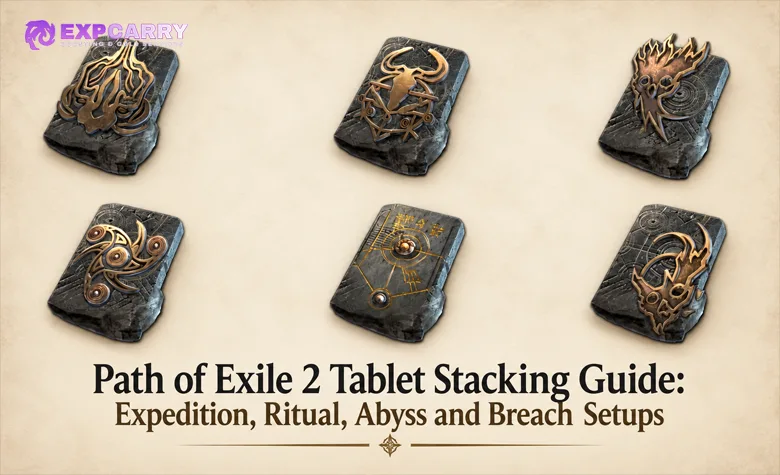
Path of Exile 2 Tablet stacking is no longer about placing one Tablet in a Tower and hoping the right cluster of Atlas maps receives its effect. Tablets are now inserted directly into the Map Device with the Waystone, and the amount of investment you can apply to one map is controlled by the Waystone itself. A Waystone with 1-2 modifiers provides one Tablet slot, 3-5 modifiers provide two, and 6 or more modifiers unlock the normal maximum of three. A City Map can reach four with the right Atlas passive.
This Path of Exile 2 Tablet stacking guide turns those rules into ready farming setups for Expedition, Ritual, Abyss, and Breach. The goal is not to spend the maximum number of Tablets on every map. It is to match the number and type of Tablets to the mechanic, map layout, Waystone modifiers, Atlas passives, and clear speed so that every consumed use produces content you can actually finish.
How Tablet Stacking Works in Current Path of Exile 2
The modern Tablet system has two layers. First, the Waystone determines how many Tablet slots are available. Second, the Tablets determine which extra content is added and how strongly that content is stacked. Grinding Gear Games established the direct Map Device system in the 0.3.1 patch notes, then expanded same-type stacking in 0.5.0 so multiple copies of one Tablet can increase the number, size, or density of that mechanic, depending on the content type.
Normal non-Unique Tablets have 10 uses. Opening maps with them gradually consumes those uses until the Tablet is destroyed. That makes a Tablet batch an input cost, not a permanent Atlas setting. Expensive rolls should therefore be reserved for maps where their mechanic, layout, and Waystone are good enough to justify another use.
The first mistake to remove from any old guide is the Tower requirement. Towers still reveal Atlas territory and reward Tablets, but you do not socket Tablets into Towers to affect nearby maps. Put the Waystone and Tablets into your personal Map Device for the map you are about to run.
Tablet Slot Requirements: 1, 2, 3, and 4 Tablet Maps
The number of Waystone modifiers is the first gate for every stacking strategy. A map that does not expose enough slots cannot run the planned setup even if you own the Tablets. City Maps add one special exception through the main Atlas Passive Tree.
| Tablet Slots | Waystone Requirement | Extra Requirement | Best Use |
|---|---|---|---|
| 1 | 1-2 Waystone modifiers | None | Cheap guaranteed access to one chosen mechanic |
| 2 | 3-5 Waystone modifiers | None | Budget same-type stacking or one target Tablet plus one support Tablet |
| 3 | 6 or more Waystone modifiers | None | Normal maximum for dedicated Expedition, Ritual, Abyss, or Breach farming |
| 4 | Enough modifiers to unlock the normal three slots | City Map plus Industrial Improvements | High-investment City farming and the full four-Tablet Expedition breakpoint |
Waystones must also be identified before they can be activated. Tablets cannot be applied to Unique Maps or to a map area that has already been attempted. If you fail a map and return to the same Atlas node, do not plan the second attempt around another Tablet stack because the failed area no longer accepts Tablets.
The City-only fourth slot comes from Industrial Improvements. This main Atlas passive applies to level 75 or higher areas and requires completion of the Burning Monolith. Players still building toward that point can use the PoE 2 Atlas Passive Tree guide to separate main-tree progression from the dedicated mechanic trees. A four-Tablet screenshot is not a normal map baseline; it assumes both a City location and the passive.
Why Filling Every Tablet Slot Changes the Map
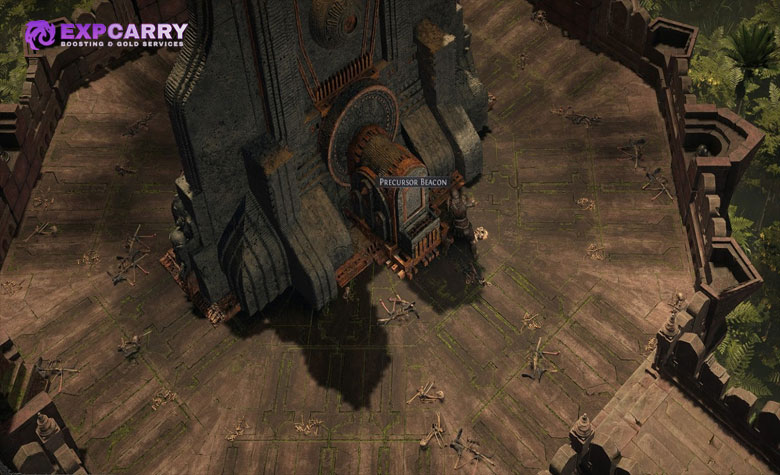
Tablet stacking does more than add several bonuses. Since the 0.5.0 endgame rework, each empty Tablet slot contributes to random non-Tablet league content. Filling every available slot removes that contribution and focuses the map on the league content supplied by the Tablets you chose.
This creates two valid Atlas plans. A dedicated farmer fills the slots because consistency is the goal: three Breach Tablets should produce a Breach-focused map instead of relying on unrelated random encounters. A mixed farmer can intentionally leave one slot open when additional random content has value and the target mechanic does not need another Tablet.
The important detail is that a locked slot is not the same as a deliberately unused available slot from a planning perspective. If you want a three-Tablet farm, roll a Waystone with at least six modifiers first. Running a weak Waystone with only two available slots and calling it a three-Tablet strategy means the setup failed before the map opened.
Explore services related to this guide, selected from our Path of Exile 2 catalog.
View All Path of Exile 2 Services


Ready Tablet Stacking Setups at a Glance
The four mechanics scale differently, so there is no universal "three of the same Tablet" rule. Expedition has explicit 1/2/3/4 breakpoints in 0.5.5, Ritual can add further Altars when the layout allows them, current Abyss documentation reports additional pits from multiple Tablets, and Breach adds more Unstable Breaches. The following table is a routing summary; the detailed sections explain when to stop at two, when to use three, and when a City four-stack is worth the extra investment.
| Mechanic | 2-Tablet Setup | 3-Tablet Setup | 4-Tablet City Setup | Main Map Requirement |
|---|---|---|---|---|
| Expedition | Expedition + Expedition | Expedition x3 | Expedition x4 | Open placement space and a build that can clear increased Expedition density |
| Ritual | Ritual + Ritual | Ritual x3 | Ritual x4 when the City layout can place the additional Altars | Enough usable arena space for extra Altars and dense revived packs |
| Abyss | Abyss + Abyss | Abyss x3 | Abyss x4 for high-investment City farming | Open layout with enough room for several Abyss paths and pits |
| Breach | Breach + Breach | Breach x3 | Breach x4 when clear speed supports the extra encounters | Open terrain and enough damage to extend and stabilise Breaches |
These are pure same-type templates. Mixed setups are useful too, but only after you understand what is being sacrificed. Replacing one Abyss Tablet with Ritual does not create a "better" Abyss setup; it creates a mixed map with less Abyss stacking and more encounter variety.
Expedition Tablet Stacking: Exact 0.5.5 Breakpoints
Expedition is the easiest mechanic to plan because the 0.5.5 patch notes define exactly what each additional Expedition Tablet does. Expedition is also core again in Standard and is available in Forbidden Rites, so these stacking breakpoints are not limited to the old Runes of Aldur league.
- One Tablet: adds a Kalguuran Expedition to the map.
- Second copy: adds a Verisium Remnant and raises Kalguuran Expedition density by 35%.
- Third copy: adds another Kalguuran Expedition.
- Fourth copy: adds another Verisium Remnant and another 35% increased Expedition density.
Increased Expedition density affects Chests, Monster Flags, and Verisium Remnants inside Expedition sites. This makes the two-Tablet breakpoint more than a simple duplication. The second Tablet improves Expedition density, while the third creates another Expedition. The fourth, available through the City slot, increases the investment again with another Verisium Remnant and another density bonus.
Two-Tablet Expedition Setup
Use two Expedition Tablets as a practical low-complexity breakpoint. The first guarantees the encounter and the second adds a Verisium Remnant plus the 35% density increase. This is a useful testing setup for a build that has not yet proven it can handle two separate Expedition sites in a heavily rolled map.
Prioritise Tablet explicits that support the reward loop you actually use. Increased Logbook quantity from Runic Monsters is useful for Ocean and Grand Expedition progression. Increased explosive area or placement support improves the number of Remnants, flags, and chests you can connect. Extra frozen bosses or Verisium Sentries can raise encounter value, but they also raise the combat burden.
Three-Tablet Expedition Setup
The third Expedition Tablet adds another Kalguuran Expedition, so this is the normal-map ceiling for a pure Expedition stack. The map now asks the character to solve two Expedition sites instead of one, and both compete for your time. If reading Remnants and clearing Runic Monsters already takes longer than the rest of the map, a third Tablet can lower profit per hour even while increasing raw loot per map.
Prepare six-modifier Waystones in batches before inserting premium Tablets. Players whose character still lacks enough damage or defence for high-density maps can use a PoE 2 build setup as one progression option, but the farming rule does not change: do not increase Tablet investment until the current stack clears reliably.
Four-Tablet Expedition City Setup
Four Expedition Tablets are a genuine mechanical breakpoint rather than a vanity maximum. On a City Map with Industrial Improvements, the fourth copy adds another Verisium Remnant and another 35% increased Expedition density. That brings the stack to two Expeditions, two Verisium Remnants, and two 35% density increases.
This is the setup to reserve for strong City maps with layouts that allow comfortable explosive placement. Do not spend the fourth use on a cramped City layout where the extra density becomes difficult to access or dangerous Remnant combinations force you to skip much of the site.
Ritual Tablet Stacking After Patch 0.5.5
Ritual changed specifically in 0.5.5. Using more than one Ritual Tablet now adds an extra Altar to the map if possible. In Forbidden Rites, it also increases the quantity of Azmeri Wisps collected inside the Viridian Wildwood. The Wildwood bonus is league-specific because Sacred Blooms are a Forbidden Rites reward; do not describe it as a Standard farming layer.
A two-Tablet Ritual setup is therefore a practical budget starting point. It secures Ritual and activates the 0.5.5 multi-Tablet interaction. Current community documentation reports that multiple Ritual Tablets can add additional Altars, but placement remains limited by map geometry. Do not assume a guaranteed one-for-one relationship between every extra Tablet and every extra Altar simply from the patch-note wording. A fourth Tablet on a City Map is the highest-investment version, but the phrase "if possible" matters: the layout must actually have valid locations for the additional Altars.
Best Ritual Tablet Setup
For ordinary Ritual farming, start with two matching Tablets and use a map layout that has several open combat spaces. Move to three only when the build clears repeated enclosed fights without portal loss and the chosen layouts consistently make good use of the additional Ritual investment. Four should be a City specialization, not an automatic upgrade.
Tablet modifiers that improve the Ritual reward screen or the value of Ritual monsters are more important than generic bonuses when you are paying specifically to farm Omens, Uniques, and Audience progress. Freedom of Faith can be useful when rerolling is the goal, but its special reroll modifier does not stack when multiple copies of the Unique Tablet are used, so do not fill several slots with Freedom of Faith expecting that effect to multiply.
The full Tribute, Favours, deferral, King, and Rite route is covered separately in the PoE 2 Ritual guide. Tablet stacking should increase the number and quality of Ritual opportunities; it should not change the basic rule that a reward is only valuable if you have enough Tribute to buy or defer it.
If you are buying Tablets or rolling a prepared Waystone batch through Trade, compare the cost of the entire input package rather than one premium Tablet in isolation. A PoE 2 Exalted Orb option is one external currency route, but the farming rule is the same: do not spend more on Ritual inputs than the build can reliably convert into completed Altars and useful rewards.
Abyss Tablet Stacking: More Pits Need More Map Space
Current community documentation reports that using multiple Abyss Tablets adds additional Abyss pits to the zone. Do not treat that as a fixed one-extra-Tablet-equals-one-extra-pit formula, because Tablet explicit modifiers can also add Abysses and the final amount of content depends on the stack you actually roll. Abyss is unusually sensitive to layout because each pit can generate movement through the map before the encounter resolves. A high-investment stack on a wide area can feel efficient; the same investment on a cramped layout can turn into backtracking and overlapping paths.
The two-Tablet setup is a practical default for learning how much Abyss your build can process. Three matching Tablets make more sense once the character can keep up with several moving Abysses, clear the rare monsters quickly, and finish any Depths without turning the map into a long detour. Treat the number of Tablets as an investment level, not as a promise of an exact fixed pit count.
Abyssal Ravines and Guaranteed Abyss Maps
Patch 0.5.5 added Large Abyssal Ravines to the Atlas. Maps positioned on those ravines are guaranteed to contain Abysses. A guaranteed Abyss does not make an Abyss Tablet useless because extra Tablets and their explicit modifiers can still increase the amount or value of Abyss content. It does mean the first Tablet is no longer being spent merely to secure the presence of the mechanic.
Use that distinction when pricing the setup. On an ordinary map, the first Abyss Tablet buys access. On a Ravine map, the map already provides access, so every Tablet should be justified by the additional Abyss content or worthwhile explicit modifiers it contributes.
Which Abyss Tablet Mods Matter
Current Abyss Tablets can improve the mechanic in several useful directions. The `of Champions` modifier now adds 2-3 additional Rare Monsters from Abysses after the 0.5.5 buff. Other current modifiers can raise the chance for Abyssal monsters to gain Abyssal Modifiers, improve Desecrated Currency outcomes, add Abysses, or increase monster density. Generic pack, rarity, monster, and Waystone bonuses can also matter, but they should not displace a mechanic-specific roll if the whole purpose of the batch is Abyss.
Avoid evaluating an Abyss Tablet only by how many monsters it creates. A build that needs several seconds for every rare can lose more time to a high-density Tablet than the extra drops return. For mapping specialists, the PoE 2 mapping builds guide explains why coverage, movement, and rare-kill speed matter as much as peak boss damage in dense Atlas content.
Breach Tablet Stacking: Extra Unstable Breaches and Clear-Speed Checks
Multiple Breach Tablets add additional Unstable Breaches. Breach therefore scales best on open maps where expanding encounters have room to reveal monsters and the character can kill quickly enough to keep them moving. The limiting resource is usually clear speed, not the number of Tablets you can physically insert.
Two Breach Tablets are a practical budget setup for a character that comfortably handles the mechanic and wants more repetitions per map. Three are the normal pure-stack ceiling outside City Maps and make sense when the build can maintain high kill speed through repeated encounters. Four on a City Map are only efficient when the extra Breach investment does not turn every map into a slow cleanup exercise.
Prioritise Breach Pack and Stabilisation Value
Useful Breach Tablet rolls include increased Breach Pack Size, increased Breach Splinter quantity, Wombgift improvements, Hiveblood quantity, and extra rare-monster value. In 0.5.5, the `of the Invasion` modifier was changed so stabilised Unstable Breaches spawn 1-2 additional Rare Monsters, and Rare Monsters during stabilisation now arrive in waves of five rather than appearing all at once.
Those changes reduce the value of copying an older modifier table. Build the stack around the live tooltip, then test whether the character can still reach stabilisation consistently. If the progress bar repeatedly expires before you stabilise, adding another Breach Tablet is not more juice; it is another paid encounter that the build cannot fully convert into rewards.
Players who need the complete route from normal Breaches through Wombgifts, Breachstones, Hives, and Xesht can use the PoE 2 Breach guide. This Tablet setup assumes the base Breach mechanic is already understood.
Breach Hive caution: Current community documentation reports that additional Unstable Breaches from stacked Breach Tablets do not appear in Breach Hive maps even though the map objective may still list them. It is not clearly established whether this is an intended restriction or a bug. Do not use an expensive Breach stack on a Hive map specifically to force extra Unstable Breaches unless the live client shows that the interaction has changed.
Same-Type Tablets Versus Mixed Tablet Setups
Same-type stacking is best when the reward target is narrow. Mixed stacks are better when the map itself is valuable enough that you want several different mechanics from one Waystone. The choice should be made before the Map Device opens, not after seeing which content spawned.
A simple mixed setup is two target Tablets plus one secondary mechanic. For example, two Abyss Tablets plus one Breach Tablet can create a high-density map for a build that clears both mechanics efficiently. Two Ritual Tablets plus one Abyss Tablet can increase Ritual investment while using Abyss to add more map activity. These are hybrid farming plans, not replacements for the pure three-Tablet setups.
Be careful with the full-slot rule. If all available Tablet slots are occupied, the contribution from empty slots toward random non-Tablet league content is removed. Filling three slots with two Ritual Tablets and one Breach Tablet gives you a controlled Ritual/Breach map; leaving an available third slot empty preserves its contribution toward random non-Tablet league content instead.
Atlas Passives That Make Tablet Stacking Better
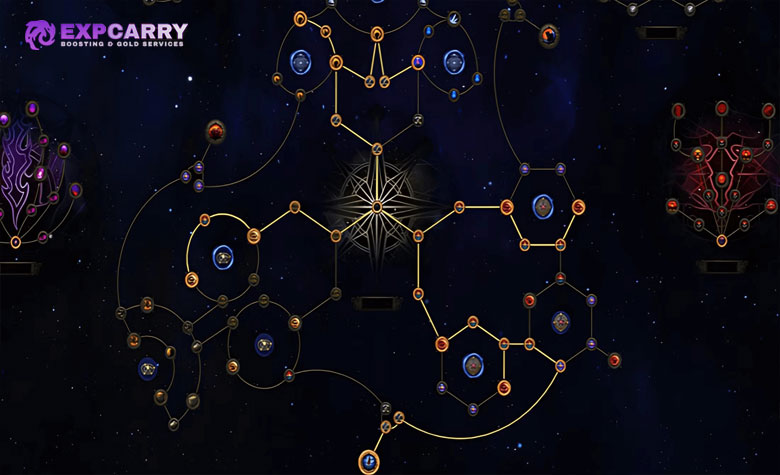
The main Atlas Tree now contains several passives that reward stacking Tablets directly. The current structure grew out of the official 0.5.0 endgame rework, and the relevant nodes can make a three- or four-Tablet map much stronger than the same items used before Atlas progression is complete.
- Industrial Improvements: allows one additional Tablet to be used on City Maps in level 75+ areas after completing the Burning Monolith.
- Controlled Climates: grants 5% increased effect of Tablet explicit modifiers for each Tablet affecting the map area.
- Enigmatic Intensification: grants 3% increased effect of Waystone explicit modifiers for each Tablet affecting the map area.
- Propagating Secrets: grants 8% increased quantity of Tablets found for each Tablet affecting the map area.
- Specialised Seeker: makes Tablets also provide 10% increased rarity of items dropped by monsters from their mechanic.
- City Biome: Tablet Effect: there are three City-biome nodes, each granting 8% increased effect of Tablet explicit modifiers on City Maps.
- Curiously Durable Stone: gives an 8% chance not to consume Tablet uses when opening Maps.
These bonuses create a feedback loop: more Tablets improve the map, and some Atlas passives make the Tablets themselves stronger. They do not make every Tablet worth using. A poor mechanic-specific roll remains poor if it scales a stat your farming plan does not care about.
How to Roll Waystones Before Spending Premium Tablets
The Waystone is the foundation of the stack. Identify it, confirm that it has enough modifiers for the required slots, then decide whether its danger is acceptable for the content you are adding. A Tablet use is normally spent when the map is opened, subject to Curiously Durable Stone's chance to preserve it, so there is no advantage in inserting expensive Tablets into a Waystone that your build is likely to fail.
- Roll the Waystone first. Reach 3-5 modifiers for two Tablets or at least six for three.
- Read every dangerous modifier. Do not judge only by the number of affixes needed to unlock slots.
- Check the Atlas location. Confirm the layout, City status, Ravine status, fixed content, and whether the node has already been attempted.
- Choose the mechanic stack. Use pure same-type Tablets for a narrow target or a mixed stack for deliberate variety.
- Inspect Tablet explicit modifiers. Do not spend a premium use merely because the base Tablet type is correct.
- Confirm the character can finish the density. The highest theoretical loot map is a bad investment if it repeatedly consumes portals or leaves encounters unfinished.
Common Tablet Stacking Mistakes That Waste Uses
Most wasted Tablets are not caused by hidden mechanics. They are caused by opening the wrong map with the right Tablet. A short pre-map check prevents most of the loss.
- Using a low-modifier Waystone: if the Waystone does not unlock the required number of slots, the planned stack cannot be applied.
- Forgetting to identify the Waystone: unidentified Waystones cannot be activated under the current Atlas rules.
- Trying to use Tablets on a Unique Map: maps that cannot accept extra content cannot take Tablets.
- Trying to juice an already attempted node: Tablets cannot be applied after that Atlas area has been attempted.
- Using four Tablets outside a City: Industrial Improvements adds the extra slot specifically to City Maps.
- Ignoring layout: Ritual needs places to spawn extra Altars, Abyss needs room for paths and pits, Expedition needs usable explosive space, and Breach rewards open terrain.
- Stacking beyond the build's clear speed: additional encounters have no value when they fail, time out, or force excessive backtracking.
- Filling every slot accidentally: a full set removes the random non-Tablet league-content contribution that available empty slots can provide.
- Using old Tablet guides: Towers are no longer required, same-type stacking changed in 0.5.0, and 0.5.5 changed Expedition, Ritual, Abyss, and Breach-related behavior again.
- Assuming unique effects stack: special Unique Tablet wording can have its own stacking rules, such as Freedom of Faith's reroll effect.
The best protection is to prepare maps in batches. Separate two-slot, three-slot, and City four-slot Waystones in the stash, then pair each group with Tablets rolled for the same mechanic. That removes the repeated Map Device mistake of inserting premium Tablets first and only then discovering that the Waystone or Atlas node is unsuitable.
How to Test a New Tablet Setup Without Burning a Full Batch
Do not buy or roll ten maps of a new setup before you know whether the build can clear it. Normal Tablets already have 10 uses, so a small test is enough to establish whether the stack works for your character. Run one or two maps at the intended stack size, record completion time and failures, and only then commit the rest of the batch.
For Expedition, measure time spent reading and clearing both sites. For Ritual, note whether the chosen layouts make good use of the extra Altars and whether Tribute remains useful. For Abyss, track backtracking and Depths time. For Breach, record whether each Unstable Breach reaches stabilisation. The best stack is the one that produces completed reward loops per hour, not the one with the most mechanics visible on the map.
If the bottleneck is repetitive Atlas farming rather than the setup itself, a PoE 2 hourly mapping and farming option is one external route for progression. The article's setup remains fully usable without a service: test a small sample, measure completion, and scale only after the result is stable.
Path of Exile 2 Tablet Stacking FAQ
The following questions cover the current Map Device rules and the stacking interactions most often confused with older Tower-based guides.
How many Tablets can you use on one map in Path of Exile 2?
Normally up to three. One slot is available with 1-2 Waystone modifiers, two with 3-5 modifiers, and three with 6 or more. City Maps can use a fourth Tablet when Industrial Improvements is allocated and its area-level requirement is met.
Can you stack multiple Tablets of the same type?
Yes. Since 0.5.0, same-type Tablets can be combined. The result depends on the mechanic: some increase encounter size or density, while others increase the number of encounters.
Do you still need Precursor Towers to use Tablets?
No. Tablets are inserted directly into the Map Device with the Waystone. Towers remain useful for Atlas visibility and Tablet rewards.
What happens when all Tablet slots are filled?
Available empty slots contribute toward random non-Tablet league content. Filling every available slot removes that contribution and focuses the map on the league content supplied by the inserted Tablets.
What is the best number of Expedition Tablets?
Two is a strong practical breakpoint because it adds a Verisium Remnant and 35% Expedition density. Three adds another Expedition. Four, only on a City Map with the extra slot, adds another Verisium Remnant and another 35% density.
Do multiple Ritual Tablets add more Altars?
Yes. In 0.5.5, using more than one Ritual Tablet adds an extra Altar if the map can place it, and current community documentation reports additional Altars from multi-Tablet stacking. Do not assume a fixed Altar count when the layout cannot support the placement. The multi-Tablet interaction also increases Azmeri Wisp quantity inside the Viridian Wildwood in Forbidden Rites.
Do multiple Abyss Tablets add more Abysses?
Current community documentation reports that multiple Abyss Tablets add additional Abyss pits. Exact map content can also be affected by Tablet explicit modifiers, so do not treat the Tablet count as a guaranteed one-for-one pit count. Open layouts are preferable because several Abyss paths can otherwise create substantial backtracking.
Do multiple Breach Tablets add more Breaches?
They add additional Unstable Breaches. Current community documentation reports that these additional Unstable Breaches do not appear inside Breach Hive maps, while the objective may still list them, so avoid expensive Hive stacking unless the live interaction changes.
Does a Tablet use disappear if the map goes badly?
Tablet uses are consumed as the Tablet is used while running maps. Treat each opened stacked map as an input cost and avoid premium Tablet setups on Waystones or layouts the character cannot complete reliably.
Conclusion
Path of Exile 2 Tablet stacking starts with the Waystone, not the Tablet. Roll and identify the map first, unlock two slots with 3-5 modifiers or three with 6 or more, and reserve four-Tablet plans for eligible City Maps with Industrial Improvements. Fill every available slot when you want a controlled mechanic farm; leave one open deliberately when its contribution toward random extra league content is part of the plan.
Then match the stack to the mechanic. Expedition has exact 0.5.5 breakpoints at two, three, and four Tablets. Ritual gains additional Altar potential when the layout can place it. Abyss stacking can add more pits and needs room to route them efficiently, while exact content can also come from Tablet explicits. Breach gains more Unstable Breaches and only pays when the build can extend and stabilise them. Prepare maps in batches, test a small sample before scaling investment, and judge every Tablet by completed reward loops rather than by how much content it can theoretically add.