
A strong Path of Exile 2 league start follows a controlled sequence: verify the live rules, choose a starter that functions on obtainable equipment, collect permanent campaign power, spend common currency on proven bottlenecks, and enter the Atlas with a stable build instead of an unfinished showcase setup. The checklist below covers that sequence from preparation through the first meaningful endgame upgrades.
League start speed is not measured only by how quickly a character leaves the first town. Repeated boss failures, missed permanent rewards, broken attribute requirements, and reckless early crafting can erase every minute saved by skipping useful objectives. The practical goal is continuous forward movement with few forced repairs.
Use each stage as a readiness gate rather than a fixed schedule. Build strength, player experience, party composition, Solo Self-Found rules, and the current league mechanic all change the route. No universal completion time or exact currency total applies to every character.
Use the Complete League Start Checklist
This overview shows the entire route before the detailed decisions begin. Finish the exit condition for the current stage before treating the next stage as the priority.
| Stage | Required actions | Exit condition |
|---|---|---|
| Before launch | Read current patch information, select a starter, verify its source, prepare a fallback setup, update the client, and load a progression filter | The build has a campaign version that does not require an unavailable Unique |
| Character creation | Select the intended league, mode, class, and character name before allocating anything | The character appears under the correct league banner and ruleset |
| Early campaign | Establish one clearing skill, one boss plan, workable recovery, movement, and current weapon or spell scaling | Normal packs and required bosses die without repeated recovery runs |
| Later campaign | Collect permanent bonuses, complete planned Ascendancy progress, repair resistances, and keep gems and requirements functional | The final campaign stages are completed without depending on temporary overlevelling |
| Atlas entry | Audit equipment, identify Waystones, keep a reserve, and run modifiers the character can survive | Several maps and their bosses can be completed consecutively |
| First upgrades | Measure damage, defence, recovery, movement, or resource failures and improve the weakest system first | The upgrade removes a visible limit instead of changing an irrelevant stat |
The official PoE 2 patch index should be the first check before every new league or major restart. Begin with the newest entry and work backwards only when a later note refers to an earlier system change.
Check the Live Rules Before Creating a Character
A league-start plan becomes unsafe when it assumes that old gems, passives, items, quests, or Atlas systems still work the same way. Read the newest content update, later balance patches, and launch-day hotfixes in that order. Search the notes for the main skill, Ascendancy, defensive mechanic, weapon type, and any required Unique.
- Confirm the launch time and platform availability through an official announcement.
- Determine whether the league creates a fresh economy and requires a new character.
- Check whether Standard, Hardcore, and Solo Self-Found variants follow different migration or death rules.
- Look for last-minute changes to the intended main skill, supports, passives, and campaign rewards.
- Verify whether a league mechanic begins during the campaign or only after the Atlas opens.
- Record unresolved information instead of filling the gap with an older guide.
The wider PoE 2 guides hub can be used after the official review to locate a current narrow guide for the build, campaign system, or endgame decision that needs more detail.
Lock a Starter That Works Without Endgame Gear
A league starter needs two separate plans: a campaign configuration made from ordinary drops and an endgame destination reached after currency and equipment exist. If deleting one rare Unique or premium craft from the plan makes the campaign version stop functioning, the build is not ready for a fresh economy.
| Build check | Acceptable league-start answer | Warning sign |
|---|---|---|
| Main damage | Scales from gem levels, attainable weapons, broad affixes, or reachable passives | The damage engine begins only after one scarce item is equipped |
| Boss damage | Has a sustainable single-target loop and safe damage windows | Relies on perfect burst uptime or an untested interaction |
| Defence | Uses layers available on normal campaign bases and common passives | Requires several exact modifiers before ordinary hits are manageable |
| Resources | Mana, Life costs, Spirit, and attributes remain functional while levelling | One temporary item keeps multiple skills active |
| Upgrade path | Several weapons or armour combinations count as progress | Every drop is rejected until the final item appears |
| Patch evidence | The guide identifies its game version and explains campaign transitions | The source shows only finished endgame footage or an older passive tree |
Importing guidance does not validate it. Use the PoE 2 Build Planner guide to inspect the correct class, Ascendancy, skill package, passive route, gear assumptions, and version before following a file. Keep written alternatives for the main weapon, one support, and one defensive slot.
Explore services related to this guide, selected from our Path of Exile 2 catalog.
View All Path of Exile 2 Services


Prepare the Client, Filter, Stash and Controls
Technical preparation prevents avoidable interruptions after the servers open. Complete downloads and local setup early enough to test them, but check again for a launch patch because the final client can change after preload files become available.
- Update the game client and verify that the selected platform account is linked correctly.
- Load a lenient campaign filter that still displays useful Normal bases, currency, gems, quality items, sockets, and league materials.
- Prepare a stricter endgame preset without enabling it during the first campaign zones.
- Place movement, dodge, recovery, weapon swap, portal, and interaction controls where they can be used consistently.
- Clear enough stash space and decide which tabs will hold currency, candidate bases, gems, maps, and league inputs.
- Save the source page, current build file, passive checkpoints, and short upgrade list outside the game.
- Test audio and visual settings so dangerous boss cues remain readable during crowded encounters.
Do not spend the opening minutes redesigning the stash or filter for a finished farming strategy. The campaign setup should make current upgrades easy to recognise. Precision can increase after the character stops changing several equipment slots per act.
Players who want assisted character progression can compare a contextual PoE 2 leveling option. The build still needs a coherent setup when control returns, so skill compatibility, attributes, Spirit, equipment requirements, and the intended Atlas transition remain part of the handoff check.
Create the Character in the Correct League
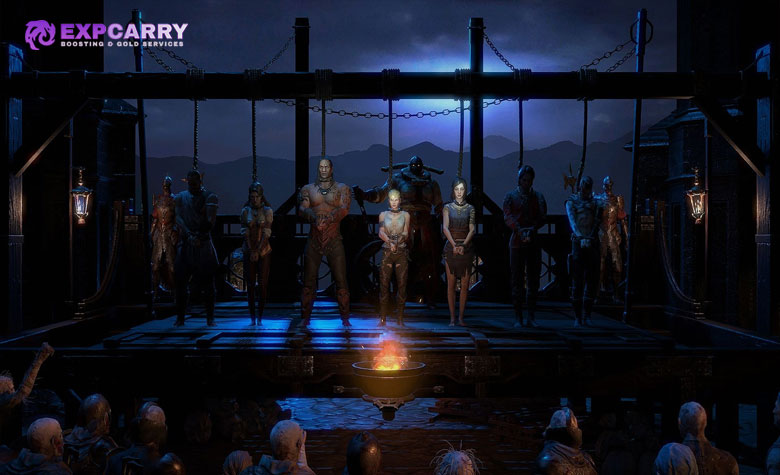
Character creation sets the initial rules for that run. Confirm the league banner and mode before accepting the name. Standard, a current challenge league, Hardcore, and Solo Self-Found do not share the same economy or failure rules even when their core campaign areas are similar.
| Selection | Question to answer | Consequence |
|---|---|---|
| Current league | Does the character need access to the live league mechanic, challenges, and fresh economy? | An older Standard character cannot substitute for a required league start |
| Hardcore | Is the build and player prepared for the league's current death-parenting rule? | One death may move or end the intended competitive run |
| Solo Self-Found | Can every mandatory item and craft be obtained without player trade? | The upgrade plan must include farmable alternatives |
| Class | Does its starting position and Ascendancy route match the actual build file? | A familiar class name does not repair a mismatched tree |
| Party plan | Will progression, loot expectations, and quest pacing be shared? | Unclear ownership and different detour priorities slow the group |
After entering the first area, confirm the league name on the character and test the intended opening skill or weapon. Restart immediately if the wrong mode was selected; correcting the mistake after hours of progress costs far more.
The official Return of the Ancients FAQ demonstrates why this check matters: Runes of Aldur began with a fresh economy, required a new league character, preserved purchased stash tabs while leaving the new stash empty, and used an explicit banner at character creation. Future leagues need the same direct confirmation.
Run the Campaign by Stage, Not by Character Level
The current campaign proceeds through Acts 1 to 4 and then three Interludes. Level is evidence of time spent, not proof that the build is ready. Advance when packs clear smoothly, bosses can be damaged during safe openings, recovery remains available, and the next equipment requirements are understood.
| Campaign stage | Main priorities | Stop and repair when |
|---|---|---|
| Opening zones | Secure a usable skill, compatible support, current weapon or caster focus, and dependable recovery | The main attack or spell already needs repeated casts against ordinary enemies |
| Act 1 | Add movement, begin resistance coverage, take valuable permanent detours, and establish boss damage | A required boss exposes one repeated elemental or recovery failure |
| Acts 2 and 3 | Update bases, maintain attributes and Spirit, continue Ascendancy planning, and protect the main skill package | New equipment disables another slot or the passive route lacks its next purpose |
| Act 4 | Review full defence, commit only to durable upgrades, and prepare for the less linear later campaign route | The build survives packs but cannot sustain damage or recovery against bosses |
| Interludes | Finish permanent objectives, close resistance gaps, organise the final skill setup, and prepare Atlas gear | The character reaches the next stage with missing quest power or temporary equipment dependencies |
The current PoE 2 campaign walkthrough provides the detailed Acts and Interludes route. Use it for exits, quest order, and important rewards, while this checklist remains focused on league-start decisions and readiness gates.
Collect Permanent Campaign Power
Optional does not mean low value. Permanent campaign rewards can provide passive power, Spirit, resistance support, and other character-wide benefits that remain after temporary equipment is replaced. Compare the time required for the detour with the lasting value rather than skipping every side objective automatically.
- Inspect every permanent-reward marker on the campaign map before leaving an act or Interlude.
- Confirm that a dropped reward item was used and that a required NPC turn-in was completed.
- Take Spirit objectives early when persistent skills or minions are limited by reservation capacity.
- Choose permanent resistance, attribute, recovery, or defensive options around the intended endgame build.
- Complete planned Ascendancy progression when the character is ready instead of postponing all trials until mapping.
- Recheck the character sheet after each permanent reward so the equipment plan uses the new totals.
Keep a small written list of unfinished objectives. Returning to one known reward later is efficient; searching every campaign zone after entering the Atlas is not. A missing permanent bonus should be ruled out before spending valuable currency to reproduce the same power on gear.
If repeated story bosses or missing campaign completion become the main obstacle, a PoE 2 campaign completion option is the relevant contextual service. It should not be treated as evidence that an unfinished build is ready for mapping; the equipment and skill audit still applies before Atlas entry.
Use Early Currency Without Wasting It
Fresh-economy currency has two values: its direct crafting effect and, in Trade, what another player may exchange for it. Spend when the result can remove a current blocker or create an item likely to survive several stages. Hold when the base is weak, only one narrow outcome works, or the character already clears comfortably.
| Currency or resource | Good early use | Stop condition |
|---|---|---|
| Orb of Transmutation | Test a correct Normal base for one useful Magic modifier | The first modifier does not support the slot's job |
| Orb of Augmentation | Add a second modifier when the existing Magic item is already promising | The first modifier is too weak to justify another resource |
| Regal Orb | Advance a functional two-modifier Magic item toward a usable Rare | The item still needs several unlikely results before it can be equipped |
| Essence | Apply a relevant guaranteed modifier category to an eligible prepared base | The guarantee does not solve the current bottleneck |
| Exalted Orb | Add a modifier to a Rare that already performs its intended job | Only one exact affix would make the item useful |
| Quality resource | Improve a weapon, armour, flask, or other item expected to remain equipped | The base will be replaced as soon as the next campaign tier appears |
| Gold | Buy, gamble, respec, or use another supported system for a defined need | The action has no target slot or measurable purpose |
The live 0.5 foundation increased useful campaign Essence availability, changed the availability of Greater and Perfect currency tiers, and established a single crafted-modifier limit per item. The official 0.5.0 notes remain the primary reference for those system changes, while later patches must be checked for corrections.
Upgrade Gear When a Bottleneck Appears
Replace equipment because the character has a measured problem, not because a new item has higher rarity. After every difficult boss or major act transition, classify the failure as damage, survival, recovery, movement, attributes, Spirit, or skill compatibility. Upgrade the category that appears repeatedly.
| Observed problem | First equipment check | Secondary check |
|---|---|---|
| Slow attack clear | Weapon base, local damage, speed, and applicable affixes | Skill level, supports, accuracy, and passive scaling |
| Slow spell clear | Relevant gem levels, spell modifiers, cast speed, and resource stability | Support compatibility and passive pathing |
| Frequent elemental deaths | Current resistance totals and the damage type shown by the encounter | Life, Energy Shield, mitigation, avoidance, and recovery |
| Skills become unavailable | Attributes, Spirit, weapon requirements, and support capacity | Whether the new item removed a dependency from another slot |
| Long travel between fights | Boot movement speed and usable movement skills | Loot-filter strictness and route discipline |
| Boss attempts collapse late | Flask quality, charge use, sustain, and safe damage uptime | Whether the fight exposes a mechanic problem rather than a gear deficit |
Trade-league players who consider an external PoE 2 Exalted Orb option should first identify a Rare worth extending. Currency cannot make a poor base, incompatible requirement, or broken skill setup into an efficient league-start upgrade, and purchased currency does not apply to an active SSF run.
Treat League Mechanics as Optional Acceleration
A campaign league mechanic is valuable when it supplies experience, equipment, crafting resources, or permanent progress without repeatedly stopping the main route. Test it while the character handles the encounter efficiently. Reduce participation when its danger or time cost exceeds the value of the current reward pool.
In the current Runes of Aldur environment, Verisium Runeforging begins during Act 1, further Alloy and Unique-upgrade systems unlock through later campaign progress, and additional Runes become available after later Farrow quests. These are current-league opportunities, not permanent assumptions for every future launch.
- Complete required introductory quests when they unlock a system used by the starter.
- Use early league resources on equipment with enough service life to justify the cost.
- Do not force a dangerous encounter after it has already exposed insufficient damage or defence.
- Store unfamiliar materials until their current effect and eligibility are verified.
- Replace this entire league-specific step when the next official mechanic changes the campaign route.
The league mechanic should support the starter rather than redefine it before enough resources exist. A build that cannot progress without one random league reward has converted optional acceleration into a fragile dependency.
Prepare for Campaign Bosses Before Repeating Them
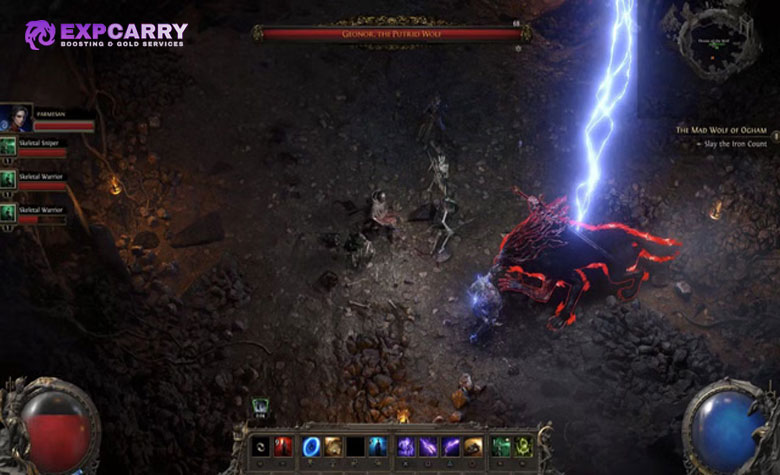
One failed attempt can provide useful information; several identical failures usually mean the setup was never changed. Before returning, identify the attack or situation that ended the run and make the shortest relevant correction.
- Repair the resistance or defensive layer associated with the repeated damage type.
- Equip a charm, flask, or swap item that answers a recurring ailment or pressure pattern.
- Confirm that the main skill and supports function during the boss rather than only against packs.
- Preserve recovery charges by learning safe damage windows and avoiding unnecessary trades.
- Update the weapon or gem package when the encounter lasts long enough to create repeated overlaps.
- Separate mechanical execution from build weakness before spending currency.
Do not assume that character level alone fixes positioning, incompatible supports, missing resistance, or poor recovery. A modest targeted change followed by a cleaner attempt is more useful than unfocused farming that leaves the same failure intact.
The PoE 2 fast gearing guide expands this bottleneck method from campaign equipment into endgame upgrades. At league start, preserve only old items that still cover a dependency or provide a deliberate boss swap; process the rest according to their available use.
Finish the Campaign With an Atlas-Ready Character
Campaign completion unlocks endgame access, but it does not certify the character for sustained mapping. Perform a final audit before consuming the first Waystone. The objective is a working baseline that can survive several different map layouts and modifiers without replacing half the build.
| Atlas-entry check | Ready state | Repair before mapping |
|---|---|---|
| Permanent rewards | Planned passive, Spirit, resistance, and choice-based bonuses are collected | Return for every missing objective that directly supports the build |
| Main skill | Clear and boss setups have compatible supports and sustainable costs | Remove disabled, redundant, or unaffordable supports |
| Requirements | Attributes, weapon rules, and Spirit remain valid after all planned swaps | Eliminate reliance on an item scheduled for immediate replacement |
| Defence | Current resistances, primary defences, recovery, and movement handle final campaign pressure | Replace the weakest outdated base or missing defensive slot |
| Damage | The final campaign bosses can be damaged consistently during safe openings | Update the weapon, relevant gem levels, or passive route |
| Reserve | Gold, basic currency, recovery items, and several usable candidates remain available | Stop spending on speculative late-campaign crafts |
Do not copy an endgame gear list into the audit as if those items already exist. Record the current item in each slot, the job it performs, and the next affordable improvement. That list becomes the first Atlas upgrade queue.
Enter the Atlas Conservatively
The opening Atlas objective is repeatable completion. Waystones must be identified before they can be activated, and their modifiers must be read as encounter conditions. The highest tier in the stash is not automatically the correct first map.
- Identify every candidate Waystone and reject combinations that directly disable the build's recovery, damage, or defence.
- Begin with content the character can clear and boss reliably rather than testing the full limit immediately.
- Keep multiple Waystones outside the active attempt so one loss does not end mapping.
- Collect broad rewards and useful bases before specialising around a narrow farming strategy.
- Complete the visible endgame objectives that open Fortress and Atlas progression.
- Review deaths and failed bosses before increasing tier or modifier pressure.
The main Atlas now develops through maps inside the Fortress and can eventually be fully allocated. The PoE 2 Atlas Passive Tree guide explains the current point sources, Masters layer, and early priorities. League start routing decides which benefits arrive first rather than permanently excluding every unchosen branch.
Make the First Atlas Upgrades in Order
Early Atlas currency is limited, so the upgrade queue must follow performance. Change one system, run another small group of maps, and check whether the failure rate improved. Simultaneous expensive changes make it difficult to learn which purchase or craft solved the problem.
| Priority | Upgrade when | Do not prioritise when |
|---|---|---|
| Weapon or main caster item | Pack clear and boss damage are both below the required pace | Deaths occur before the character can maintain any damage uptime |
| Boots and movement | Slow repositioning causes hits, failed mechanics, or excessive travel | The replacement breaks resistance or attribute requirements |
| Resistance and core defence slots | Ordinary map hits or one damage type repeatedly cause deaths | The character already survives and damage is the measured limit |
| Jewellery and belt | Attributes, Spirit, recovery, Life, Mana, or resistance balance blocks other upgrades | The slot is being changed only for a small unrelated damage roll |
| Skill sockets and supports | A tested support materially improves clear, bossing, defence, or sustain | The skill package may be replaced before the socket is used |
| Specialised crafting | A correct base and a written stopping rule make several outcomes useful | The project consumes the reserve needed to continue mapping |
Players who prefer assisted mapping or repeated early farming can use a contextual PoE 2 hourly progression option. Any resulting equipment should still be evaluated by the same bottleneck test; additional loot does not make every dropped Rare an upgrade.
Choose Trade or SSF Rules Before Spending
Trade and Solo Self-Found use the same character fundamentals but assign different value to drops and currency. Decide which economy the checklist serves before comparing items or reserving materials.
| Decision | Trade league | Solo Self-Found |
|---|---|---|
| Unneeded currency | May be exchanged when the market and Gold cost justify the conversion | Keeps only its direct crafting or system value |
| Exact equipment need | Compare the total purchase against the expected crafting cost | Farm several eligible bases and accept broader modifier packages |
| Valuable off-build drop | Price it using current live listings rather than launch speculation | Keep it only for a realistic second character or direct transformation |
| Build-enabling Unique | Use a Rare-based setup until supply and price make the transition sensible | Do not choose a starter that stops without the item |
| Boss or mechanic access | Buying access may compete with equipment upgrades | Every failed attempt includes the time required to rebuild access |
Opening-week prices move quickly and do not create a permanent value hierarchy. Buy an item because it fixes a current slot at an acceptable opportunity cost, not because another guide calls the base mandatory. In SSF, replace price comparisons with access time and number of acceptable outcomes.
Avoid Common League Start Failures
Most failed starts do not come from choosing the second-best levelling skill. They come from allowing one avoidable dependency or repeated mistake to survive through several campaign stages.
- Following an endgame build that never documents its campaign version.
- Selecting the wrong league, Hardcore parent, or SSF mode at character creation.
- Using a build file without checking its class, variant, budget, or game version.
- Skipping permanent power and trying to reproduce it with expensive equipment.
- Saving every common currency while a cheap craft could remove an active blocker.
- Spending premium currency on a Rare that is not useful before the next roll.
- Keeping an early filter after it hides relevant Atlas bases or Waystones.
- Running a higher map tier while ordinary bosses still consume repeated attempts.
- Equipping an apparent damage upgrade that disables attributes, Spirit, or resistances elsewhere.
- Copying launch prices, drop claims, or farming rankings from another league.
- Treating one lucky Unique as the expected outcome of the progression route.
- Changing several expensive gear slots before measuring which one was actually weak.
When progression stalls, return to the most recent readiness gate and name the exact failure. A specific problem creates a short repair list. A vague goal such as needing better gear creates an unlimited and inefficient search.
Keep This Checklist Updated
This page is designed to retain its preparation, campaign, currency, Atlas, and upgrade framework while its volatile league block changes. Update the current version, launch rules, campaign mechanic, build assumptions, and Atlas notes after every major content release.
| Verification item | Current review | Future update trigger |
|---|---|---|
| Live client version | 0.5.4f verified on August 13, 2026 | A newer patch appears in the official index |
| Campaign structure | Acts 1 to 4 followed by three Interludes | GGG changes acts, progression order, or endgame entry |
| Current league block | Runes of Aldur and its campaign Runeforging progression | A new league begins or the mechanic moves to core |
| Atlas baseline | Identified Waystones, fixed objectives, Fortress points, and Masters | Atlas point sources, sustain rules, or progression systems change |
| Latest hotfix impact | No new campaign, currency, or Atlas checklist rule in 0.5.4f | A hotfix changes any system used by the route |
The newest official 0.5.4f patch notes contain targeting, movement-input, boss-grab, and stability fixes rather than a replacement for this progression sequence. The version and every volatile row still need another official check before the next publication update.
Final Verdict
A dependable PoE 2 league start is a chain of verified decisions. Prepare a starter with an attainable campaign form, use permanent rewards and common currency to maintain momentum, repair only measured weaknesses, and finish the story with a complete skill and defence baseline.
Enter the Atlas at a difficulty the character can repeat, protect the first Waystone reserve, and purchase or craft upgrades in the order that failures reveal. This approach remains useful when skills, league mechanics, and market prices change because it measures readiness instead of assuming one fixed route fits every launch.