World of Warcraft esports finally has a season with a real destination again. Blizzard is not just reopening the Arena World Championship and Mythic Dungeon International with fresh dates for 2026. It is tying both circuits to BlizzCon, which gives the entire year a clearer shape from the start. That matters because every qualifier, regional finish, and format change now leads to a live final in Anaheim instead of fading into another online-only ending.
That is the real story behind this announcement. The Road to BlizzCon is back for WoW esports, and that alone makes the 2026 season easier to follow and easier to care about. Arena teams get a longer competitive path with a meaningful final stage. Mythic dungeon teams get a cleaner qualification route and the return of speedrunning as the center of the format. For viewers, the season now feels connected instead of fragmented.
AWC and MDI 2026 at a Glance

| Program | Season 1 opening | Main format hook | BlizzCon qualification | BlizzCon finals prize pool |
|---|---|---|---|---|
| AWC | Open registration cups begin April 8 | Year-long structure, Cross-Region Playoff, extra China slot | 6 teams reach the Grand Finals | $300,000 |
| MDI | Time Trials begin April 15 | Speedrunning returns, fastest 24 teams move to Groups | 4 teams reach the Global Finals | $300,000 |
Registration is already open, which gives the 2026 season immediate weight. This is not a vague teaser for later in the year. Blizzard has already put both programs into active competitive preparation, and that early clarity is one of the strongest parts of the rollout.
BlizzCon gives the season a stronger finish
The return of BlizzCon changes the tone of the whole WoW esports year. Blizzard has tied both AWC and MDI to a live championship stage for the first time in seven years, and that gives the season a proper endpoint from day one. Without that kind of finish, competitive calendars can feel flat. Events happen, champions are crowned, and the larger scene struggles to build momentum because there is no bigger stage pulling everything together.
BlizzCon fixes that problem. It gives both circuits a visible destination and gives the season a cleaner narrative from opening registration through the final qualification rounds. That matters for competitors, but it also matters for viewers, because a season with one clear road is easier to follow than a collection of isolated weekends.
AWC gets a broader path without losing pressure
The Arena World Championship remains the most direct competitive format in WoW esports. It is small-team PvP built on quick adaptation, tight execution, and constant pressure. That format always benefits from escalation, and the BlizzCon link gives the 2026 season more of it.
AWC Season 1 begins with open registration cups on April 8, then moves qualified teams into the Seasonal Finals in June. That opening layer keeps the circuit accessible while still letting the field narrow quickly once qualification pressure starts to matter. Blizzard then adds a new Cross-Region Playoff and an additional team from China, which makes the road to BlizzCon broader without making it softer.
The final AWC field at BlizzCon will include the top two teams from each region's Season 1 Finals, the Cross-Region Playoff winner, and one additional team from China. That creates a six-team live final in Anaheim with $300,000 on the line. Blizzard is also attaching the Umbral Champion's Illustrious Banner as a Season 1 participation reward, which is a practical way to pull more teams into the system early.
Explore services related to this guide, selected from our World of Warcraft catalog.
View All World of Warcraft Services
MDI puts speed back at the center
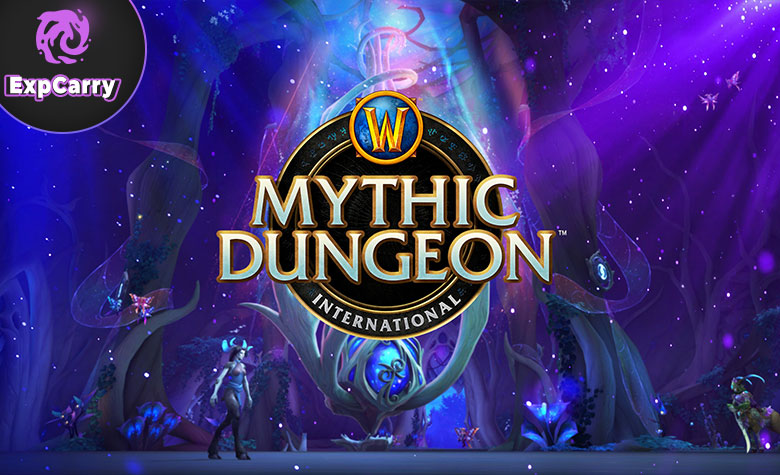
If AWC is built on rivalry and direct match pressure, MDI is built on route planning, execution speed, and timer discipline. That is why the biggest MDI change in this announcement matters so much: speedrunning returns as the core of the format for Midnight Season 1.
That adjustment gives MDI a clearer identity right away. The mode is strongest when teams are pushed to optimize routes, cooldown usage, pulls, deaths, and recovery decisions under raw speed pressure. That is when MDI looks like its own esport instead of a looser extension of regular Mythic+ play.
Season 1 begins April 15 with open registration Time Trials. Any team can enter, gain access to the Tournament Realms, and try to clear two dungeons-service">dungeons-services">dungeons as quickly as possible. The fastest 24 teams move into the Group Stage starting May 8. From there, the field is split into three groups of eight, and each group sends two teams into the Season 1 Finals.
The Season 1 Finals then feature six global teams, the top two from each group, plus two teams from China. From that stage, the top three global teams and the highest-seeded China team qualify for the MDI 2026 Global Finals at BlizzCon. That leaves MDI with a four-team live final in Anaheim and another $300,000 prize pool.
Two circuits, two different strengths
One reason the 2026 structure works is that Blizzard is not trying to sell AWC and MDI as the same kind of competition. AWC wins on tension, player matchups, and direct confrontation. MDI wins on route mastery, technical execution, and speed under pressure. Those are different strengths, and the season looks better because each circuit is allowed to lean into its own identity.
That difference also helps the overall WoW esports calendar. Arena provides the personal conflict side of the scene. MDI provides the technical spectacle side. Put both on a road to the same live stage, and the season feels more complete than a calendar built around disconnected events.
The viewer side is finally easier to follow
This structure is also stronger for viewers who are not competing themselves. Esports scenes do not grow by serving players alone. They grow when spectators can understand the stakes without having to decode the format every few weeks. Blizzard helps that here by making the opening dates clear, the qualification paths cleaner, and the final destination obvious from the start.
For viewers, the opening rhythm is simple. AWC begins on April 8 with open cups. MDI follows on April 15 with Time Trials, then moves into a more visible competitive phase when Groups begin on May 8. From there, both circuits build toward seasonal finals and then into the BlizzCon championship stage.
Blizzard has also confirmed that all AWC and MDI programming will air live on the official Warcraft Twitch and Warcraft YouTube channels, alongside co-stream perspectives. That is the right setup for this kind of season. The official broadcast provides consistency, while co-streams give the events more texture and broader community reach.
Midnight Season 1 now carries more weight
The Midnight label matters here as well. Blizzard is using the first season of a new expansion era to reset the frame for WoW esports, and that gives 2026 more weight than a routine seasonal restart. The first Midnight-era arena champions will be crowned on the BlizzCon stage, while MDI begins the expansion cycle with a format that better fits what long-time viewers expect from the competition.
If Blizzard executes the calendar well, Midnight Season 1 could become the expansion opening that gave WoW esports a cleaner competitive arc again. That is a stronger story than another year of separate events with no larger finish tying them together.
Conclusion
WoW esports in 2026 feels more meaningful because the season is finally moving toward a visible endpoint again. The return of a real Road to BlizzCon gives both AWC and MDI stronger shape, clearer stakes, and a better reason for teams and viewers to care from the opening weeks instead of waiting for a late-season summary.
AWC looks stronger because Blizzard widened the qualification route without removing pressure, adding a Cross-Region Playoff and an extra China slot to a six-team BlizzCon final. MDI looks healthier because speedrunning is back at the center of the format, restoring the identity that has always made the competition easier to understand and more exciting to watch. These are not cosmetic changes. They affect how the season is built and how it will be experienced.
If Blizzard keeps the broadcasts sharp and the calendar easy to track, Midnight Season 1 could become the first truly coherent WoW esports year in a long time. That is why this announcement matters. Not because the headline is loud, but because the structure finally gives the scene a stronger foundation again.