

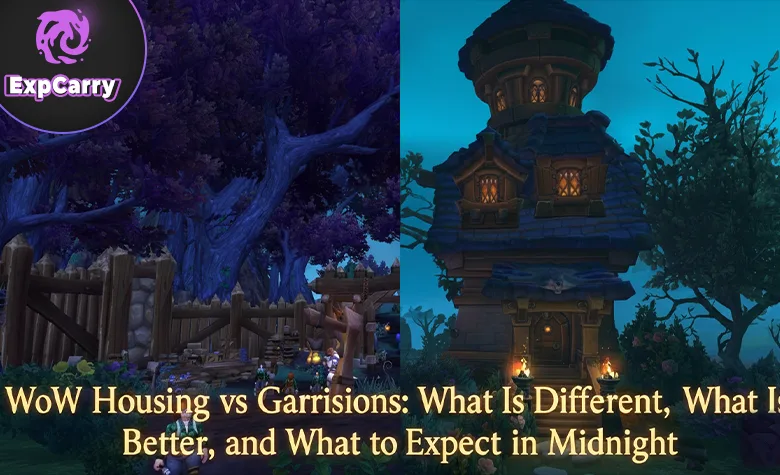
When WoW players search "WoW housing vs garrison," they are usually asking one real question: is housing like garrison, or is this finally a true decorating system that does not become another mandatory power loop. The comparison is fair, because Garrisons were the closest thing WoW had to a personal base for years. They also left a scar for many players: chores, isolation, and a feeling that your session started with maintenance.
Housing in World of Warcraft: Midnight is positioned differently. In Blizzard's current messaging and in how Housing Early Access is rolling out, the system is framed as cosmetic-first, social, and evergreen, with neighborhoods as the core community layer rather than a private utility hub. That does not mean there is zero progression, but it does mean the intended "why" is your home, your style, and your social space, not your DPS or gearing speed.
It also matters that Housing Early Access launched as part of the "The Warning" Midnight Prologue content update: players who have purchased Midnight can claim a home and start customizing right away, while players who do not own Midnight yet can still begin adding to their Housing collection through activities and achievements or by buying decor from vendors across Azeroth. This is a strong signal that Blizzard wants Housing to be a long-term collection and creativity lane that complements the game, instead of replacing the rest of your session with a mandatory dashboard.
WoW Housing vs Garrison: The Clean Feature Comparison
Most "housing feature comparison WoW" debates get messy because people compare a fully matured garrison ecosystem to a housing system whose main goal is creative expression. The fastest way to understand the difference is to compare what each system pushes you to do every time you log in. Garrisons pushed output and efficiency. Housing pushes collecting and decorating.
The second reason this comparison matters is social impact. Garrisons quietly replaced cities for many players because they were convenient and profitable, which reduced spontaneous social play. Housing is built around a Midnight housing community concept: neighborhoods, visiting, and being near other players by default.
Finally, the fear behind "garrison housing differences" is not aesthetic. Players are worried about obligation. If housing becomes a timer-driven value extractor, it will feel like Garrisons again even if the walls are prettier. If housing stays cosmetic-first with many optional paths, it becomes a creative side-game you can binge or ignore without falling behind.
| Garrisons (WoD) | Player Housing (Midnight) |
|---|---|
| Progression hub with functional benefits and passive value loops | Creative system focused on decor collection, building, and sharing |
| Mostly isolated personal instance by default | Neighborhood community as the default framing (public and private options) |
| Routine-driven: mission table, followers, buildings, daily maintenance | Variety-driven: activities and achievements, vendors, professions">professions crafting, and neighborhood-wide events |
| Risk of feeling mandatory because rewards touched player progression and economy | Positioned as cosmetic-first and not presented as a combat power system; prestige trophies can still exist as decor |
| Customization mostly via fixed building slots and upgrades | Customization via decorating tools (basic placement plus advanced freeform) |
Core Purpose: Power Hub vs Creative, Cosmetic System
The biggest difference is purpose, because purpose decides what players optimize. Garrisons were built to be an expansion hub: pick buildings, run followers, produce resources, and convert time into rewards. Even if the loop was short, it created a persistent sense that you should do it, because it generated value.
Player Housing is framed as a creative system. The reward is a home you enjoy and want to show, not damage, healing, or gearing speed. That changes the emotional tone of progression. You collect items because you want options for builds, not because skipping a dashboard makes you "lose money" or fall behind.
If you are skeptical, anchor your expectations here: as long as Blizzard keeps housing cosmetic-first, the system can be deep without becoming mandatory. You can still have long-term goals, rare trophies, and prestige props, but the baseline should remain accessible and non-punitive for casual players.
Player Power Anxiety: Why This Question Always Comes Up
When players ask "is housing like garrison," they often mean "will I be forced into it for power." That fear is rational, because WoW has a long history of systems that started as optional flavor and later gained power-adjacent incentives, or at least social pressure.
The healthier model for housing is what Blizzard has described in previews: beautiful baseline items should be broadly obtainable, while trophies can exist for players who want to show prestige. The key difference from Garrisons is that Housing is not being presented as a primary source of character power. It is being presented as a long-lasting journey of collecting, customizing, and sharing.
The practical takeaway is this: if you only care about raids, keys, or PvP power, housing should remain optional. If you care about identity, collecting, and building spaces, housing becomes your evergreen sandbox. Those two playstyles can coexist without one being a chore for the other.
Passive Output vs Earned Collection
Garrisons created pressure because value arrived passively. The rational move was to log in and harvest it, even when you were not excited to play. That design turns a feature into a habit, and habits quickly feel like chores.
Housing is designed around earned collection. You acquire decor through play and progression, then you turn that into a space. That shifts the mindset from extraction to creation. It also makes breaks less punishing, because you are not losing months of passive production by being away.
If housing ever adds anything that looks like a mission table, the key test is whether it is cosmetic and ignorable or whether it becomes the dominant source of rewards. That is the line between "fun optional lane" and "maintenance meta."
Social Layer: Garrison Isolation vs MidnightHousing Community Neighborhoods
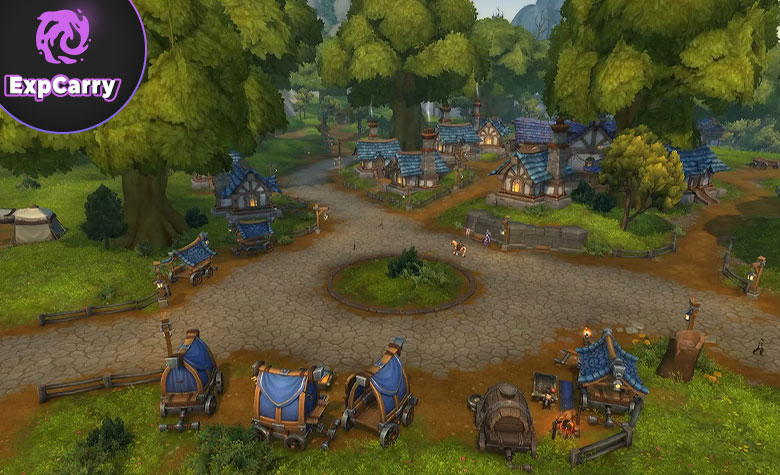
Garrisons were socially possible but socially unnatural. You could invite people, but the default experience was still a private instance that replaced cities. The system encouraged solo optimization, not communal living.
Housing is built around neighborhoods, and that is not a small detail. Neighborhoods mean you are near other players by default, you can visit, and your home exists inside a shared space rather than a sealed personal bubble. This is the clearest structural signal that housing is not trying to repeat Garrisons.
The social layer also changes creativity. When you regularly see other builds, you learn faster, you steal ideas, and you get motivated by community standards. That turns housing into a living gallery, not a private spreadsheet.
Public vs Private Neighborhoods and Why It Matters
Neighborhood structure is where housing solves one of the main garrison problems: social isolation as the default. Public neighborhoods lower friction. You can participate in the neighborhood vibe and start decorating without turning the system into a gated, coordination-heavy project.
Private neighborhoods (including guild-focused options) are where community identity becomes real. A guild street feels different than a random public street because people coordinate themes, events, and shared expectations. This is closer to what players wanted when they asked for guild halls, without forcing everyone into a single shared interior room.
The important part is that both paths can exist without becoming mandatory. If you are solo, public neighborhoods should be enough. If you are social, private neighborhoods create a stronger sense of place.
Explore services related to this guide, selected from our World of Warcraft catalog.
View All World of Warcraft Services


Customization Depth: Preset Buildings vs Real Decorating Tools
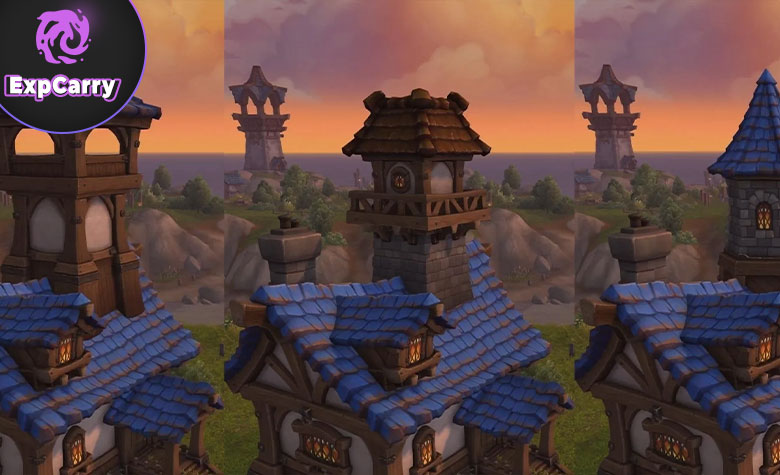
Garrisons offered customization, but it was mostly menu customization: choose buildings, upgrade tiers, and decorate in a limited, developer-authored way. The interior was not a sandbox. The layout was largely static. The "fantasy" came from ownership and utility, not from design.
Housing is built around decorating as the main activity, which changes what customization means. You are not picking a building from a slot. You are composing rooms, controlling layout feel, and building scenes with props and space planning.
This matters because it is what makes housing evergreen. Menu-driven base systems age quickly. Tool-driven creative systems age slowly because players keep inventing new outcomes with the same pieces.
Basic Placement vs Advanced Freeform: Why It Is Not Just Cosmetic UI
A real housing system needs to work for two player types at once: players who want quick, clean placement and players who want advanced control for kitbashing and custom builds. When a system supports both, it avoids the garrison trap of "everyone ends up with the same layout, just with different building choices."
Basic placement is about speed and guardrails: snapping, clean alignment, and simple rotation that makes a home look decent fast. This is what makes housing accessible for casual players who just want a cozy space without learning a complicated editor.
Advanced tools are what create long-term depth: free movement and fine control over rotation and placement to build scenes that are not explicitly authored by designers. That is where housing becomes its own hobby rather than a checklist.
Progression Feel: Daily Chores vs Long-Term Collecting
Garrisons trained players to think in daily routines. Even if you enjoyed them, you learned to log in, clear the table, manage followers, and convert time into output. That pattern created obligation, because skipping felt like loss.
Housing progression is intended to feel like collecting and building. Your catalog grows through multiple lanes that Blizzard has already highlighted: activities and achievements, vendors, and professions crafting. On top of that, neighborhoods add a community cadence through shared activities and rewards. Instead of one correct daily checklist, you pick the lanes you enjoy and let them feed your home.
This is also why housing can complement the world instead of replacing it. Your house becomes the destination where you build. The open world stays relevant because it becomes the supply chain for decor, themes, and long-term goals.
The Real Burnout Test: Variety vs One Dominant Loop
If you want a simple rule to judge whether housing is becoming "Garrisons 2.0," watch what happens when players optimize. In a healthy housing system, optimized play still looks varied because different decor goals pull you into different content lanes.
In a garrison-like system, optimized play collapses into one dominant loop. Everyone logs in to do the same chores because that loop is too efficient to ignore. The content becomes mandatory by math, not by fun.
Housing can have progression without becoming chores as long as the best outcomes remain spread across optional lanes and the baseline path stays simple. That is what keeps the system from turning into a job.
Common Misconceptions About WoW Housing vs Garrison
Misconception: Housing will be required for endgame power. Blizzard is presenting housing as cosmetic-first and has not framed it as a combat power system. If that holds, housing becomes optional for power-focused players and meaningful for collectors and roleplayers.
Misconception: Housing will isolate players like Garrisons did. Neighborhood design is explicitly meant to keep housing social and visible, with visiting and community proximity baked in rather than being an invite-only side feature.
Misconception: Everyone will have identical homes. Even if base shells start similar, tool depth and catalog variety are what create differentiation. A decorating system with strong placement control produces radically different outcomes from the same starting space.
Misconception: If I skip early access, I will be permanently behind. An evergreen cosmetic system should not work like a power race. Starting later should still let you build a strong catalog, even if you miss some early novelty pieces.
A Simple Test Plan for Skeptical Players
If you are skeptical because of Garrisons, do not commit emotionally on day one. Treat housing like a trial. Build a baseline home using only easy sources: vendor staples, simple crafts, and a few achievement rewards you can earn without changing your normal play.
Then pick one theme and one long-term goal. A theme prevents random item dumping. One long-term goal gives you direction without turning your play into five parallel grinds. This is the best way to enjoy housing without recreating the garrison "optimize everything" mindset.
Finally, set a hard rule: if the system starts feeling like chores, stop and switch lanes. A healthy housing system rewards variety. If you feel forced into one loop, you are either over-optimizing or the system is drifting in a direction you should wait out.
Fast Design Option: Turning Housing Into a Home, Not a Second Job
Some players love collecting over time. Others want a polished home quickly, and they mostly care about closing catalog gaps: lighting options, rugs, wall fillers, shelves, plants, and the right duplicate counts to make rooms feel complete. If you want to skip the slowest parts and focus on design, ExpCarry can help accelerate targeted decor goals and trophy-style unlocks tied to time-consuming content. The point is not to replace your creativity. The point is to reduce the time you spend stuck in acquisition loops when your real goal is building.
This is also the cleanest way to avoid the garrison mindset. When you are not trapped in a daily routine for output, you can treat housing as creative play: build sessions, theme sessions, and community visits, instead of maintenance.The reason this debate exists is simple: Garrisons were a personal base that became a power-adjacent hub with chores and passive value. That design created obligation and reduced social friction by isolating players in efficient private instances. Housing in Midnight is designed around a different center: creative expression, a Midnight housing community layer through neighborhoods, and a long-term collecting loop that is meant to stay cosmetic-first. That is the core of the housing feature comparison WoW players actually care about.
If you hated Garrisons, the best news is that housing is not trying to be your new mandatory hub. If you loved the fantasy of having "your place" but hated the maintenance, housing is positioned to deliver the fantasy without the job. Your decision should be based on one test: does building feel fun, social, and optional. If yes, this system is finally its own thing.