

Ready to play Restoration Shaman in WoW Midnight Season 2? This Patch 12.1 guide explains the current PvE builds for raids, Mythic+, and delves, then covers PvP priorities for Solo Shuffle, 2v2, 3v3, and rated battlegrounds. Every section focuses on the choices that affect real play: talent imports, secondary stats, Season 2 equipment, consumables, healing priorities, cooldown planning, and utility. Restoration Shaman rewards players who prepare for damage, place totems with purpose, and switch cleanly between efficient single-target healing and stronger group recovery.
PvE Guide for Restoration Shaman in Midnight Season 2
Restoration Shaman enters Midnight Season 2 with flexible healing, a short-cooldown ranged interrupt, powerful totems, and strong answers to both focused and party-wide damage. Current Patch 12.1 recommendations favor Totemic for raids, Mythic+, and delves. Its value comes from Surging Totem, Healing Rain interactions, passive healing, and free Chain Heal casts generated through Lively Totems. Farseer remains an alternative for players who want more spot-healing emphasis, but it requires closer management of Riptide charges, target selection, hard casts, and movement. Players concentrating on Mythic Dungeons should also adjust utility talents for each dungeon instead of treating the import string as completely fixed.
Restoration Shaman Raid Guide in Midnight Season 2
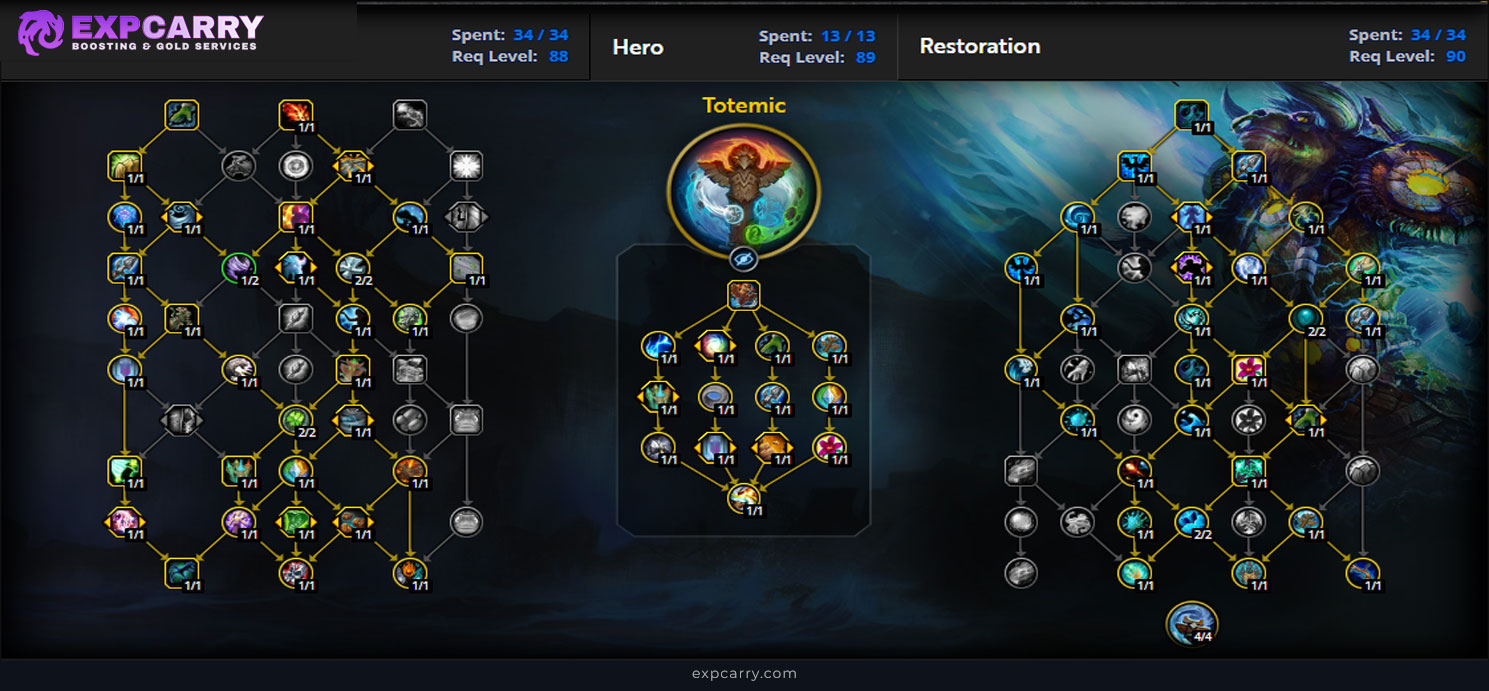
Season 2 raid progression takes place in The Venomous Abyss and The Tidebound Grotto. Totemic is the leading general raid choice because many encounters allow enough players to remain near Healing Rain, letting Surging Totem and the Season 2 set bonuses deliver consistent value. The build is straightforward to execute: spread Riptide, maintain Surging Totem, cast Healing Stream Totem and Stormstream Totem efficiently, and fill suitable group-healing windows with Chain Heal while controlling mana use.
Best Talents for Restoration Shaman Raids
The recommended raid import is the current Totemic build marked as the best option by Wowhead. It concentrates points on the spells that drive the healing profile rather than adding low-impact active buttons. Encounter-specific utility can still be moved when a boss requires extra movement support, survivability, dispels, or a different cooldown timing.
Best Stats for Restoration Shaman Raids
- Intellect
- Critical Strike
- Haste
- Versatility, then Mastery
Intellect leads the raid priority, while Critical Strike is the strongest secondary because it supports both throughput and Restoration Shaman mana mechanics. Haste improves cast speed and works well with the Season 2 two-piece bonus, although excessive Haste also accelerates mana spending. Versatility is the next dependable option, and Mastery can become stronger when allies remain at low health but is generally the lowest secondary in the current baseline.
Best Consumables, Enchants, and Gems for Restoration Shaman Raids
- Combat potion: Potion of Recklessness when Critical Strike is your highest secondary; use Lightfused Mana Potion when mana recovery is the more important need.
- Health potion: Concentrated Silvermoon Health Potion.
- Food: Silvermoon Parade, Royal Roast, or Sanguithorn Tea.
- Flask: Flask of the Shattered Sun.
- Augment rune and weapon buff: Void-Touched Augment Rune and Earthliving Weapon; Earthliving cannot be combined with weapon oils.
- Enchants: Acuity of the Ren'dorei for the weapon, Empowered Hex of Leeching for the helm, Silvermoon's Mending for shoulders, Mark of the Magister for chest, Arcanoweave Spellthread for legs, Shaladrassil's Roots for boots, and Eyes of the Eagle for rings.
- Gems: Telluric Eversong Diamond when mana matters, supported by one Flawless Versatile Garnet, Flawless Deadly Peridot, Flawless Deadly Lapis, and Flawless Deadly Amethyst; use Indecipherable Eversong Diamond with additional Flawless Versatile Garnets when mana is comfortable.
Best Gear for Restoration Shaman Raids
- Weapon and shield: target Jan'thrazet, the Soul Fang with Venom-Slashed Scuteward; weapon upgrades remain the first general crest priority.
- Trinkets: Soulcoiler Ritual Vessel is the standout target, paired with Freightrunner's Flask; Drum of Renewed Bonds and Glorious Crusader's Keepsake are useful passive alternatives.
- Tier set: Ophidian Oracle's Prophecy is crucial, and the two-piece bonus lets Healing Wave and Chain Heal create an eight-second Healing Rain at the target.
- Four-piece bonus: once per second, an ally inside Healing Rain can receive a ten-second watery absorb, so every additional Healing Rain also contributes defensive value.
- Crafting: Arcanoweave Lining is the recommended embellishment, with two copies used across suitable crafted slots once your long-term gear plan is clear.
Rotation and Ability Priority for Restoration Shaman Raids
Totemic raid healing follows a priority rather than a rigid spell loop. Use Stormstream Totem procs without wasting charges, keep Riptide cycling, activate Nature's Swiftness regularly, maintain Surging Totem, and use Healing Stream Totem on cooldown when healing is useful. Chain Heal is the stronger multi-target filler but costs considerably more mana, while Healing Wave is the efficient answer for one or two allies. Plan these choices around the encounter timeline so that short cooldowns produce value without leaving you empty before the next dangerous phase.
Single Target Healing
- Cast Riptide on an injured ally who does not already have it, giving priority to targets likely to keep taking damage.
- Maintain Earth Shield on the active tank or another consistently pressured target.
- Use Healing Wave for efficient focused healing, especially when only one or two players need attention.
- Combine Nature's Swiftness with an urgent cast when immediate stabilization is required, then spend the resulting Stormstream Totem proc at a useful moment.
AoE Rotation
- Spread Riptide before predictable group damage so Tidal Waves and ongoing healing are ready in advance.
- Keep Surging Totem active where the raid can remain within its Healing Rain area.
- Use Healing Stream Totem and available Stormstream Totem procs to trigger Totemic's passive healing and free Chain Heal value.
- Cast Chain Heal when at least three players need healing and your mana budget can support it.
Cooldowns and Utility
- Prepare Ascendance with two Tidal Waves stacks and Surging Totem, then use Healing Wave for one or two targets or Chain Heal for broader damage during the effect.
- Place Spirit Link Totem before a lethal hit when its damage reduction and health redistribution can protect the group.
- Assign Healing Tide Totem to planned raid-wide pressure when it is selected, and use Spiritwalker's Grace when forced movement overlaps required hard casts.
Opener
- Before the pull, apply Earth Shield to the active tank and place Riptide on targets expected to take early damage.
- Establish Surging Totem at the first stable stack location, then begin cycling Riptide and Healing Stream Totem.
- Move into Healing Wave or Chain Heal according to the number of injured allies, saving major cooldowns for the encounter's scheduled damage unless the opening demands them.
Restoration Shaman Mythic Plus Guide in Midnight Season 2
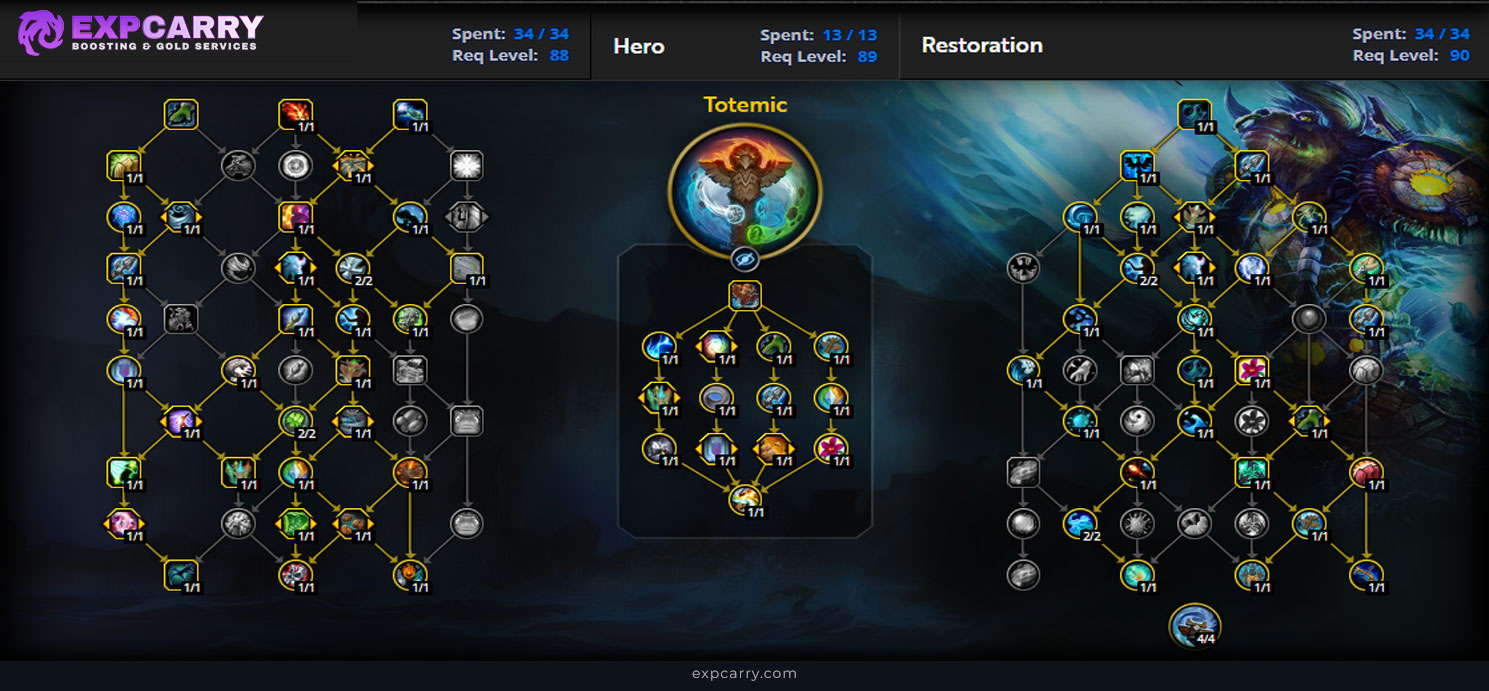
Totemic is also the current default for Midnight Season 2 Mythic+. Lively Totems provides instant Chain Heal casts through totem use, passive healing reduces the number of globals spent catching up, and Acid Rain adds damage while enemies remain inside the area. Restoration Shaman still brings exceptional dungeon utility through Wind Shear, Capacitor Totem, Tremor Totem, Poison Cleansing Totem, Purge, and curse dispels. Because each dungeon tests different mechanics, move utility points when the route changes.
Best Talents for Restoration Shaman Mythic Plus
This Totemic import is the first current Mythic+ recommendation on Wowhead. It gives the group steady healing over time, responsive instant Chain Heals, and Acid Rain damage. Farseer can deliver stronger spot healing, but it supplies less passive recovery and asks for more uninterrupted casting time, which can be difficult during movement-heavy pulls.
Best Stats for Restoration Shaman Mythic Plus
- Intellect
- Critical Strike
- Haste
- Versatility, then Mastery
The same Season 2 priority applies in keys: Intellect first, then Critical Strike, Haste, Versatility, and Mastery. Critical Strike remains the best general secondary, while Haste makes reactions and damage weaving faster but can increase mana consumption. Actual item level, socket value, and the complete stat package can outweigh a small secondary-stat difference, so compare real upgrades rather than rejecting an item from its weakest stat alone.
Best Consumables, Enchants, and Gems for Restoration Shaman Mythic Plus
- Combat potion: Potion of Recklessness with Critical Strike as your highest secondary, or Lightfused Mana Potion when a dungeon demands additional mana.
- Health potion: Concentrated Silvermoon Health Potion.
- Food: Silvermoon Parade, Royal Roast, or Sanguithorn Tea.
- Flask: Flask of the Shattered Sun.
- Augment rune and weapon buff: Void-Touched Augment Rune and Earthliving Weapon.
- Enchants: Acuity of the Ren'dorei on the weapon, Empowered Hex of Leeching on the helm, Silvermoon's Mending on shoulders, Mark of the Magister on chest, Arcanoweave Spellthread on legs, Shaladrassil's Roots on boots, and Eyes of the Eagle on rings.
- Gems: choose Telluric Eversong Diamond with all four supporting colors for mana-intensive runs, or Indecipherable Eversong Diamond and Flawless Versatile Garnets when mana is not limiting you.
Best Gear for Restoration Shaman Mythic Plus
- Prioritize weapon item level and aim for Jan'thrazet, the Soul Fang with Venom-Slashed Scuteward when raid access allows; otherwise use the strongest available Season 2 weapon and shield.
- Target Soulcoiler Ritual Vessel and Freightrunner's Flask, with Drum of Renewed Bonds or Glorious Crusader's Keepsake as practical passive alternatives.
- Complete Ophidian Oracle's Prophecy, then plan two Arcanoweave Lining embellishments around the crafted slots that do not interfere with stronger drops.
Rotation and Ability Priority for Restoration Shaman Mythic Plus
Dungeon healing places more weight on spot recovery than raid healing, while mana is often a smaller restriction between pulls. Keep Riptide moving through damaged targets, maintain Surging Totem where most of the party can stand, use Healing Stream Totem and Stormstream Totem efficiently, and include Unleash Life before an important direct heal. Choose Healing Wave when one player needs focused attention and Chain Heal when several party members are hurt. Add damage only after the group is stable and the next enemy ability is accounted for.
Single Target
- Keep Earth Shield on the tank or the party member receiving the most consistent damage.
- Use Riptide on cooldown without overwriting a healthy remaining duration on the same target.
- Cast Healing Wave for focused recovery and strengthen a critical direct heal with Unleash Life when available.
- Use Nature's Swiftness when a cast must land immediately, then convert its Stormstream Totem proc into additional passive healing.
AoE Rotation
- Position Surging Totem so most of the party receives Healing Rain and enemies can be damaged by Acid Rain.
- Cycle Healing Stream Totem and Stormstream Totem to gain their direct healing and Lively Totems Chain Heals.
- Use Chain Heal when several party members need recovery, especially when they are positioned for reliable jumps.
- Refresh Riptide across pressured allies while moving instead of waiting until every health bar has already fallen.
Cooldowns and Utility
- Use Ascendance for a major healing check, choosing Healing Wave for focused danger and Chain Heal for party-wide damage.
- Commit Spirit Link Totem before lethal group damage, and use Healing Tide Totem for sustained party pressure when it is part of the build.
- Interrupt dangerous casts with Wind Shear and select Tremor Totem, Capacitor Totem, Poison Cleansing Totem, Purge, or improved dispels for the mechanics in the current dungeon.
Opener
- Before the pull, establish Earth Shield and Riptide, then place Surging Totem where the tank will hold the pack.
- Use your first Healing Stream Totem as damage begins, interrupt priority casts, and delay offensive globals until party health is secure.
Explore services related to this guide, selected from our World of Warcraft catalog.
View All World of Warcraft Services


Restoration Shaman Delves Guide in Midnight Season 2
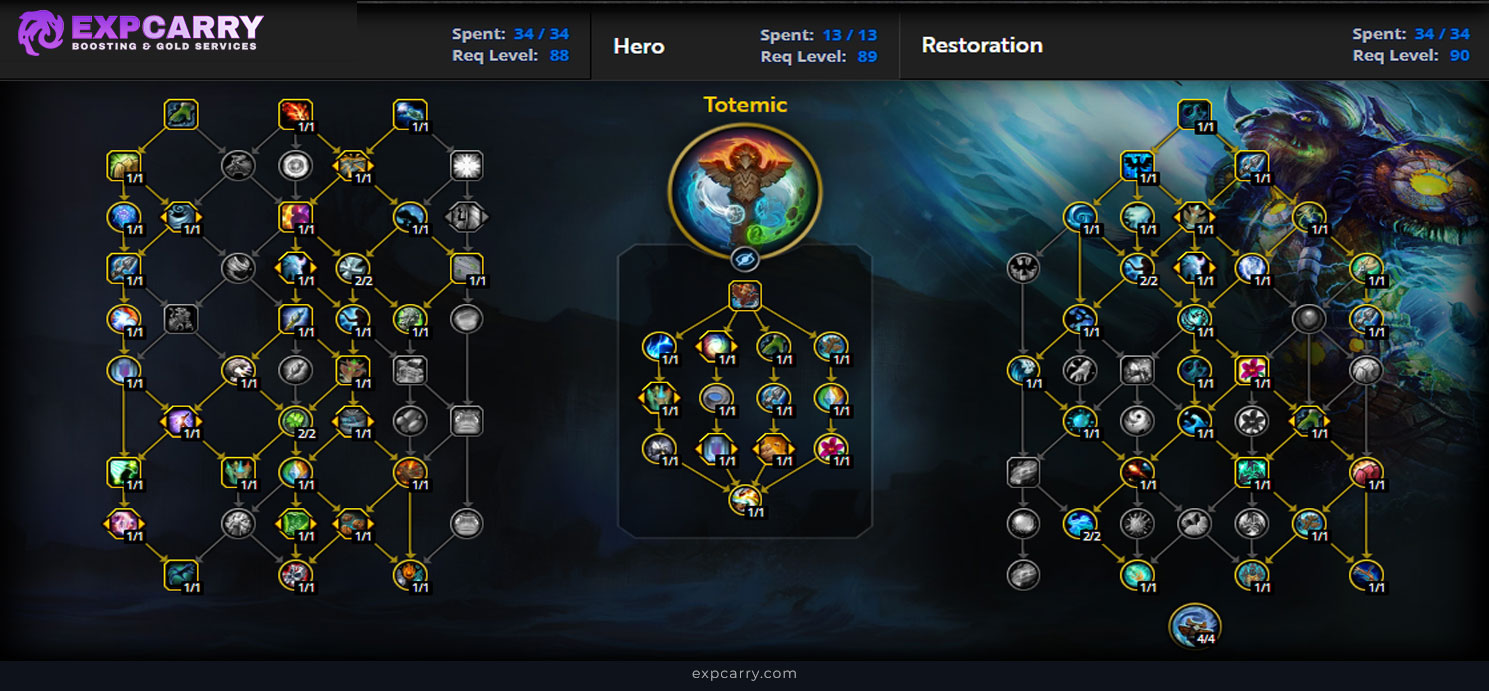
Restoration Shaman approaches Season 2 delves through durability, healing control, ranged damage, interrupts, and crowd-control totems. Totemic supports that plan with passive healing and Surging Totem, allowing more time to handle mechanics or contribute damage. The recommended import below intentionally matches the current Mythic+ build, giving one familiar setup for solo runs, companions, and small groups while retaining Acid Rain and responsive free Chain Heals.
Best Talents for Restoration Shaman Delves
Use the same Totemic import as the Mythic+ recommendation. It provides a balanced package of self-sustain, area healing, control, and damage contribution without changing the core rhythm between grouped and solo endgame activities.
Best Stats for Restoration Shaman Delves
- Intellect
- Critical Strike
- Haste
- Versatility, then Mastery
Use the established Intellect, Critical Strike, Haste, Versatility, and Mastery order as the general gearing baseline. Higher item level usually supplies more Intellect and stamina, which are both valuable during solo progression. Versatility can feel especially comfortable when you are taking direct damage, but that does not move it ahead of Critical Strike in the current overall recommendation.
Best Consumables, Enchants, and Gems for Restoration Shaman Delves
- Combat and recovery potions: Potion of Recklessness for throughput, Lightfused Mana Potion for mana, and Concentrated Silvermoon Health Potion for emergency healing.
- Food and flask: Silvermoon Parade, Royal Roast, or Sanguithorn Tea with Flask of the Shattered Sun.
- Weapon support: Enchant Weapon - Acuity of the Ren'dorei and Earthliving Weapon.
- Armor and ring enchants: Empowered Hex of Leeching, Silvermoon's Mending, Mark of the Magister, Arcanoweave Spellthread, Shaladrassil's Roots, and Eyes of the Eagle.
- Gems: Telluric Eversong Diamond with the required four colors for mana support, or Indecipherable Eversong Diamond with Flawless Versatile Garnets when mana is already stable.
Best Gear for Restoration Shaman Delves
- Upgrade your weapon first, then improve high-budget armor slots such as helm, chest, and legs when their item-level gains are meaningful.
- Use Soulcoiler Ritual Vessel with Freightrunner's Flask when available; high-item-level passive alternatives remain effective for delve progression.
- Complete the Ophidian Oracle's Prophecy set bonuses and use Arcanoweave Lining on crafted pieces that fit your wider Season 2 equipment plan.
Rotation and Ability Priority for Restoration Shaman Delves
Begin each pull with shields and healing-over-time effects already established, then keep Surging Totem where it can cover you or your companion and damage enemies through Acid Rain. Wind Shear, Hex, Capacitor Totem, Earthbind Totem, and Tremor Totem reduce the amount of damage that must be healed. Maintain control first, use efficient healing when pressure is low, and spend instant or major cooldowns only when the pull becomes dangerous.
Single Target
- Maintain Earth Shield and Riptide on yourself or the ally currently taking damage.
- Use Healing Wave for efficient recovery and Nature's Swiftness when the heal cannot wait for a cast.
- Contribute ranged damage only while health is stable and no dangerous cast or mechanic is about to occur.
AoE Rotation
- Place Surging Totem so Healing Rain covers friendly targets while Acid Rain reaches the enemy pack.
- Use Healing Stream Totem or Stormstream Totem for passive recovery, then Chain Heal when several friendly targets are injured.
- Control clustered enemies with Capacitor Totem and slow them with Earthbind Totem to prevent avoidable incoming damage.
Cooldowns and Utility
- Use Ascendance when direct healing must rise sharply for a boss or a dangerous multi-enemy pull.
- Use Spirit Link Totem or Healing Tide Totem for severe group pressure when running with a companion or party.
- Activate Astral Shift before heavy personal damage and interrupt or control enemies instead of attempting to heal through every cast.
Opener
- Apply Earth Shield and Riptide before combat, then establish Surging Totem in the area where the pull will be fought.
- Stop the first dangerous cast with Wind Shear or crowd control, stabilize incoming damage, and only then commit extra globals to offense.
Best PvP Guide for Restoration Shaman in Midnight Season 2
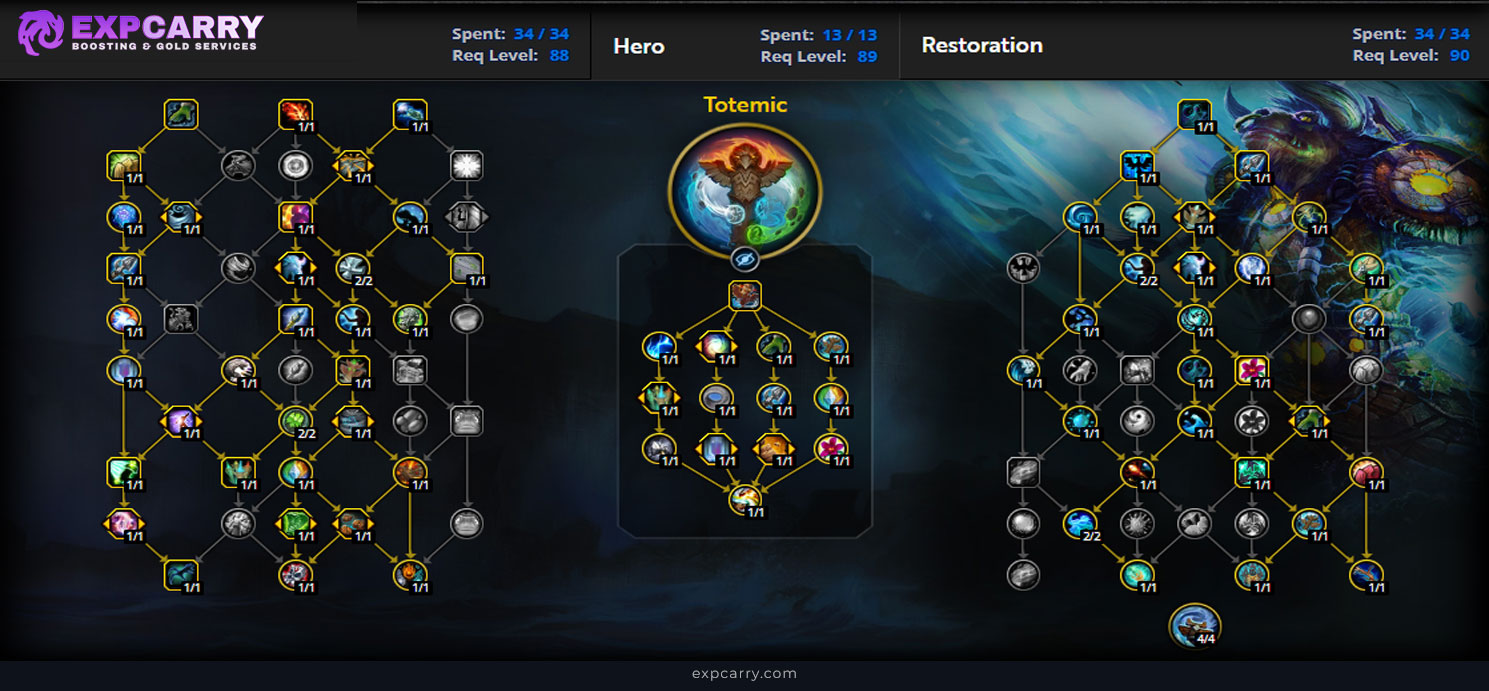
Restoration Shaman remains a versatile PvP healer in Patch 12.1 because it combines sustained healing with disruption, movement tools, and several ways to deny enemy setups. Riptide, Healing Wave, Healing Stream Totem, and Surging Totem form the healing base, while Wind Shear, Grounding Totem, Hex, Purge, and positioning totems influence the pace of a match. The current recommended PvP build is Totemic and uses Surging Totem aggressively for both friendly Healing Rain coverage and pressure through Acid Rain.
Best Talents for Restoration Shaman Solo Shuffle
Use the first Totemic Restoration Shaman build shown by Icy Veins. It is built around regular Surging Totem casts and can use Lightning Lasso to lock down an opponent during a teammate's burst. Grounding Totem, Rain Dance, Wavespeaker's Blessing, and Lightning Lasso form the main recommended talent pool, while Static Field Totem, Burrow, Call of Al'Akir, or Totem of Wrath can replace options when a matchup demands different control or survival.
Best Stats for Restoration Shaman Solo Shuffle
- Item Level
- Versatility
- Mastery
- Haste
- Critical Strike
Best Consumables, Enchants, and Gems for Restoration Shaman Solo Shuffle
- Gems: Cognitive Heliotrope in the meta socket and Flawless Versatile Amethyst in the remaining sockets.
- Primary enchants: Empowered Blessing of Speed for the helm, Akil'zon's Swiftness for shoulders, Mark of the Magister for chest, and Acuity of the Ren'dorei for the weapon.
- Remaining enchants: Arcanoweave Spellthread for legs, Farstrider's Hunt for boots, and Zul'jin's Mastery for rings.
Macros and Addons
Use arena1, arena2, and arena3 Wind Shear and Hex macros, a focus Hex or Purge macro, party-targeted Purify Spirit macros, and cursor placement for Spirit Link Totem.
Restoration Shaman 2v2 Guide
In 2v2, maintain Earth Shield on the target receiving pressure and use Riptide on cooldown to build Tidal Waves for Healing Wave. Preventing crowd control with Grounding Totem or Wind Shear is often more efficient than recovering afterward. When your partner begins a burst window, Lightning Lasso can hold an enemy in place, but remember that its channel prevents you from healing and can be interrupted.
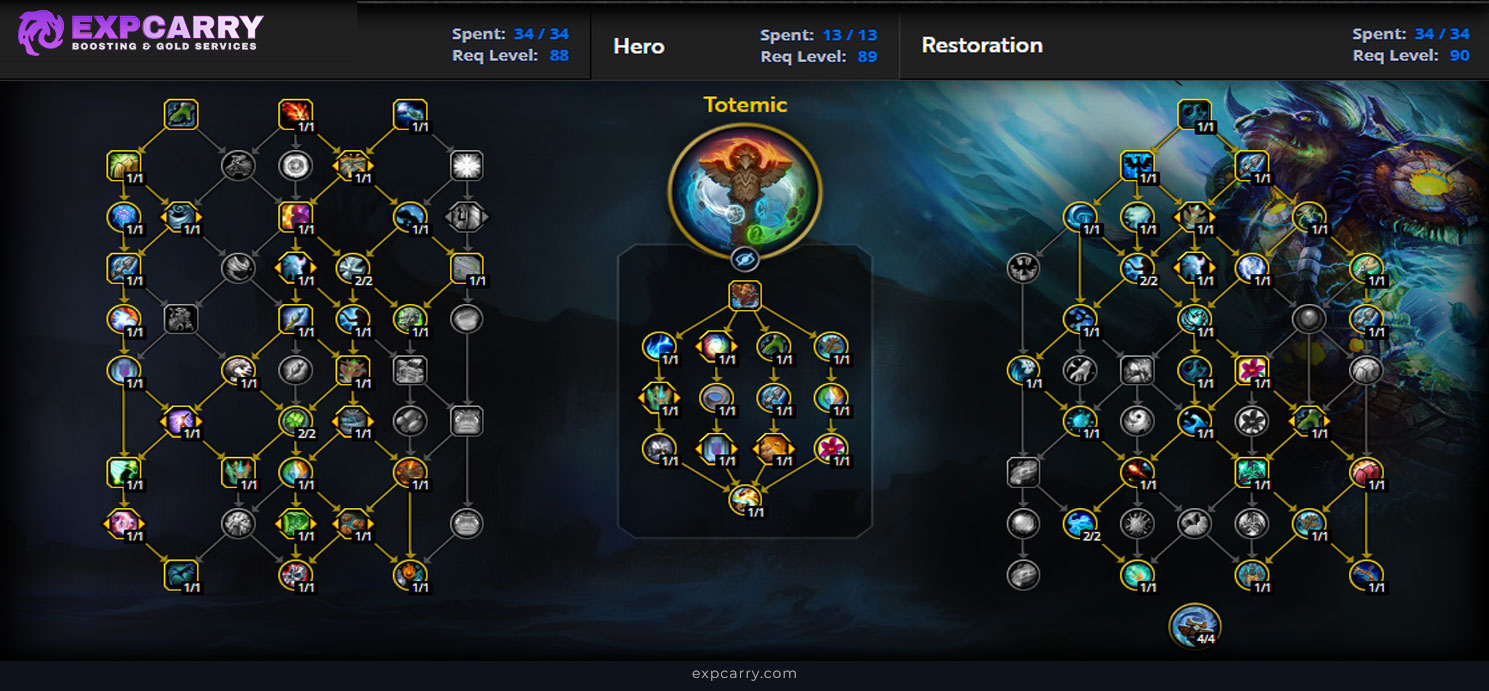
Best Talents for Restoration Shaman 2v2
The first Icy Veins Totemic import remains the recommended starting point. Keep the Surging Totem core, then choose the three PvP talents that answer the opposing composition: Grounding Totem protects against key spells, Rain Dance rewards teams that can remain in Healing Rain, Lightning Lasso adds offensive control, and Burrow or Static Field Totem can cover survival and positioning needs.
Best Stats for Restoration Shaman 2v2
- Item Level
- Versatility
- Mastery
- Haste
- Critical Strike
Best Consumables, Enchants, and Gems for Restoration Shaman 2v2
- Gems: use Cognitive Heliotrope for the meta and fill other sockets with Flawless Versatile Amethyst.
- Helm, shoulder, chest, and weapon: Empowered Blessing of Speed, Akil'zon's Swiftness, Mark of the Magister, and Acuity of the Ren'dorei.
- Legs, boots, and rings: Arcanoweave Spellthread, Farstrider's Hunt, and Zul'jin's Mastery.
Macros and Addons
Use focus or arena-target Hex, arena-target Wind Shear, party1 and party2 Purify Spirit, focus Purge, and cursor macros for Spirit Link Totem and Earthgrab Totem.
Restoration Shaman 3v3 Guide
Three-player arena places more pressure on positioning and cooldown coordination. Keep Earth Shield on the current kill target, cycle Riptide and healing totems for sustained damage, and use Healing Tide Totem for heavy spread pressure. Spirit Link Totem is the emergency answer when a teammate cannot survive another cast, while Grounding Totem, Wind Shear, Tremor Totem, Hex, Purge, and movement control should be used to interrupt the enemy team's setup before it becomes lethal.
Best Talents for Restoration Shaman 3v3
Start with the same first Totemic build from Icy Veins. Surging Totem supplies Healing Rain and Acid Rain value, while Lightning Lasso creates a coordinated stun during friendly offensive cooldowns. Swap the available PvP slots between Grounding Totem, Rain Dance, Wavespeaker's Blessing, Lightning Lasso, Static Field Totem, Burrow, or other listed situational options according to your composition and the enemy team's win condition.
Best Stats for Restoration Shaman 3v3
- Item Level
- Versatility
- Mastery
- Haste
- Critical Strike
Best Consumables, Enchants, and Gems for Restoration Shaman 3v3
- Gems: socket Cognitive Heliotrope as the meta gem and use Flawless Versatile Amethyst elsewhere.
- Main enchants: Empowered Blessing of Speed on the helm, Akil'zon's Swiftness on shoulders, Mark of the Magister on chest, and Acuity of the Ren'dorei on the weapon.
- Additional enchants: Arcanoweave Spellthread on legs, Farstrider's Hunt on boots, and Zul'jin's Mastery on rings.
Macros and Addons
Prepare arena1, arena2, and arena3 macros for Wind Shear and Hex, party macros for Purify Spirit, a focus Purge, and cursor placement for Spirit Link Totem and Earthgrab Totem.
Restoration Shaman RBG Guide
Rated battlegrounds amplify Restoration Shaman's area healing and utility around objectives. Place Surging Totem where allies can remain inside Healing Rain, and use Rain Dance when its pulsing pressure and team coverage can persist. Wind Shear, Grounding Totem, Tremor Totem, Capacitor Totem, Static Field Totem, Purge, and Hex help control casters, choke points, and coordinated pushes. Preserve Astral Shift for enemy offensive cooldowns because it cannot be activated while stunned.
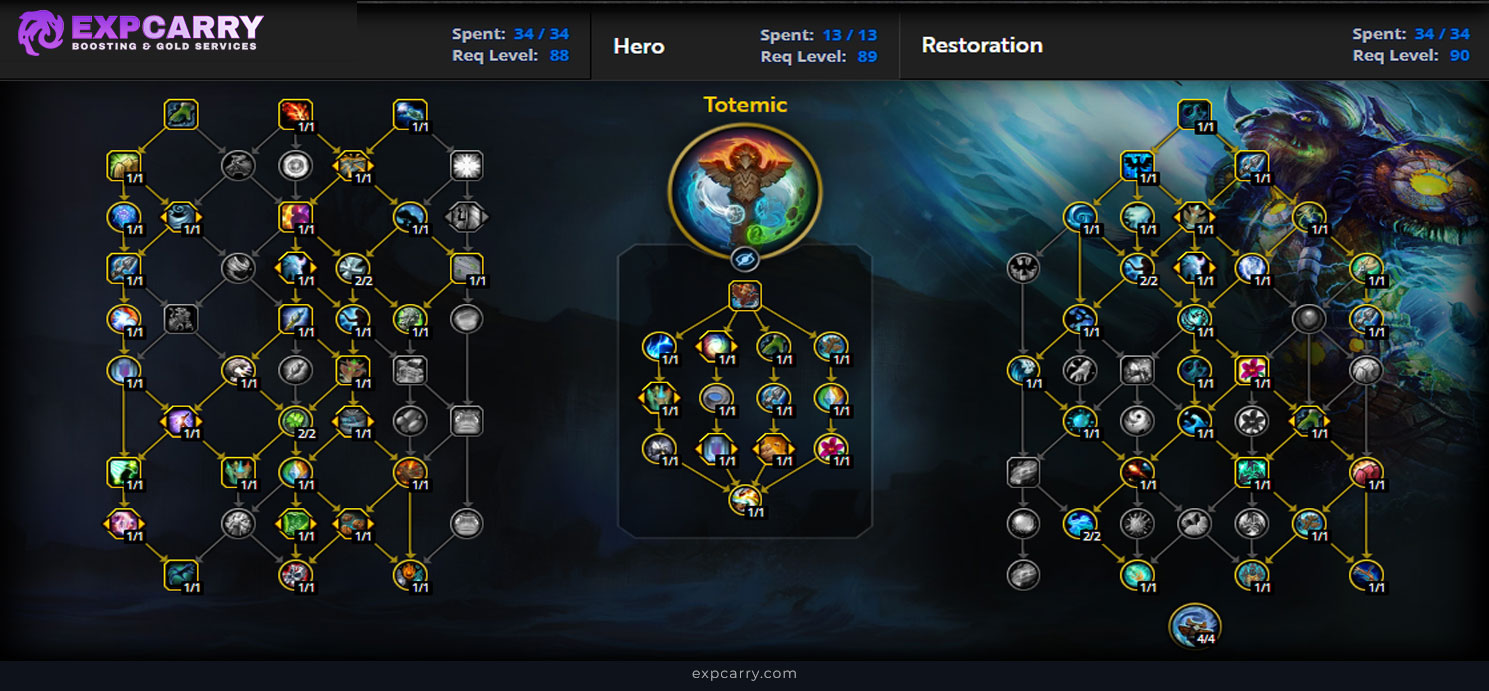
Best Talents for Restoration Shaman RBG
Use the same first Totemic PvP import as the arena sections. Its Surging Totem package is well suited to clustered fights, while the PvP talent slots can be adapted for the map: Rain Dance supports stable objective stacks, Grounding Totem denies important spells, Static Field Totem controls movement, and Lightning Lasso adds a non-dispellable stun when channeling is safe.
Best Stats for Restoration Shaman RBG
- Item Level
- Versatility
- Mastery
- Haste
- Critical Strike
Best Consumables, Enchants, and Gems for Restoration Shaman RBG
- Gems: select Cognitive Heliotrope for the meta socket and Flawless Versatile Amethyst for every other socket.
- Core enchants: Empowered Blessing of Speed for the helm, Akil'zon's Swiftness for shoulders, Mark of the Magister for chest, and Acuity of the Ren'dorei for the weapon.
- Other enchants: Arcanoweave Spellthread for legs, Farstrider's Hunt for boots, and Zul'jin's Mastery for rings.
Macros and Addons
Use focus Hex and Purge, mouseover or cursor totem placement, and a battleground frame addon that clearly shows friendly and enemy targets, health, and important effects.
Conclusion
Restoration Shaman in WoW Midnight Season 2 is strongest when healing and utility are treated as one system. Totemic is the current general recommendation across raid, Mythic+, delves, and the first Icy Veins PvP build. In PvE, its Surging Totem, Healing Rain interactions, Lively Totems, and Stormstream Totem support reliable group recovery. In PvP, the same hero tree adds steady area value while the Shaman disrupts casts and creates control windows.
Build familiarity around Riptide, Earth Shield, Surging Totem, Healing Stream Totem, Healing Wave, and Chain Heal, then layer cooldowns and utility on top of that foundation. Use Ascendance, Spirit Link Totem, and Healing Tide Totem before damage becomes unmanageable; move utility talents for each encounter or enemy composition; and gear toward the verified Season 2 priorities and set bonuses. That approach keeps the specialization effective without relying on outdated previous-season assumptions.