




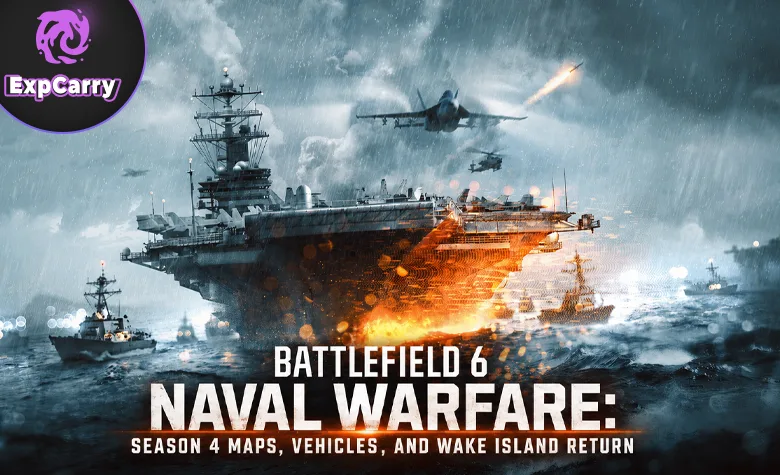
Battlefield 6 Naval Warfare is one of the biggest features on EA's 2026 roadmap, and it is planned for Season 4 in July 2026. The update brings two major maps built around water combat: the brand-new Tsuru Reef and the returning classic Wake Island. Both maps are tied to aircraft carriers with operational flight decks, new naval vehicles, and a dynamic wave system designed to make ocean combat feel like more than flat water with boats glued on top.
This matters because naval combat has always been part of Battlefield's larger identity. The series is at its best when infantry, armor, aircraft, transport, objectives, destruction, and map scale all collide in the same match. Battlefield 6 launched with strong fundamentals, but many players wanted larger maps and more complete combined-arms warfare. Naval Warfare is EA's direct answer to that pressure, and Season 4 is the update that should make Battlefield 6 feel much closer to the full sandbox players expected.
The important detail is that Naval Warfare is not just one new boat or a small side playlist. EA's 2026 roadmap describes a July Season 4 built around land, air, and sea, with Tsuru Reef, Wake Island, carriers, naval vehicles, dynamic waves, Custom Lobbies, and Spectator Mode all arriving in the same seasonal block. EA has confirmed the broad feature set, but exact vehicle roles, carrier rules, wave behavior, and objective layouts are still not fully detailed. That gives the update enough weight to feel like a real mid-year expansion for Battlefield 6 instead of another patch trying to stretch one map and two weapons into a marketing beat.
Battlefield 6 Naval Warfare Release Window and Season 4 Content
Battlefield 6 Naval Warfare is planned for Season 4 in July 2026. EA's official roadmap does not present it as a small experimental mode. It is listed as the main Season 4 feature, tied directly to large-scale maps, aircraft carriers, naval vehicles, and the dynamic wave system. That means Season 4 is the first point where Battlefield 6 is officially expanding its combat triangle from land and air into full sea warfare.
The two key maps are Tsuru Reef and Wake Island. Tsuru Reef is the new map built for naval warfare, while Wake Island brings back one of Battlefield's most recognizable legacy locations. Both maps are important for different reasons. Tsuru Reef gives Battlefield Studios a clean chance to design around modern naval systems from the start. Wake Island gives the update immediate nostalgia and a classic asymmetrical island assault structure that fits naval combat naturally.
Season 4 also includes Custom Lobbies and Spectator Mode. Season 4 also includes Custom Lobbies and Spectator Mode. BF6 Coaching can help players adapt to larger combined-arms matches and the new naval layouts. These are not naval features by themselves, but they matter for the wider update because they give communities, creators, competitive players, and organized groups more control over how they play and watch Battlefield 6. A naval season with big maps and carriers benefits from tools that let players create events, test formats, and watch large-scale matches properly.
| Feature | Confirmed Season 4 content | Why it matters | Still unclear |
|---|---|---|---|
| Naval Warfare | Sea combat returns as a major gameplay layer | Completes Battlefield 6's land, air, and sea combined-arms structure | How deeply water objectives will shape normal match flow |
| Tsuru Reef | Brand-new naval-focused map planned for Season 4 | Lets Battlefield Studios design around modern naval combat from the ground up | Whether its scale will still support strong infantry routes |
| Wake Island | Classic Battlefield map returns in Season 4 | Brings back one of the series' most famous island assault maps | How much the remake changes objective layout, cover, and vehicle flow |
| Aircraft carriers | Operational flight decks on both Season 4 maps | Creates a stronger connection between air, sea, and island combat | Exact spawn rules, vulnerability, and match impact are not fully detailed |
| New naval vehicles | Additional sea-based combat and transport options | Gives squads more ways to attack, flank, and contest objectives from water | Vehicle classes, counters, and balance rules are still unknown |
| Dynamic wave system | Changing ocean conditions attached to naval combat | Makes sea battles feel more physical and less like flat-water vehicle lanes | How much waves affect aiming, movement, visibility, and control |
| Custom Lobbies | More control over match setup | Supports community events and organized naval matches | Depends on how much control EA actually gives players |
| Spectator Mode | Tools for watching matches | Useful for creators, tournaments, and large-scale Battlefield events | Needs clean camera tools to matter beyond novelty |
Tsuru Reef Is Battlefield 6's New Naval Warfare Map
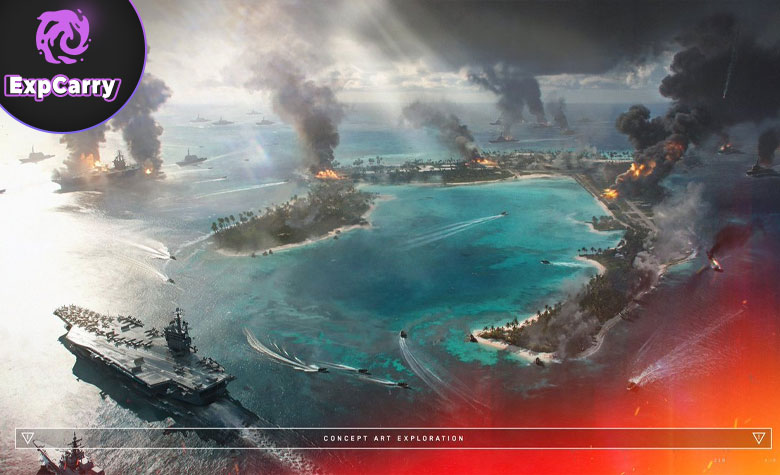
Tsuru Reef is the new Season 4 map built around Naval Warfare. The roadmap positioning makes it clear that this is not a normal land map with a few boats near the edge. It is being presented as the showcase location for sea combat, with huge air and sea spaces, carrier operations, naval vehicles, and the dynamic wave system all feeding into its identity.
The challenge for Tsuru Reef is balance. A great Battlefield map cannot belong only to vehicles. It needs infantry routes, objective clusters, transport options, aerial pressure, cover, sightline control, and enough meaningful movement between points. If the map becomes too open, infantry players will feel like cargo. If it becomes too segmented, naval vehicles may feel decorative. The best version of Tsuru Reef gives every role a reason to exist.
That is why Tsuru Reef matters more than the feature label itself. Naval Warfare will only work if the map gives players a reason to use the sea. Boats need objectives to contest, carriers need strategic value, aircraft need space to operate, and infantry need landing zones that feel dangerous without becoming impossible. Otherwise, the map becomes a very large swimming pool with explosions, which is less impressive than marketing departments seem to think.
Tsuru Reef Could Decide Whether Naval Combat Feels Essential
Battlefield players will judge Naval Warfare by how often it creates meaningful decisions. A good Tsuru Reef match should force squads to choose between direct land pushes, sea flanks, carrier launches, beach assaults, vehicle escorts, and air support. The water should not be dead space between objectives. It should be part of the fight.
The best Battlefield maps create pressure from several directions at once. Tsuru Reef has the chance to do that because naval combat naturally creates multiple attack lanes. A squad can approach from sea, aircraft can launch from carriers, infantry can push inland, and vehicles can contest exposed routes. If the objective layout supports those choices, Tsuru Reef could become the map that proves Battlefield 6 needed Naval Warfare all along.
Wake Island Returns With Aircraft Carriers and Naval Combat
Wake Island is one of Battlefield's most famous maps, so its return in Season 4 is not just filler nostalgia. The map's island shape and coastal assault structure make it a natural fit for Naval Warfare. It has always been associated with beach landings, carrier pressure, aircraft, and asymmetrical battlefield flow. Bringing it back alongside new naval systems is a smart move because the map already has the language of sea-based Battlefield combat built into its history.
The modern version needs to do more than copy the old layout. Battlefield 6 has different movement, destruction, visibility, vehicle handling, and player expectations. A faithful remake that plays badly would be useless. A smart remake should preserve Wake Island's identity while adjusting objective placement, cover, vehicle routes, and carrier pressure for the current sandbox.
Wake Island also gives Season 4 a powerful comparison point. Players know what this map is supposed to feel like. They remember carrier launches, beach assaults, desperate objective holds, and chaos around the island's curved shape. If Battlefield 6 delivers that feeling with modern systems, Wake Island could become one of the season's biggest wins. If it misses, players will not be gentle, because nostalgia makes people weirdly protective of geography.
Wake Island Gives Season 4 a Classic Battlefield Hook
Tsuru Reef is the new test, but Wake Island is the emotional hook. It tells older Battlefield players that Season 4 is trying to reconnect with the series' identity. That matters after years of debate over whether modern Battlefield still understands what made the franchise different from other shooters.
A Wake Island return also helps newer players understand why Naval Warfare matters. The map's design makes water, air, and land feel connected. Players can see how sea-based routes, carrier pressure, air support, and island objectives create a different kind of match than a normal urban or desert battlefield. That is the value of bringing back a classic map at the same time as a major combat feature.
Aircraft Carriers and New Naval Vehicles Change Battlefield 6 Match Flow
Aircraft carriers are one of the most important additions in Battlefield 6 Season 4. EA has confirmed that both Tsuru Reef and Wake Island will feature aircraft carriers with operational flight decks. That detail matters because carriers are not just scenery. They can connect sea combat, air launches, and island pressure in a way normal land bases cannot.
Operational flight decks can change how teams enter the battlefield, but EA has not fully detailed the exact carrier rules yet. The likely value is clear: aircraft can launch from sea-based positions, boats and naval vehicles can support landings, and infantry can move from offshore pressure into island or coastal objectives. The result should be a more layered match where the battle begins before players even touch the main landmass.
New naval vehicles are the other half of the system. Battlefield 6 needs more than transport boats to make Naval Warfare work. Sea vehicles should create roles: assault, transport, anti-air pressure, anti-vehicle pressure, fire support, objective flanking, and squad mobility. If every boat feels like a disposable taxi, the feature will not last. If naval vehicles have real battlefield jobs, Season 4 can change how players approach entire maps.
Battlefield 6 Naval Vehicles Need Clear Roles
The best vehicle sandboxes work when every vehicle has a purpose and a counter. Naval vehicles need to threaten the battlefield without erasing infantry play. A strong attack boat can break a beach defense, but it should be vulnerable to missiles, aircraft, mines, coordinated infantry, or other naval vehicles. A carrier can be a strong base, but it cannot become an untouchable fortress.
Battlefield has always depended on that push and pull. Vehicles should feel powerful enough to matter and vulnerable enough to create teamwork. If Battlefield 6 gets that balance right, naval combat can create some of the best squad moments in the game. If it gets the balance wrong, players will spend Season 4 arguing about boats with the seriousness of diplomats negotiating a ceasefire.
Dynamic Wave System Could Make Battlefield 6 Naval Combat Stand Out
The dynamic wave system is the most interesting technical feature attached to Battlefield 6 Naval Warfare. EA says Season 4 will include a dynamic wave system alongside new naval vehicles and carrier-based maps. The value of this system depends on whether it changes gameplay in visible, readable ways.
If waves affect vehicle movement, cover, sightlines, landing approaches, or combat timing, they could make sea battles feel physical and unpredictable. A boat cresting a wave, dipping behind water, or struggling during rough conditions can create moments that flat water never could. The ocean becomes part of the battlefield instead of a decorative surface.
The danger is frustration. EA has not fully detailed how deeply waves will affect aiming, movement, visibility, or vehicle control. If waves add tactical variety without fighting player input, the system could become one of Season 4's best ideas. If they make naval combat feel random, players may hate them quickly. The worst version turns every naval duel into a fight against physics and netcode, two ancient enemies of human joy.
Battlefield 6 REDSEC Should Stay Separate From Naval Warfare Until EA Shows More
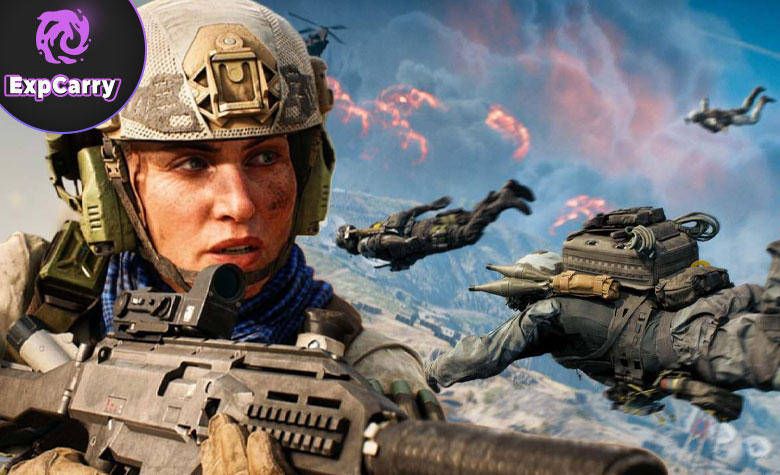
Battlefield REDSEC is part of the wider Battlefield 6 ecosystem, but EA has not clearly confirmed that Season 4's Naval Warfare systems will fully reshape REDSEC battle royale combat. That distinction matters. It is fair to imagine how carriers, naval vehicles, and water routes could affect REDSEC later, but the current roadmap is clearer about Naval Warfare as a Battlefield 6 Season 4 feature than it is about a full naval battle royale overhaul.
That does not make REDSEC irrelevant. Large-scale water combat could eventually make battle royale rotations more varied if EA brings those systems across in a meaningful way. Naval vehicles, offshore positions, and carrier-style points of interest could make water zones more valuable than simple map boundaries. But until EA details that integration, it should be treated as a possibility, not a confirmed Season 4 promise.
The risk is that REDSEC and main Battlefield 6 need different balance. A naval vehicle that feels fair in All-Out Warfare may be too oppressive in a battle royale setting where survival, third-party pressure, and final-circle positioning matter more. Battlefield Studios will need to tune the naval sandbox carefully if it ever pushes those systems deeper into REDSEC instead of pretending one balance profile fits everything. That would be convenient, which is exactly why it probably will not happen cleanly.
Battlefield 6 Player Reaction to Naval Warfare
Early coverage and community discussion around Naval Warfare are leaning optimistic because this is one of the features Battlefield fans have been asking to see return in a serious way. The series has a long history with island maps, carriers, boats, beach assaults, and full combined-arms chaos. For many players, Battlefield without meaningful sea combat has felt incomplete.
The excitement is tied to two things: Wake Island and aircraft carriers. Wake Island gives fans a classic map to rally around, while carriers suggest that Season 4 is taking naval combat seriously. The dynamic wave system also gives the update a modern hook instead of simply bringing back old boats with better textures.
The skepticism is just as obvious. Players want to know whether naval vehicles will be balanced, whether Tsuru Reef will support infantry, whether Wake Island will preserve its old flow, and whether Battlefield Studios can deliver this on schedule with enough polish. The roadmap is promising, but Battlefield players have learned not to clap until the server actually works. A grim little wisdom, but earned.
Battlefield 6 Naval Warfare Pros and Concerns
Naval Warfare has a strong pitch because it directly addresses several complaints about Battlefield 6: map scale, missing legacy features, limited combined-arms variety, and the need for stronger community tools. Season 4 brings a feature fans wanted, a classic map, a new large-scale map, and tools like Custom Lobbies and Spectator Mode.
The concerns are practical. Naval Warfare will only work if maps, vehicles, waves, aircraft, and infantry are balanced together. Battlefield is not a naval simulator. It is a combined-arms shooter. Sea combat must support the wider match, not replace it.
| System | Best-case impact | Why players want it | Main concern |
|---|---|---|---|
| Naval Warfare | Full sea combat alongside land and air | Restores a classic Battlefield combat layer | Could feel shallow if water objectives are weak |
| Tsuru Reef | A large new map built around naval combat | Gives Season 4 a fresh large-scale battlefield | Must avoid empty spaces and vehicle-only dominance |
| Wake Island | A modern version of a legendary island map | Brings back one of Battlefield's most famous layouts | Needs modernization without losing its identity |
| Aircraft carriers | Sea-based air operations and stronger coastal pressure | Adds carrier launches, staging, and air support flow | Carrier teams must not feel trapped or overpowered |
| Dynamic waves | Changing ocean conditions during combat | Makes sea battles more physical and unpredictable | Can become frustrating if it hurts control too much |
| Naval vehicles | New flanking, transport, and fire-support options | Creates more squad routes and objective pressure from water | Needs clear counters for infantry and aircraft |
| Custom Lobbies | Player-controlled match setups | Helps communities create events and test modes | Depends on how flexible the settings are |
| Spectator Mode | Tools for watching large-scale matches | Supports creators, events, and competitive play | Needs strong camera and UI tools to matter |
Battlefield 6 Season 4 Could Be the Update That Completes the Sandbox
Season 4 has the potential to become Battlefield 6's most important update because it adds something the game has been missing at a structural level. New weapons and small balance patches can improve the game, but Naval Warfare changes the shape of matches. It gives designers new routes, new objective pressure, new vehicle interactions, and new reasons for squads to coordinate.
That is what Battlefield needs most. The franchise is not just about shooting. It is about the feeling that every match contains several overlapping wars at once: infantry fighting room to room, tanks pushing roads, aircraft contesting the sky, transport vehicles carrying squads to objectives, and now naval vehicles reshaping coastal combat. When those layers work together, Battlefield becomes something other shooters cannot easily copy.
If Season 4 succeeds, Battlefield 6 will feel more complete. If it fails, Naval Warfare will become another example of a requested feature arriving with the right name but the wrong execution. The difference will come down to map flow, vehicle balance, wave readability, carrier design, and whether infantry still has a meaningful role on maps built around the sea.
Final Thoughts
Battlefield 6 Naval Warfare is coming in Season 4 in July 2026 as part of EA's roadmap, and it brings Tsuru Reef, Wake Island, aircraft carriers with operational flight decks, new naval vehicles, and a dynamic wave system. This is not just a nostalgia feature. It is a major attempt to restore land, air, and sea warfare as the full Battlefield formula.
The strongest part is the map combination. Tsuru Reef gives Battlefield Studios a new naval-focused battlefield, while Wake Island brings back one of the franchise's most iconic island combat layouts. Together, they give Season 4 both a fresh test case and a legacy anchor. That is a stronger approach than launching naval combat on one unproven map and hoping everyone salutes.
The biggest risk is balance. Naval combat can make Battlefield 6 feel larger, more tactical, and more dramatic, but only if boats, carriers, aircraft, infantry, objectives, and waves all support each other. If one layer dominates, the sandbox breaks. If every layer has a role, Season 4 could become the update that finally makes Battlefield 6 feel like the full-scale combined-arms shooter players wanted from the start.
For now, Battlefield 6 Naval Warfare looks like the Season 4 feature to watch. It answers a major community request, brings back Wake Island, adds a new map in Tsuru Reef, and gives the game a chance to stand apart from ordinary military shooters again. Battlefield works best when the battlefield itself feels alive. Season 4 is where the ocean finally gets to join the fight.