
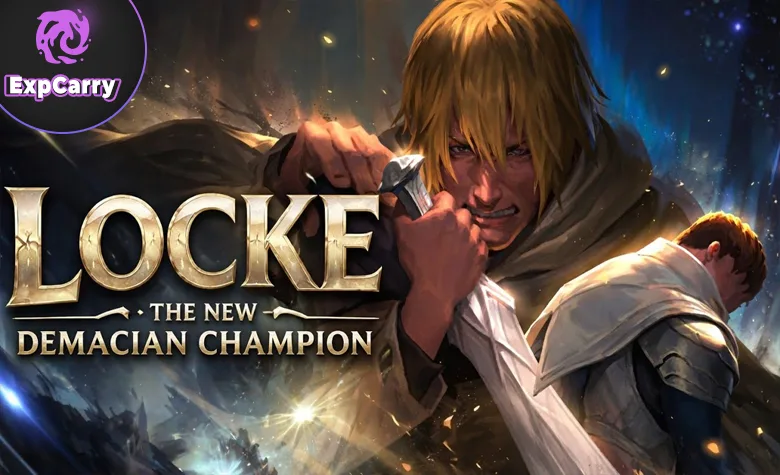
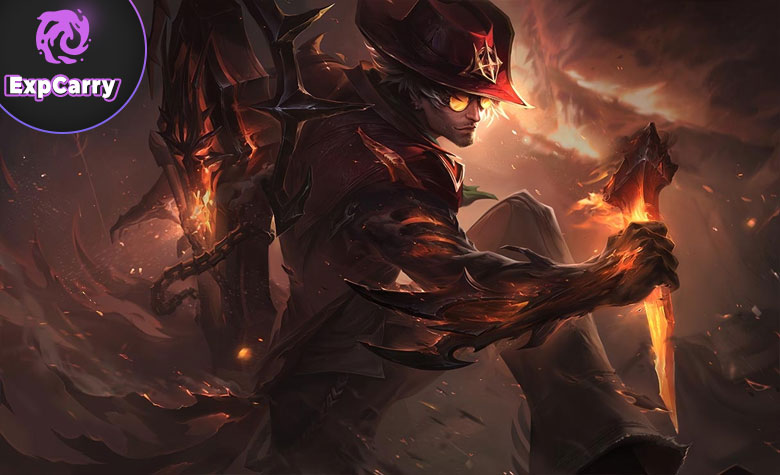
League of Legends Locke is Riot's newest champion, and the first thing to clear up is the name: it is Locke, not Loki. His full name is Corvin Locke, and Riot introduces him as the Ashen Exorcist, a Demacian demon hunter built around forbidden rites, Soul Nails, mobility, self-risk and execution pressure. Locke arrives in Patch 26.13 on June 24, 2026, with High Noon Locke as his release skin. Riot positions him as a mid lane AP assassin, but his kit immediately raises a more interesting question: is Locke a pure burst champion, or is he closer to a melee AP skirmisher who needs repeated contact, careful timing and clean execution windows?
That is what makes Locke a stronger topic than a simple ability rundown. He is not just another new mid laner with damage and a dash. His story gives Riot a way to return to Demacia's fear of magic while connecting it to the current demon-focused direction of League's lore. Locke does not see demons as the clean source of all evil. His belief is darker: demons feed on the corruption, guilt and weakness already inside people. In gameplay, that theme appears through marks, health sacrifice, healing after danger, mobility and an ultimate that turns weakened enemies into Purgatory targets.
League of Legends Locke Comes From Demacia's Darker Side
Locke is from Demacia, but he does not fit the public image of the region. Demacia is usually presented through order, honor, military discipline, noble houses and distrust of magic. Its capital was built as a refuge from sorcery after the Rune Wars, using petricite, the white stone known for dampening magical energy. That background matters because Locke is not a knight, ranger, royal defender or Mageseeker. He comes from the hidden side of Demacia: the occult side that exists beneath the kingdom's clean banners and strict laws.
His lore says he was born into a family of Demacian occultists and raised around deception, hypocrisy and forbidden knowledge. That makes him different from champions who represent Demacia's official ideals. Locke uses rites, binding tools and soul-based methods while coming from a kingdom that built much of its identity around purity and control. The contradiction is the point. Locke is Demacian, but his work exists in the part of Demacia that the kingdom would rather deny: curses, demons, private guilt and the kind of moral rot that cannot be solved by armor, law or patriotic speeches.
This also makes him useful for Riot's modern Demacia storyline. The region has already been tested through Sylas, Lux, the Mageseekers, Shyvana, Vayne and the wider question of what happens when fear of magic becomes cruelty. Locke adds a different pressure point. He is not simply another victim of Demacia's anti-magic culture, and he is not another soldier defending the system. He is someone shaped by the things Demacia hides. That gives the champion a clearer place in the region than his stylish design first suggests.
Locke's Story Connects Demons, Vayne and Demacian Hypocrisy
Riot's Back from the Brink cinematic gives Locke a direct role in the current demon storyline. The setup is direct: Locke has hunted demons for his whole life, and a possessed Vayne becomes one of his most important challenges. That connection matters because Vayne is one of Demacia's most famous monster hunters. Her usual answer to darkness is direct violence. She tracks monsters, kills them and sees the world through a harsh line between hunter and prey.
Locke approaches the same space from another angle. He hunts demons, but he is also interested in why they are there in the first place. His view makes evil less simple. The monster is not only an outside creature that attacks innocent people. It is also something drawn toward human weakness, guilt and corruption. That gives his exorcist identity more weight than a normal demon hunter archetype. Locke is not written as a clean holy savior. He can fight something genuinely monstrous while still using methods Demacia would find disturbing.
That ambiguity is what separates him from a straightforward heroic champion. Locke can save someone like Vayne, but his cure does not have to feel clean or gentle. He uses forbidden tools to fight forbidden things. He exposes the darkness inside people rather than pretending it came from nowhere. For Demacia, that is a strong thematic fit. The region has always been more interesting when its ideals are placed next to the fear, repression and hypocrisy required to maintain them. Locke gives Riot another way to explore that tension without repeating the exact same Mageseeker conflict.
Locke Abilities Build an AP Assassin Around Marks and Execution
Locke's gameplay identity is built around mid lane AP assassin pressure, but his kit is not just a quick dash-and-burst pattern. Passive - Silver Stake makes his attacks deal bonus magic damage on hit, with stronger value against enemies who are already missing Health. Q - Ritual Nails lets him throw Soul Nails to damage and mark enemies. These marks can then be consumed by Locke's attacks for bonus damage, which gives him a repeated damage pattern instead of relying only on one spell rotation.
| Ability | Role in Locke's kit | Why it matters |
| Passive - Silver Stake | On-hit bonus magic damage based on missing Health | Pushes Locke toward finishing damaged targets instead of only trading safely |
| Q - Ritual Nails | Throws Soul Nails, damages and marks enemies | Creates the mark-and-consume pattern that drives his repeated damage |
| W - Soul Ignition | Gives Attack Speed and Move Speed, costs his own Health, then heals back damage | Makes his all-in windows risky and rewards surviving the fight |
| E - Ashen Pursuit | Teleports to a location before dashing into an attack | Gives him engage angles, target access and reset-style fight movement |
| R - Purgatory | Damages and can execute enemies hit | Turns weakened enemies into snowball targets and gives his kit its main threat |
W - Soul Ignition is the risk tool. Locke ignites his soul, gains Attack Speed and Move Speed, damages himself, and then heals back part of the damage he takes during the effect. The important part is not only the numbers. It is the decision. Locke has to choose when he can afford to burn his own Health and when the fight is too dangerous to extend. This is the part of the kit that makes him feel less like a pure one-shot assassin and more like a champion who wants to survive long enough to turn pressure into a kill.
E - Ashen Pursuit gives Locke the mobility expected from a modern melee assassin. He can reposition, reach a target and dash through enemies with a damaging attack. The takedown pressure is especially important because this kind of tool can let him continue a fight after one enemy falls. R - Purgatory completes the kit by throwing a binding artifact that damages enemies and threatens an execute when targets are low enough. When Locke can seal away an enemy champion, his ultimate becomes more than a finisher. It becomes the tool that lets him convert one mistake into a larger fight swing.
The result is a champion who wants commitment. A basic assassin usually looks for a fast entry, a quick kill and a clean exit. Locke can burst, but his marks, self-damage, healing window and execute pressure make him care about the full sequence. He wants to mark, enter, survive the counterattack, consume damage windows and finish the target with Purgatory. If his numbers are high, he can snowball hard. If his damage or healing is too low, he may struggle into control mages, crowd control and coordinated peel.
Explore services related to this guide, selected from our League of Legends catalog.
View All League of Legends Services


Purgatory Is the Ability Players Are Watching Closest
Purgatory is the part of Locke's kit that will likely shape early public opinion. New champions with mobility are always watched closely. New champions with mobility, healing, mark damage and an execute are watched even harder. Purgatory gives Locke a finishing condition that can decide whether he is a controlled assassin with clear counterplay or a frustrating snowball threat that removes low-health targets too easily.
The ability also connects cleanly to his theme. Locke is an exorcist, so his ultimate is not only a damage spell with a dark name. It is a sealing tool. The champion fantasy is about finding a marked or weakened enemy, binding them and removing them from the fight. That makes the ability readable from a lore perspective, but dangerous from a balance perspective. Execute mechanics always draw attention because players dislike dying at a health threshold that feels different from normal damage calculation.
The balance question is not simply whether Purgatory can kill. The real question is how much setup it requires. If Locke has to land his spells, manage his Health, commit at the right time and expose himself to counterplay, then Purgatory can become a satisfying payoff. If the setup is too forgiving, the ability could make him feel oppressive, especially when he gets early kills. His best version is a champion who earns the execute through timing and risk. His worst version is a champion who looks conditional but still deletes targets through raw numbers.
What Players Think About Locke So Far
Early player reaction is mixed in a useful way. A lot of players like the surface package: the exorcist theme, glasses, music, sound design, animation style and the idea of a Demacian occult champion. He stands out from Demacia's usual visual language, which is part of why the reaction is divided. Some players like that he feels confident, gothic and more modern than many Demacian champions. Others think the design leans so hard into anime and exorcist influences that he does not immediately read as Demacian.
The gameplay discussion is sharper. Riot presents Locke as a mid lane champion, but players immediately see possible jungle pressure. That concern comes from his mobility, skirmish pattern, takedown value and ability to chase weakened targets. If his jungle clear is even serviceable, jungle players will test him quickly. This does not mean he will become a primary jungler, but it is the kind of question that appears whenever Riot releases a melee AP champion with mobility and strong fight conversion tools.
The second debate is about class identity. Locke is called an assassin, but parts of his kit read like a skirmisher. Soul Ignition rewards him for surviving inside the fight. Ritual Nails encourages repeated attacks after spell hits. Ashen Pursuit gives him access and follow-through. Purgatory rewards finishing a target after setup. That combination makes him different from a simple frontloaded burst champion. He may end up feeling closer to champions who dance around extended fights than to assassins who only care about one clean combo.
That does not make the design wrong. It makes the release more volatile. A melee AP champion with mobility, healing and execution pressure can be exciting when balanced around risk. The same package can become frustrating if he is too safe or too forgiving. If Locke has clear weaknesses into crowd control, range, early wave control and coordinated peel, he has room to be a skill-expressive mid laner. If those weaknesses are too easy to ignore, the launch conversation will quickly move from theme and lore to balance complaints.
Why Locke Is More Interesting Than Another Mid Lane Assassin
Locke is interesting because he gives Riot three hooks at once. The first hook is lore. Demacia has spent years being one of League's most useful regions because its ideals sound noble while its history with magic is full of fear and repression. Locke enters that setting as a character who uses forbidden methods to fight something worse. He is not another noble soldier, another rebel mage or another victim of the Mageseekers. He is a product of Demacia's hidden side.
The second hook is gameplay. League already has many assassins, but Locke's pattern is not only dash and burst. His health-cost W, healing return, Soul Nail marks, on-hit damage and execute pressure make him more conditional. He has to choose when to burn his own Health, when to enter, when to commit to attacks and when to save Purgatory for the finish. That gives good Locke players several points where they can separate themselves from first-time players.
The third hook is timing. Locke arrives at a point where new League champions are expected to carry more than a kit. They need a role in the current season, a clear fantasy, a strong visual identity and enough gameplay depth to survive beyond launch week. Locke has those ingredients. His early discussion is not only about whether he is strong. Players are also asking whether he belongs in mid, whether jungle will steal him, whether Purgatory has enough counterplay, whether his design fits Demacia and whether Riot has made a stylish champion with enough substance behind him.
That is why Locke works as a larger article topic. He is not only a release date and five abilities. He is a champion built around contradiction. He belongs to Demacia, but he uses tools Demacia would fear. He hunts demons, but he believes human darkness gives them power. He is presented as an assassin, but his kit asks for commitment and survival inside dangerous fights. Those contradictions give him more identity than a normal damage champion would have.
Conclusion
League of Legends Locke is a Demacian exorcist built from tension. He comes from a kingdom that fears magic, but he uses forbidden rites. He hunts demons, but he believes people create the darkness that demons exploit. He is positioned as a mid lane AP assassin, but his kit has enough self-risk, healing, mark consumption and repeated-contact pressure that players are already debating whether he will feel more like a skirmisher in practice.
The real test begins once players have enough games on Patch 26.13. If Locke's mobility, healing and Purgatory are balanced around real setup, he could become one of the more interesting mid lane releases in recent years. If his numbers let him ignore that setup, he will become another launch balance argument. Either way, Locke gives League a champion with a clear hook: Demacia's clean image now has an occult exorcist standing in the shadow behind it.