




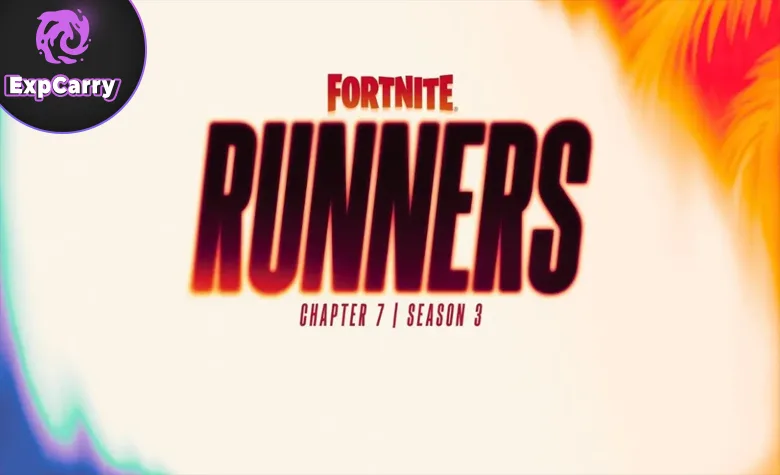
Fortnite Runners is not just another seasonal layer placed on top of Battle Royale. It changes what a match is allowed to mean. The usual Fortnite structure is still there: players drop onto the island, loot fast, rotate through the Storm, fight for position and try to win. Runners adds another objective beside survival. Players now search for Sprites, extract them from the match, add them to a collection and use that collection to affect future games. That is a clear break from the clean reset logic that made battle royale easy to understand. In a traditional Battle Royale match, every round starts from zero. Loot is temporary, positioning is temporary and the result is contained inside the match. Runners bends that structure because a Sprite found on Shattered Coast can become collection progress, while Sprite Dust can be earned through extraction and spent before later matches.
This does not turn Fortnite into a full extraction shooter. It keeps the speed, readability and broad audience of Battle Royale, but it brings extraction pressure into the same loop. The player is no longer only asking how to survive the final circle. The player is also asking whether a Sprite is worth carrying, whether an extraction site is worth contesting and whether the current match is more valuable as a win attempt or as a collection run. That is why Fortnite: Runners matters as more than a content update. It tests whether Battle Royale can support persistent objectives without losing the immediacy that made the genre work.
Fortnite Runners Adds Extraction Without Replacing Battle Royale
The central Runners loop is direct: find a Sprite during a match, take it to an Extraction Site, defend the process and add that Sprite to your Collection. Once extracted, that Sprite can become part of future match preparation. This is the extraction influence at the center of the season. The value is no longer limited to what helps the player survive the current lobby. A player can leave a match with progress even without winning it. That changes how risk works. In normal Battle Royale, risk is mainly tied to position, loot, Storm timing and enemy pressure. In Fortnite Runners, the Sprite itself becomes a risk object. Carrying one can create a reason to move toward an extraction site instead of following a safer rotation. It can also make the player more protective of timing, inventory space and fight selection.
A bad fight no longer costs only placement. It can cost the Sprite before it is banked. That detail is important because Runners is not a free permanent perk system. If a player is eliminated before extracting a Sprite, that Sprite can be left on the battlefield for another player to take. The collection loop has value, but the match still has risk. This gives the mid-game a stronger purpose. Fortnite matches can sometimes settle into a familiar rhythm after the first drop: loot, rotate, avoid bad angles and wait for a stronger fight. Runners interrupts that rhythm by putting extraction pressure on the map. Extraction points become contested decisions rather than neutral utility. A player carrying a valuable Sprite has to decide whether to bank it now, hide nearby, fight for the area or abandon the attempt and keep playing for the endgame.
The mode also avoids one of the main barriers of extraction shooters. It does not force a heavy stash system, long inventory management or punishing gear loss on every death. Fortnite takes the cleanest emotional part of extraction design, leaving with something valuable, and compresses it into a faster Battle Royale structure. That makes Runners more accessible than a dedicated extraction game while still giving each match more long-term weight. The result is not a separate genre bolted onto Fortnite. It is a Battle Royale match where survival and extraction can both be meaningful outcomes. That distinction is important because Fortnite does not need to abandon its core audience to experiment with extraction. It only needs to give players another reason to care about what they carry through the match.
Fortnite Runners Sprites Turn Loot Into Collection Progress
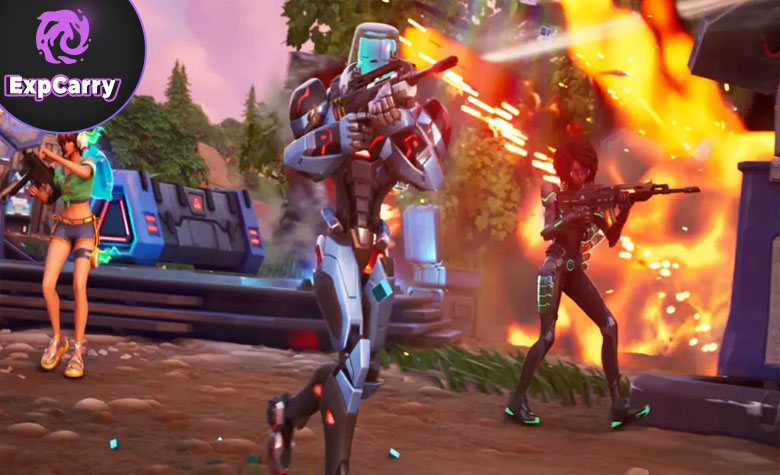
Sprites are the reason Runners feels different from a normal item update. Fortnite has used temporary powers, mythic weapons, medallions, NPC rewards and special mobility tools many times before. Those systems usually reset with the match. Sprites work differently because successful extraction adds them to a Collection. That Collection then connects to future matches through Sprite Dust and pre-match summoning. The abilities are not cosmetic flavor. Sprites can grant powers such as shield recovery, temporary invisibility, bonus burst damage, siphon, Pickaxe damage, random item rewards, loot help and defensive tools. The individual strength of each Sprite can be tuned over the season, but the larger point is already clear: Runners turns a found creature into a gameplay option that can outlive the round.
A player is not simply picking up the best weapon on the floor. The player is building a library of possible powers. That library does not remove the match reset completely. Weapons, positioning, immediate loot and Storm pressure still reset. What carries forward is narrower: access to collected Sprites, Dust decisions, Mastery progress and seasonal rewards. This is why Runners feels more controlled than a hardcore extraction game. It adds continuity, but it does not let the whole match become determined by a permanent stash before the Battle Bus even moves.
The known Sprite lineup also gives the system more range than a single seasonal gimmick. Earth Sprite supports loot value by giving a chance for additional rare items from chests. Fire Sprite rewards damage pressure with a fiery burst. Water Sprite supports shield recovery in water for the player and nearby squadmates. Duck Sprite turns emoting or jamming into shield recovery. Ghost Sprite grants cloak after reloading. Demon Sprite rewards eliminations with siphon. King Sprite improves Pickaxe damage. Dream Sprite grants random items as it levels and can explode with stronger loot at max level. Punk Sprite is built around uncertainty, while Zero Point Sprite can create a Shield Bubble Jr. when the player uses a healing item. That variety matters because it lets Runners support different player habits instead of forcing everyone into one optimal path.
Fortnite Sprite Dust connects extraction to future matches
Sprite Dust is the system that prevents extraction from being only a collection animation. Players earn Sprite Dust by successfully extracting Sprites. They can spend it before a match to summon a previously extracted Sprite, and summoned Sprites grant their power before the player drops from the Battle Bus. Rarer Sprites cost more Dust, which creates a limit on how often stronger options can be used. Dust can also be spent to upgrade Sprite powers and loot. That gives the currency more than one purpose. It is not only a ticket for pre-match summoning. It is also a way to strengthen the value of the Sprites a player has already worked to extract.
That limit is important. If every extracted Sprite could be brought into every match for free and upgraded without cost, the system would quickly become a permanent perk menu. Sprite Dust forces a choice. A player has to decide when a power is worth the cost, when to save currency and when to run cheaper options to rebuild resources. The economy is simple, but it gives the season a repeatable loop: extract, earn Dust, summon, upgrade, use power, extract again. This also explains why Runners can create engagement even when the player is not chasing a Victory Royale. A failed endgame can still produce useful Dust. A risky extraction can still add a Sprite to the Collection. A match can have more than one useful outcome.
The carry-over structure is the real shift. Battle Royale usually limits power to the current lobby, while Runners lets successful extraction influence the next drop. That does not mean the match becomes fully persistent. The change is narrower and more controlled: the Sprite Collection creates a set of earned options, and Sprite Dust determines how often those options can be used and improved. This is why the system feels closer to roguelite progression than to a standard loot pool update. The player makes a run, extracts value, improves future choices and starts again with a slightly different setup. The match still has a clean competitive shape, but the account-level collection gives it continuity. For Fortnite, that is a useful compromise. It adds progression without requiring the slow friction of a hardcore extraction inventory.
Shattered Coast Turns the Map Into an Extraction Route
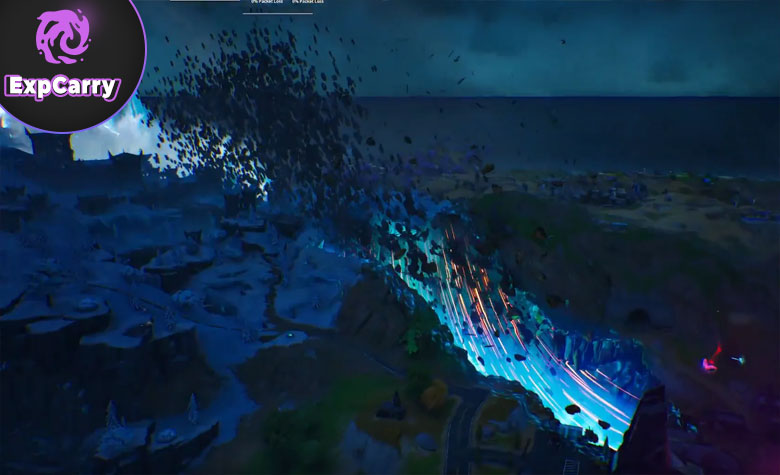
Shattered Coast is not only a new backdrop. It supports the new logic of the season. The island has been reassembled with twisted takes on familiar points of interest, a fresh loot pool, new movement options and extraction-focused tools. The map has to serve more than combat flow. It also has to support Sprite hunting, extraction routes and conflict around banking points. In a normal Fortnite season, map value is usually judged by loot density, mobility, elevation, cover, vehicles, launch options and access to safe rotations. Runners adds another layer. A location can matter because it helps the player find a Sprite, protect a Sprite or reach an Extraction Site without wasting too much time.
This changes how players read the island. The map is not only a combat arena. It becomes a route-planning space where collection value, survival value and rotation value overlap. A safe route may not be the most profitable route. A strong combat position may not help if the player still needs to bank a Sprite. A risky area may be worth entering if it creates a chance to complete the Collection or earn enough Dust for a later summon. That is the map-level strength of Runners. It does not need every point of interest to be redesigned around extraction. It only needs enough Sprite pressure and banking pressure to make players think about the island differently.
Extraction Sites are the clearest example. They turn collection into a public risk. A player holding a Sprite cannot simply keep the reward by surviving passively. The player has to use an extraction route, defend the process and avoid becoming an easy target while the reward is being banked. This creates a pressure point that Battle Royale already understands: players are drawn toward valuable locations, and valuable locations create fights. Runners uses that familiar Battle Royale language, but changes the reason players move toward danger. They are not only chasing better weapons or a better angle. They may be trying to convert a temporary pickup into future match value.
The new extraction-focused Gizmos push this idea further. Portable Extractor gives players a way to extract an equipped Sprite from anywhere on the island. Lucky Locator is announced for later in the season and is designed to track a buried chest with an uncollected Sprite. Extraction Site Booster is also announced for later in the season and is designed to boost the value of a Sprite extracted at a site, while attracting attention. These tools show that extraction is not a small side objective. It is a system Epic can tune across the season through items, events and map pressure.
| Battle Royale layer | Runners layer | Match effect |
| Land, loot, rotate and survive | Search for Sprites and protect them | Early and mid-game routes become more objective-driven |
| Loot resets after the match | Extracted Sprites enter a Collection | A match can create value for future games |
| Victory Royale is the main result | Extraction can also count as progress | Players can gain something even without winning |
| Items are temporary tools | Sprite Dust funds summoning and upgrades | Extraction creates a seasonal economy |
| Map control is mostly combat-based | Extraction Sites create banking pressure | Objective areas become stronger conflict zones |
This is why Runners works better as a hybrid than as a separate genre label. It does not ask Fortnite to stop being Battle Royale. It adds another layer of value to the same island. The result is still fast, colorful and readable, but the decisions are heavier because the player can carry some future progress through the current match.
Fortnite Runners Uses Roguelite Progression Inside a Seasonal Meta
The Sprite level and Mastery systems make the roguelite influence stronger. Sprites gain experience through exploration, eliminations and extractions. Reaching maximum level takes multiple runs, and extracting a max-level Sprite grants Mastery. Mastering Sprites unlocks seasonal progression rewards. This is not the structure of a single-use pickup. It is a repeat-run progression loop. That kind of structure fits Fortnite because the game already depends on seasonal reasons to return. Battle Pass progression, quests, limited-time events, ranked goals and cosmetic unlocks all give players objectives outside a single match. Runners adds a gameplay version of that same logic.
Players are not only unlocking skins or account levels. They are improving a Collection that can change the start of later Battle Royale matches. The strongest part of this design is that it gives different types of players a reason to engage. Combat-focused players can use Sprites as a power tool. Collection-focused players can chase variants and Mastery. Squad players can build runs around protecting a Sprite carrier. Solo players can decide whether to treat a match as a win attempt, Dust run or Mastery run.
That also helps with seasonal fatigue. Battle Royale can become repetitive when every match feels like a clean loop with only a win or loss at the end. Runners gives the player smaller outcomes inside the same structure. A match can be successful because the player extracted a rare Sprite. Another can be useful because it generated Sprite Dust. Another can advance Mastery. The final placement still matters, but it is no longer the only measure of progress. That does not remove the pressure to win. It makes the match less disposable, especially for players who do not expect every run to end with a Victory Royale.
Bus Exfil pushes that idea further, although it should be treated as an announced seasonal feature rather than the core launch loop. Later in the season, some matches can include a small chance for the Battle Bus to rift back into the map. Teams that board it, grapple up and get at least one teammate to the rift out point can secure a Victory. Multiple teams can win this way in the same match. That is a serious shift for Battle Royale structure because the genre is normally built around one final survivor or one final team. Bus Exfil adds an objective-based win condition that can exist beside the traditional endgame.
Bus Exfil changes the meaning of leaving a Fortnite match
Bus Exfil fits the Runners direction because extraction is not only about collecting Sprites. It is about changing what it means to leave the match. A player can extract a Sprite. A team can potentially exfil through the Battle Bus. In both cases, Fortnite is testing whether Battle Royale can support exit-based goals without losing its basic identity. Players may still fight, but the fight can have a different endpoint. Instead of only eliminating everyone else, a team can fight to board, defend or deny an extraction route. That kind of objective can create tension without forcing the whole lobby into the same final-circle script.
The risk is that alternative win conditions can confuse the clean competitive promise of Battle Royale if they appear too often or feel too easy to force. That is why the small chance matters. If Bus Exfil is rare, it becomes an event that changes a match. If it becomes too common, it could start to compete with the final-circle identity of the mode. Runners is most interesting when it stretches the format without replacing the core loop. Bus Exfil is the sharpest version of that experiment.
Fortnite Runners Is Already Evolving After Launch
Runners is not a static launch-week system. Epic is already treating Sprites as a seasonal framework that can receive events, variants and community-driven additions. The Design A Sprite contest is the clearest example. Players can submit original Sprite concepts, and selected designs are planned to be built into Fortnite. That matters because it turns Sprites from a closed loot list into a format Epic can expand with community input. For a live service season, that is more useful than a one-time novelty. It gives the system room to stay visible after the first week.
Weekly and limited-time events also make the Collection loop more active. Mastery Mondays, Thursday Sprite or variant drops and Saturday Power Hours give players specific windows to return for better progression, refreshed modifiers or missing variants. Special variants such as Gummy and Galaxy Sprites support the same retention logic. They give players a reason to care about the Collection beyond basic power access. The player is not only asking which Sprite is strongest. The player is also asking which version is available, when it appears and whether it is worth chasing during a limited window.
This is where Runners becomes stronger as a seasonal topic than a simple item update. A weapon can be buffed, nerfed or vaulted and then disappear from the conversation. Sprites are broader. They can be balanced, collected, mastered, upgraded, displayed, varied and expanded. That gives Epic more knobs to turn across the season without rebuilding the whole mode every week. It also means the system can keep producing new article angles: best Sprites, fastest Dust farming, Mastery routes, Power Hour value, rare variants, Bus Exfil strategy and the effect of extraction objectives on ranked play.
Fortnite Is Already a Platform, So Runners Fits the Bigger Strategy
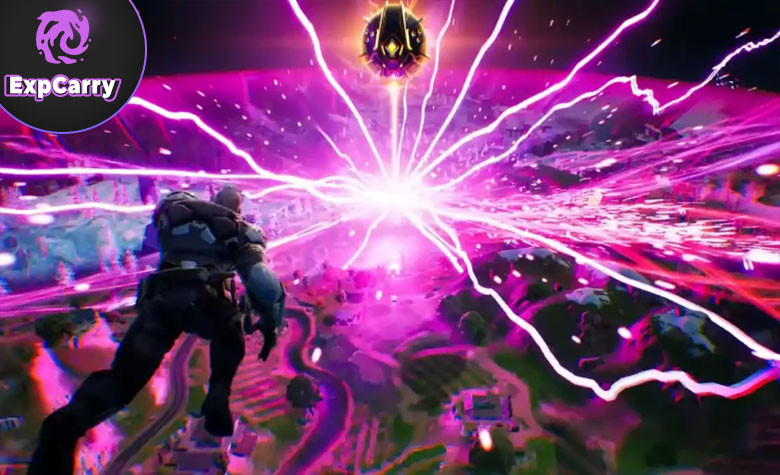
Runners also makes sense because Fortnite is no longer just a single Battle Royale mode. Epic supports Fortnite Creative, UEFN, creator-made islands, the Creator Portal and engagement systems for island developers. The v41.00 ecosystem update also expands creature-based possibilities in UEFN through Sidekicks as NPCs, while adding more tools for custom weapons, mobile controls, community events and publishing workflows. That platform structure matters for Runners. Fortnite players are already used to opening the client and finding different types of experiences. The same ecosystem can contain Battle Royale, Zero Build, creator islands, social spaces and genre experiments.
Runners brings that modular thinking into the official Battle Royale loop. It mixes extraction, collection, progression and seasonal events inside the core map instead of separating them into a completely different product. The UGC comparison is structural, not literal. Runners is not a creator island, but it uses platform-style retention logic: clear hooks, repeatable runs, visible progress, collection goals, limited-time variants, currency use and reasons to requeue. Those are the same kinds of loops that keep players moving through a platform ecosystem. Runners brings them into Battle Royale without asking players to leave the main island.
This is why Runners is a stronger article topic than a normal patch note. A balance change or weapon tweak usually affects the current meta. Runners says more about where Fortnite is going. It shows Epic using Battle Royale as a flexible container rather than a fixed ruleset. The game can keep its main identity while adding systems that would normally belong to extraction games, collection games or roguelite runs. That does not mean every future season will use Sprites. It means Fortnite can keep testing new genre structures inside its most recognizable mode.
Fortnite Runners Shows How Battle Royale Can Stretch
The main lesson from Fortnite Runners is not that every Battle Royale game should become an extraction game. The lesson is that the genre can stretch without losing its basic shape. Fortnite still has the drop, the loot race, the Storm, the firefights and the final Victory Royale. Runners adds a second layer underneath those systems. The player is now managing value that can survive beyond the match, but only if it is extracted, funded and used through the season's rules. That balance is the point. Runners adds continuity without turning Fortnite into a slow stash-management game.
A new Sprite can matter because it changes collection goals. A Power Hour can matter because it changes availability. A Gizmo can matter because it changes extraction risk. A Bus Exfil match can matter because it changes the win condition. These are systemic changes, not just content drops. They give Fortnite more ways to make the same island feel different without replacing the core verbs of the game. Players still move, build or use Zero Build cover, fight, rotate and survive. They simply have more reasons to make one route choice over another.
The risk is that too much persistence can damage Battle Royale clarity. If carry-over powers become too strong, new or casual players may feel that the match is decided before landing. If extraction rewards feel too grind-heavy, players may ignore the system or treat it as another chore. If rare variants are too important, the season could start to feel more like a checklist than a competitive mode. Runners works only if the Collection loop remains useful without becoming mandatory. The early design avoids the full weight of hardcore extraction systems, but balance will decide whether players see Sprites as a fresh layer or as pressure they do not want.
For now, Runners is one of Fortnite's clearest genre experiments. It does not abandon Battle Royale. It adds extraction pressure, collection value and roguelite-style continuity to it. That makes each match less disposable and gives the island more than one kind of success condition. The season's strongest idea is not one Sprite, one weapon or one event. It is the larger structure: Fortnite can let players enter the same Battle Royale match with different goals and still keep the match readable.
What Fortnite Runners Means for Battle Royale
Fortnite Runners turns Battle Royale into something broader without removing the core match loop. Players still drop, loot, rotate and fight, but Sprites add a second objective that can survive beyond the round if the player extracts successfully. Extraction creates risk. Sprite Dust creates an economy. Upgrades create resource decisions. Mastery creates seasonal progression. Shattered Coast gives those systems a map built around routes and pressure points. Design A Sprite, Power Hours and special variants show that Epic can keep expanding the system after launch.
The result is not a full extraction shooter and not a simple collection event. It is Fortnite testing a hybrid structure inside its biggest mode. If the system works, future Battle Royale seasons may not only add new loot or map changes. They may keep stacking genre systems into the same island, turning each match into a mix of survival, collection, extraction and long-term progression. That is the real importance of Runners. It shows Fortnite using Battle Royale less like a fixed ruleset and more like a flexible live-service framework.