



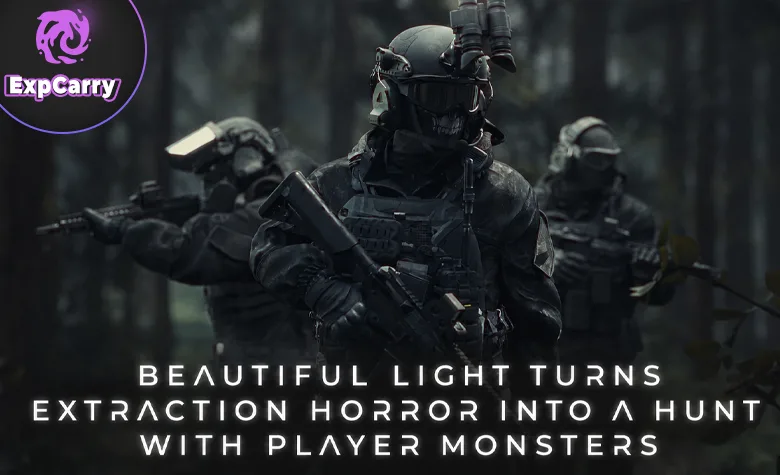
Beautiful Light is a PvPvPvE tactical first-person horror extraction shooter from Deep Worlds SA, built around a simple but sharp idea: squads enter a hostile zone to secure an artifact, while rival operators and player-controlled anomalies try to make sure they never leave. It is extraction shooter pressure with asymmetrical horror layered on top, which means the usual fear of losing gear now comes with the added comfort of knowing another human player may be stalking you as a monster. Civilization continues to innovate in the field of voluntary suffering.
The game is planned for PC through Steam and the Epic Games Store, with both store pages currently pointing to a December 2026 Early Access launch window. Deep Worlds SA is developing and publishing the game, and the official descriptions frame Beautiful Light around tactical raids">raids-service">raids, hardcore FPS mechanics, artifacts, traders, quests, RPG-style progression, gear risk, and playable anomalies. That combination gives it a clearer identity than another military extraction shooter with gray corridors, angry footsteps, and a spreadsheet pretending to be a loot economy.
The confirmed Early Access focus is Raid, an asymmetrical mode where operators and anomalies enter the same match with different goals. Operator squads search the intervention area, complete quests, fight rival teams, secure the artifact, and call extraction when they are ready to leave. Anomalies play a different game inside the same raid. Their job is to hunt operators, stop the artifact from leaving, gain experience, improve abilities, and unlock new monstrous forms. That split is the reason Beautiful Light is worth watching in a crowded extraction market: it is not only about surviving other armed players, but also surviving other players who chose to become the nightmare.
Beautiful Light Release Window and Core Game Details
Beautiful Light is currently listed for a December 2026 Early Access release on PC. Steam describes it as a PvPvPvE tactical first-person extraction shooter where 6 squads of 3 operators enter a hostile environment to secure and extract an artifact while facing other operators and player-controlled anomalies. Epic Games Store uses similar language, with a strong focus on horror, tactical gameplay, gear risk, and online multiplayer.
The full match structure is described in Early Access feature listings as a 24-player raid with 6 squads of 3 operators and 6 monsters called anomalies. Since the game is still unreleased, that structure should be treated as the current Early Access plan rather than a final launch guarantee. This is Early Access, after all, the industry term for "we have a plan, and reality has a crowbar."
| Category | Current detail | Why it matters |
|---|---|---|
| Developer and publisher | Deep Worlds SA | The game comes from an independent studio rather than a major publisher chasing the extraction trend by committee. |
| Genre | PvPvPvE tactical first-person horror extraction shooter | Beautiful Light combines squad extraction, PvP combat, environmental danger, and player-controlled monsters. |
| Platform | PC through Steam and Epic Games Store | No console version has been listed on the main store pages so far. |
| Release window | December 2026 Early Access | The game is still in development, so content, balance, and technical details can change before launch. |
| Main Early Access mode | Raid | The core loop is built around entering hostile areas, finding the artifact, surviving, and extracting. |
| Operator side | 6 squads of 3 operators | Human squads compete for objectives, gear, survival, and artifact extraction. |
| Anomaly side | 6 player-controlled monsters in listed Early Access materials | The monster role gives Beautiful Light its main identity break from standard extraction shooters. |
| Progression | Quests, traders, gear, RPG-style progression, anomaly upgrades | Both operators and anomalies are designed to grow over time instead of feeling like one-off match roles. |
Beautiful Light Gameplay Loop Starts With the Artifact
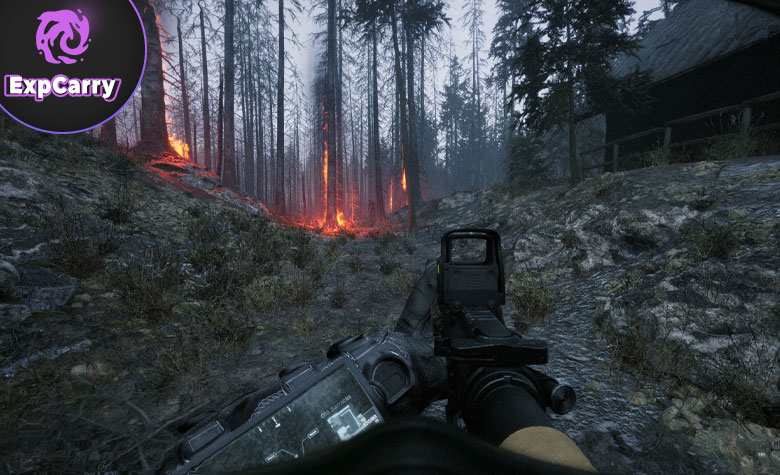
The operator side of Beautiful Light begins with a familiar extraction shooter rhythm: gear up, enter a dangerous area, complete objectives, fight if necessary, collect value, and leave before the raid takes everything back. The artifact is the central prize. Operators are sent into intervention zones to locate it, secure it, and extract it, while other squads and anomalies turn that objective into a moving disaster.
The artifact gives every match a natural point of conflict. Before it is found, squads search, listen, scout, and decide how much risk they can take. Once someone has it, the raid can shift into a hunt. Rival operators can chase the carrier, cut off routes, or wait near extraction. Anomalies can use that same pressure to track weakened squads, punish noise, and turn the artifact carrier into the most popular corpse on the map.
Extraction is also designed as a pressure point rather than a quiet exit button. Epic's store description says players can shoot a flare, call in an extraction helicopter, and hold out until it arrives. That creates a last-stand scenario where leaving the raid becomes visible, loud, and dangerous. In a tactical horror extraction shooter, that is exactly where the game should be mean. A safe extraction would be polite, and politeness has no place in a game about armed squads and player-controlled monsters.
Player-Controlled Anomalies Give Beautiful Light Its Sharpest Hook
The anomaly system is the main reason Beautiful Light does not feel like another "Tarkov but slightly different" pitch. Many extraction shooters use AI enemies, guards, mutants, or infected as environmental pressure. Beautiful Light pushes further by letting players invade the raid as anomalies. That changes the match because a scripted monster can be learned, baited, and optimized against. A human-controlled anomaly can wait, retreat, stalk, ambush, adapt, and ruin a squad with intent.
Anomalies are not described as background enemies. Their role is to hunt operators, kill them, eat them, stop artifact extraction, and earn experience. Early Access materials also mention improving skills, gaining new abilities, and unlocking new monstrous anomaly forms. That gives the monster side a progression path instead of making it a temporary gimmick for players who got bored of rifles.
This is where Beautiful Light leans into asymmetrical horror. Operators care about gear, quests, artifact control, trader progression, extraction, and survival. Anomalies care about tracking, killing, feeding, leveling, and denying the human objective. Those motivations collide naturally. A squad may win a firefight against another team and still lose everything because an anomaly arrives during the aftermath. A monster may ignore a full squad and wait for the artifact carrier to panic near extraction. That kind of human unpredictability is much harder to solve than a scripted patrol route.
Beautiful Light Horror Is Built on Sound, Gear Risk, and Human Predators
Beautiful Light is aiming for horror through pressure rather than only scripted scares. Early Access feature lists mention breathing, realistic footsteps, heartbeats, a realistic gas mask, and an oppressive atmosphere. In a tactical shooter, sound is information. In a horror extraction shooter, sound is paranoia with a user interface. Every footstep can be a squad, every strange noise can be an anomaly, and every silent corridor can feel like the game is preparing a bill.
The gear-loss structure makes fear practical. A normal horror game can scare the player with a monster. An extraction shooter can scare the player with the loss of weapons, armor, resources, and progress. Beautiful Light tries to combine both. An encounter with an anomaly is not just a monster attack. It can also mean losing the kit you brought, the artifact you found, the quest progress you were chasing, and the extraction you were seconds away from calling.
The diegetic HUD also supports that immersion. Beautiful Light uses a forearm PDA inspired by military interface design instead of relying only on floating UI elements. That choice fits the game's identity: operators should feel like they are checking equipment inside the world, not browsing a menu while the horror politely waits. The important part will be usability. Immersion is useful until players die because the interface became too artistic to read under pressure.
Beautiful Light Takes Clear Inspiration From Hunt: Showdown and Asymmetrical Horror
The easiest lazy comparison is Escape from Tarkov because Beautiful Light uses extraction shooter language: raids, gear risk, tactical FPS mechanics, inventory, quests, traders, and survival under pressure. That comparison is useful, but incomplete. Beautiful Light's artifact-focused structure and monster pressure also make Hunt: Showdown a more relevant reference point, especially because MeinMMO reports that Hunt: Showdown was a major inspiration for the project.
The Dead by Daylight comparison also makes sense, but only in a narrow way. Beautiful Light is not copying Dead by Daylight's generator-and-killer structure. The connection is the asymmetrical horror idea: some players enter the match as human survivors or combatants, while another side plays the predator role. Beautiful Light adapts that idea to extraction shooter rules, where gear risk, objective control, and PvP firefights sit beside the monster threat.
That mix gives the game a strong identity, but it also creates a difficult balance problem. Tactical players want clarity, fair gunfights, readable audio, and systems they can master. Horror players want uncertainty, fear, and danger. Anomaly players want to feel powerful. Operator players want to avoid becoming food every three minutes. Beautiful Light has to satisfy those groups without letting one side crush the rest of the design. A small task, naturally, because games are famously easy to balance when one faction has guns and the other has teeth.
Beautiful Light Progression Uses Traders, Quests, Gear, and Monster Growth
Operator progression in Beautiful Light is built around quests, artifacts, extraction, traders, rewards, equipment, and an RPG-style progression tree. Epic's store page says players will complete quests, secure artifacts, escape alive, and use rewards to improve skills or buy weapons and valuable equipment for future raids. That is the expected extraction foundation: each successful raid should make the next raid more interesting, more profitable, or more dangerous.
The trader system is important because it gives the game structure beyond wandering through danger and collecting whatever glows. Traders can push players toward specific locations, objectives, risks, and playstyles. They also create a practical economy: take a job, enter the zone, survive, get paid, improve your character, buy gear, and return to the meat grinder with slightly better equipment and the same fragile human body.
Anomaly progression is more unusual. Player-controlled monsters earning experience by eating players and unlocking new abilities gives the role long-term motivation. The design challenge is obvious. If anomalies scale too hard, operators may feel like unpaid food delivery. If anomalies are too weak, the horror fantasy collapses into target practice with claws. Beautiful Light's long-term health will depend heavily on whether Deep Worlds can make both sides feel dangerous without making either side feel like the only role that matters.
Beautiful Light PC System Requirements
Epic Games Store currently lists Beautiful Light system requirements for Windows, though the page notes that the requirements are subject to change. That warning matters because the game is still heading toward Early Access, and performance targets can shift before launch. For now, the listed requirements suggest a game aiming above low-end hardware, especially on the GPU side.
| Requirement | Minimum | Recommended |
|---|---|---|
| OS | Windows 10 | Windows 11 |
| CPU | Ryzen 5 3600 | Intel Core i7-9700K |
| Memory | 8 GB | 16 GB |
| GPU | NVIDIA GeForce GTX 1080 | NVIDIA GeForce GTX 3060 |
| DirectX | DirectX 12 | DirectX 12 |
| Storage | 50 GB | 60 GB |
These requirements are not extreme for a modern PC shooter, but they are not especially light either. A GTX 1080 as the listed minimum GPU is a real barrier for older systems, and the recommended 16 GB of RAM is exactly where many current multiplayer shooters have landed. Since Beautiful Light leans on horror atmosphere, detailed environments, tactical audio, and online raids, performance will matter as much as raw visual quality. Nothing kills dread faster than frame drops, except perhaps a monster player camping extraction like a tax official with claws.
Beautiful Light Early Access Risks Are Bigger Than Its Trailer Hook
Beautiful Light has a strong pitch, and that matters. "Six operator squads fight over an artifact while player-controlled anomalies hunt them" is easier to understand than most extraction shooter marketing, which often sounds like someone fed military nouns into a vending machine. The game also appears to have meaningful pre-release interest. MeinMMO reported that Beautiful Light had approached 700,000 Steam wishlists by January 2026 according to the developers, with third-party estimates later placing it higher.
Wishlist numbers are useful as a signal of interest, not proof of future success. Extraction shooters are hard to launch because they need stable servers, readable netcode, strong anti-cheat, satisfying progression, fair matchmaking, good audio, useful quests, enough map variety, and an economy that does not collapse into either grind or boredom. Beautiful Light adds another layer by balancing playable monsters against armed squads. That is not one design problem. It is several design problems stacked under a trench coat.
GamingBolt also reported that Early Access plans include community-oriented dedicated servers that players can rent or host themselves. If implemented well, that could help communities run their own spaces, events, and long-term groups. It could also create moderation and balance headaches, because giving players tools is noble until someone immediately uses them like a raccoon with administrator rights. Since this feature is not the central store-page pitch, it is best treated as a reported Early Access plan rather than the foundation of the game.
Beautiful Light Could Make Extraction Shooters Feel Unsafe Again

Extraction shooters often start terrifying and then become efficient. Players learn routes, spawns, sound cues, loot tables, recoil patterns, trader values, and safe exits. Eventually the unknown becomes routine. Beautiful Light's anomaly system could slow that process down because human-controlled monsters are less predictable than scripted AI. Even experienced squads may have to respect the possibility that an anomaly is waiting, adapting, or using their habits against them.
That is the real promise of the game. Not just "there are monsters," but "the monsters think." Operators and anomalies are not only fighting over health bars. They are playing different objectives inside the same raid. Operators want the artifact, quest progress, gear value, and extraction. Anomalies want kills, experience, ability growth, and failed human escapes. Those goals can create memorable stories: a squad wiped after securing the artifact, a last-second helicopter escape, a monster ambush near extraction, or a rival operator fight interrupted by something much worse than another rifle.
If Deep Worlds can turn that structure into repeatable tension without making the game feel unfair, Beautiful Light could carve out a real place in the extraction genre. The market does not need only bigger inventories, more ammo types, and another gray industrial map. It needs stronger reasons to feel unsafe. Beautiful Light has one: the thing hunting you may not be AI. It may be another player having the time of their life ruining yours.
Conclusion
Beautiful Light is one of the more interesting upcoming extraction shooters because its central twist is not cosmetic. The foundation is familiar: squads enter a raid, search hostile zones, fight rival operators, complete quests, manage gear, secure the artifact, and try to extract alive. The difference is the anomaly role. Other players can enter as monsters, hunt operators, eat them for experience, improve abilities, and stop the artifact from leaving the map. The game's horror identity depends on overlapping pressures rather than simple jump scares. Gear loss, sound paranoia, rival squads, extraction flare calls, artifact value, trader progression, and human-controlled monsters all push the same idea: every decision can become expensive. That is why Beautiful Light feels different on paper. It is not only asking whether you can outshoot another squad. It is asking whether you can stay calm when the thing stalking you has a player behind it.
The risk is execution. Beautiful Light needs strong gunplay, readable audio, stable performance, fair progression, useful quests, good map design, meaningful anomaly mechanics, and enough content to keep raids from becoming predictable. That is a heavy list for any Early Access game, especially from an independent studio. But the hook is strong, the asymmetrical structure is clear, and the December 2026 window gives Deep Worlds time to prove that Beautiful Light can be more than another extraction shooter chasing a trend. If the monster role works, Beautiful Light could become the rare horror shooter where fear does not come only from darkness, atmosphere, or scripted creatures. It comes from another player making decisions against you in real time. That is a nastier kind of fear, and probably the right kind for a genre that has spent years teaching players to optimize danger until it becomes routine.