
The only reliable way to increase your CS2 Premier Rating is to win Premier matches consistently. There is no official fixed number of wins required to rank up, and Valve does not publish the full formula that decides how many CS Rating points are offered for each match.
What you can control is much clearer: your map pool, opening deaths, trading, economy, utility, communication, queue decisions and ability to stop losing streaks before they turn into long sessions.
How Ranking Up in CS2 Premier Works
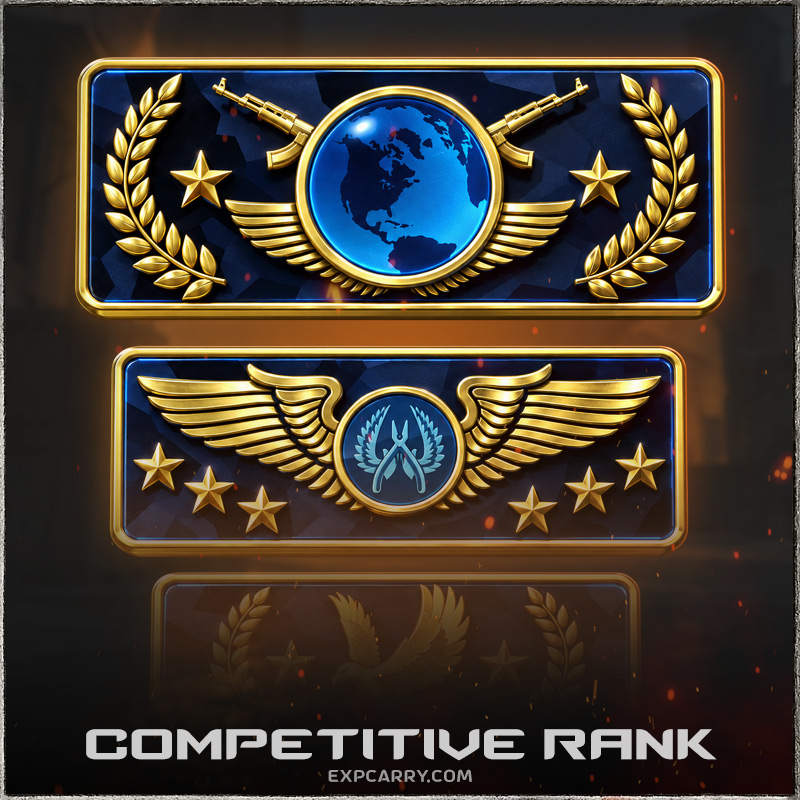
Premier uses one numerical CS Rating rather than the Silver-to-Global-Elite Skill Groups used by Competitive.
Your rating moves through the following visible color ranges:
| CS Rating | Color | Next Major Boundary |
|---|---|---|
| Below 5,000 | Gray | 5,000 |
| 5,000–9,999 | Light Blue | 10,000 |
| 10,000–14,999 | Blue | 15,000 |
| 15,000–19,999 | Purple | 20,000 |
| 20,000–24,999 | Pink | 25,000 |
| 25,000–29,999 | Red | 30,000 |
| 30,000+ | Gold | No published hard ceiling |
Valve officially places promotion and relegation matches at the color boundaries, meaning every 5,000 CS Rating points.
For the complete structure, see our CS2 Premier Ranks Explained guide.
How Much CS Rating Do You Gain per Win?
There is no official fixed amount.
Before a Premier match begins, CS2 shows the possible rating change associated with the result. The value can differ between matches.
Valve has publicly confirmed that possible CS Rating win and loss amounts can be large enough to move players faster after calibration, but it has never published the complete mathematical formula.
This means rules such as:
- “every win gives exactly +250”;
- “three wins always trigger +350”;
- “30 kills gives more rating”;
- “MVPs add a hidden fixed bonus”
should not be presented as official Premier rules.
Does K/D Affect Your CS Rating Gain?
The rating stake for a match is shown before the match is completed.
That means a 30-kill performance during that specific match cannot retroactively change an already displayed +/− value into a completely different number.
Your personal performance still matters enormously because better performance increases your chance of winning. But the practical relationship is:
better play → more rounds won → more matches won → higher rating over time.
It is not safe to claim:
better K/D → guaranteed extra fixed CS Rating after the match.
Explore services related to this guide, selected from our Counter Strike 2 catalog.
View All Counter Strike 2 Services


Why Am I Losing More CS Rating Than I Gain?
This is one of the most frustrating Premier situations:
- win: +110;
- loss: -300;
- win: +120;
- loss: -350.
The important point is that Valve does not publish enough of the internal rating model to calculate exactly why your account receives that specific combination.
The system can offer different win and loss values from match to match, and those values are visible before the result.
If your current screen repeatedly shows much larger losses than gains, the solution is not to try to “farm K/D” inside the same match. Your priority should be to stop adding losses while the downside is expensive.
Do Win Streaks Increase CS Rating?
Players commonly observe that their offered rating gains and losses change during extended winning or losing runs.
However, Valve does not publish an official rule such as “three consecutive wins activate a specific multiplier.”
For that reason, the safest interpretation is:
- streak-like changes in the displayed +/− values are observable;
- the exact trigger and coefficient are not publicly documented;
- you should judge your account by the actual value shown before the next match rather than an old formula from Reddit or an outdated guide.
If the next match suddenly shows a much larger positive value than previous games, that is useful information. You do not need to know Valve's hidden coefficient to understand that winning that match has higher upside.
Do Loss Streaks Hurt More?
The same caution applies to losing streaks.
Players often see increasingly unfavorable rating stakes during bad runs, but Valve does not provide a public formula defining exactly when a loss streak starts or how much each consecutive defeat changes the system.
From a climbing perspective, the response is simple: do not allow a five-loss session to happen just because you want to “win the rating back.”
A bad session should have a stop condition.
For example:
- stop after two clearly poor matches in a row;
- stop if communication becomes toxic;
- stop if your decision-making becomes rushed;
- stop if you are mechanically tired;
- stop if you are repeatedly queueing immediately after frustrating losses.
How Many Wins Does It Take to Rank Up?
There is no universal answer because Premier is numerical.
If you are at 14,000 and your matches offer approximately +200 for a win, the raw mathematical gap to 15,000 is about five net wins.
But real sessions include losses and changing gain/loss values.
A better way to calculate your climb is:
Target Rating − Current Rating = Rating Gap
Then compare that gap with the positive value currently shown by Premier.
| Current Rating | Target | Rating Gap |
|---|---|---|
| 12,400 | 15,000 | 2,600 |
| 17,800 | 20,000 | 2,200 |
| 22,600 | 25,000 | 2,400 |
| 27,200 | 30,000 | 2,800 |
The number of matches required depends on the actual gain/loss pattern you receive while completing that gap.
Understand the 5K Promotion Boundaries
Valve officially places promotion and relegation matches at:
- 5,000;
- 10,000;
- 15,000;
- 20,000;
- 25,000;
- 30,000.
These are also the boundaries between Premier's visible colors.
Do not treat every 1,000 rating as a formal rank-up. Moving from 16,000 to 17,000 is useful progress, but both numbers remain within the Purple band.
The color changes only at the major 5K boundaries.
Stop Thinking Only in Colors
A common mistake is saying, “I have been Purple for weeks, so I am not improving.”
That is misleading.
A move from 15,100 to 19,200 is more than 4,000 CS Rating of progress while remaining Purple.
Track:
- exact rating;
- 30-match trend;
- win rate;
- weak maps;
- opening death frequency;
- how often leads are converted into wins.
Your exact number provides more information than the color alone.
Build a Real Premier Map Pool
Map preparation became even more important after Valve changed Premier map selection on September 22, 2026.
The current process is:
- Team 1 picks one map.
- Team 2 picks two maps.
- Team 1 picks a final map.
- One of those four maps is selected randomly.
This makes “I only play Mirage” a weak Premier strategy.
For Season 5, the Active Duty pool is:
- Ancient;
- Anubis;
- Cache;
- Dust II;
- Inferno;
- Mirage;
- Nuke.
You do not need to master all seven at a professional level. But you should avoid having several maps where you do not know basic rotations, economy tendencies and essential utility.
Use a Three-Tier Map Pool
A useful way to organise your Premier preparation is:
| Map Group | Goal |
|---|---|
| Comfort Maps | 2–3 maps where you know positions, utility and rotations well |
| Playable Maps | 2–3 maps where you can perform reliably without being the weak link |
| Weak Map | At most 1–2 maps requiring focused practice |
If four or five maps are in your “weak” category, your map pool is probably the biggest obstacle to climbing.
Reduce Opening Deaths
One of the fastest ways to increase your team's chance of winning is to stop giving away unnecessary 4v5 situations.
An opening duel can be worth taking when:
- you have a planned flash;
- a teammate can trade immediately;
- you understand the spawn timing;
- the position provides useful information even if contested.
It is much worse when you repeatedly:
- dry peek an AWP;
- fight without trade support;
- repeat the same failed opening;
- push through utility with no reason;
- take an aggressive duel while your team already has an advantage.
You do not need to become passive. You need to make aggression tradable and purposeful.
Improve Trading Distance
Many Premier rounds are lost because teammates technically move together but cannot actually trade each other.
If your teammate dies and you need three seconds to reach the fight, you were not really playing as a pair.
Good spacing should allow you to:
- punish the enemy after your teammate dies;
- avoid both dying to the same spray;
- enter a site together;
- keep pressure on a defender who has already committed.
This is one of the highest-value improvements for solo and duo players because it does not require perfect team coordination.
Learn Utility That Wins Real Rounds
You do not need 200 grenade lineups to climb Premier.
Start with utility you will actually use:
- one or two reliable entry smokes per site;
- common CT defensive smokes;
- retake flashes;
- molotovs for common anchor positions;
- basic mid-control utility;
- safe anti-rush utility.
Knowing six useful grenades on every map is often more valuable than knowing forty lineups on Mirage and nothing on Ancient.
Stop Destroying Your Own Economy
Premier is not deathmatch. A mechanically strong player can still throw matches through bad buying decisions.
Common problems include:
- forcing alone while four teammates eco;
- buying without enough utility;
- refusing to save in unwinnable rounds;
- dropping below a useful full-buy threshold unnecessarily;
- failing to drop weapons for teammates;
- buying a fragile hero rifle every round.
Economy discipline creates stronger future rounds, which creates more match wins.
Play the Score, Not Your K/D
At 11–8, your objective is not to finish with a prettier scoreboard.
Your objective is to reach 13 rounds before the opponent.
That can mean:
- saving instead of attempting a 1v4;
- not hunting when the enemy save is already trapped;
- playing crossfires rather than taking solo fights;
- using utility to burn time;
- avoiding a low-percentage peek when you already have the bomb down.
Premier rewards match results. Play for round conversion.
Do Not Queue Cold
A short warm-up is useful because the first Premier game should not also be your first serious gunfight of the day.
A simple routine can be:
- 5 minutes of basic aim activation;
- 5 minutes of counter-strafing and bursts;
- a short deathmatch or equivalent live-target warm-up;
- queue only once mouse control feels normal.
The objective is not to spend an hour warming up. It is to remove the first-match mechanical shock.
Use a Session Stop Rule
This is one of the simplest ways to protect rating.
Choose your stop condition before queueing.
Examples:
- two bad losses in a row;
- three total losses in one session;
- noticeable mechanical fatigue;
- communication deteriorating;
- you start queueing because you are angry about the previous match.
Trying to recover every loss immediately is how a -200 evening becomes a -1,000 evening.
Solo Queue vs Duo vs Full Stack
You can climb in any format, but the source of variance changes.
Solo Queue
You control only yourself, so prioritise:
- clear short communication;
- playing tradable positions;
- avoiding arguments;
- adapting to teammates rather than forcing one strategy.
Duo or Trio
A small coordinated group can reliably create:
- trade pairs;
- site-entry combinations;
- crossfires;
- utility combos;
- consistent communication.
Full Stack
A stable five-player group gives you the most control over team structure, but it only helps if the stack actually communicates and plays coordinated CS.
Five individual players doing five separate things is still an uncoordinated team.
What to Do If You Are Stuck Around 10K
10K is close to the middle of the current tracked Premier distribution.
Players stuck here often gain more from fixing fundamentals than from learning advanced tactics.
Prioritise:
- fewer free opening deaths;
- basic utility on every current map;
- economy discipline;
- trading;
- not throwing 5v4 advantages;
- consistent crosshair placement.
What to Do If You Are Stuck Around 15K
15K is already clearly above the current tracked average.
At this level, basic mechanics alone become less differentiating.
Look for:
- weak maps lowering your overall win rate;
- poor mid-round decisions;
- unnecessary re-peeks;
- low utility impact;
- bad clutch selection;
- failure to adapt when the enemy repeats the same setup.
What to Do If You Are Stuck Around 20K+
20K is roughly around the Top 10% of current large tracked datasets, so obvious beginner mistakes are less likely to be the main issue.
At this level, small repeated errors matter:
- one unnecessary opening death every few matches;
- poor grenade timing;
- weak communication under pressure;
- losing anti-eco rounds;
- bad spacing in late rounds;
- failing to recognise opponent tendencies quickly.
Reviewing close losses becomes much more useful than watching only your best games.
You can check your approximate current standing with our CS2 Premier Rating Percentile Calculator.
Track Win Rate Over Enough Matches
A five-match sample is almost meaningless.
A better review window is at least 20–30 matches.
If you win 55% of 100 matches, that indicates something different from winning six of your last eight.
Track:
- overall win rate;
- win rate per map;
- solo vs party win rate;
- average rating gain/loss pattern;
- maps responsible for most losses.
A negative overall trend often becomes obvious once you separate the data by map.
Do Not Chase a Higher Color Without a Plan
“I want 20K” is a result, not a strategy.
A better plan is:
- identify current rating;
- calculate the gap to the next milestone;
- identify the two maps costing you the most wins;
- fix one repeated round-losing mistake;
- set session limits;
- review the trend after 20–30 matches.
For a clearer benchmark, see What Is a Good CS2 Premier Rating?.
Premier vs Competitive for Improvement
Competitive can be useful when one Premier map is clearly weak.
You can queue that specific map repeatedly without directly changing your Premier CS Rating.
This makes Competitive a useful training environment for:
- new positions;
- utility;
- rotations;
- site anchoring;
- map-specific confidence.
See CS2 Premier vs Competitive for the full comparison.
Premier vs FACEIT for Improvement
FACEIT provides an independent Elo ladder rather than replacing Premier Rating.
If you use both systems, do not assume that one bad week in Premier means your FACEIT Elo should move identically.
Use the two ladders as separate benchmarks.
A Practical Premier Climbing Checklist
| Before Queue | During Match | After Match |
|---|---|---|
| Warm up briefly | Play for round wins | Check whether another queue is sensible |
| Know your current +/− environment | Keep aggression tradable | Record major repeated mistake |
| Do not queue tilted | Manage team economy | Stop after your preset loss limit |
| Know the current map pool | Communicate short useful information | Track long-term rating trend |
The Fastest Sustainable Way to Rank Up
The fastest sustainable climb is not a secret rating exploit.
It is a process that produces more wins than losses over a large enough sample:
- play a real seven-map Premier pool rather than depending on one map;
- remove unnecessary first deaths;
- trade teammates consistently;
- use practical utility;
- manage economy correctly;
- protect good sessions and end bad ones;
- review the maps and situations responsible for repeated losses.
Want to Reach a Specific CS Rating?
If you already have a visible Premier Rating and want to reach a defined target such as 15K, 20K, 25K or 30K+, see our CS2 Premier Rating Boost.
Last verified: October 2026. Valve's 5,000-point promotion boundaries, current Season 5 Active Duty pool and September 2026 Premier map-selection system were checked against current Counter-Strike release notes. Valve does not publish the complete CS Rating formula.