



Light No Fire is the next major game from Hello Games, the studio behind No Man's Sky, but the safer way to describe it is not "No Man's Sky with dragons." The official pitch is more specific and more dangerous: one shared fantasy planet roughly the size of Earth, built around adventure, building, survival, exploration, and multiplayer discovery. Instead of jumping between endless planets, players are meant to live, travel, build, and survive on one enormous world.
As of May 29, 2026, Light No Fire still has no confirmed release date. The official press kit lists the release date and platforms as TBC, while Steam shows the planned release date as "To be announced." There is no confirmed price, beta date, full platform list, final system requirements, detailed server structure, PvP rules, class system, quest model, or endgame loop. The confirmed idea is huge, but most of the mechanics are still behind the curtain, because apparently even a planet-sized fantasy game needs a little mystery before the internet starts measuring it with a ruler.
Hello Games describes Light No Fire as a game that brings the depth of a role playing game to the freedom of a survival sandbox. That phrase should be treated carefully. It confirms the direction, not the full mechanical design. The studio has not yet explained whether that RPG depth means classes, skills, gear tiers, quests, factions, dialogue systems, character builds, or something else entirely. The honest version is simple: Light No Fire is an open-world fantasy survival adventure with multiplayer, building, procedural generation, and RPG ambition, but many core systems remain unconfirmed.
Light No Fire Game Details Confirmed So Far
The confirmed version of Light No Fire is already ambitious without stuffing it with guesses. It is an open-world fantasy survival adventure from Hello Games, set on a procedural fantasy planet the size of Earth. The official description focuses on four pillars: adventure, building, survival, and exploration together. That final word matters because Light No Fire is not being presented as a purely lonely survival box. It is a shared world where players can meet others, build persistent homes and communities, or travel alone to discover places other players have not seen.
Steam lists Light No Fire as an action and adventure game, with tags such as open world, survival, exploration, sandbox, RPG, procedural generation, fantasy, base building, multiplayer, crafting, dragons, single-player, and online co-op. Some Steam tags can reflect audience labeling as much as official feature documentation, so they are useful for understanding expectations, not for proving every system. The safer reading is that Light No Fire sits between survival sandbox, fantasy RPG, multiplayer exploration game, and procedural world experiment.
| Category | Current official status | Why it matters |
|---|---|---|
| Developer | Hello Games | The project comes from the studio behind No Man's Sky, Joe Danger, and The Last Campfire. |
| Core pitch | Adventure, building, survival, and exploration together | The game is being sold as a world to inhabit, not as a linear fantasy campaign. |
| World scale | A fantasy planet the size of Earth | The central hook is one massive shared planet rather than a galaxy of separate worlds. |
| World generation | A procedural Earth with dense biomes, unique enemies, valuable resources, oceans, mountains, and continents | Hello Games is adapting its procedural world-building experience into a single fantasy setting. |
| Multiplayer | Players can meet others, explore together, survive together, and build persistent communities | The game is designed around shared discovery without being fully explained as a traditional MMO. |
| Traversal | Climbing mountains, sailing oceans and rivers, riding beasts, and flying dragons | Movement is central because the world is meant to be crossed physically, not only admired from a map screen. |
| Release date | To be announced | There is still no confirmed launch date as of May 29, 2026. |
| Platforms | Steam page live; full official platform list still TBC | PC via Steam is visible, but wider platform support has not been formally locked down. |
| System requirements | Not finalized | Steam currently does not provide final PC specs, which is normal for a game without a release window. |
Light No Fire World Design Starts With One Earth-Sized Fantasy Planet
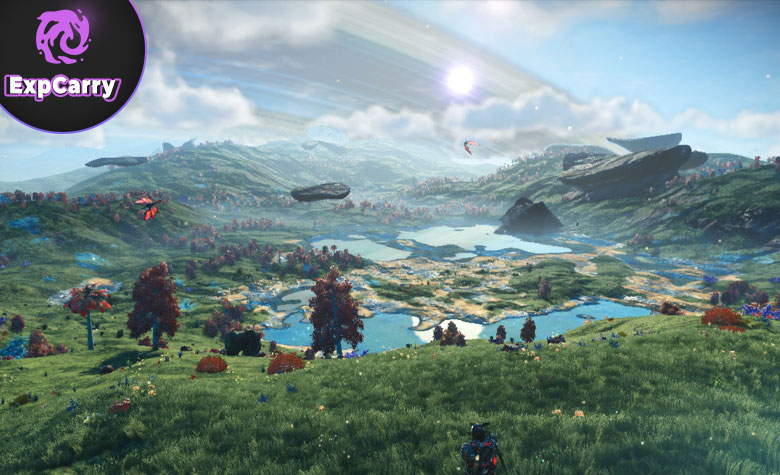
The central hook of Light No Fire is its world. No Man's Sky aimed for an effectively endless universe filled with procedural planets. Light No Fire narrows that ambition into one planet and then makes that planet absurdly large. Sean Murray presented the game at The Game Awards 2023 as a fantasy world that is not built around small video game hills pretending to be mountains, but around true scale, real distance, and places that can still feel undiscovered.
That shift from many planets to one planet changes the whole design problem. No Man's Sky could impress through quantity: another star system, another planet, another alien sky. Light No Fire has to make one world feel deep enough to justify staying there. Geography matters more in that structure. Mountains, oceans, continents, rivers, biomes, ruins, settlements, resources, and travel routes all need to create the feeling of uncovering a living place rather than moving through procedural wallpaper.
Hello Games calls it a procedural Earth and a fantasy Earth, but the studio is not presenting it as a simulation of our actual planet. The world is described as ancient, dangerous, mysterious, and shaped by classic fantasy. That distinction matters because "Earth-sized" by itself is not gameplay. A huge empty map is just a punishment with coordinates. The real question is whether Hello Games can make that scale dense, readable, social, and worth exploring for more than one trailer-length burst of wonder.
Light No Fire Gameplay Blends Survival Sandbox Freedom With RPG Ambition
The gameplay pitch is built around survival sandbox freedom with role playing depth. Based on official descriptions, players will explore, gather resources, survive danger, face enemies, build persistent structures, and form communities. The trailer visually suggests a low-tech fantasy setting with handmade homes, wild beasts, dragons, skeleton-like enemies, bows, shields, and sword-style combat, but Hello Games has not yet detailed the combat system. That distinction matters. A trailer can show tone and direction; it does not explain balance, progression, enemy AI, damage models, loot, or build variety.
Building appears to be a major pillar. Hello Games says players can construct persistent buildings and communities, which suggests the world is not only meant to be crossed but also settled. That is important because an Earth-sized planet needs reasons to stay in places, not just reasons to sprint across them like a fantasy delivery driver with stamina problems. If building, exploration rewards, resource loops, and social systems connect properly, Light No Fire could become less of a map and more of a long-term world.
Survival is also part of the pitch, but the details remain open. Hello Games has not confirmed hunger systems, temperature rules, crafting complexity, death penalties, PvP, difficulty scaling, or progression tiers. It would be sloppy to call Light No Fire a hardcore survival game, a cozy survival game, or a full MMO survival game at this stage. The confirmed version is broader: players survive on a massive fantasy planet where exploration, building, danger, and shared discovery are tied together.
Light No Fire Multiplayer Is About Shared Discovery, Not MMO Certainty
Light No Fire is not being pitched as a traditional MMORPG with raids-service">raids, fixed factions, auction houses, and a quest treadmill. It is also not being presented as a simple private four-player survival server. The official language sits somewhere between those poles: players can meet others from across the globe, build a life together, explore and survive together, create communities, or strike out alone to discover the world for others.
That makes expectations important. If players expect World of Warcraft with dragons and survival mechanics, they may be setting themselves up for disappointment. If they expect a tiny private server structure, they may also be wrong. Hello Games is describing something bigger and more communal, but the exact server architecture, population limits, matchmaking, persistence rules, player visibility, and encounter systems have not been explained. Those details will decide whether the shared world feels alive or simply sounds impressive in a store description.
The strongest version of Light No Fire would make discovery social without forcing every player into the same routine. Some players may want to build towns. Others may want to cross oceans, climb mountains, tame creatures, map biomes, or vanish into the wild like fantasy tax evaders. The game needs those playstyles to coexist without turning the planet into either chaos or emptiness. Multiplayer survival games often live or die in that gap, because humans can turn even a beautiful fantasy world into a zoning dispute with axes.
Light No Fire Traversal Could Be the Game's Real Test
Traversal is more than flavor in Light No Fire. On a planet-sized map, movement becomes design. Hello Games says players can climb mountains, sail across vast oceans and rivers, ride wild beasts, and fly dragons over undiscovered landscapes. Sean Murray later connected Light No Fire to technology from No Man's Sky's Voyagers update, describing a shared Earth-sized planet with real oceans that require large boats and crews to cross.
That ocean detail is not cosmetic. Many open-world games use water as a visual border, a loading trick, or a pretty blue inconvenience. Light No Fire is talking about oceans as actual journeys. If crossing water requires large boats and crews, travel can become a social activity rather than a loading screen with waves. That fits the broader idea of a shared world where players build, travel, and survive together.
The same applies to mountains. A world with enormous peaks only works if climbing, navigation, weather, distance, danger, and reward support the fantasy. Otherwise players get big terrain and small reasons to care. Scale is cheap to advertise and expensive to design. Hello Games knows that better than most studios, because No Man's Sky already lived through the gap between promise, perception, and delivery.
Light No Fire Inspirations Come From Classic Fantasy and No Man's Sky Technology
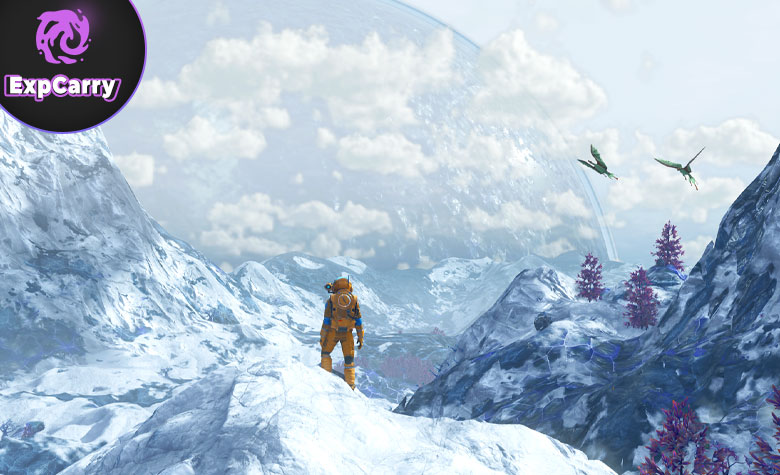
Hello Games directly frames Light No Fire around the adventure, charm, and imagination of classic fantasy. That is broad, but it helps define the tone. The game is not aiming for grimdark realism or licensed Tolkien imitation. The trailer shows a mythic, slightly storybook version of fantasy: animal-like humanoids, dragons, ruins, forests, rivers, mountains, skeleton enemies, handmade homes, and a world that feels ancient rather than industrial.
The other major influence is internal: No Man's Sky. Light No Fire is clearly shaped by Hello Games' long interest in procedural generation, impossible scale, shared discovery, player-driven exploration, and world systems that produce unexpected journeys. The difference is emotional direction. No Man's Sky looked upward into space and isolation. Light No Fire looks outward across one planet, with a stronger focus on settlement, survival, fantasy travel, and communal adventure.
There is also an obvious survival genre overlap, although Hello Games has not framed the game as a clone of any single title. Building, gathering, wild traversal, co-op survival, and persistent structures naturally place Light No Fire near the broader conversation around games like Valheim, Minecraft, Ark, and Enshrouded. The difference is the central bet. Light No Fire is not selling one handcrafted map or a normal server world. It is trying to make one fantasy planet feel large enough to support long-term discovery.
Classic Fantasy Gives Light No Fire Its Tone
The official "classic fantasy" influence matters because it explains why Light No Fire looks softer, stranger, and more adventurous than a grim medieval survival game. The world has danger, but also charm: dragons to fly, wild beasts to ride, distant mountains to chase, and landscapes built around wandering. The phrase "one where you're not the hero" is especially important because it suggests the game may avoid the usual chosen-one power fantasy.
That choice fits a shared world better than a traditional savior narrative. In multiplayer, everyone cannot be the single chosen hero of reality without the entire premise collapsing into comedy. Light No Fire seems more interested in players as explorers, settlers, survivors, travelers, and small figures inside a much older world. That is a better match for a multiplayer fantasy planet than asking every player to pretend they alone are destiny's favorite employee.
No Man's Sky Gives Light No Fire Its Technical Foundation
No Man's Sky is the unavoidable comparison, but it is also the main reason Light No Fire feels technically plausible. Hello Games has spent years expanding No Man's Sky with terrain improvements, creature systems, base building, vehicles, multiplayer features, settlements, expeditions, oceans, weather, visual upgrades, and major free updates. Light No Fire appears to be the studio turning that long technical education toward a different genre fantasy.
The Voyagers update made that connection clearer. Hello Games said much of the technology introduced with Voyagers is shared with Light No Fire, including systems tied to a shared Earth-sized planet, real oceans, and large crew-based traversal. That does not confirm every Light No Fire feature in detail, but it does show that the project is not being developed in a sealed box. The studio is still evolving the technology that supports its large-scale worlds.
Light No Fire Release Date, Platforms, and System Requirements
Light No Fire currently has no confirmed release date. As of May 29, 2026, the Steam page still lists the planned release date as "To be announced," while the official press kit lists the release date as TBC. Any exact date, month, or launch window should be treated as speculation unless Hello Games announces it directly. Rumors and wishlist theories are not release information, no matter how confidently they are wrapped in thumbnails and arrows.
The platform situation is also not fully locked down. Light No Fire has a Steam page, so PC via Steam is visible. However, the official press kit still lists platforms as TBC. It is tempting to assume console versions because No Man's Sky eventually reached many platforms, but that remains an assumption until Hello Games names them directly. The clean version is simple: Steam page live, wider platform list not confirmed.
There are no final system requirements either. Steam currently lists minimum OS as "To be confirmed," and there are no official CPU, GPU, RAM, or storage requirements. That is normal for a game without a release window, but it also matters because an Earth-sized shared procedural fantasy world raises obvious performance questions. Hello Games will need to show not only that the world is huge, but that it runs well, loads cleanly, supports co-op properly, and avoids the kind of technical weirdness that turns ambitious survival games into public bug zoos.
Light No Fire Expectations Are Already the Hardest Enemy
Light No Fire has the kind of pitch that creates hype and suspicion at the same time. A fantasy planet the size of Earth sounds incredible. It also sounds like the exact sentence that makes players start sharpening forum posts before launch. Hello Games knows that better than anyone. No Man's Sky launched in 2016 under enormous expectations, struggled with the gap between public perception and release reality, and then spent years rebuilding trust through major updates.
That history cuts both ways. Hello Games has proven it can support a game for the long term and transform it dramatically after launch. At the same time, players will naturally examine Light No Fire's marketing with suspicion because the studio's most famous game became a case study in hype management. The lesson is not "never believe Hello Games." The lesson is simpler: separate confirmed features from personal fantasy. Humanity continues to find this difficult, despite thousands of years of practice being disappointed.
The smarter expectation is that Light No Fire should be judged on systems, not only scale. Earth-sized terrain means little if exploration feels repetitive. Dragons mean little if traversal is shallow. Building means little if settlements have no purpose. Multiplayer means little if players rarely connect in meaningful ways. The pitch is strong, but the final game will live or die by density, interaction, progression, performance, and the feeling that the world is worth inhabiting.
Light No Fire Could Turn Distance Into the Main Adventure
The most interesting thing about Light No Fire is not only that it is big. It is that distance itself seems central to the fantasy. Mountains are not just background. Oceans are not just borders. Continents are not just map labels. The game seems to ask players to treat travel as an adventure rather than a delay. That could make Light No Fire feel different from survival games where the loop eventually becomes farming the same local resources until everyone builds identical wooden boxes.
If Hello Games gets this right, players may create stories through movement: a crew crossing an ocean, a settlement under a mountain, a lone explorer finding a biome no one else has mapped, a dragon flight over a region that feels genuinely remote. That is where the Earth-sized pitch becomes useful. Not because bigger automatically means better, but because distance can create stakes, memory, and identity. A place feels different when reaching it actually took effort.
The danger is that distance can also become friction. Long travel can feel magical once and exhausting forever after. Light No Fire will need smart traversal tools, meaningful landmarks, varied biomes, readable navigation, and reasons to journey without making players feel trapped inside a commute simulator with dragons. There is a thin line between epic exploration and digital hiking homework. Naturally, the internet will argue about that line until the sun gives up.
Conclusion
Light No Fire is Hello Games' attempt to turn the procedural ambition of No Man's Sky into a single shared fantasy planet. The confirmed pitch is bold: an Earth-sized world built around adventure, building, survival, exploration, multiplayer discovery, persistent structures, dangerous biomes, valuable resources, rideable beasts, dragons, vast oceans, rivers, mountains, and a world where players are not treated as the one chosen hero. It is a survival sandbox, a fantasy RPG-adjacent world, and a technical statement from a studio that has spent years learning how to build impossible-scale games.
The game's inspirations are clear enough without pretending every system is already known. Creatively, Light No Fire draws from classic fantasy: ancient worlds, mystery, charm, strange creatures, adventure, ruins, danger, and the feeling of being a small figure in a huge mythic landscape. Technically, it grows out of No Man's Sky: procedural generation, shared exploration, large-scale terrain, player construction, traversal systems, and the studio's long obsession with worlds too large for normal design logic.
Light No Fire is still mostly promise. There is no release date, no full platform list, no final system requirements, and many core gameplay details remain unconfirmed. The smart way to read it is not as a guaranteed revolution, but as one of the most ambitious survival sandbox projects currently in development. If Hello Games can make the world dense, social, dangerous, beautiful, and meaningful across long distances, Light No Fire could become something rare: a fantasy game where the world itself is the main character.