




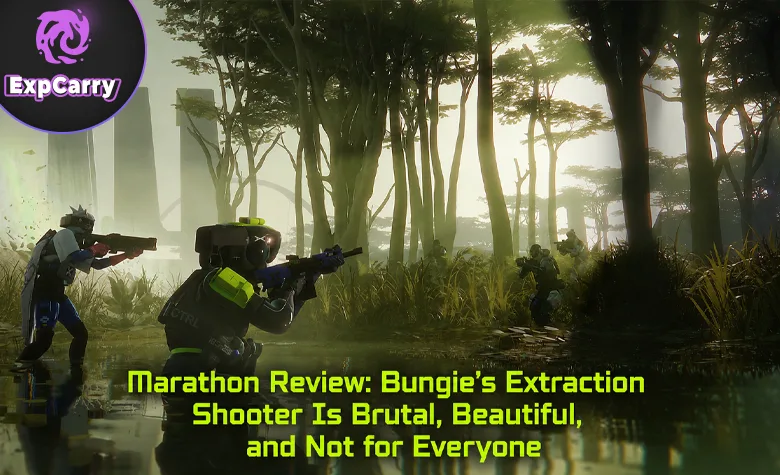
Marathon is Bungie's attempt to turn the high-stakes extraction shooter into something faster, stranger, and more visually distinctive than the genre usually allows. It is a PvPvE survival FPS set on Tau Ceti IV, where players become bio-cybernetic mercenaries called Runners, enter dangerous zones, collect weapons and resources, complete faction contracts, fight AI enemies and rival players, and try to escape before everything they carried into the match disappears with them.
The concept sounds simple because extraction shooters always sound simple when reduced to one sentence. Go in, find valuable things, survive, and leave. The actual experience is built around pressure. Ammunition is limited, every distant gunshot can change the route, another crew may be watching an extraction point, and the item in your backpack is only yours if you reach safety. Marathon takes Bungie's familiar gunplay and places it inside a genre where one bad decision can erase twenty minutes of careful progress. Apparently, shooting aliens was no longer stressful enough.
Marathon is also a difficult game to recommend without conditions. Marathon is also a difficult game to recommend without conditions. Marathon remains a strong fit for players who want a tense extraction loop. Its weapons feel excellent, its art direction is immediately recognizable, and its best runs create stories that scripted shooters rarely match. But it has a steep learning curve, a punishing seasonal progression structure, limited patience for players who want a relaxed experience, and a live-service future that depends on Bungie keeping enough people inside its dangerous little ecosystem. Marathon can be brilliant, but it does not make that brilliance easy to reach.
Marathon Game Concept Turns Tau Ceti IV Into a Living Survival Story
Marathon revives Bungie's original science-fiction setting, but it is not a traditional single-player sequel to the 1990s games. The new game uses the lost colony of Tau Ceti IV and the abandoned UESC Marathon ship as the foundation for an online survival experience. The colony has gone silent, valuable technology and information remain scattered across the planet, and several competing factions hire Runners to recover whatever can still be taken.
Runners operate specialized bio-cybernetic shells that can be replaced, modified, and built for different roles, which gives the extraction loop a logical place inside the fiction. Death is expected. The body is temporary. The information, gear, and reputation earned between runs are what matter. It is a clean concept for a game where players repeatedly die while insisting the next attempt will be different.
The story is not delivered through a normal campaign. Marathon builds its world through faction agents, contracts, environmental details, Codex entries, seasonal events, and discoveries made by the community. This makes the narrative feel more mysterious and less direct than Destiny or Halo. Players who enjoy piecing together lore may find Tau Ceti fascinating. Players who want clear cinematic storytelling may feel like the game is hiding the interesting parts behind work assignments.
Marathon Factions Give Every Extraction Run a Larger Purpose
Factions are one of the main ways Marathon connects repeated matches to its story. Organizations such as MIDA, CyberAcme, NuCaloric, Traxus, Arachne, and Sekiguchi Genetics have their own goals, rivalries, rewards, and progression paths. Completing their contracts reveals more about the colony while unlocking equipment, stronger starting options, expanded storage, and other season-long advantages.
This structure gives players a reason to do more than chase expensive loot. A run may involve recovering a specific object, visiting a dangerous location, eliminating a target, helping a teammate, or making a decision that affects faction progress. The best contracts create tension because they push players toward places they would otherwise avoid. The weaker ones can feel like chores added to a match that was already perfectly capable of killing you without administrative assistance.
Marathon Gameplay Loop Makes Every Successful Extraction Feel Earned
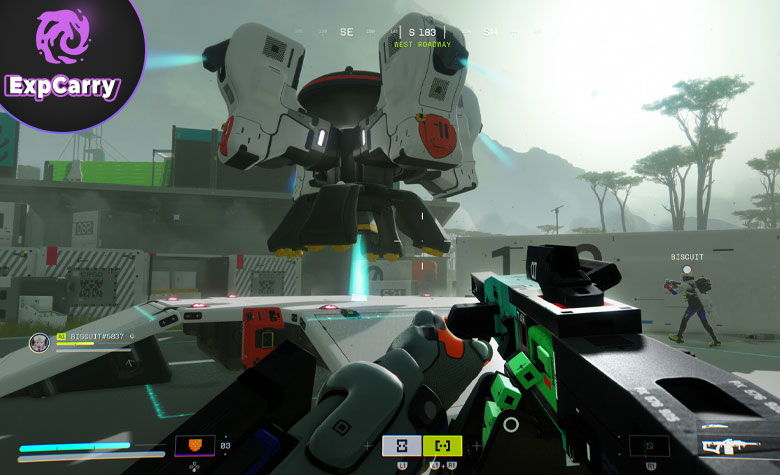
The core Marathon gameplay loop begins before the player enters a zone. You choose a Runner shell, prepare weapons, select equipment, decide how much valuable gear to risk, and enter with a crew of two or three players or alone in a dedicated solo lobby. Once inside, the goal is not simply to kill everything. You need to explore, complete contracts, collect loot, react to AI threats, decide whether other players are enemies or temporary allies, and reach an extraction point before the run collapses.
Standard survival zones are shared with other players. Some may avoid conflict, some may use proximity chat to negotiate, and some may treat every moving object as a donation of ammunition and supplies. This uncertainty is Marathon's strongest source of tension. AI enemies can be dangerous, but other players make the map unpredictable. A route that was safe five minutes ago can become a trap because another crew heard the same gunfire or wanted the same contract objective.
Death means losing the equipment and loot carried in your Backpacks during the run. Successful extraction lets the player keep resources, improve builds, progress factions, and prepare for more dangerous zones. This creates the familiar extraction-shooter cycle where better gear makes the player stronger but also gives them more to lose. Wealth becomes confidence, confidence becomes recklessness, and recklessness becomes someone else's backpack.
| Marathon system | Role in the game | Player impact |
|---|---|---|
| Runner shells | Specialized cybernetic bodies with different abilities and playstyles | Creates class-like roles without locking every build to one weapon type |
| Faction contracts | Objectives tied to progression, rewards, and story | Gives each run a purpose beyond collecting random loot |
| PvPvE zones | Shared maps with AI enemies, hazards, and rival players | Keeps routes unpredictable and creates high-stakes encounters |
| Extraction | Required to keep collected gear and resources | Makes survival more important than kill count |
| Rook | Low-risk scavenger experience that enters crew matches already in progress | Lets players collect gear without risking a prepared loadout |
| Cryo Archive | Rotating raid-style endgame zone aboard the UESC Marathon | Adds harder security systems, contested vaults, and endgame goals |
Runner Shells Give Marathon More Build Variety Than a Basic Tactical Shooter
Runner shells are Marathon's version of classes, but they are more flexible than a traditional hero-shooter roster. Each shell has abilities and strengths that support a particular role, while weapons, implants, cores, mods, and equipment shape the final build. This lets players create aggressive entry builds, mobile scouting setups, defensive support roles, stealth-focused loadouts, or scavenger routes built around survival rather than direct combat.
The system works because the shells change how players approach a zone without completely replacing gun skill. Abilities can create opportunities, but positioning, aim, sound awareness, and equipment choices still decide most fights. Marathon does not become a parade of ability effects where the guns are decorative. Bungie remains stubbornly competent at making weapons feel important.
Rook Gives New and Cautious Players a Safer Way Into Marathon
Rook is one of Marathon's smartest ideas. Instead of entering with a prepared loadout, a Rook joins a crew match already in progress with no personal gear at risk. The player can scavenge what remains, avoid stronger crews, form temporary alliances, and attempt to extract with whatever they find.
This mode lowers the cost of failure and gives players a way to learn maps without repeatedly destroying their inventory. It is useful after a series of bad runs, when credits are low, or when someone wants to play without committing expensive equipment. Rook does not remove the pressure, but it gives Marathon a small emergency exit from its own cruelty.
Marathon Season 2 Shows Bungie Trying to Fix Its Harshest Problems
Marathon launched with a clear identity, but its first season also exposed the risks of that identity. The game could become overwhelming, faction progression could feel slow, and experienced players could create matches that felt impossible for newcomers. Season 2: Nightfall began on June 2, 2026 with the game's first seasonal reset, wiping gameplay progression such as Vault contents, personalized Armory access, and shell upgrades while preserving achievements, cosmetics, and non-seasonal Codex progress.
Season 2 adds Night Marsh, the Sentinel Runner shell, new weapons, new equipment, the Cradle system for customizing shell stats, faster faction progress, larger storage, a daily rotating Duos Queue, and further experiments with lower-risk modes. Cryo Archive returns on rotation with its first Season 2 opening on June 11, while Ranked returns on June 14. Sponsored Survival is not a permanent PvE mode: it is a limited experimental queue running from June 2 to June 9, where one crew enters Night Marsh first and Rook players can arrive later.
These changes show that Bungie understands the main problem. Marathon's best moments come from danger, but constant danger can push players away before they learn why the game is good. The challenge is not making Marathon easy. The challenge is giving players enough successful moments that they want to return to the difficult ones.
Marathon Pros Give Bungie's Extraction Shooter a Strong Identity
Marathon's biggest strengths are not subtle. The game looks different, sounds different, and feels different from most military extraction shooters. It combines a clean graphic design style with unsettling science fiction, strong weapon feedback, readable environments, and moments of sudden violence that feel more intense because the player has something real to lose.
The game also understands that extraction shooters need stories created by players. The most memorable moments are not always victories. A temporary alliance can collapse at the extraction point. A weak loadout can survive against better-equipped enemies. A crew can abandon valuable loot to save a teammate. These situations are not scripted, but they often feel more personal than scripted missions because the outcome depends on decisions made under pressure.
Bungie Gunplay Is Marathon's Most Reliable Strength
Marathon's weapons feel precise, responsive, and distinct. Rifles, shotguns, sidearms, and specialist weapons have clear roles, while recoil, range, movement, and positioning matter enough to make fights readable. The game rewards aim, but it also rewards preparation. A player with better equipment can still lose to someone who chose the right angle, understood the terrain, or simply resisted the human urge to sprint into obvious danger.
This is the part of Marathon that even skeptical players often recognize. Bungie has spent decades refining first-person shooting, and Marathon benefits from that experience. The extraction structure may divide players, but the act of firing a weapon rarely feels like the problem.
Marathon Art Direction Makes Tau Ceti IV Hard to Confuse With Any Rival
Marathon avoids the muddy realism common to the genre. Tau Ceti IV uses sharp colors, bold signage, clean geometry, strange industrial spaces, and unsettling biological details. The result feels futuristic without becoming generic. Even menus, weapons, and equipment carry the same visual language, giving the game a cohesive identity.
This matters because extraction shooters ask players to revisit the same spaces repeatedly. A memorable environment makes repetition easier to tolerate, while environmental storytelling gives players reasons to inspect areas instead of treating every building as a container with walls around it. Marathon's world often feels like something terrible happened just before the player arrived, which is a useful atmosphere for a game where something terrible usually happens shortly afterward.
Marathon Builds and Endgame Reward Long-Term Players
The combination of shells, weapons, mods, implants, cores, faction rewards, and endgame zones gives Marathon more build depth than a simple competitive shooter. Players can gradually shape loadouts around specific goals, whether that means surviving longer, moving faster, supporting a crew, hunting other players, or entering difficult areas such as Cryo Archive.
Cryo Archive is the strongest example of Marathon's ambition. It turns the extraction format into a rotating raid-style PvPvE activity with security systems, vault chases, tight corridors, and rival crews competing for the same rewards. This gives dedicated players a reason to prepare beyond ordinary matches and suggests that Marathon can grow into something more than a collection of loot runs.
Marathon Cons Make the Game Difficult to Recommend to Everyone
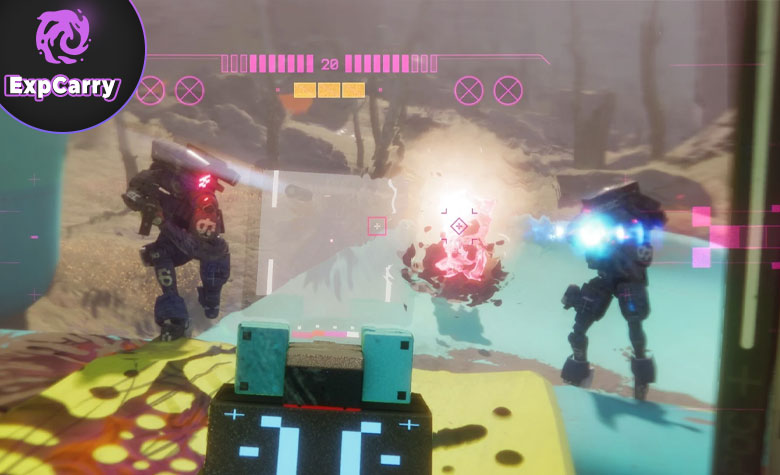
Marathon's weaknesses are closely connected to its strengths. The game is tense because failure matters, but that also makes failure exhausting. Progression feels meaningful because equipment has value, but that also makes losing equipment painful. Other players create memorable stories, but they can also create matches where a newcomer barely understands what killed them.
The result is a game that can feel hostile before it feels rewarding. Experienced extraction-shooter players may accept that as part of the genre. New players may see an expensive loadout disappear, look at the seasonal progression ahead, and decide that another game would be more respectful of their evening.
Marathon Learning Curve Can Turn Early Runs Into a Death Spiral
The opening hours are one of Marathon's biggest problems. New players need to learn maps, extraction points, AI behavior, sound cues, weapon handling, valuable loot, faction goals, shell abilities, and the habits of experienced players. Learning these systems requires entering matches where mistakes are punished immediately.
This can create a death spiral. A player loses gear, becomes less capable, enters another run with weaker equipment, dies again, and makes slower progress. Bungie has adjusted faction progression, expanded storage, and added lower-risk experiments, but the core game still expects players to tolerate failure long enough to become competent. That is a fair demand for the target audience and a terrible sales pitch for everyone else.
Marathon Solo Play Is Possible but Rarely Comfortable
Marathon supports solo players through dedicated solo lobbies, so a lone player is not normally thrown against full crews in standard solo matchmaking. That makes the format fairer than simply sending one person into a three-player battlefield, but it does not make the experience easy. A solo player still has to manage every angle, every objective, every inventory decision, and every extraction attempt without anyone available to revive them or recover their gear.
Rook, solo lobbies, proximity chat, and seasonal progression changes help, but solo Marathon remains a harsher and less forgiving experience than playing with a coordinated crew. Players who prefer solo extraction shooters can still enjoy it, but they need more patience, more map knowledge, and a stronger willingness to avoid unnecessary fights.
Marathon Live-Service Future Depends on Player Retention
Marathon is a paid live-service game built around seasons, progression resets, changing systems, new zones, new shells, new equipment, cosmetic purchases, and a continuing player population. That gives Bungie room to improve the game, but it also creates risk. An extraction shooter needs enough players to support matchmaking, fair competition, and a healthy range of skill levels. If too many casual players leave, the remaining matches become harder, which can push even more players away.
This concern became more visible after the first season. Bungie is clearly trying to widen the game's appeal through Open Play Week, faster progression, larger storage, rotating Duos, experimental queues, and future PvE tests. Marathon is not dead, but it is not a game that can afford to ignore new players or assume its strongest audience will replace everyone who leaves.
Marathon Player Opinions Are Positive, Divided, and Cautious
Player opinion on Marathon is more positive than the loudest criticism suggests, but it is not simple. As Season 2 begins, Steam's English-language user reviews remain Very Positive, while recent reviews are Mostly Positive. Many players praise the gunplay, art direction, tension, build options, worldbuilding, and the satisfaction of successful extraction. The game has a dedicated group of players who see it as one of the strongest competitive shooters Bungie has made.
The criticism is also consistent. Players complain about the punishing learning curve, difficult early progression, uneven matchmaking, limited casual options, seasonal resets, and the risk that the game becomes too hostile for newcomers. Some longtime Bungie fans also resent Marathon because they wanted more Destiny or a different kind of Marathon revival. That criticism is not always fair to the game itself, but live-service shooters have never been protected from emotional accounting.
Season 2 has created cautious optimism because Bungie is addressing several common complaints instead of pretending the first design was flawless. Faster faction progression, the Cradle system, Sponsored Survival, rotating Duos, new content, and future PvE experiments suggest that the game can become more welcoming without losing its core identity. The real test is whether these changes improve retention after the initial excitement fades.
Marathon Is Worth Playing for the Right Kind of Shooter Fan
Marathon is worth playing if you enjoy high-stakes multiplayer shooters, strong gunplay, science-fiction mystery, buildcrafting, and matches where survival matters more than kill count. It is especially appealing to players who like Hunt: Showdown, Escape from Tarkov, competitive Destiny activities, or any game where a successful escape can feel more rewarding than a conventional victory screen.
Marathon is a weaker choice if you want a traditional Bungie campaign, a relaxed cooperative shooter, permanent progression without seasonal resets, or a multiplayer game that rarely punishes failure. The game can be played casually, but it is not naturally casual. It asks players to learn through loss and to accept that some evenings will end with less equipment than they started with. That is either exciting or deeply irritating, depending on whether your brain interprets risk as entertainment.
The safest recommendation is to try Marathon during Open Play Week from June 2 to June 9, 2026, or wait for a sale before committing fully. It is a paid live-service game with in-game purchases, so the price matters more than it would in a free-to-play shooter. Marathon reveals its appeal quickly once the gunplay, tension, and extraction loop begin to connect. It also reveals its frustrations quickly. The game is not hiding what it is. It simply assumes the right players will enjoy being threatened by it.
Final Thoughts
Marathon is a bold extraction shooter with excellent gunplay, a memorable visual identity, strong worldbuilding, and a gameplay loop capable of producing intense unscripted stories. Its concept fits Bungie's strengths: mysterious science fiction, precise shooting, cooperative pressure, and long-term systems that encourage players to return.
The game is also difficult, demanding, and sometimes needlessly hostile. Its opening hours can punish players before teaching them enough to improve, seasonal resets will discourage anyone who dislikes rebuilding progress, and its live-service future depends on Bungie continuing to lower barriers without removing the danger that makes extraction meaningful. Season 2 is a sensible step, but the game still has work to do.
Marathon's biggest strength and biggest weakness are the same: it refuses to become a safe, ordinary shooter. For players who enjoy risk, preparation, and the relief of escaping with valuable loot, that refusal makes the game special. For players who want a straightforward campaign or a relaxed multiplayer experience, it makes Marathon an easy game to admire and an even easier game to avoid.