




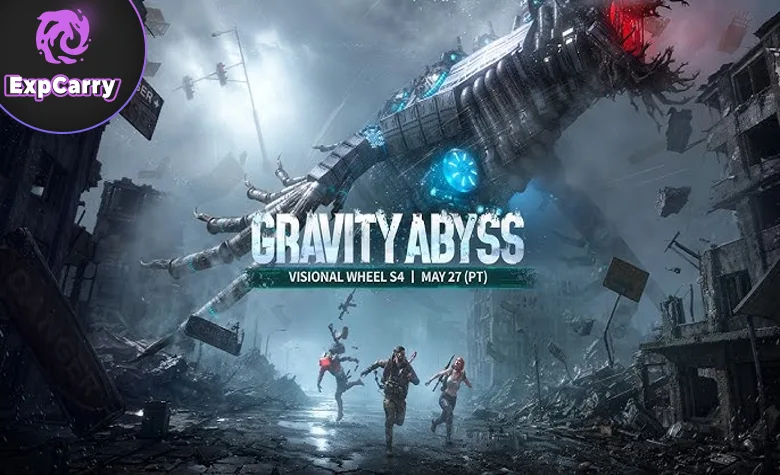
Once Human S4 is less about adding another seasonal gimmick and more about pushing the survival formula toward MMO-style live content. Gravity Abyss changes how players move, fight, farm, build, and group up across Nalcott. Instead of keeping survival progression locked to small territory loops, S4 sends Metas into shared aerial events, contested relic drops, zero-gravity strongholds, large-scale Riftwalker encounters, and reward systems built around long-term seasonal participation.
The core theme is clear: Once Human is still a survival game with crafting, base building, Deviants, weapons, territory management, and seasonal resets, but S4 makes the structure feel closer to an MMO. The game now leans harder on public events, account-wide cosmetic progression, Battle Pass expansion, cross-platform access, group coordination, and world-state changes that affect how servers are played. That shift is important because survival games usually depend on private bases and small-group pressure, while MMOs depend on shared objectives, repeatable public content, social systems, and long reward tracks. S4 brings those two models closer together.
Once Human S4 Gravity Abyss Changes Movement, Combat, and World Events
The main S4 feature is Visional Wheel S4: Gravity Abyss. After the update, servers with Visional tags moved from Aberrant Progeny into Gravity Abyss, while the Vision World and Basic World structure lets players choose whether they want to take part in the seasonal event layer. That design matters because it gives Once Human a cleaner live-service structure. Players who want standard survival progression can stay away from the Vision layer, while players who want seasonal activity can move into a version of the world where gravity anomalies, Riftwalker events, and aerial rewards reshape the map.
Gravity Imbalance is the foundation of the season. Certain Stronghold regions become affected by the seasonal gravity field, and players can find them through map pins. These areas are not only movement zones. They are farming spaces, combat spaces, and reward routes where Metas can gather Mods, Gravity Crystals, and other seasonal materials. The vertical movement changes how players approach terrain, enemy positioning, and combat spacing. Once Human already had open-world survival pressure, but S4 adds a more event-driven layer where the environment itself becomes part of the seasonal combat loop.
The Riftwalker is the center of that loop. It is presented as a colossal airborne Deviant whose presence distorts gravity across Nalcott. The Riftwalker drops Echoite Broken Relics and Riftwalker Relics across the wilderness, turning the map into a timed pursuit route. When players approach a Riftwalker Relic, elite enemies appear and the relic begins to ascend. To secure the reward, players must stop that ascent by defeating the enemies and then reach the reward position, which can require vertical tools such as Energy Raisers, Floating Aerogel, flying vehicles, or careful use of the surrounding terrain. This is a stronger MMO-style structure than a simple loot crate because it combines map alerts, travel, enemy waves, vertical pressure, and competition over a shared objective.
Aerial Hunt Makes the Riftwalker a Shared Server Target
Aerial Hunt is the clearest example of S4 moving Once Human toward MMO-scale public content. After the early S4 fixes, the mode opens once per hour. Fifteen minutes after the Vision is activated, the Riftwalker can appear above random Wilderness Settlements, and Metas can check Riftwalker pins on the map to move toward the event. A failed airship platform manifests above the location, and players can enter through a portal or use map pins when server load allows teleportation. This turns the season's main Deviant into a rotating server event rather than a private boss encounter.
The fight itself requires coordination because the Riftwalker has multiple combat forms. That puts more pressure on group positioning, target focus, and build reliability than ordinary survival farming. In a standard survival game, the main risk often comes from scarcity, base raids, or local PvP. In Gravity Abyss, the risk comes from organized aerial encounters layered over the world map. That makes S4 feel closer to a world boss season, especially because the best rewards are attached to event participation rather than only to private progression.
The launch version of Aerial Hunt was not perfect. The developers acknowledged lag, crash issues, unclear gameplay flow, and rewards that felt weaker than the effort required. Since then, the mode has received server performance optimization, higher Gravity Crystal rewards, more Deviation and Mod Crate rewards, improved Abyssal Core drop chances, reduced Riftwalker HP, and simpler personal reward requirements based on damage contribution. That matters for the article's main point because S4 is not only a content drop. It is a live seasonal loop being adjusted through feedback, balance fixes, and reward tuning.
Floating Building and Gravity Rewards Push Survival Beyond the Ground
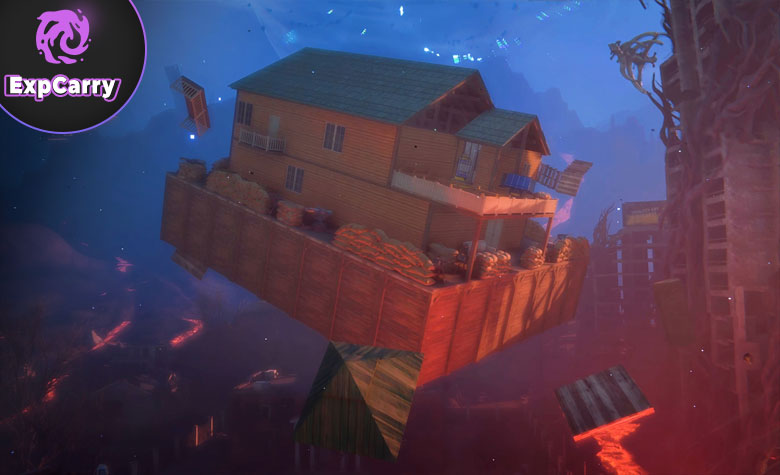
S4 does not stop at combat. The season also changes construction and progression through Floating Building, Gravity Crystals, Abyssal Cores, Abyssal Essence, and seasonal Mods. Floating Building becomes available after learning the Anti-Gravity Foundation Formula, and construction consumes Gravity Crystals. This is one of the most important survival-side additions because it connects base building to seasonal exploration. Players are not only collecting gravity materials for combat rewards. They are also using them to alter how territory construction works.
Gravity Integrator Mode adds another layer to that loop. Players can obtain the Gravity Integrator Formula and unlock a challenge where the higher the device ascends, the richer the rewards become. This is a compact version of the season's full design philosophy: verticality creates risk, risk creates better rewards, and those rewards feed back into builds, territory, cosmetics, and trading. Once Human has always used strange science-fiction logic to separate itself from ordinary zombie survival games, but Gravity Abyss makes that identity mechanical rather than only visual.
The Energy Raiser also matters because it brings weightless movement outside naturally affected zones. Players can obtain the Energy Raiser Formula through wilderness exploration, craft it at the Supplies Workbench, and use it in non-weightless regions during the active Vision period. Early fixes also addressed issues with Floating Aerogel and Energy Raiser stacking, which shows how central these tools are to the season's movement design. Gravity Abyss depends on players being able to reach airborne rewards, move through unstable combat spaces, and treat verticality as part of the normal seasonal route.
Abyssal Core, Abyssal Essence, and Aero Mods Build a Seasonal Economy
The reward structure is where S4 becomes more MMO-like. Abyssal Core can drop from Riftwalker Relic and Aerial Hunt activities, with Epic, Legendary, and Mythic rarity tiers. Higher rarity can produce stronger rewards, including Shiny Mods, Abyssal Essence, high-level Morphed Deviations, and other rare items. Players can also spend Gravity Crystals for resonance, with deeper resonance carrying a chance at double rewards. Since Abyssal Cores can be traded between players, Gravity Abyss creates a player-facing seasonal economy around risk, rarity, and market choice.
Abyssal Essence gives that economy a second purpose. It can be exchanged in the Visional Redemption shop for rewards such as Lightforge Ingots, selected Shop Fashion, Furniture, Weapon Skins, Shiny Mods, and top-tier Deviations. S4 also brings back Morphed Deviations and Mods from Visional Wheel S1 while adding new Morphed Deviations: The Digby Boy - Gravity Abyss, Atomic Lighter - Gravity Abyss, and Zapamander - Gravity Abyss. The new Aero suffix Mod also joins the returning Downstar Mod, with Aero focused on aerial states and Downstar rewarding elevation-based combat. Together, these systems make the season more than a temporary event. They give players repeatable farming, build decisions, collectible goals, and trade value.
The post-launch adjustments made this economy stronger. Aerial Hunt rewards were increased, Riftwalker Relic ascent speed was reduced, hover time was extended, and the weekly Gravity Crystal obtain limit was raised to 10,000. The Visional Shop also added Downstar/Aero Shiny Mod Random Crates with a monthly redemption limit, giving seasonal farming a clearer long-term target. These changes are important because a seasonal MMO-style loop only works when public events feel worth repeating. Gravity Abyss now has a better reward base than it had at launch, even if some players may still judge the grind by drop rates, server stability, and how often they want to repeat aerial content.
Update 2.4.2 Adds MMO-Style Account Systems and Better Group Play
Version 2.4.2 builds on S4 with systems that are not only about combat. Radiance is the new cosmetics progression system, and it works across the account. Obtaining cosmetics grants Radiance value, previous cosmetics are counted when entering the system, and Radiance levels unlock exclusive rewards and benefits. This is a classic MMO-style account layer: long-term collection becomes visible progression, not just inventory decoration. Once Human's monetization remains cosmetic-focused here, but the system adds status, namecard customization, badges, team name decorations, and monthly active rewards.
S13 Battle Pass: Indigo Mystic also expands the seasonal treadmill. It runs from the June 10 update until before the August 25 update, and the developers state that this pass has a longer duration because subsequent level rewards were expanded. The pass now continues beyond level 60, with new rewards every 5 levels starting from level 65 and a maximum level of 200. That is another MMO signal. The reward track is not just a short cosmetic pass. It becomes a longer progression structure designed to keep players active across the season.
The S13 update also includes Stardust Secret Crate changes, Meta Pass reward updates, the limited-time return of S3 Sailor's Spirit Battle Pass cosmetics, and the Lightforge Loot Crate: Vipers Lunge. These additions are not the core gameplay of S4, but they show how Once Human is being organized as a live seasonal platform. Combat events, cosmetics, crates, account progression, shop rotations, and Battle Pass expansion all move on the same calendar. That is how MMO live operations usually work: the world changes, reward systems rotate, and players get multiple parallel reasons to log in.
RaidZone Improvements Make Team Play Less Rough
RaidZone also gets a practical upgrade in 2.4.2. Squad mark sharing now lets team members see shared pins in the wilderness and on the map, whether the mark is for supplies, threats, or tactical movement. Team mode also receives online voice chat support, which is a direct improvement for coordinated fights. In survival PvP and PvPvE modes, communication is often the difference between a clean push and a wasted run. Adding built-in voice and shared squad marks makes RaidZone less dependent on external tools and more like an organized MMO group mode.
This matters because Once Human's long-term identity depends on more than strange enemies and base building. If the game wants to compete as a survival MMO hybrid, it needs group systems that support repeated coordinated play. RaidZone improvements point in that direction. Players still need gear, builds, map knowledge, and territory planning, but the interface now does more to support team decisions in real time. That is a small change on paper and a large change in practice.
PC and Mobile Sync Strengthens Once Human as a Live Platform
Once Human S4 is also being pushed with PC and mobile data sync. That detail matters more than it looks. Survival games often struggle with session commitment because base building, farming, events, and progression demand time at a fixed platform. Cross-platform data sync reduces that friction. A player can treat Once Human less like a game tied to one device and more like an ongoing account-based world that can be checked, managed, and played across PC and mobile.
This does not turn Once Human into a traditional tab-target MMO. It still keeps shooter combat, survival crafting, territory building, Deviants, seasonal resets, and scenario-based progression. The difference is structural. PC/mobile sync, Battle Pass expansion, Radiance, RaidZone upgrades, public aerial events, tradable seasonal rewards, and rotating Vision content all push the game toward a more persistent live-service rhythm. S4 is not only asking players to survive. It is asking them to participate in a shared seasonal schedule.
The upcoming and testing-side content reinforces that direction. First Person Mode enters Pioneer confidential testing, giving players a more direct combat and exploration perspective in Manibus and Endless Dream. Isles of the Abyss also enters another Pioneer test as a maritime survival scenario with scattered islands, resource gathering, dynamic weather, day-night cycles, facilities, environmental danger, and mysterious enemies. Even though these tests are separate from the main Gravity Abyss loop, they show that Once Human is expanding through scenario design rather than only through isolated patches.
Collection and Shiny Mod Changes Point to Longer Progression Goals
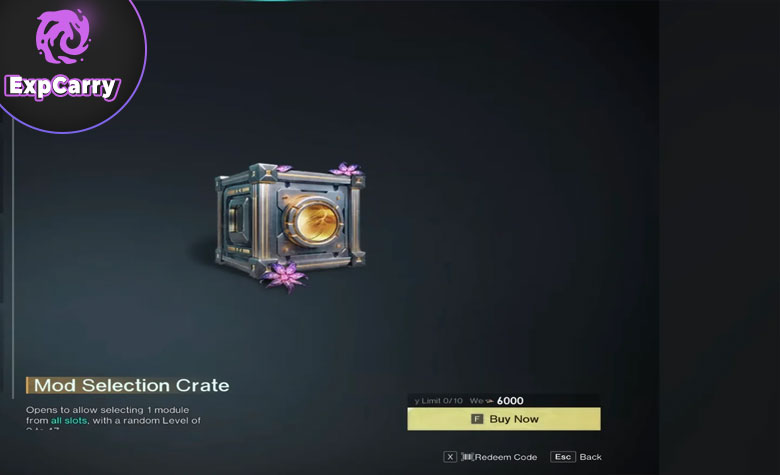
The latest progression-side direction also supports the MMO reading of S4. The developers are preparing Collection System optimization around clearer reward nodes, long-term collection goals, and compensation for existing progress. The total Collection level is being expanded, accessories are being moved toward Precision Components, and unlocked content is not supposed to be reclaimed from existing players. This does not directly change the Riftwalker fight, but it changes the wider account progression environment around S4.
Shiny Mods are also being pushed toward a more predictable long-term structure. The current system has relied heavily on randomness, especially through duplicate high-level Mods, but the planned changes introduce clearer reward paths through Scenario Honor - Scenario Rating and Mod Collection Progress. Armor Shiny Mods are also planned as part of this wider progression update. That matters because MMO-style seasons need more than one repeating activity. They need layered goals: public events, account collection, cosmetics, build progression, social display, and reward tracks that continue beyond one week of exploration.
There is still a real player concern here. More account systems can make the game feel richer, but they can also make it feel busier and more demanding. Gravity Abyss already asks players to farm crystals, chase relics, repeat Aerial Hunt, build around vertical combat, and manage seasonal shops. Adding deeper Collection and Shiny Mod systems strengthens the live-service structure, but it also increases the need for clean reward pacing. If Once Human wants to keep survival players and MMO players in the same ecosystem, the grind has to feel readable, stable, and worth the time.
Final thoughts
Once Human S4 shows where survival games are heading when they borrow from MMO design without abandoning their own identity. Gravity Abyss keeps the survival base intact through crafting, territory, farming, Deviants, and seasonal resources, but it adds a stronger shared-event layer through Riftwalker Relics, Aerial Hunt, zero-gravity regions, Floating Building, Gravity Integrator challenges, Abyssal rewards, and tradable seasonal items. The result is a season built around repeatable participation rather than a simple content drop.
The important update is that Gravity Abyss is no longer only the version that launched on day one. Aerial Hunt has received reward improvements and stability fixes, Riftwalker difficulty has been tuned, Riftwalker Relics have become easier to handle, Gravity Crystal acquisition has been expanded, and Visional reward paths now connect more clearly to Mod progression. That makes the season more credible as an MMO-style loop because the public content is being actively balanced around participation, rewards, and server pressure.
Update 2.4.2 makes that direction clearer. Radiance turns cosmetics into account-wide progression, S13 Battle Pass expands long-term rewards, RaidZone improvements make coordinated play smoother, and PC/mobile sync supports Once Human as a platform rather than a single-device survival sandbox. The Collection and Shiny Mod plans push the same idea further by giving players clearer long-term goals beyond immediate seasonal farming. S4 does not erase the survival genre. It stretches it toward MMO habits: public objectives, account systems, group tools, rotating events, visible collection status, and longer reward tracks. That is why Once Human S4 is more than a gravity season. It is a strong signal that survival games are moving closer to MMO structure while keeping the pressure, crafting, and weird world design that made the genre work in the first place.