




WARDOGS is a tactical All-Out Warfare FPS from BULKHEAD and Team17, planned for Steam Early Access in 2026. It is built around large-scale online PvP battles where up to 100 players split across three teams fight over a randomized Control Zone inside a much larger battlefield. The game combines objective warfare, vehicles, destruction, base building, proximity voice chat, and a persistent cash economy that makes each life a tactical and financial decision. The simplest way to describe WARDOGS is this: it is a large-scale military FPS where three teams compete for battlefield control, while players buy their loadouts, earn cash through useful actions, and decide how much risk to take before entering the fight. It is not a battle royale, because the goal is not to be the last player or squad alive. It is not an extraction shooter either, because the match is not built around looting and escaping. WARDOGS sits closer to large-scale objective warfare, with realistic-feeling gunplay balanced for multiplayer flow rather than strict military simulation.
That distinction matters because WARDOGS is trying to solve a familiar issue in large-scale shooters: teamwork is often encouraged in theory, but the visible rewards can push players toward kill farming, lone-wolf flanks, or ignoring logistics. WARDOGS uses cash, team actions, and battlefield control as part of its core loop, so reviving teammates, transporting players, supporting the objective, building defenses, and helping the team hold ground are intended to have direct economic value.
What Is WARDOGS?
WARDOGS is a modern tactical FPS focused on large-scale online PvP. The core match setup is direct: up to 100 players are divided across three teams and fight over a randomized 2x2km Control Zone. The team with the strongest presence inside that zone earns points, and the first team to reach 100 points wins the match. On paper, that sounds close to a King of the Hill-inspired format, but the surrounding systems give WARDOGS its identity.
The game is set in the derelict industrial mountains of Eastern Europe on a destructible battlefield. This setting gives the map room for ruined towns, industrial zones, mountain roads, open ground, defensive structures, vehicle routes, and dense objective fights. WARDOGS uses a large 256km² battlefield, while the active fight centers on the randomized 2x2km Control Zone. The larger map gives the match strategic variation, while the Control Zone keeps the main combat from turning into long walks through empty terrain.
WARDOGS is built around a militaristic sandbox rather than a narrow class corridor. Players are not only spawning, dying, and repeating with the same equipment every time. Each life begins with a spending decision. Players buy weapons, gear, utility, or vehicles, then try to make that investment matter before it is lost. This gives the game a softer form of gear-risk tension without turning the whole experience into an extraction loop.
The persistent cash economy is one of the game’s main hooks. Every player starts with $10,000, and useful teamplay actions can reward cash. That money can be spent on stronger tools, vehicles, and tactical options, and it persists between matches. Bad spending decisions can therefore matter beyond one death, while smart support play can help a player and their team build momentum. If the economy is tuned well, medics, transport drivers, builders, logistics-focused players, and objective anchors should feel like part of the core progression loop rather than background support for players chasing kills.
WARDOGS Release Date, Platform, Developer, and Early Access
WARDOGS is officially planned for Steam Early Access in 2026. The game is developed by BULKHEAD and published by Team17. At the time of writing, WARDOGS is listed as a PC title on Steam, and no console version has been officially announced. Until BULKHEAD or Team17 gives a more precise final date, 2026 remains the safest confirmed public release window.
Because WARDOGS is launching through Early Access, the first public version should be treated as a work-in-progress rather than a finished full release. That matters because the game is ambitious for a multiplayer FPS. Its core design includes up to 100 players, three-team objective warfare, vehicles, destruction, building, logistics, proximity voice chat, persistent cash, progression, and online multiplayer infrastructure. These systems will need tuning during Early Access, especially around balance, server performance, economy pacing, and match flow.
| Category | WARDOGS details |
|---|---|
| Game title | WARDOGS |
| Genre | Tactical All-Out Warfare FPS |
| Developer | BULKHEAD |
| Publisher | Team17 |
| Release window | 2026 |
| Launch model | Steam Early Access |
| Platform | PC via Steam |
| Player count | Up to 100 players |
| Team structure | Three teams fighting over the Control Zone |
| Map scale | 256km² battlefield with a randomized 2x2km Control Zone |
| Main systems | Vehicles, tactical gunplay, base building, destruction, persistent cash, proximity voice chat |
| Anti-cheat | Easy Anti-Cheat, listed by Steam as kernel-level anti-cheat |
According to the Early Access description, the initial version is expected to include the core WARDOGS experience: large-scale tactical FPS combat, three teams, dynamic objective zones, cash and XP-based progression, vehicles, logistics systems, support-focused gameplay, realistic-feeling gunplay balanced for gameplay rather than strict simulation, and online multiplayer with proximity voice chat.
The full version is expected to expand the game with more maps, weapons, vehicles, gameplay variety, progression depth, seasonal metagame systems, additional objective variations, and new vehicle types such as fighter jets. These planned additions should not be treated as guaranteed launch-day content for the first Early Access build. WARDOGS is expected to remain in Early Access for around one to two years. Pricing may also change during development, with the Early Access version planned to be cheaper and the full version potentially priced higher as content, systems, and polish increase.
WARDOGS Gameplay and Core Systems
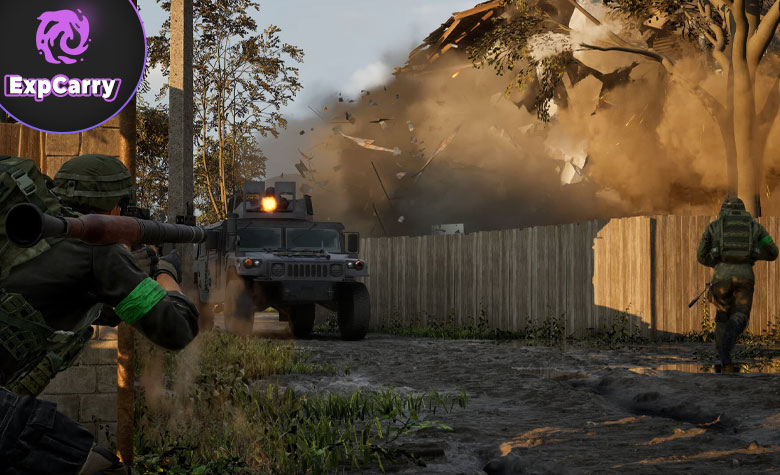
WARDOGS uses a King of the Hill-inspired match format, but it builds a larger tactical sandbox around that objective. Three teams fight for the same Control Zone, and the team with the most players inside the zone earns points. The first team to reach 100 points wins. This gives every match a clear purpose, while the route to victory can change depending on the zone location, terrain, player tactics, vehicles, defenses, and cash decisions.
The three-team setup is one of the most important differences between WARDOGS and many large-scale shooters. Most objective FPS games use two sides, which often creates a predictable front line: one team pushes, the other pushes back, and the match becomes a tug-of-war. WARDOGS adds a third team, which could make the flow harder to stabilize. A leading team may be pressured from two directions, a weaker team may wait for the right moment to contest the zone, and a strong defensive position can become vulnerable if both enemy teams attack it at once.
This structure could make battles more dynamic, but it also creates balance risks. Three-team formats need careful spawn logic, map flow, reward tuning, objective placement, and vehicle balance. If those systems work well, WARDOGS can avoid predictable two-sided stalemates and create more reactive matches. If they are tuned poorly, one team may get squeezed too hard, or the winning side may snowball through better cash, vehicles, and positioning.
The Control Zone is the center of the match, but it is not a tiny capture circle. At 2x2km, it is large enough to support multiple approaches, long sightlines, roads, buildings, defensive positions, vehicle movement, flanks, and support roles. That size is important because WARDOGS needs enough room for tactics without losing the pressure of a central objective.
The randomized zone system should also help replayability. A Control Zone in an industrial district may create close infantry fights and building-to-building pressure. A zone near open terrain may make vehicles, long-range fire, and helicopter logistics more valuable. A zone around roads or mountain approaches may reward transport, ambushes, and forward fortifications. The same map can produce different tactical problems because the active fight does not always happen in the same location.
Gunplay is described as realistic-feeling but balanced for gameplay rather than simulation. That wording is important. WARDOGS is not being presented as a pure mil-sim where every system exists only to imitate real-world procedure. It is aiming for a tactical military feel inside a multiplayer structure that still needs readability, pacing, and fair counterplay.
Map, Vehicles, Building, and Destruction
The WARDOGS battlefield is set in the derelict industrial mountains of Eastern Europe. The setting fits modern tactical warfare without tying the game directly to a licensed real-world conflict. It also gives the developers a practical space for ruined infrastructure, industrial structures, open approaches, mountain roads, vehicle routes, and fortified positions.
The 256km² map is one of the largest promises attached to WARDOGS, but the key detail is how that map is used. Large maps can sound impressive and still feel empty if players spend too much time moving through unused space. WARDOGS tries to avoid that issue by focusing each match around the randomized 2x2km Control Zone. The full map gives the game room for variation, while the active objective keeps the main fight concentrated.
Vehicles are part of the combined arms design. They are not only background decoration or simple transport options. Official gameplay examples mention transporting supplies by helicopter, pushing through towns in heavily armored tanks, and using an artillery tank to attack enemy positions. These examples suggest that vehicles are meant to affect movement, logistics, objective pressure, and heavy firepower.
The challenge will be balance. In combined arms shooters, vehicles often become either too dominant or too disposable. If armor can farm infantry with limited counterplay, objective fights become frustrating. If anti-vehicle options are too strong or too cheap, vehicles become expensive liabilities. WARDOGS will need a healthy relationship between infantry, vehicles, terrain, construction, destruction, and cash cost.
Building and destruction are also central to the game’s identity. Players can fortify key locations, create forward positions, and shape how teams hold or attack space. On the other side, destruction gives opponents a way to break those positions instead of being forced into permanent chokepoints. Official examples include destroying apartment blocks with rocket launchers or tearing through towns with heavily armored tanks.
The strongest version of this system would create a constant tactical loop: teams build to hold useful ground, enemy teams use destruction, vehicles, explosives, or flanks to break those defenses, and the defenders relocate, rebuild, or change their approach. The weaker version would be decorative destruction, cluttered construction, or defensive spam that slows the match without adding much depth. This is one of the systems Early Access will need to prove in real matches.
Persistent Cash, Progression, and Teamplay
The persistent cash system is the most distinctive WARDOGS feature. Every player starts with $10,000 and uses cash to purchase loadouts before entering a life. That loadout can include weapons, equipment, utility, or vehicles. This changes the psychology of spawning. In a standard shooter, death usually costs time and maybe a team ticket. In WARDOGS, death can also mean losing an investment that could have been spent more carefully. This does not make WARDOGS an extraction shooter, but it does borrow one useful form of pressure from gear-risk games. Players have a reason to think before spending. A cheap loadout may be safer when learning the match or moving into a risky area. A more expensive kit may be worth it when the team needs a serious push, vehicle support, or specialized equipment.
Because cash persists between matches, the system can create longer-term consequences. That is both promising and risky. If the economy works as intended, players who support the team, control objectives, revive allies, transport squads, and make smart decisions should be able to fund better tools over time. If the economy is too generous, money may stop mattering. If it is too punishing, weaker or newer players may feel stuck with poor options while experienced players snowball into stronger equipment.
The best part of the system is that it gives support play a visible reward structure. Large-scale shooters often depend on medics, transport players, builders, logistics players, and objective anchors, but those roles can feel thankless when the scoreboard mostly celebrates kills. WARDOGS attempts to make those actions financially meaningful, so teamwork has practical value inside the progression loop.
WARDOGS System Requirements and Online Features
WARDOGS is a large-scale multiplayer FPS with up to 100 players, vehicles, destruction, building, and online voice systems, so performance will matter from the start. A game like this can survive missing content more easily than it can survive unstable servers, poor hit registration, or severe frame drops during the exact moments when the battlefield becomes interesting. The current Steam page lists both minimum and recommended PC requirements.
| Requirement | Minimum | Recommended |
|---|---|---|
| OS | Windows 10 | Windows 11 |
| Processor | Intel Core i5-8600 / AMD Ryzen 5 3500 | Intel Core i7-12700K / AMD Ryzen 7 5700X |
| Memory | 16 GB RAM | 16 GB RAM |
| Graphics | Nvidia GTX 1660 / Radeon RX 590 | Nvidia RTX 3070 / AMD Radeon RX 6700 XT |
| Network | Broadband internet connection | Broadband internet connection |
| Storage | 30 GB available space | 40 GB available space |
| Performance target | 1080p Low at 60fps+ | 1440p Medium at 70fps+ or 4K Medium at 60fps+ |
These requirements may change before or during Early Access, but they already show the kind of hardware target BULKHEAD is aiming for. The minimum target is not extreme for a modern PC shooter, but large-scale online performance is not only about local hardware. Server stability, netcode, vehicle synchronization, destruction, and large player counts will all affect how WARDOGS feels in real matches.
Steam lists WARDOGS as using Easy Anti-Cheat and marks it as kernel-level anti-cheat. That is an important detail for players who care about anti-cheat requirements, privacy concerns, system compatibility, or Linux and Steam Deck support. The game also includes online PvP, online interactivity, and in-game chat. English is listed with full audio support, while several other languages are listed for interface support, including German, French, Italian, Spanish, Japanese, Korean, Portuguese-Brazil, Russian, Simplified Chinese, Traditional Chinese, Polish, Turkish, and Ukrainian.
How WARDOGS Compares to Other FPS Games
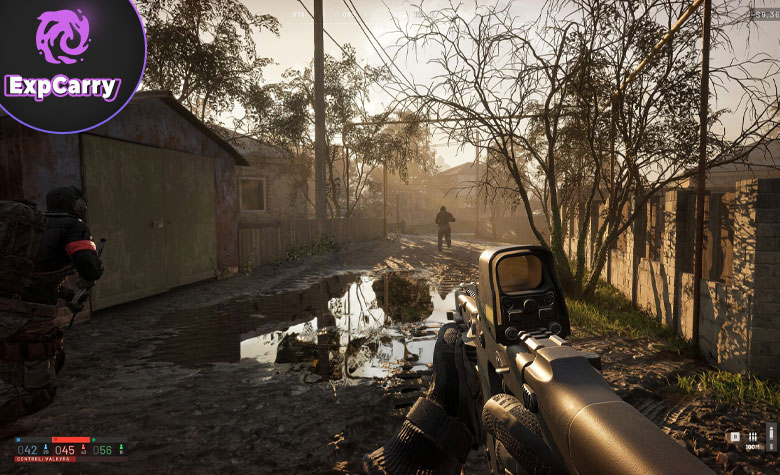
WARDOGS will naturally be compared to Battlefield, Arma King of the Hill, Squad, BattleBit Remastered, Delta Force, and extraction shooters like Escape from Tarkov. None of these comparisons are exact, but they help place the game. WARDOGS has the combined arms appeal of Battlefield, the objective pressure and money logic associated with King of the Hill-style play, the tactical tone of military shooters, and some gear-risk tension from its persistent economy.
The clearest distinction is that WARDOGS is not a battle royale. High player count does not automatically mean parachutes, shrinking circles, looting houses, and last-squad-standing pacing. WARDOGS has up to 100 players, but the win condition is objective control. Death matters because of cash and loadout investment, but it does not end the match in the same way a battle royale death does.
WARDOGS is also not an extraction shooter. It has persistent cash and risk attached to equipment, but the match is not centered on entering a raid, looting items, and escaping through an extraction point. The main focus remains large-scale objective warfare. This could make the game appealing to players who like risk and consequence but do not want the slower backpack-management rhythm of extraction shooters.
| Comparison point | How WARDOGS approaches it |
|---|---|
| Battle royale | Not a battle royale; the goal is objective control, not last-player survival |
| Extraction shooter | Not an extraction shooter; cash persists, but the match is not based on extracting loot |
| Battlefield-style warfare | Shares large-scale combat, vehicles, destruction, and combined arms appeal |
| Arma King of the Hill | Similar objective pressure and cash-based loadout decisions |
| Mil-sim | More tactical than a pure arcade shooter, but not presented as a strict simulation |
| Sandbox shooter | Strong sandbox focus through player choice, cash spending, vehicles, building, destruction, and voice chat |
The important point is that WARDOGS is trying to arrange familiar pieces into a different structure. The three-team setup changes how fights may develop. The cash economy changes how players think about death and spending. Building and destruction change how teams hold space. Vehicles and logistics change how teams move toward the objective. Proximity voice chat adds another coordination layer. If these systems reinforce each other, WARDOGS can feel distinct even in a crowded tactical FPS market.
Who Is WARDOGS For?
WARDOGS is mainly for players who want a tactical multiplayer FPS with more consequence and freedom than a standard arcade shooter. It should appeal to players who enjoy large maps, objective warfare, combined arms combat, team coordination, vehicle pressure, construction, and battlefield chaos created by many players making different decisions at the same time.
Battlefield fans may be interested because WARDOGS includes vehicles, destruction, infantry combat, and large-scale battles. Arma King of the Hill players may recognize the appeal of objective control and money-based loadout decisions. Players who enjoy extraction shooters may find the equipment-risk element interesting, even though WARDOGS does not use extraction match logic. Squad or mil-sim players may appreciate the tactical tone, but they should not expect a strict simulation built around real-world procedure.
The game may be less suitable for players who only want fast, symmetrical, low-friction arena combat. WARDOGS is built around spending decisions, movement, coordination, objective pressure, and unpredictable three-team fights. Some deaths may come from vehicles, third-party pressure, long sightlines, or chaotic attacks on the Control Zone. That is part of the format rather than a side effect.
| Player type | WARDOGS fit |
|---|---|
| Battlefield fans | Strong potential fit because of vehicles, destruction, large battles, and combined arms combat |
| Arma King of the Hill players | Strong potential fit because of objective warfare and cash-based loadout decisions |
| Extraction shooter fans | Possible fit if they like equipment risk but want more objective-focused warfare |
| Pure battle royale players | Mixed fit because WARDOGS does not use last-player-standing match logic |
| Hardcore mil-sim players | Possible fit, but WARDOGS appears more accessible than a strict simulation |
| Solo casual FPS players | Possible fit, but the game will likely reward teamwork and communication heavily |
WARDOGS Strengths, Risks, and Final Thoughts
WARDOGS has a strong pitch because its main systems point in the same direction. A three-team Control Zone mode gives every match a clear objective. A large map gives the game scale and variation. Vehicles and destruction add pressure and tactical options. Building gives players a way to shape defensive positions. Persistent cash makes individual decisions matter. Proximity voice chat supports the player-driven sandbox. These features all support the idea of tactical, large-scale, objective-focused warfare. The biggest strength is identity. WARDOGS is not hiding what it wants to be. It wants to be a large, tactical FPS where cash, teamwork, and battlefield control matter. That is clearer than many multiplayer shooters that launch with too many modes and no obvious core audience.
The second strength is role diversity. If the cash economy works, players should have more useful ways to contribute than simply farming kills. A medic can matter by keeping teammates alive. A transport player can matter by moving squads into useful positions. A builder can matter because fortified positions can change a fight. A vehicle player can matter because armor, transport, or artillery can support the objective. Large-scale shooters are strongest when different roles combine into one team result instead of every player chasing the same scoreboard fantasy.
The biggest risk is complexity. WARDOGS has many systems that must function together. Bad vehicle balance can ruin infantry fights. Weak construction can make building irrelevant. Overpowered construction can make objectives tedious. Poor economy tuning can punish new players. Weak server performance can make every system feel worse than it actually is. Because the game depends on large player counts, performance and netcode will matter from the first public build.